

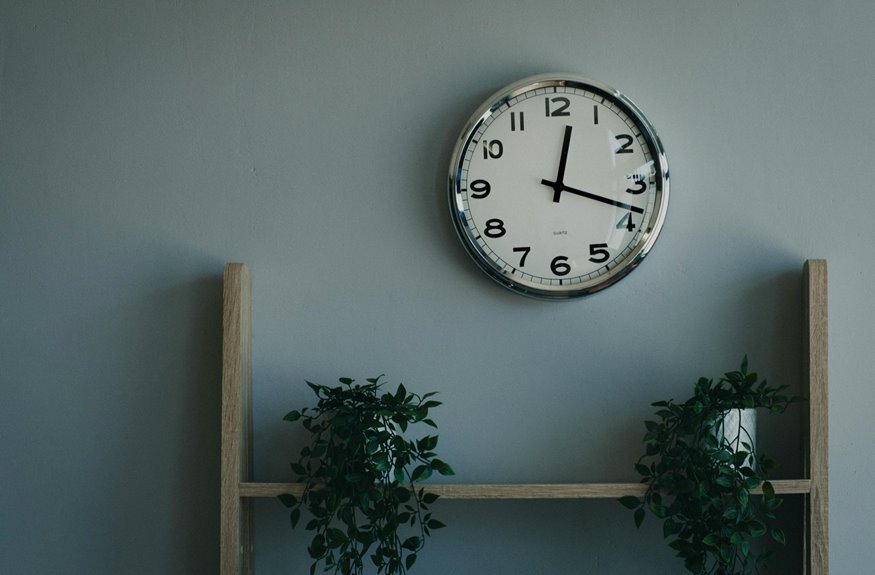
In case your sofa faces a blank wall, hang the clock there and keep its center at eye level while seated, because that spot can turn a plain room into a calm, useful focal point. You’ll want the clock to feel easy to glance at, not like it’s shouting for attention, so the next step is choosing the right wall, height, and distance from furniture.
Where Should You Hang a Wall Clock?
Should you want your wall clock to feel like part of the room instead of an afterthought, start with the spots people notice most. You’ll usually do best above a fireplace, over a sofa, or on a central wall that faces your seating area. These places give the clock historical symbolism and help it join the room’s daily rhythm.
In case your layout feels open, pick an empty wall that balances the space without crowding it. You can also place it opposite an entrance or recliners so you catch it at a glance. Next, consider the wall itself. A clock that’s easy to reach for mechanical maintenance saves you hassle later, and it keeps the whole setup feeling cared for, calm, and welcoming.
Choose the Best Height for Your Wall Clock
The right height can make your wall clock feel calm, useful, and naturally part of the room. You want it easy to read, yet not too high or low. Aim for seated eyelevel, about 145 to 150 cm from the floor, so you can glance up from the sofa without straining. Should you want an elderly friendly setup, place the center a little lower, around 140 to 145 cm.
- Keep the clock centered with your main seating view.
- Check that your eyes land on the time quickly.
- Adjust slightly if the wall feels busy or tall.
That small change helps you feel settled and included, like the room was made for everyday life.
Hang Your Wall Clock Above Furniture
As you hang your wall clock above a sofa or console table, you give that furniture a clear anchor point.
You should keep the clock centered and leave enough space so it feels balanced, not crowded.
That simple placement can make your room look finished and easier to enjoy.
Above Sofas
A well-placed clock can make your sofa area feel calm, complete, and easy to live with. As you hang it above your sofa, aim for a balanced look that helps you feel at home with ease. You want the clock centered with the couch so the wall feels steady, not crowded. A little symmetry contrast can make the room feel warm and inviting, especially once your decor mixes soft and bold pieces. Use ambient lighting to keep the clock easy to read without glare.
- Keep the clock about 6 to 8 inches above the sofa.
- Choose a size that fits your wall and seat.
- Make sure you can see it from your favorite spot.
That way, your room feels welcoming and pulled together.
Above Console Tables
Placed above a console table, your wall clock can do more than tell time. It can pull your entry or living space together and make guests feel welcome right away.
You should keep it centered, about 20 cm above the tabletop, so the look feels calm and balanced. This spot works well with antique consoles because their shape gives your clock a natural frame.
Should your room feel dim, add soft LED backlighting behind the clock for a warm glow. Choose a clock that matches the console’s size, and let nearby décor stay simple.
Then your wall clock becomes a friendly focal point, not just another object on the wall.
Center Your Wall Clock on a Blank Wall
In a calm, open space, a blank wall can do more for your home room than you might suppose. Center your wall clock there, and you give the room a minimalist focalpoint that feels steady and welcoming. You help everyone feel they belong because the clock reads as part of the space, not an afterthought.
- Pick the widest empty wall for clean balance.
- Keep the clock level at eye height so it feels natural.
- Choose a size that stands out without crowding the wall.
This spot also makes seasonal swaps easier, since you can change nearby art or decor without moving the clock. Whenever the clock sits in the middle, your wall feels calm, organized, and ready for daily life.
Match Wall Clock Placement to Your Layout
You can make your clock feel right at home once you place it on the wall that naturally draws the eye. Try centering it on a focal wall so it works with your furniture instead of fighting it.
As soon as you balance the clock with the sofa, fireplace, or chairs, the whole room feels calmer and more complete.
Center On Focal Wall
A well-placed wall clock can do more than tell time, especially whenever you center it on the main focal wall of your inhabited room. You create symmetry alignment, and that steady line helps your space feel calm and welcoming. Whenever you choose the wall everyone notices initially, your clock naturally builds visual hierarchy without shouting for attention.
- Place it at eye level for easy glances.
- Keep it centered so the room feels settled.
- Choose a size that fits the wall, not fights it.
This simple choice works well with a fireplace, a broad entry wall, or an open nook. You’re not just hanging decor. You’re helping your room feel like it belongs to you and to everyone who shares it.
Balance With Furniture
Once you’ve centered the clock on a strong focal wall, the next step is making sure it works with your furniture, not against it.
Look at the visual weight of your sofa, chairs, and table initially. In the event one side feels heavier, place the clock where it restores balance instead of crowding the space.
Keep enough negative space around it so the wall can breathe and the clock feels intentional, not squeezed in. Above a sofa, leave room so the pieces connect without touching.
Opposite from seating, make sure everyone can see it at a glance. Whenever your clock matches the layout, your room feels calmer, warmer, and easier to settle into.
A good fit helps the whole space feel like it belongs together.
Use a Wall Clock to Balance the Room
Whenever your living-room feels a little uneven, a wall clock can quietly bring it back into balance. You can use it to create visual rhythm, so the eye moves smoothly across the room instead of stopping at one heavy spot. It also adds focal contrast, especially when your sofa, shelves, or art lean to one side.
- Place it across from a busy seating area.
- Let it mark an empty wall that needs company.
- Match its finish to nearby decor for easy harmony.
Once you choose a spot that feels natural, your room starts to seem more welcoming. The clock doesn’t just tell time; it helps your space feel settled, shared, and cared for.
That small shift can make your home feel easier to enjoy.
Choose the Right Wall Clock Size
Choose a wall clock that fits the wall it will hang on, because a tiny clock can get lost and a huge one can overpower the room.
You’ll want the size to match the space around your furniture, so the clock feels like part of the room instead of a random add-on.
Whenever the proportions are right, your wall clock looks balanced and makes the lounge feel calm and complete.
Match Clock To Wall
A wall clock can feel too small on one wall and oddly loud on another, so size matters just as much as style. You want it to match the wall’s mood, not fight it. A slim clock with matte material finishes can calm a busy room, while a glossy frame adds energy through color contrast.
- On a plain wall, choose a larger face so it feels anchored.
- Near artwork, pick a clock that shares one color or finish.
- For patterned walls, keep the design simple so it blends in.
When you match the clock to the wall, you help your communal room feel like it belongs to everyone there. The right choice makes the space feel warm, settled, and easy to love.
Balance Size With Space
Now that the clock matches your wall, the next step is to make sure it fits the room’s scale too. You want it to feel like part of your circle, not a guest who brought a suitcase.
For most lounge rooms, a 30 to 50 cm clock works well, but your sofa, mantel, or empty wall still guides the final choice. A larger clock adds confidence above a wide couch, while a smaller one keeps a tight space calm.
Watch the material contrast too. A wooden frame can warm a bright wall, and a metal face can steady softer decor. Then check ambient lighting, because glare can shrink the clock’s presence and spoil easy reading from your favorite seat.
Keep Your Wall Clock Easy to See
Let’s set your wall clock where it can actually do its job without making you squint across the room. You want quick glances from the sofa, chair, or entryway, so choose a spot that supports visibility maintenance and easy viewing angles. Whenever the clock sits in line with your main seating, you feel more at ease because the room works with you, not against you.
- Place it across from your favorite seat.
- Keep the center near eye level whenever seated.
- Pick a wall that matches your room’s flow.
If you share the space with family or guests, this setup helps everyone check the time without shifting around.
A clear, steady view also makes the room feel more welcoming, like it was planned with you in mind.
Avoid Glare, Clutter, and Awkward Spots
As you hang a wall clock, glare, clutter, and awkward placement can turn a helpful piece into a daily annoyance. To reduce reflections, test the wall at different times of day and watch how sunlight or lamps hit the glass. Should the face flash back at you, shift it to a softer angle.
Next, avoid overcrowding the clock with frames, shelves, or tall decor, because a busy wall makes it harder to relax and read the time. Choose a spot that gives the clock breathing room and keeps the area calm.
Also, skip tight corners, doors, and high traffic paths where the clock feels squeezed or odd. Once you place it with care, your room feels more welcoming, and you do too.
Style the Wall Clock to Fit the Room
Style can do more than decorate a room. You can let your clock echo the same mood as your sofa, rug, and shelves, so the space feels like it belongs to you. Choose material finishes that match your room’s voice, whether that’s warm wood, clean metal, or soft matte paint. Then use color coordination to tie the clock into pillows, art, or trim, which helps the whole room feel calm and connected.
- A metal frame can support a modern, polished look.
- A wood finish can soften busy spaces and feel welcoming.
- A bold color can add energy without shouting.
When you match the clock to nearby pieces, you make the room feel familiar and easy to live in. That little harmony can make your wall feel like part of the team.
Make Wall Clock Placement Feel Intentional
A clock feels more purposeful as you place it with a clear job in mind. You help the room feel calm whenever you choose a spot that welcomes quick glances from the sofa or across from the entry. That choice says, “You belong here.” To keep it intentional, match the wall to the room’s flow and use color psychology to support the mood you want.
| Placement cue | Effect |
|---|---|
| Above sofa | Feels anchored |
| Opposite seating | Stays visible |
| Near console | Feels gathered |
| On open wall | Adds balance |
Tactile placement matters too, so place the clock where your hand can reach for setup without strain. At that point you’ll create a small, steady moment that feels lived in, not random.
Frequently Asked Questions
Can a Wall Clock Be Placed According to Vastu Directions?
Yes, a wall clock can be placed according to Vastu. North or east walls are generally preferred because they are associated with positive energy and movement. This placement supports a harmonious room layout while respecting directional principles.
What Wall Clock Size Suits a Small Living Room?
For a small living room, choose a 30 to 35 cm wall clock with a compact design and clear, bold numerals so it is easy to read and keeps the room visually balanced.
Should a Wall Clock Be Centered Above a Fireplace?
Yes, you can place it centered above the fireplace. It will create a strong focal point with balanced mantel lines, like a quiet marker above the hearth, and it can make the room feel composed, inviting, and connected.
How High Should a Wall Clock Be for Elderly Viewers?
Hang the clock about 140 to 145 cm from the floor so the center is near eye level for older viewers. Choose a clock with large, clear numerals and place it where it can be seen at a quick glance.
Are Silent Wall Clocks Better for Living Rooms?
Yes, a silent mechanism is often the better choice for a living room because it keeps the atmosphere calm and visually balanced. Without a ticking sound, the room stays quieter, which makes it easier for you and your guests to talk, unwind, and enjoy the space.