
At the time you choose bathroom wall materials, you’re really deciding how well your space will handle steam, splashes, and daily scrubbing without turning into a hassle. Tile, waterproof panels, moisture-resistant drywall, and sealed coatings each have their own strengths, and the best choice depends on where the water hits hardest, how much upkeep you can live with, and how quickly you want the job done. The tricky part is that the safest pick for a shower isn’t always the smartest one for a dry wall, and that’s where the details start to matter.
How to Choose Bathroom Wall Materials?
Once you choose bathroom wall materials, start with the space itself, because the best option is the one that fits your moisture level, cleaning habits, and style.
You can narrow choices through asking how much splashing the walls face, then picking a surface that stands up to that daily wear.
Should you love a calm look, use color psychology to guide tones that feel fresh and steady.
In case you rent or want a faster update, choose panels or vinyl that go up with simple installation tools.
For busy homes, look for low-maintenance finishes that wipe clean fast and keep the room feeling welcoming.
As you match function, ease, and mood, you create a bathroom that feels like it belongs to you, not just any house.
Are Tile Bathroom Walls Worth It?
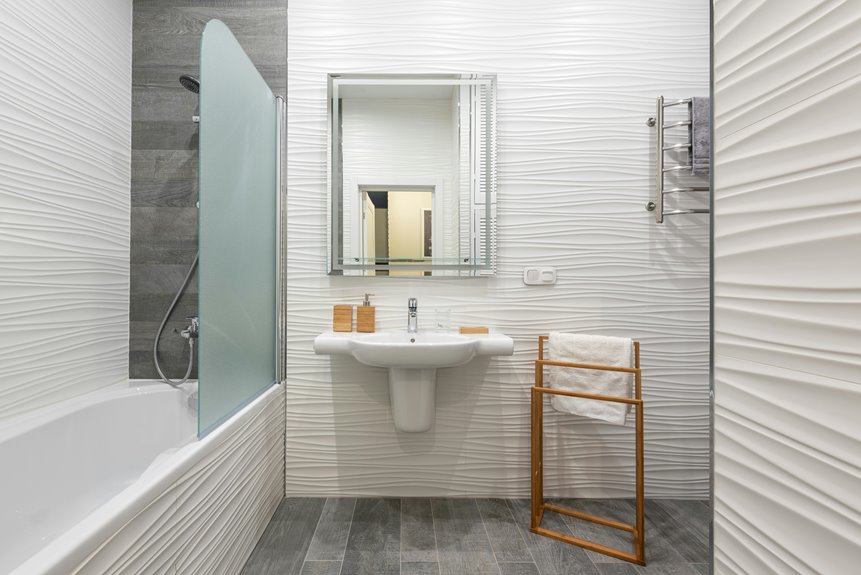
Tile bathroom walls can be a smart pick because they stand up well to water, especially around showers and sinks.
You also get lots of style choices, from simple ceramic to bold porcelain, but you’ll want to consider grout care and the upfront cost.
Should you want a wall that can handle daily splashes and still look polished, tile could be worth it for your space.
Water Resistance Benefits
Water resistance is usually the main reason people choose bathroom wall materials, and for good reason. Whenever you pick tile, you give yourself a strong shield against daily splashes, shower spray, and wet hands.
That matters because good water blocking helps with mold prevention and keeps steam management easier after hot showers. You also get a cleaner space around sinks and tubs, which helps your bathroom feel calm and put together.
Tile works well in busy homes because it stands up to repeated soaking without losing its shape. Plus, you can choose finishes that fit your style, so protection doesn’t have to look plain.
Should you want walls that handle moisture with confidence, tile can make your bathroom feel safer, fresher, and more like home.
Cost And Maintenance
Should your bathroom already feels protected from splashes and steam, the next question is usually the one that hits the wallet and the cleaning routine. Tile can feel pricey up front, but it often lowers long term costs because it lasts for years and takes direct water well. You do pay for grout care, though, and that part can test your patience. Should you prefer a polished, shared-home look, tiles can still feel worth it.
| Option | Upfront Cost | Care Level |
|---|---|---|
| Ceramic tile | Medium | Grout cleaning |
| Porcelain tile | Higher | Low upkeep |
| Acrylic panels | Medium | Easy wipe |
| PVC panels | Low | Very easy |
| Glass tile | High | More care |
When you choose tile, you join a crowd that values style and strength together.
Are Waterproof Panels Good Bathroom Wall Materials?
Waterproof panels can be a smart choice provided you want a fast, low-stress bathroom update.
You’ll want to look at how well they hold up, since durable panels handle daily moisture better and save you trouble later.
Just as crucial, you need proper installation and sealing, because even the best panel can fail provided water sneaks behind it.
Waterproof Panel Durability
At the moment you choose a waterproof panel for a bathroom wall, durability matters just as much as water resistance. You want a panel that stays solid through steam, splashes, and daily life, so your space still feels welcoming years later.
- Impact testing shows whether the surface can handle bumps from bottles, elbows, and busy routines.
- Long term wear matters because a panel should resist fading, warping, and surface marks.
- FRP and PVC panels often hold up well in humid rooms, so you can feel confident in your choice.
- Acrylic and fiberglass panels stay smooth and easy to care for, which helps your bathroom look cared for.
When you pick a tough panel, you’re not just buying material. You’re building a bathroom that fits your life and keeps up with it.
Installation And Sealing
Fitting a waterproof panel well can make your bathroom feel calm instead of stressful, because good installation does a lot of the heavy lifting for you.
You want flat walls, clean edges, and tight seams, so the panel sits like it belongs there.
Use the right sealant types around corners, edges, and fixtures, since a poor bead can invite leaks fast.
Also, leave room for expansion joints where the room might move a little with heat and moisture.
Should you be using PVC, acrylic, or FRP panels, follow the maker’s spacing and fastener steps.
Then check each joint with care.
Once you seal it right, you get a space that feels sturdy, neat, and easy to live with every day.
Is Moisture-Resistant Drywall Good for Bathrooms?
Is moisture-resistant drywall good for bathrooms? Yes, it can work well in dry bathroom zones whenever you want a cleaner, calmer space that feels built for you. It gives you a solid base for mould prevention and fast repairs, especially around areas away from direct splashes. Still, you need to treat it as one part of the room, not the whole shield.
- Use it on walls outside showers and tubs.
- Pair it with careful sealing at seams and edges.
- Choose it whenever you want easier patching later.
- Match it with proper ventilation for better comfort.
If you share the bathroom with others, this choice can feel practical and reassuring. It helps you keep the space neat without making every fix a big project.
Should You Use Waterproof Wall Coatings?
Waterproof wall coatings can work well in bathrooms whenever you want extra protection without a full wall overhaul.
You can brush or roll them on, and they help seal small pores before moisture sneaks in. That makes them useful on walls that already feel solid but need a fresh shield.
For best results, choose products with strong coating longevity, so you won’t be redoing the job too soon. Also look for eco friendly formulations provided you care about healthier indoor air and a smaller footprint.
Still, you ought to check the surface beforehand, because coatings need clean, sound walls to stick well.
Once you pick the right one, you join a smarter, easier path that keeps your bathroom looking cared for.
What Works Best in Shower and Tub Areas?
After you seal and protect the walls around your bathroom, the wettest spots still need stronger protection, and that’s where shower and tub areas call for tougher materials. You want surfaces that shrug off daily splashes and still feel welcoming.
- Porcelain tile works well because it resists water and gives you many looks.
- Glass tile adds brightness, so your shower can feel open and calm.
- Acrylic or fiberglass panels give you a smooth finish with fewer seams.
- PVC or FRP panels help you cover shower niches and match your curb design without much upkeep.
Choose what fits your space, your style, and your comfort. Whenever you pick the right material, you create a bath that feels shared, sturdy, and easy to enjoy every day.
How Do You Install Bathroom Walls Safely?
Start with a clean, dry plan, because safe bathroom wall installation depends on what sits behind the finish, not just what you see on top. You’ll feel more confident once you inspect studs, patch weak spots, and mark every pipe and wire before you cut.
Next, turn off power at the breaker and check for electrical safety with a tester, so you don’t surprise yourself or anyone helping you.
Then open windows or run a fan for proper ventilation, since dust and sealants can build up fast.
After that, fit your chosen wall panels or boards snugly, keeping seams tight and fasteners secure.
Finally, seal edges around tubs, sinks, and corners, because water loves tiny gaps. You’re not alone here; steady steps make the room safer for everyone.
What Bathroom Wall Materials Fit Your Budget?
Picking the right bathroom wall material can trim costs fast without making your space feel cheap. You can still build a room that feels welcoming and solid. Should you want savings, compare upfront price, labor, and upkeep before you buy.
- budget friendly vinyl gives you a quick install, so you spend less on labor and time.
- economy ceramic costs more than vinyl, but it lasts longer and adds a classic look.
- PVC panels work well whenever you desire low grout care and strong moisture protection.
- Acrylic sheets fit tight budgets too, because they install fast and clean easily.
Frequently Asked Questions
Which Bathroom Wall Materials Are Best for Mold Prevention?
Non porous wall panels, porcelain tile, glass tile, acrylic, fiberglass, and PVC resist mold growth most effectively. Use mold resistant paint on adjacent walls, seal every joint, and keep the bathroom dry to limit mold buildup.
How Long Do Waterproof Bathroom Wall Materials Typically Last?
Waterproof bathroom wall materials typically last 10 to 30 years, depending on the product, installation quality, and upkeep. Watch for wear signs such as cracks, lifting edges, or peeling, and stay on top of cleaning and maintenance to keep the walls looking sound and well protected.
Can Bathroom Wall Materials Be Installed Over Existing Walls?
Yes, you can often install bathroom wall materials over existing walls if the surface is clean, level, and free of mold, and if you add the right vapor barrier.
Which Wall Materials Are Safest for DIY Bathroom Renovations?
PVC panels and cement board are the safest wall materials for DIY bathroom renovations. PVC panels are quick to install, and cement board holds up well against moisture behind tile. For waterproof walls, many homeowners prefer these practical, lower risk upgrades.
Do Bathroom Wall Materials Affect Indoor Air Quality?
Yes, bathroom wall materials can influence indoor air quality by releasing VOCs and by helping control moisture. Choosing low VOC, water resistant materials can reduce mold growth and support a cleaner, healthier bathroom environment.