

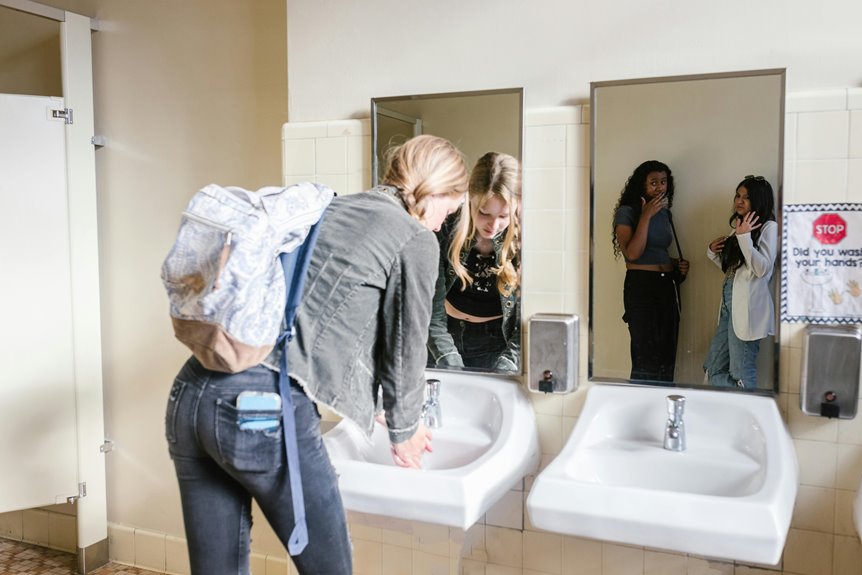
No, not all colleges have communal bathrooms, and that’s a relief in case you’re worried about dorm life feeling too crowded. Some schools still use shared floor bathrooms, while others offer suite-style or private setups that give you more space and privacy. The real difference often comes down to the age of the building, your housing choice, and how much the school invests in updates. Before you pick a dorm, a few details can change everything.
Do All Colleges Have Communal Bathrooms?
Not every college has communal bathrooms, but many still do, especially in traditional dorms and initial-year residence halls. You may find them on a floor shared by many students, and that can feel strange initially.
Still, bathroom history shows that shared spaces have long been part of campus life. Once you know that, the setup can seem less random and more familiar.
Cultural differences also shape what you see, since some schools and communities expect more privacy than others. So, in case you’re worried, keep in mind that you’re not the only one adjusting. Plenty of students learn the routine, find their rhythm, and feel at home faster than they expected.
Why Colleges Use Communal Bathrooms
Colleges use communal bathrooms because they can fit more students into less space and keep housing costs lower for you. They also make dorm life feel more social, since you’re more likely to run into people and build everyday connections.
In many halls, that mix of practicality and community is exactly why schools keep using them.
Space and Cost Efficiency
One big reason colleges lean on communal bathrooms is that they help campuses stretch both space and money without cramming students into even tighter rooms. With shared setups, you get space savings because one bathroom can serve many rooms, so builders can fit more housing on the same floor.
That also supports cost reduction, since schools buy fewer fixtures, run less plumbing, and spend less on repairs over time. You mightn’t love sharing every sink, but this design often keeps your housing bill from jumping higher than it needs to.
It also lets colleges update older halls instead of tearing them down. Whenever a school manages rooms, pipes, and cleaners in one shared area, you benefit from a simpler system that keeps housing more affordable and practical.
Community and Social Design
Beyond saving space, communal bathrooms also shape how campus life feels day to day. You meet people in line, swap quick hellos, and start to feel like you belong.
That shared routine can turn small moments into resident rituals, like chatting while you brush your teeth or borrowing a paper towel in a pinch. With communal design, colleges create spaces that invite casual contact instead of leaving you tucked away in your room.
This matters because first-year life can feel new and a little lonely. A shared bathroom can soften that edge. It gives you a place where familiar faces appear often, and that repeated contact helps friendships grow naturally.
Even simple mornings can feel less awkward whenever everyone shares the same space and rhythm.
What Shared Dorm Bathrooms Are Like
Shared dorm bathrooms can feel a little awkward initially, but they’re usually more practical than scary. You’ll often find a few stalls, several showers, and a row of sinks that everyone learns to share.
At first, you might wonder about shower privacy, but curtains, doors, and simple timing usually make things feel normal fast. You also get used to mirror etiquette, like stepping aside after brushing your hair or shaving.
Small habits matter, because they help everyone move smoothly through busy mornings. Should you be new, watch how others handle space, keep your items tidy, and be polite when the room fills up. Soon, the bathroom stops feeling like a stranger and starts feeling like part of your floor’s routine.
How Suite-Style Bathrooms Work
Should you land in a suite-style dorm, the bathroom setup usually feels much more private and much less crowded than a floor bathroom. In most suite layouts, you and a small group share one bathroom inside your unit, so you don’t have to hike down the hall in slippers. That setup can make mornings smoother, and it often helps you settle in faster because the space feels like yours.
You’ll usually see a toilet, sink, and shower in one shared area, with private locks on the bathroom door for added comfort. Since only a few people use it, cleaning and schedules can feel easier to manage. It’s still shared, but it can give you a calmer, friendlier rhythm that makes dorm life feel a little more like home.
When Private Bathrooms Are Available
Very rarely, you can get a private bathroom tied to your own room, and that can feel like a huge relief should you value privacy or just want a simpler daily routine. You could find these rooms in higher cost tiers, especially in newer halls or special housing.
Some schools reserve them for upperclassmen, while others open a few to new students. As you look at options, check whether the price fits your budget and whether the added comfort matters to you.
Alumni preferences often shape housing upgrades, too, because schools hear that many graduates recall the calm, easy mornings these rooms give. Even so, private bathrooms stay limited, so you might need to act fast in case one appears.
Whenever you get one, you can still feel connected while enjoying a small, welcome retreat.
How Dorm Bathroom Access Differs by Campus
On one campus, you could find a floor bathroom shared across everyone nearby, while on another, you might obtain a suite or apartment bathroom that only a few students use.
Your access can also shift based on hall rules, like who can enter, whenever bathrooms lock, and whether the space is co-ed or gender-specific.
That means you should always check each school’s housing setup, since bathroom life can feel very different from one dorm to the next.
Bathroom Layout Types
From campus to campus, bathroom layouts can look very different, and that’s why college life can feel a little unpredictable at initially.
You could find a long hall bath shared among many neighbors, a suite bath for just a few rooms, or a private bath tucked beside your own space.
In many dorms, you’ll see privacy partitions around showers or sinks, plus ventilation upgrades that help the room feel fresher and less cramped.
Some buildings mix shared stalls with roomier vanity areas, so you can still get ready without feeling crowded.
Once you know these layout types, you can envision your daily routine more clearly and settle in with less stress. That small bit of certainty can make your hall feel more like home.
Floor Access Rules
Because bathroom access can shape your whole morning, floor rules matter more than many students expect.
On some campuses, you’ll use keycard access to enter the hall, then another card or code for the bathroom. That setup helps you feel secure, but it also means you can’t always pop in whenever you like.
Other schools keep floor bathrooms open to everyone on the floor, yet they might set restricted hours for cleaning or quiet time.
Should you be new, ask how your hall works before move-in day, so you don’t end up wandering in pajamas. These rules can feel odd at initially, but they usually aim to protect privacy and keep shared spaces usable.
Once you learn them, your routine gets easier and the floor starts feeling more like home.
Campus Facility Variations
Still, dorm bathroom access can look very different from one campus to the next, so you shouldn’t assume every college works the same way. On one school, you might share a hall bath with 20 other students, while another gives you a suite bathroom or even a private one.
You’ll also see changes based on maintenance funding, because better budgets often mean cleaner showers, faster repairs, and fewer broken sinks. Cultural norms matter too, since some campuses prefer gender-specific rooms, while others welcome co-ed or gender-neutral setups.
How Bathroom Rules Affect Your Privacy
Once you step into a shared dorm bathroom, the rules around it can shape how private or exposed you feel. Should your hall use bathroom surveillance, even a simple sign-in or cleaning check can make you feel watched. Good privacy design helps you relax because stalls, curtains, and clear space limits protect your comfort.
Whenever rules state when to enter, where to wait, or how to report repairs, they can cut down awkward moments and help you feel included, not crowded out. You might still share the room, but fair rules give everyone room to breathe. That matters most while you’re trying to settle in, meet new people, and feel like the floor is yours too. Clear policies turn a shared bathroom into a space that feels orderly, respectful, and a little more yours.
What Dorm Bathroom Etiquette Looks Like
Dorm bathroom etiquette usually comes down to simple habits that make shared space easier for everyone. You help the room feel welcoming whenever you clean up after yourself, keep your things in your own caddy, and leave the sink dry for the next person.
For shower etiquette, keep your music low, respect time, and rinse away hair so drains stay clear. In mirror sharing, give others space to brush teeth, fix hair, or check outfits without hovering.
A quick knock before you enter shows care, and a simple “you’re good” can ease awkward moments. Should you notice a mess, you can fix it without making it a scene. Small choices like these help you fit in fast and make everyone feel respected.
What to Expect on Move-In Day
Move-in day can feel busy, loud, and a little overwhelming, especially while you’re also figuring out how shared bathrooms work in real life. You’ll likely meet hall staff, grab keys, and follow an arrival checklist that keeps the day moving.
Then come roommate introductions, which can help the floor feel friendlier fast. As you unpack, you might notice the bathroom down the hall and ponder about traffic, cleaning, and pre-dawn lines. That’s normal.
Most dorms expect a quick tour, a few basic rules, and a shared sense of respect from day one. Should you feel unsure, ask questions right away. Small details today can help you settle in with more ease, confidence, and belonging.
How to Pack for a Shared Bathroom
At the start of packing, consider about comfort, privacy, and speed. You’ll want shower essentials that travel well, like a quick-dry towel, flip-flops, shampoo, soap, and a caddy you can grab fast.
Then add a robe or cover-up so you can move with ease and feel at home. Next, use privacy organizers for toothbrushes, skin care, and small items that can get lost in a busy room.
A hanging pouch or shower tote keeps everything together, so you’re not hunting in the hallway like you forgot your own name. Also pack a laundry bag, a small mat, and extra hair ties or contacts.
Whenever each item has its place, you’ll settle in quicker and feel part of the space.
When Communal Bathrooms Make Sense
Upon examining college housing, communal bathrooms can actually make a lot of sense, especially in traditional dorms where many students share one floor. You get quick access, and you often feel less alone because everyone uses the same space. In case you’re in a first-year hall, bathroom scheduling can help you dodge the morning rush and keep things moving.
Shared showers and sinks also fit naturally with locker organization, since you can keep towels, soap, and clothes in one easy system. Plus, college staff usually clean these spaces, so you’re not carrying that load yourself.
Once your floor learns the routine, the bathroom starts to feel less like a hassle and more like part of campus life. It’s a small place, but it can still help you feel at home.
How to Choose the Best Bathroom Setup
As you select a bathroom setup, start with considering how much privacy you need each day.
Then check how often the space gets cleaned, because a good schedule can make shared bathrooms feel much easier to use.
You should also look for accessibility features, since the right layout can make your routine safer and less stressful.
Privacy Needs
Privacy matters a lot, and you should treat it as one of the biggest factors while choosing a college bathroom setup. In case you value personal boundaries, look for options that give you more space, like suite-style or apartment-style living. These setups can ease awkward moments because you’re not sharing every sink, shower, and mirror with a whole floor. That can enhance your emotional comfort, especially when you’re tired, rushing, or just need a quiet reset.
Also, check whether the bathroom feels open or enclosed, since doors, curtains, and fewer roommates can make a big difference. You don’t need a perfect setup to feel at home, but you do deserve one that helps you relax, feel respected, and join campus life with confidence.
Cleaning Schedule
A good bathroom setup is only half the story, because the cleaning schedule can shape your day just as much as the room itself. Whenever you tour housing, ask how often staff clean and whether they use a daily rotation for stalls, sinks, and showers. In case the crew comes through often, you’ll usually face less buildup and fewer awkward surprises.
Next, check the deep cleaning schedule, since a weekly scrub can keep smells down and help everyone feel more at ease. You should also ask how residents handle quick wipe downs between visits, because shared effort matters. A clear plan makes the space feel calmer, and that calm helps you settle in, meet neighbors, and feel like you belong.
Accessibility Features
Comfort matters, but the best bathroom setup also needs to work for your body and your routine. Whenever you tour housing, check for wheelchair access at the door, in the stalls, and near the sinks. You should also look for grab bars, wide paths, and lower fixtures should you need them.
Next, notice whether tactile signage clearly marks each room, shower, or accessible stall. That small detail can save you stress when you’re rushing between classes.
In case you use mobility aids, ask how maintenance teams keep paths clear and how often they inspect hardware. If you don’t, still consider comfort for friends who might visit. A bathroom that welcomes more people helps you feel included, not squeezed out.
Questions to Ask Before You Pick a Dorm
Before you settle on a dorm, zoom in on the bathroom setup, because it can shape your daily routine more than you might expect. Ask how many students share it, at what times it gets cleaned, and whether it’s gender-specific or mixed. Then check whether showers have curtains, whether sinks sit inside the room, and whether the hall feels crowded at rush hour. These details help you feel at home fast.
Next, talk with future roommates about roommate agreements, because shared habits can prevent awkward surprises. Also ask about locker organization, storage, and where you’ll keep towels, shoes, and toiletries. Should you prefer more privacy, inquire about suite-style or apartment-style options. A few smart questions now can help you pick a space that feels calm, friendly, and truly yours.
Frequently Asked Questions
Do All Freshmen Dorms Have the Same Bathroom Setup?
No, freshmen dorms do not always have the same bathroom setup. Your living arrangement may include a communal bathroom, a suite bathroom, or a private one. Learn the bathroom rules early so you know what to expect.
Are Co-Ed Dorm Bathrooms Usually Gender-Neutral?
Co-ed dorm bathrooms are often shared spaces, but they are not always fully gender-neutral. Some dorms use gender inclusive signs, private stalls, and rules designed to protect privacy. Check your dorm’s policy to know exactly how the bathroom is set up.
How Many Students Typically Share One Floor Bathroom?
Usually, a floor bathroom serves around 20 to 30 students, so expect a steady stream of shampoo bottles and shower caddies. Clear bathroom etiquette and a cleaning schedule help everyone get along.
Do Communal Bathrooms Always Have Showers and Sinks?
No, you will not always find both. In some dorms, communal bathrooms include showers and sinks. In others, sinks are inside individual rooms or bathing areas are set apart from the main bathroom, depending on the housing setup.
Can You Request a Private Bathroom as a First-Year Student?
Yes, you can sometimes ask for one, but it is uncommon for a first year student. About 90 percent of U.S. colleges offer coed housing, and single occupancy bathrooms usually cost more. Privacy concerns can support your request.