

Like a well-tuned plane in a joiner’s shop, the right trim router bit can make the difference between a crisp edge and a rough mistake. You want carbide, the right bearing setup, and a shank that matches your tool and workload.
In 2026, the best choices promise cleaner cuts, longer life, and less sanding, but one detail still decides which bit earns a place in your kit.
| Freud 50-102: 1/2″ (Dia.) Top Bearing Flush Trim Bit |  | Best Overall | Cut Type: Flush trim | Shank Size: 1/4 in | Cutting Diameter: 1/2 in | VIEW LATEST PRICE | Read Our Analysis |
| SpeTool Downcut Spiral Router Bit for Woodwork |  | Best for Clean Cuts | Cut Type: Downcut spiral | Shank Size: 1/4 in | Cutting Diameter: 1/4 in | VIEW LATEST PRICE | Read Our Analysis |
| TwoWin 110V 800W Wood Router Tool with Bits |  | Best Router Kit | Cut Type: Router bit set | Shank Size: 1/4 in | Cutting Diameter: Not specified | VIEW LATEST PRICE | Read Our Analysis |
| Freud Flush Trim Router Bit with Bearing (50-501) | 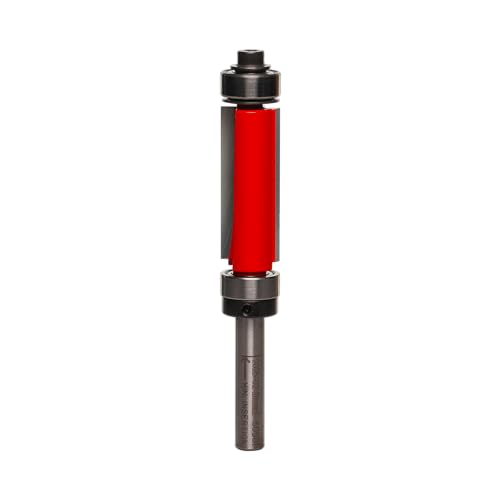 | Best for Templates | Cut Type: Flush trim | Shank Size: 1/4 in | Cutting Diameter: 1/2 in | VIEW LATEST PRICE | Read Our Analysis |
| 2-1/2 Inch Flush Trim Top and Bottom Bearing Router Bit 1/2-Inch Shank | Best Heavy-Duty Pick | Cut Type: Flush trim | Shank Size: 1/2 in | Cutting Diameter: 3/4 in | VIEW LATEST PRICE | Read Our Analysis |
More Details on Our Top Picks
Freud 50-102: 1/2″ (Dia.) Top Bearing Flush Trim Bit
Freud’s 50-102 is a strong choice for clean, reliable flush trimming. It features a 1/2-inch top-bearing bit with a 1/4-inch shank, a 1-inch cut length, and a 2-5/8-inch overall length. TiCo Hi-Density Carbide and the Perma-SHIELD coating help reduce friction when cutting hardwoods, softwoods, plywood, and composites. You can use it for sign lettering, templates, and intricate shapes on handheld or table-mounted routers. The two-flute design runs up to 24,000 RPM. At just 0.1 lb, it is easy to handle, and Freud backs it with limited tooling warranty support.
- Cut Type:Flush trim
- Shank Size:1/4 in
- Cutting Diameter:1/2 in
- Flutes:2-flute
- Bearing Design:Top bearing
- Material:Carbide
- Additional Feature:24,000 RPM max
- Additional Feature:Perma-SHIELD coating
- Additional Feature:Sign lettering use
SpeTool Downcut Spiral Router Bit for Woodwork
SpeTool’s 1/4-inch downcut spiral bit delivers clean cuts for CNC and handheld router work. It features a 1/4-inch shank, a 1-inch cutting length, and a 2-flute tungsten carbide construction that handles softwoods, hardwoods, plywood, laminate, oak, and MDF. The downcut design helps keep top edges crisp on mortises, slots, and dados. Its extra long-life coating claims up to 2.5 times more life than uncoated bits while improving stiffness and supporting smooth, stable cutting. It fits 1/4-inch collets and comes with a plastic storage box for protection and organization.
- Cut Type:Downcut spiral
- Shank Size:1/4 in
- Cutting Diameter:1/4 in
- Flutes:2-flute
- Bearing Design:No bearing
- Material:Tungsten carbide
- Additional Feature:Extra long-life coating
- Additional Feature:2.5x longer life
- Additional Feature:Plastic storage box
TwoWin 110V 800W Wood Router Tool with Bits
With 800W and a 15 piece bit set, TwoWin gives you a solid router kit for precise trim work. You get 30,000 RPM, so it powers through trimming, edging, grooving, and pattern work with ease. The aluminum and plastic body feels sturdy, while the transparent base helps you keep sight of the cut line. You can fine tune height with the lift knob and scale, and the stable guides keep cuts accurate. The 1/4 inch collet, wrenches, brushes, and wooden organizer make setup and storage easy for woodworking, cabinetry, and DIY projects.
- Cut Type:Router bit set
- Shank Size:1/4 in
- Cutting Diameter:Not specified
- Flutes:Not specified
- Bearing Design:No bearing
- Material:Tungsten carbide
- Additional Feature:800W motor power
- Additional Feature:30,000 RPM speed
- Additional Feature:15-piece bit set
Freud Flush Trim Router Bit with Bearing (50-501)
Need precise template work? You’ll appreciate the Freud Flush Trim Router Bit with Bearing (50-501). Its top and bottom bearings let you control cutting direction for flush trimming, laminate trimming, and template routing, so you can route one half of a curve, flip the workpiece, and finish the other side without resetting the pattern. The two-cutter design cuts fast with less resistance, helping you handle intricate details or production runs. TiCo Hi-Density Carbide stays sharp in hardwood, softwood, laminates, and veneered plywood. Use the 1/4″ shank bit at up to 24,000 RPM.
- Cut Type:Flush trim
- Shank Size:1/4 in
- Cutting Diameter:1/2 in
- Flutes:2-cutter
- Bearing Design:Top and bottom bearings
- Material:Carbide
- Additional Feature:Top and bottom bearings
- Additional Feature:Laminate trimming use
- Additional Feature:Half-curve routing
2-1/2 Inch Flush Trim Top and Bottom Bearing Router Bit 1/2-Inch Shank
For heavy-duty flush trimming, this 2.5-inch router bit is a solid choice. It has a 1/2-inch shank, a 3/4-inch cutting diameter, and a 2.5-inch blade height for reliable control. Its industrial-grade C3 micro-grain carbide edge stays sharp, cuts smoothly, and handles impact well. The top and bottom bearings help you trim flush with less fuss on CNC machines, table routers, or handheld setups. You can use it on wood, MDF, plywood, particle board, and compact panels. It is great for edging, grooving, and veining, but do not cut metal.
- Cut Type:Flush trim
- Shank Size:1/2 in
- Cutting Diameter:3/4 in
- Flutes:Not specified
- Bearing Design:Top and bottom bearings
- Material:C3 carbide
- Additional Feature:1/2-inch shank
- Additional Feature:2.5-inch blade height
- Additional Feature:CNC router compatible
Factors to Consider When Choosing Trim Router Bits
As you choose trim router bits, first check the bit diameter and shank size so the bit fits your tool and delivers the cut you need. Also look at bearing placement, material compatibility, and the bit’s speed rating to match the job safely and cleanly. The right combination helps you achieve smoother results and longer bit life.
Bit Diameter
Bit diameter shapes both the cut width and the bit’s stability, and trim router bits usually fall between about 1/4″ and 1/2″. You’ll get more rigidity with a larger diameter, which helps reduce chatter, sheds heat better, and leaves a cleaner edge on long or heavy passes. Smaller diameters let you work tighter curves and finer details, but they can flex more and break sooner if you push them too hard. Choose a diameter that fits your router’s collet and matches the depth and clearance you need. An oversized bit could overload the tool or force shallower cuts. For template or flush trimming, pick a size that gives the bearing enough support and contact so you track smoothly and remove material evenly.
Shank Size
Shank size affects how steadily a trim router bit runs and how much force it can handle. You will usually choose between 1/4 inch and 1/2 inch shanks. A 1/4 inch shank works well with compact trim routers and gives you better maneuverability for tight access, small profiles, and handheld or CNC tasks. A 1/2 inch shank offers more rigidity, cuts with less vibration, and resists deflection better at high speed, so you get cleaner results and longer bit life. For heavier duty routing or larger diameter cutters, choose 1/2 inch to handle the extra load. Always match the shank to your router’s collet, because the wrong size needs an adapter and can be unsafe. If you need faster feeds, prioritize rigidity.
Bearing Placement
Bearing placement determines how you guide a trim router bit, so choose the style that matches your setup and cut. If you use a top mounted bearing, you can follow a template set above the workpiece while the bearing rides on its surface. A bottom mounted bearing lets you run along the edge and trim flush without an overhead guide. Bits with both bearings give you more flexibility. You can flip the workpiece, rout in either direction, and switch between template and edge work. Check the bearing diameter too, since it sets the offset from cutter to guide and affects how tightly you can follow curves. Make sure the bearing and shaft are rated for your router speed, spin freely, and stay lubricated to help prevent chatter and ragged cut edges.
Material Compatibility
Upon matching a trim router bit to the material, you get cleaner cuts and longer tool life. Choose carbide or high-density carbide bits whenever you work across hardwoods, softwoods, plywood, MDF, laminates, and composite panels. Match the geometry to the task: down-cut spirals compress fibers for cleaner top edges on laminates and veneers, while up-cut spirals and straight bits clear chips better in solid wood and deep cuts. For laminated or veneered panels, use top-bearing or down-cut designs to reduce tear-out and leave chip-free surfaces. Do not use standard wood bits on abrasive or ferrous materials, including metals, stone, or particle-filled composites with sand or iron, because they dull or chip quickly. Coatings and tougher carbide grades can also improve wear resistance on MDF, particleboard, and melamine-faced panels.
Speed Rating
Check the bit’s maximum safe RPM and make sure your router’s no-load speed stays below it, because overspeeding can overheat the cutter, shorten its life, or even cause failure. You will usually need higher RPM limits for small-diameter or fine-detail bits, while larger bits often call for slower speeds. Match spindle speed with feed rate so the cutting edge moves in the right surface-speed range. Too fast with a slow feed can burn the work, and too slow with a fast feed can tear it out. If you are using carbide-tipped or coated bits, follow the maker’s RPM window closely. With a variable-speed router, start low for deep cuts, then raise speed for lighter finishing passes to control heat and clear chips.
Frequently Asked Questions
Which Trim Router Bit Gives the Smoothest Edge on Plywood?
A sharp solid carbide flush trim bit with an upcut spiral usually gives you the smoothest plywood edge because it shears fibers cleanly. You will get even better results with a sharp pilot bearing and light passes.
How Often Should Router Bits Be Replaced for Best Results?
You should replace router bits once they begin to dull, usually after 15 to 25 hours of heavy use. You will notice burn marks, tear-out, or chatter sooner, so change them before the cut quality drops.
Can Trim Router Bits Be Used on Laminate Without Chipping?
Yes, you can use trim router bits on laminate without chipping if you choose a sharp carbide bit, cut in the right direction, and support the surface. Light passes will give you cleaner edges.
What Shank Size Works Best for Handheld Trim Routers?
Like a handshake, 1/4 inch shanks suit handheld trim routers best. You will find them lighter, widely compatible, and easier to control. Use 1/8 inch only for delicate detail, and avoid 1/2 inch unless your router is built for it.
Do Spiral Bits Cut Cleaner Than Straight Trim Bits?
Yes, you’ll usually get cleaner cuts with spiral bits because they shear fibers more smoothly. You’ll still need the right feed rate and a sharp bit, though, since straight trim bits can also work well.
Wrap Up
Assuming you want cleaner cuts in 2026, the best results come from matching the bit to the job. Freud and SpeTool stand out for sharp carbide and smoother finishes, while dual bearing flush trim bits give you more flexibility on stock. Keep in mind that 1/4 inch shanks fit more tools, but 1/2 inch shanks add stability. A useful stat is that a good carbide bit can last up to 10 times longer than standard steel.