
Provided your patio chair sinks, tilts, or feels oddly soft, you’re not coping with bad luck, you’re facing wear, weight, and weather. You can trace the sag, tighten the right parts, and bring back support without starting from scratch. The trick is being aware whether the frame, springs, webbing, or cushion is the real problem, because each one needs a different fix, and the next step can make all the difference.
What’s Causing Your Patio Furniture to Sag?
Sagging patio furniture usually starts with simple wear, and that can feel frustrating as your outdoor space is supposed to be the relaxing spot. You’re not imagining it. Weather exposure beats down on cushions, straps, and fabric day after day. Sun, rain, and damp air can speed material degradation, so the support inside slowly loses shape.
Should you sit in the same spot often, that pressure can crush foam or stretch slings even faster. Dirt and moisture can also weaken fibers, which makes the furniture feel softer and less steady over time. So once your favorite chair starts to sink, the problem usually comes from age, climate, and repeated use working together.
That mix can make a good seat feel tired before its time, but you’re not alone in coping with it.
Tighten Loose Frames and Joints
Start via checking every frame connection so you can spot the spots that wobble or pull apart.
Then tighten the bolts and screws with the right tool, because even a little looseness can make the whole piece feel tired.
In case any hardware is rusty, stripped, or bent, replace it so your furniture stays sturdy and safe.
Inspect Frame Connections
Give the frame a careful once-over before you blame the cushions. Start with a tight inspection of every corner, arm, and back rail.
Then do connection testing by gently rocking the frame and watching for wobble, gaps, or shifting seams. You’ll catch weak spots sooner, and that saves your whole seating spot from feeling tired and lopsided.
Check where pieces meet after rain, sun, or rough use, since those joints often loosen first. If you spot movement, note it before you move on to hardware work.
This step helps you feel like part of a sturdy setup again, not the person sinking into the sad side of the sofa. A little attention here keeps your patio group welcoming, steady, and ready for long, easy hangs.
Tighten Bolts And Screws
A few quick turns of a wrench can bring your patio set back to life. Start with bolt tightening on every joint, then check each screw for snug contact. You’ll often feel the frame settle as loose parts pull together again. Use the right tool, and match torque specs so you don’t strip threads or crack the metal.
Work in a steady pattern, moving from one connection to the next so the frame stays even. Should a screw keep spinning, hold the nut behind it while you tighten. Then test the seat with gentle pressure. Once the joints feel solid, your furniture stops wobbling and starts feeling like part of your space again.
That small fix can make your porch feel welcoming, safe, and ready for company.
Replace Worn Hardware
Old hardware can make a sturdy patio set feel tired fast, but replacing the worn pieces can bring it back to life with less effort than you could envision. Once you swap rusted screws, bent brackets, or stripped connectors, you help the frame sit tight again and stop that annoying wobble. Choose parts with corrosion protection so they hold up through rain and sun. Should you want a polished look, pick decorative hardware that matches your style without sacrificing strength.
- Check every joint for play.
- Replace cracked washers and clips.
- Match bolt sizes before you buy.
- Tighten fresh hardware in steps.
As you work, listen for solid contact and feel the frame settle. That’s whenever your patio set starts feeling like part of the group again.
Fix Broken Springs and Seat Supports
As soon as your patio seat starts to dip, the spring or support system is often the real problem. You can fix it before the whole chair feels tired.
First, lift the cushion and check each spring for cracks, bends, or loose ends. Should one coil have failed, coil replacement can bring back steady support fast. Then tighten any clips or brackets with care, because solid spring fastening keeps the frame from shifting again.
Next, inspect the seat rails and crossbars for splits, rust, or wobble, and replace damaged pieces right away. Once you rebuild the support, test the seat with even pressure. You’ll feel safer, and your patio buddy will look ready for another season of relaxed sitting.
Fix Sagging Patio Chairs With Webbing
At the point the springs are fixed but the chair still sags, the webbing underneath is often the next place to look. You can bring back support by checking each strap for stretch, cracks, or loose fasteners. Should the seat feels lumpy or tired, replace weak bands with elastic webbing that matches the chair’s width. Keep the rows tight and even so the seat feels steady again.
- Measure from side to side initially
- Pull each strap firm before fastening
- Cross straps for stronger support
- Finish with decorative webbing should you want a neat look
When you work carefully, you help the chair feel safe and welcoming again. Small repairs like this can make your patio spot feel like yours again, with less wobble and more comfort for every relaxed sit.
Replace Worn Sling Fabric
Once sling fabric starts to sag, tear, or lose its shape, your chair can go from comfy to wobbly fast. You can bring it back through choosing the right fabric selection, usually a strong outdoor sling that matches your frame and style.
Initially, remove the old panel carefully, then inspect the tracks or rails for dirt or damage. Next, slide in the new sling and use steady tension techniques so the fabric sits smooth, not drum tight. You want support that feels firm, not stiff.
After that, check the fit from end to end and adjust before locking everything in place. Whenever you do this well, your seat feels fresh again, and you can relax with the group without that sinking feeling under you.
Use Plywood Under Sagging Seats
A thin plywood panel can give a tired seat the firm lift it needs without making the chair feel hard or awkward. You can slide it under the seat deck to spread weight and help you feel supported again.
Should you want the fix to last, leave space for plywood ventilation so air can move and the wood won’t trap dampness. Use a moisture barrier in case the frame sits near wet ground or pool spray.
- Cut the panel to fit the seat opening.
- Smooth every edge so it won’t snag.
- Check that the seat still flexes a little.
- Secure the panel so it stays centered.
That small change can make your patio spot feel welcoming again, especially whenever you want to sit back and relax with your crew.
How To Fix Sagging Patio Cushions
Sagging patio cushions can make your whole set feel tired, but you can usually bring them back with a few simple fixes.
To begin, check whether the problem is flat filling, worn foam, or a loose cover so you know what needs attention. Then you can fluff, add support, or replace damaged parts to get your cushions feeling firm again.
Diagnose Cushion Sagging
Start alongside figuring out why your patio cushion feels flat, lumpy, or uneven, because the right fix depends on the kind of sag you’re handling with. You can spot the story through checking the cover, feel, and shape. Look for fabric pilling, torn seams, or moisture indicators like dark spots and a damp smell. Then press the cushion in a few places and notice where it bounces back and where it stays sunken.
- Soft but even sag usually points to tired fill.
- Lumps near edges often mean shifted stuffing.
- Wet spots can signal concealed moisture damage.
- Flat corners may show wear from daily use.
When you name the problem clearly, you save time and feel more in control. That’s how you join the fix, not just chase it.
Restore Cushion Support
Once you know why your cushion feels flat or lumpy, you can get to the part that really matters: bringing back its support. Take the cushion off the chair, unzip the cover, and massage the fill with your hands. Work the corners and edges initially, because they lose shape fast.
Then add a thin layer of high-loft batting or quick-dry foam to lift the middle and steady the seat. Should the cushion still sink, slide in a slim foam sheet or a firm base cut to fit. Use eco friendly fillings whenever you can, especially for outdoor upholstery that needs comfort and strength.
After that, zip it closed and press down evenly. Your patio set can feel welcoming again, like it belongs in your favorite hangout spot.
Add Foam Inserts for More Support
Adding foam inserts can give tired patio cushions a fresh, supportive feel without replacing the whole set. You can tuck high density inserts inside covers to lift low spots and make your seat feel steadier. Should your cushion have odd curves, contoured foam helps it sit close and feel natural. That way, you stay comfy and your patio corner feels more inviting.
- Trim the insert so it fits snugly.
- Slide it in behind the old fill.
- Press the edges flat for even support.
- Check that the cover closes without strain.
This small upgrade helps you join the “sit here longer” crowd with less sag and more comfort. It’s a simple fix, and your guests might notice the difference before they even ask where you bought the cushions.
Reshape Cushions With New Fill
Should foam alone still leave your cushions looking a little tired, new fill can help them hold their shape again. You can unzip the cover and pull out flattened stuffing, then break it up with your hands. Add fresh DIY batting in thin layers so the cushion feels full, not lumpy. In case you want a cleaner, springier touch, mix in natural latex pieces for gentle bounce and better support.
Work the fill into the corners and edges first, because those spots sag fastest. Then press the cushion closed and sit on it once to check the feel. In the event it still sinks too much, add a little more fill. Small changes can make your seat feel welcoming again, and that matters whenever you want comfort that fits right in.
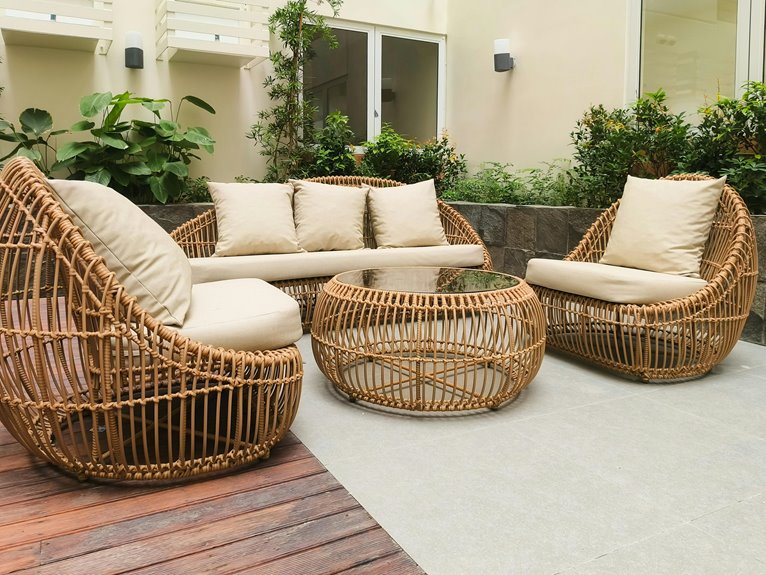
Reinforce Wicker and Rattan Furniture
As your wicker or rattan starts to sag, you can often bring back its strength via tightening any loose weave initially.
Then add support strips where the frame needs extra help, so the seat feels steadier and lasts longer.
This small fix can make the whole piece feel firm again without losing its natural look.
Tighten Loose Weave
Loose wicker or rattan can make a chair feel tired fast, but you can usually bring back its shape with a careful tightening of the weave. When you fix it promptly, you help the piece feel like part of your home again.
- Brush off dust so you can see loose spots.
- Tighten weaving gently with your fingers or a smooth tool.
- Replace bindings where ends have slipped free.
- Check each section so the pattern stays even.
Work slowly and keep the strands aligned. If one area feels weak, adjust the nearby weave too, because the frame works better when everything shares the load.
You don’t need perfect hands, just patience and a steady touch. With a little care, your seat can feel sturdy, welcoming, and ready for one more good season outside.
Add Support Strips
Add support strips to give tired wicker and rattan a stronger backbone and a more balanced feel.
You can slide reinforced webbing under the seat or along weak areas to spread weight evenly.
Should the frame still dip, add tension straps across the underside so the surface stays firm whenever you sit down.
Measure each strip carefully, then cut it to fit the frame without bunching.
As you fasten it, keep the spacing even so the repair looks neat and feels natural.
This small fix helps your furniture feel less wobbly and more welcoming for you and your guests.
With a little care, you can keep your favorite seat comfy, steady, and ready for many more lazy afternoons.
Level Uneven Patio Furniture Legs
Why does your patio chair wobble even though the cushion looks fine? You can fix that by checking each leg on a flat porch floor. Provided one leg sits high, slip in leveling blocks or base shims until the frame rests steady. That small step helps you feel settled at the table with everyone else.
- Start by rocking the chair to find the short leg.
- Slide a thin shim under that corner.
- Test the seat before adding more.
- Trim extra material so it hides neatly.
Next, match the other legs so the chair stays even. Tighten loose screws after you level it, because a stable base keeps the whole piece feeling friendly and safe.
When To Repair or Replace Patio Furniture
You can often repair patio furniture when the frame has small cracks, loose joints, or bent parts that still hold shape.
But if the damage keeps spreading, the wood is rotting, or the metal has deep rust, it’s usually time to replace it. Watching for these signs helps you avoid wasting time on a fix that won’t last.
Repairable Frame Damage
Not every sagging patio set needs to go to the curb, and that’s good news while the frame still has solid bones. You can often save it with focused repair, not a full replacement. Check the joints initially, then look for wood rot in wooden pieces and bent metal that needs structural welding. Small cracks, loose screws, and worn corner blocks usually respond well to repair.
- Tighten hardware so the frame feels steady again.
- Replace split wood before damage spreads.
- Weld clean breaks in metal for lasting support.
- Reinforce weak corners with fresh brackets or braces.
When the frame holds shape and the damage stays local, you can keep your outdoor space comfortable and familiar. That matters, because a sturdy seat helps you relax with your people without the stress of starting over.
Signs It’s Time
After you’ve checked the frame and fixed the wobble, the next question is whether the furniture still has enough life left to justify more work.
During a seasonal inspection, look for deep frame cracks, split straps, flat cushions, and upholstery smells that stay after cleaning.
If the fabric feels brittle, the foam won’t bounce back, or the seat sags again right away, repair might only buy you a little time.
You can usually save pieces with loose cushions or worn straps, because those parts replace easily.
But if rust spreads, wood rots, or the cost of parts climbs near the price of new furniture, replacement makes more sense.
Trust your eyes, your nose, and your comfort. You want pieces that welcome you back, not ones that make you keep fixing the same chair.
Prevent Patio Furniture From Sagging Again
A little routine care goes a long way in keeping patio furniture firm, level, and comfortable. You can protect your favorite seats checking them before problems settle in. Start with seasonal storage, because dry, covered spaces help frames and cushions stay in shape. Then choose cover selection that fits snugly and lets moisture escape.
- Flip cushions monthly so pressure spreads out.
- Fluff filling and smooth corners after use.
- Clean dirt and spills before they soak in.
- Keep weight centered instead of sitting on one edge.
When you handle your furniture with this kind of care, it feels like part of your outdoor home. Small habits help your whole set stay inviting, so your patio stays ready for friends, quiet mornings, and easy laughs.
Keep Patio Furniture Sturdy Longer
Keeping patio furniture sturdy for the long haul starts with the same habits that help it stay comfortable day to day. You can protect the frame through cleaning it after storms, tightening loose hardware, and checking joints whenever small wobble turns into a bigger problem.
Then you should move cushions out of damp spots and let them dry fully, because trapped moisture weakens support fast. Use protective covers whenever rain, sun, or pollen shows up, and choose ones that fit snugly, not like a sleepy blanket.
During seasonal storage, keep pieces in a dry, sheltered place so cold and moisture don’t sneak in. Finally, rotate cushions and avoid putting all the weight on one seat. These steady steps help your patio feel welcoming and solid longer.
Frequently Asked Questions
How Often Should Patio Cushions Be Fluff-Flipped for Best Shape?
Fluff flip your patio cushions once a month to help them hold their shape. Rotate them each season and plump them whenever they start to sag so your outdoor seating stays neat and comfortable.
Can I Use Cardboard as a Temporary Cushion Support Layer?
Yes, cardboard can work as a short term support layer under cushions. It can make the seat feel firmer and more stable, but it should stay dry and be replaced soon. For better long term comfort, foam or batting is a better choice.
How Do I Prevent Mildew in Outdoor Cushions During Storage?
Dry the cushions completely before storing them, then place them in airtight containers with moisture absorbers. Use a breathable cover too, and the cushions should stay in good condition until next season.
Should Vinyl Straps Be Softened Before Installing Replacement Webbing?
Yes. Soften vinyl straps before installing replacement webbing by heating them in boiling water for 3 to 4 minutes. After that, seal the edges to help the fit, making it easier to stretch and fasten them smoothly.
What Cleaning Methods Are Safest for Uv-Resistant Patio Fabrics?
You’ll clean UV resistant patio fabrics most safely by spot cleaning with a mild detergent and water. Test a small hidden area first, then blot gently, rinse thoroughly, and let the fabric air dry. This helps preserve the color and texture.