

A sharp taper can act like a steady hand guiding your cut, and that matters whenever you need clean detail without chatter.
When you choose from these 6 tapered end mills, you are not just selecting a bit, you are choosing how well your machine handles fine contours, small radii, and difficult finishes.
The right match can save time, reduce deflection, and keep your work looking crisp.
The real difference, however, is in the details that follow.
| SpeTool Assorted Tapered End Mill Carbide CNC Bit |  | Best Assorted Set | Bit Type: Tapered ball nose | Flutes: 2-flute | Material: Tungsten carbide | VIEW LATEST PRICE | Read Our Analysis |
| JERRAY Tapered Angle Ball Tip End Mills (1/4″ Shank) |  | Precision Single Bit | Bit Type: Tapered ball nose | Flutes: 2-flute | Material: Tungsten carbide | VIEW LATEST PRICE | Read Our Analysis |
| SpeTool Tapered Ball Nose Carving End Mill Bits |  | Fine Detail Pack | Bit Type: Tapered ball nose | Flutes: 2-flute | Material: Carbide | VIEW LATEST PRICE | Read Our Analysis |
| SpeTool Tapered Cone 1/8″ End Mills (5-Pack) |  | Reliable 5-Pack | Bit Type: Tapered ball nose | Flutes: 2-flute | Material: Carbide | VIEW LATEST PRICE | Read Our Analysis |
| Genmitsu Tapered Ball Nose End Mills (4pcs) | 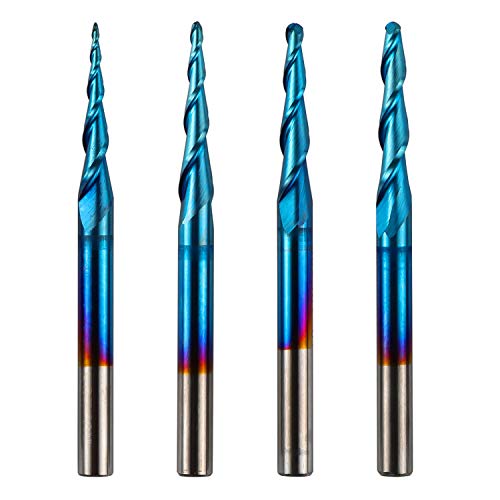 | Premium Performance | Bit Type: Tapered ball nose | Flutes: 2-flute | Material: Ultra-fine tungsten carbide | VIEW LATEST PRICE | Read Our Analysis |
| SpeTool Tapered Ball Nose End Mill Bits | 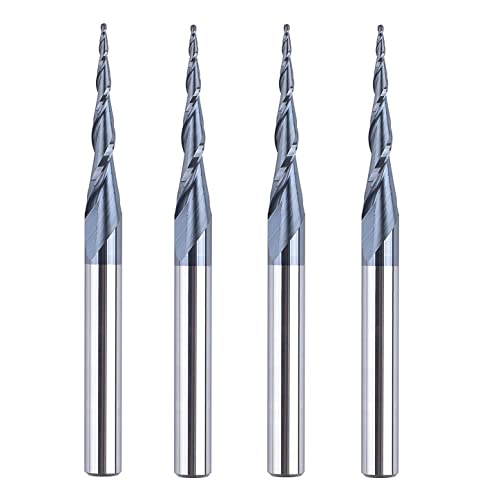 | Heavy-Duty Pick | Bit Type: Tapered ball nose | Flutes: 2-flute | Material: Tungsten carbide | VIEW LATEST PRICE | Read Our Analysis |
More Details on Our Top Picks
SpeTool Assorted Tapered End Mill Carbide CNC Bit
If you need one tapered bit that handles fine detail without feeling fragile, the SpeTool assorted tapered end mill set is a smart choice. It includes four carbide bits with R0.25, R0.5, R0.75, and R1.0 tips, so you can match the cut to the job. The 1/8 inch shank fits routers with 1/8 inch collets, and the 2 flute design helps produce clean lines. With TiAlN coating and 55 HRC hardness, you can work hardwood, MDF, acrylic, aluminum, and copper with steady control, even on small shapes.
- Bit Type:Tapered ball nose
- Flutes:2-flute
- Material:Tungsten carbide
- Coating:TiAlN
- Shank Size:1/8 in
- Pack Size:4 pcs
- Additional Feature:Assorted ball radii
- Additional Feature:15 mm cutting length
- Additional Feature:2° helix angle
JERRAY Tapered Angle Ball Tip End Mills (1/4″ Shank)
JERRAY Tapered Angle Ball Tip End Mills with a 1/4 inch shank are a smart choice when you need clean cuts, smooth curves, and steady control in one tool. The solid tungsten carbide cutter with a TiAlN coating provides durability and wear resistance. The 0.5 mm ball tip, 4.82 degree taper, and two flutes help you shape aluminum, wood, plywood, and board with less chatter. With reliable precision and efficient chip removal, this tool is well suited for fine milling, slotting, and detailed work.
- Bit Type:Tapered ball nose
- Flutes:2-flute
- Material:Tungsten carbide
- Coating:TiAlN
- Shank Size:1/4 in
- Pack Size:1 pc
- Additional Feature:4.82° taper angle
- Additional Feature:3-inch overall length
- Additional Feature:Precision held tolerance
SpeTool Tapered Ball Nose Carving End Mill Bits
SpeTool’s 5 piece Tapered Ball Nose Carving End Mill set, model W01001, is a smart choice when you need tiny, precise cuts with a clean finish. It has a 1/8 inch shank, a 0.5 mm cutting diameter, and a 5.12 degree taper that helps you shape details with control. The carbide body and TiAlN coating improve wear life, while the 2 flute design keeps chips moving. Use it for carving hardwood, MDF, acrylic, or aluminum, and you will get crisp edges with less fuss.
- Bit Type:Tapered ball nose
- Flutes:2-flute
- Material:Carbide
- Coating:TiAlN
- Shank Size:1/8 in
- Pack Size:5 pcs
- Additional Feature:5.12° taper angle
- Additional Feature:0.05 kg weight
- Additional Feature:15 mm cutting length
SpeTool Tapered Cone 1/8″ End Mills (5-Pack)
Need small, accurate cuts that still feel smooth and controlled? The SpeTool 5Pc/Pack Tapered Cone 1/8 End Mills can be a smart fit for your CNC setup. You get five carbide bits with a TiAlN finish, so they hold up well under pressure. Their 2 flutes and 4.16 degree taper help you carve clean edges and fine detail without fighting the tool. With a 1 mm cutting diameter, 15 mm cut length, and 1/8 inch shank, you can handle wood, MDF, acrylic, aluminum, and copper with confidence.
- Bit Type:Tapered ball nose
- Flutes:2-flute
- Material:Carbide
- Coating:TiAlN
- Shank Size:1/8 in
- Pack Size:5 pcs
- Additional Feature:4.16° taper angle
- Additional Feature:1.5-inch overall length
- Additional Feature:Spiral geometry design
Genmitsu Tapered Ball Nose End Mills (4pcs)
Genmitsu’s TB04A 4 piece tapered ball nose end mill set is a practical choice for clean 3D carving, small precise details, and a smooth finish. It includes four 2 flute cutters with R0.25, R0.5, R0.75, and R1.0 mm tips, so you can choose the right bit for each task. The ultra fine carbide body and Nano Blue coating help resist heat and wear, even during long runs. With a 1/8 inch shank, it fits many desktop CNC machines. Use it on wood, plastic, aluminum, or PCB work for better control and consistent results.
- Bit Type:Tapered ball nose
- Flutes:2-flute
- Material:Ultra-fine tungsten carbide
- Coating:Nano Blue
- Shank Size:1/8 in
- Pack Size:4 pcs
- Additional Feature:30° helix angle
- Additional Feature:800-minute machining durability
- Additional Feature:Ultra-fine carbide grain
SpeTool Tapered Ball Nose End Mill Bits
With a 1 mm tip, a 0.5 mm corner radius, and a slim 4.82 degree taper, these SpeTool tapered ball nose bits are a smart choice when you need tiny, precise cuts without losing control. You get four tungsten carbide bits with a TiAlN coating, so they stay sharp and handle demanding work well. Their 2 flute spiral design helps you cut smoothly in hardwood, MDF, aluminum, acrylic, and more. Since they fit 1/4 in collets, you can use them for CNC carving, engraving, mold work, and fine detail with steady confidence.
- Bit Type:Tapered ball nose
- Flutes:2-flute
- Material:Tungsten carbide
- Coating:TiAlN
- Shank Size:1/4 in
- Pack Size:4 pcs
- Additional Feature:1/4-inch collet compatible
- Additional Feature:4.82° taper angle
- Additional Feature:1-1/4-inch cutting length
Factors to Consider When Choosing Tapered End Mills
As you choose a tapered end mill, start with the taper angle and tip radius, since they determine how the tool cuts and how fine the finish can be. Then check the shank size, flute count, and coating type so the cutter fits your machine properly and handles the material without excess wear. A good match can help you avoid chatter, rough cuts, and unexpected tool behavior.
Taper Angle
Taper angle does a lot of quiet work for you, even though it does not look like the star of the show. When you choose a steeper taper, you get a stronger body near the shank, so it can handle roughing and heavier cuts with more confidence. If you need fine access for detailed finishing, a smaller taper helps you reach tight areas and keeps the tip slimmer. You also need to consider heat and chip load, because a steeper angle increases contact at depth. On 3D contours, a shallower taper can improve finish by lowering scallops, though you may need more passes. Finally, make sure the tool fits your holder, collet, and part shape, or you will fight the setup instead of the cut.
Tip Radius
The tip radius is the quiet detail that can make or break your cut. You should match it to the smallest feature in your model because a 0.25 mm tip can reach tighter concave shapes than a 1.0 mm tip. Smaller radii give you sharper detail and a cleaner finish, but they also weaken the cutter, so you will need lighter feeds and a shallower depth of cut. Larger radii add strength and help you remove material faster, and they leave smoother blends with less scallop height. Still, they cannot slip into tight corners. So, whenever you choose a tapered ball nose cutter, balance detail, speed, and tool rigidity. If the model is delicate, the right radius saves you from a broken tool and a bad day.
Shank Size
For shank size, start by matching it to your machine’s collet or chuck, because a 1/8 inch or 1/4 inch shank only works well if your toolholder can clamp it securely. Once the fit is correct, you reduce runout and prevent slippage before it affects cut quality. If you need more stiffness, choose a larger shank, since it helps reduce vibration and keeps deeper passes steadier. For fine detail work, use the smallest shank that still fits safely, but watch for added flex in narrow paths. Also check shank tolerance and concentricity, because a precision-ground shank can improve tool life and finish. Finally, confirm that your ER collet, chuck, or adapter does not weaken grip or add wobble.
Flute Count
Flute count can make or break how a tapered end mill behaves, so it is worth choosing carefully. You will often find two flutes on tapered ball nose tools because they balance chip clearance and rigidity well. This helps when you are carving small details or smoothing 3D contours. If you want a cleaner finish, three or four flutes can help, but they pack chips more tightly, so they are better for shallow cuts than deep slots. When you work in softer wood, plastic, or aluminum, one or two flutes usually move chips faster and cut with less force. Flute count also affects your feed and speed choices, so match it to your cut depth. For tight radii, two flutes are usually the best choice.
Coating Type
Choosing the right coating can change how your tapered end mill cuts, lasts, and feels in the job. If you run hot, TiAlN or AlTiN can help you hold edge strength and resist oxidation, so the tool stays steady during fast, dry, or heat-heavy cuts. For abrasive work, DLC and diamond-like coatings reduce friction and wear, though they cost more. For fine detail or soft stock, an uncoated carbide tool can keep a micro-radius sharper, since extra thickness might blur tiny geometry. Also, check coating thickness and substrate fit. A thicker layer can improve wear life, but it can also reduce the effective tip radius. Choose the finish that protects your cut without taking away the precision you need.
Material Compatibility
Material match can make or break your cut, and it often decides whether your tapered end mill feels smooth or fights you the whole way. Start with the workpiece itself. Carbide tools handle non-ferrous metals and hard stock better because they stay hard under heat and resist wear. Next, match tool HRC to the job. Use mid 50s to 60s for abrasive or hardened materials, and lower HRC for wood and plastics. Then pick a coating whenever heat and sticking become a problem. TiAlN helps in aluminum and fast metal cuts. After that, check the tip shape and radius. Small radii suit detail work, while larger ones help with roughing. Finally, choose flute count and helix angle to fit chip flow and finish.
Cutting Length
Cutting length is a key factor in a tapered end mill because it determines how deep you can cut in one pass and how stable the tool will be. Choose a cutting length that reaches your deepest feature, then allow a little extra for deflection. If you use a longer cutting length than necessary, the tool will flex more, chatter more easily, and leave a rougher finish. For fine detail, keep the unsupported overhang short so the shank stays inside the collet and the tip stays accurate. Match cutting length to your step-down plan as well. Shallow passes with a shorter cutting length often let you run faster and with a cleaner finish. When a longer cutting length is required in ductile stock, slow the feed, use climb milling, and keep coolant flowing.
Frequently Asked Questions
How Do I Prevent Chatter With Tapered End Mills?
You prevent chatter by shortening stickout, reducing feed and speed, increasing rigidity, using sharp tools, and improving workholding. You can also use climb milling and lighter passes to keep cuts stable and smooth.
Which Spindle Speeds Work Best for Tapered End Mills?
You’ll usually start tapered end mills at moderate spindle speeds, then increase gradually until the cutter runs smoothly. Too fast can overheat the tool, and too slow can cause rubbing. The best setting comes from testing and watching how the material responds.
Can Tapered End Mills Cut Hardwood and Aluminum?
Yes, you can cut both hardwood and aluminum with tapered end mills if you choose the right geometry, feed, and speed. You will get cleaner results with sharp carbide tools and proper chip evacuation.
How Often Should Tapered End Mills Be Resharpened?
Like a dull pencil, tapered end mills should be resharpened whenever the cutting edges lose sharpness, often after noticeable wear, chatter, or a poor finish. Regular inspection helps extend tool life, and sharpening before damage spreads can prevent further wear.
What Cooling Method Helps Tapered End Mills Last Longer?
You’ll usually extend tapered end mill life with high pressure coolant or a steady mist, because they remove heat and chips quickly. Use enough flow to keep the cutting edge cool, and you’ll reduce wear.
Final Thoughts
When you choose the right tapered end mill, the cut can feel remarkably precise. You will see the tool move through detail like a pencil tracing a clean line on glass, and that is no accident. Smaller tips help you shape fine features with care, while larger radii provide greater stability and strength. Trust the fit, monitor the overhang, and let the right bit handle the quiet, accurate work you are aiming for.