
I want to test a simple theory: are the best nylon 3D printing filaments for 2026 really the ones that balance strength, heat resistance, and moisture control?
I’ve narrowed the field to a few carbon fiber, glass fiber, and standard nylon options, plus one dryer that can change the result. If you care about reliable functional parts, the differences here might surprise you.
| Polymaker Fiberon PA612-CF15 Carbon Fiber Nylon Filament |  | Best Overall | Material Type: PA612 CF nylon | Diameter: 1.75 mm | Spool Weight: 0.5 kg | VIEW LATEST PRICE | Read Our Analysis |
| Polymaker Fiberon PA6-GF Glass Fiber Nylon Filament | 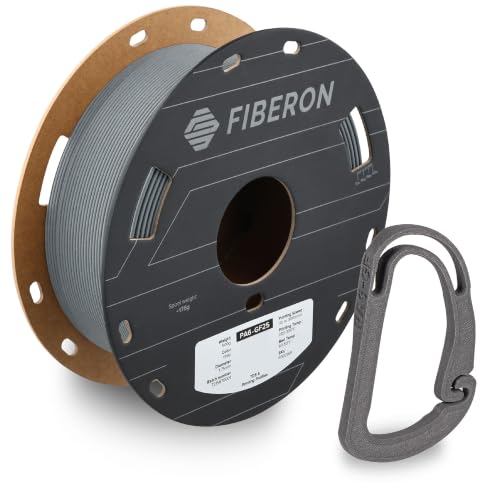 | Best for Stiffness | Material Type: PA6 GF nylon | Diameter: 1.75 mm | Spool Weight: 0.5 kg | VIEW LATEST PRICE | Read Our Analysis |
| Polymaker Fiberon PA6-CF20 Carbon Fiber Nylon Filament | 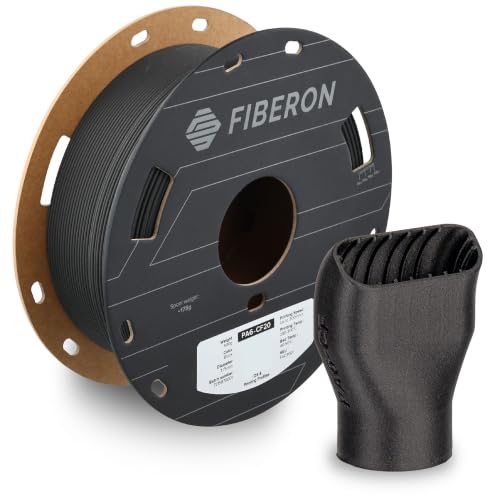 | Best Budget Pick | Material Type: PA6 CF nylon | Diameter: 1.75 mm | Spool Weight: 0.5 kg | VIEW LATEST PRICE | Read Our Analysis |
| Creality Filament Dryer Box 2.0 for 3D Printing |  | Best Accessory | Material Type: Filament dryer | Diameter: 1.75/2.85 mm | Spool Weight: 1 spool | VIEW LATEST PRICE | Read Our Analysis |
| OVERTURE Nylon 3D Printer Filament 1.75mm 1kg Spool |  | Best Classic Nylon | Material Type: Nylon PA blend | Diameter: 1.75 mm | Spool Weight: 1 kg | VIEW LATEST PRICE | Read Our Analysis |
| Creality Hyper PLA 3D Printer Filament (Black) |  | Best High-Speed PLA | Material Type: PLA | Diameter: 1.75 mm | Spool Weight: 1 kg | VIEW LATEST PRICE | Read Our Analysis |
| Creality Hyper PA612-CF Carbon Fiber Nylon Filament |  | Best Premium Nylon | Material Type: PA612 CF nylon | Diameter: 1.75 mm | Spool Weight: 1 kg | VIEW LATEST PRICE | Read Our Analysis |
More Details on Our Top Picks
Polymaker Fiberon PA612-CF15 Carbon Fiber Nylon Filament
If you need a nylon filament that handles demanding parts with ease, Polymaker Fiberon PA612-CF15 is a strong option. It is a 1.75 mm black, carbon fiber reinforced nylon designed for high strength, low moisture sensitivity, and excellent dimensional stability. It prints cleanly on most consumer and entry level printers, with a broad temperature range and strong first layer adhesion. You can run it quickly without jamming, warping, or distortion. Use it for industrial tooling, automotive parts, and end use components. The tangle free, vacuum sealed, desiccated spool also helps you store and print it reliably.
- Material Type:PA612 CF nylon
- Diameter:1.75 mm
- Spool Weight:0.5 kg
- Color:Black
- Printer Compatibility:Mainstream printers
- Print Focus:High-speed
- Additional Feature:Low moisture sensitivity
- Additional Feature:Fixed-hole spool guidance
- Additional Feature:Reinforced hard edge coating
Polymaker Fiberon PA6-GF Glass Fiber Nylon Filament
Polymaker Fiberon PA6-GF glass fiber nylon filament is a strong choice when stiffness and durability matter most. It features a glass fiber reinforced Nylon 6 blend that stays stiff, strong, and heat resistant while maintaining good layer adhesion. It prints well on most mainstream printers, including many entry level models, and Polymaker has tuned it for high speed printing. The warp resistant design helps you produce reliable parts such as bicycle pedals, brackets, jigs, drone frames, prosthetics, and handles. This 1.75 mm grey, 0.5 kg spool arrives tangle free, vacuum sealed, and ready to store.
- Material Type:PA6 GF nylon
- Diameter:1.75 mm
- Spool Weight:0.5 kg
- Color:Grey
- Printer Compatibility:Mainstream printers
- Print Focus:High-speed
- Additional Feature:Glass fiber reinforced
- Additional Feature:Warp-free design
- Additional Feature:Fully recycled spool
Polymaker Fiberon PA6-CF20 Carbon Fiber Nylon Filament
When you need tough nylon on a budget, Fiberon PA6-CF20 delivers carbon fiber performance without the premium price. You get a 1.75mm PA6-CF20 composite with 80% PA and 20% chopped carbon fiber, which improves stiffness, strength, and heat resistance. Its heat deflection temperature reaches 215°C, and it prints well on most mainstream and entry-level machines. Use it for bicycle pedals, brackets, jigs, fixtures, drone frames, prosthetics, or handles. The 0.5kg spool arrives vacuum sealed with desiccant, and the recycled box plus hard edge coating help protect the filament during storage and use.
- Material Type:PA6 CF nylon
- Diameter:1.75 mm
- Spool Weight:0.5 kg
- Color:Black
- Printer Compatibility:Mainstream printers
- Print Focus:High-speed
- Additional Feature:20% chopped carbon fibers
- Additional Feature:Heat deflection 215°C
- Additional Feature:Cost-effective composite
Creality Filament Dryer Box 2.0 for 3D Printing
For moisture-prone nylon spools, this dryer box is a practical accessory you will actually use. It offers 360° hot-air circulation, a built-in fan, and fast heating up to 65°C in 15 minutes, so you can dry filament quickly while protecting it with insulation and an anti-scald design. The screen, knob, humidity readout, and timer make setup simple, and no assembly is required. You can adjust the temperature from 45°C to 65°C and the time from 0 to 24 hours. It fits most 1 kg spools and supports nylon, PLA, PETG, TPU, ABS, and more.
- Material Type:Filament dryer
- Diameter:1.75/2.85 mm
- Spool Weight:1 spool
- Color:White/black
- Printer Compatibility:Most FDM printers
- Print Focus:Drying support
- Additional Feature:360° hot-air circulation
- Additional Feature:Real-time humidity monitoring
- Additional Feature:45°C–65°C temperature range
OVERTURE Nylon 3D Printer Filament 1.75mm 1kg Spool
OVERTURE’s 1.75 mm nylon spool suits makers who want classic nylon performance with easier printing. You get a black PA copolymer of nylon 6 and 6.6 that delivers strength, toughness, impact resistance, and heat resistance up to 180˚C. Its +/- 0.02 mm tolerance helps you print reliably on most FDM machines, while excellent layer adhesion and low shrinkage reduce trouble. For best bed hold, use PVA glue, and store the moisture-sensitive spool sealed after use. The 1 kg reel also includes a size gauge, a viewing hole, and a smoother feeding design.
- Material Type:Nylon PA blend
- Diameter:1.75 mm
- Spool Weight:1 kg
- Color:Black
- Printer Compatibility:Most FDM printers
- Print Focus:Smooth printing
- Additional Feature:+/- 0.02mm accuracy
- Additional Feature:PVA glue required
- Additional Feature:2-year warranty
Creality Hyper PLA 3D Printer Filament (Black)
Creality’s Hyper PLA Black is ideal when speed, precision, and automation matter most. You can print at up to 600 mm/s with reliable extrusion, ±0.03 mm dimensional accuracy, and strong layer adhesion. The 1.75 mm RFID spool works with Creality CFS systems, the K2 Plus Combo, the Hi Combo, and many high-speed PLA printers. Once recognized, it helps your printer optimize settings automatically and reduce waste. You also get a neatly wound, anti-tangle spool that helps minimize clogs and stringing. It is tougher than traditional PLA, with solid impact resistance, good flexibility, and a smooth, professional finish for prototypes, functional parts, and larger models.
- Material Type:PLA
- Diameter:1.75 mm
- Spool Weight:1 kg
- Color:Black
- Printer Compatibility:Most 3D printers
- Print Focus:High-speed
- Additional Feature:RFID recognition
- Additional Feature:Up to 600mm/s
- Additional Feature:Automatic setting optimization
Creality Hyper PA612-CF Carbon Fiber Nylon Filament
Creality Hyper PA612-CF delivers premium nylon performance for engineers who need rigid, reliable parts. You get a 1.75 mm, 1 kg black carbon fiber reinforced nylon filament that balances strength, toughness, and lightweight rigidity. Its PA612 base absorbs less moisture than standard nylon, so you’ll see better dimensional stability, less warping, and fewer layer splits in humid conditions. It prints smoothly at 280 to 300°C with an 80°C bed, producing accurate, durable parts with minimal post-processing. RFID smart printing also helps Creality Filament System load settings automatically, saving time and reducing waste.
- Material Type:PA612 CF nylon
- Diameter:1.75 mm
- Spool Weight:1 kg
- Color:Black
- Printer Compatibility:CFS-enabled printers
- Print Focus:Smart printing
- Additional Feature:Lower moisture absorption
- Additional Feature:RFID smart integration
- Additional Feature:280–300°C nozzle range
Factors to Consider When Choosing Nylon 3D Printing Filament
When choosing nylon 3D printing filament, I first look at the material composition because it affects how the filament performs in real prints. I also check moisture resistance, strength and stiffness, print temperature range, and warping control so the filament matches the needs of the project. These factors can determine whether the result is a clean, durable part or a frustrating print.
Material Composition
Material composition is one of the biggest factors I look at because nylon filaments are not all built on the same base resin. I pay attention to whether the filament uses PA6, PA66, PA612, or a Nylon 6/Nylon 6.6 copolymer, since each one affects strength, toughness, heat resistance, and print behavior. When I need a stiffer part, I often choose carbon fiber reinforced nylon. When I want strong, heat resistant parts with reliable layer adhesion, I lean toward glass fiber reinforced nylon. The fiber percentage matters too, whether it is 15% carbon fiber, 20% carbon fiber, or 25% glass fiber, because it changes rigidity and thermal performance. I also consider PA612 when I want a more stable formulation than PA6 in humid conditions.
Moisture Resistance
Beyond resin type and fiber reinforcement, I always check how a nylon filament handles moisture. Nylon is highly moisture sensitive, so I keep it sealed and dry before and after printing. If a spool sits in open air, I assume it may need drying again. I prefer lower absorption formulations because they stay more stable in humid rooms and usually print with fewer issues such as stringing, clogging, and weak layer bonding. Once nylon absorbs water, I have seen it warp, delaminate, and extrude unevenly, which hurts dimensional accuracy and part quality. Drying the filament before use often improves extrusion consistency, surface finish, and initial layer adhesion. For me, moisture resistance is not optional; it is a practical requirement for reliable nylon prints.
Strength And Stiffness
Strength and stiffness are the first things I evaluate whenever I need a nylon filament for functional parts. I usually prefer carbon fiber or glass fiber reinforced nylon because it offers much higher rigidity and load bearing strength than unfilled material. That added fiber content helps parts resist bending, twisting, and deformation, which matters when I am printing brackets, mounts, or fixtures. If I need something lightweight but still tough, I lean toward carbon fiber filled nylon for its strong strength to weight balance. When I want maximum stiffness and heat resistance, I choose glass fiber reinforced nylon. For torsional, tensile, or impact loaded parts, I also check whether the filament advertises strong layer adhesion and high mechanical performance, since those traits directly improve real world durability.
Print Temperature Range
Whenever I choose nylon filament, print temperature is one of the first settings I check because most nylons need a much hotter nozzle than PLA, often in the 240 to 300°C range depending on the blend. I look for a filament with a wider usable window since that gives me room to adjust flow, layer bonding, and surface finish for my printer and part shape. If I print with a higher temperature blend, I usually get steadier extrusion and fewer under-extrusion issues during fast jobs, especially on all-metal hotends. I also stay inside the maker’s recommended range because too cool can weaken adhesion, while too hot can add stringing and surface defects. I pair that with a heated bed around 70 to 100°C for better first-layer control.
Warping Control
After I’ve set the nozzle temperature, I pay close attention to warping control because nylon can curl, lift, or pull off the bed if the print is not stable from the start. I look for filament with low moisture content, since absorbed water can cause uneven extrusion, extra shrinkage, and lifted edges. I also favor nylon that shrinks less and holds its dimensions well because it stays flatter as it cools. A strong initial layer and reliable bed adhesion help me fight the internal stresses that try to lift corners. I get better results in a controlled enclosure with steady nozzle and bed heat. Whenever I want extra stiffness, I choose fiber-reinforced nylon, which often resists deformation better than unfilled material.
Layer Adhesion
Whenever I choose nylon filament for parts that need strong bonds between layers, I start with dryness because absorbed moisture can weaken adhesion and make extrusion inconsistent. I dry the spool before printing and keep it sealed, since wet nylon can string, clog, and separate between layers. I also favor higher nozzle temperatures, often near 280 to 300°C, because they help the polymer fuse more completely. For added reliability, I look at nylon copolymers like PA6/PA6.6 or PA612, which usually bond more consistently and resist warping during cooling. If I need stiffness, I might use carbon fiber or glass fiber reinforced nylon, knowing that it can still layer well, though it often gives up a bit of bond strength. A heated bed helps me reduce delamination too.
Printer Compatibility
When I choose nylon filament for a printer, I first check the basics. The diameter has to match the machine, and 1.75 mm is the most common size for many FDM setups. I also verify the nozzle and bed temperatures, because some blends need about 280 to 300°C at the nozzle and roughly 80°C on the bed, while others print at lower settings. Since nylon absorbs moisture, I keep it dry and use a filament dryer when needed to avoid clogging. I make sure my printer’s feeder and extruder can handle it, especially at higher speeds, where smooth feeding matters. If my printer supports smart material recognition, I choose filament that can share its settings so I reduce setup errors and waste.
Application Requirements
I start by matching the nylon filament to the part’s real job, because load type matters a lot. If you need high torsional, tensile, or impact strength, I would lean toward reinforced nylon composites instead of standard nylon. For brackets, jigs, fixtures, drone frames, handles, and bicycle pedals, I look for stiffness, durability, and strong layer adhesion. When the part will face heat or heavy mechanical stress, I choose nylon with solid thermal performance and high heat resistance, and some reinforced grades stay reliable around 215°C. For end-use parts and industrial tooling, I also watch dimensional stability and warping so tolerances stay tight. In humid settings, I prefer lower-moisture-absorption grades, since moisture can hurt print quality and long-term reliability.
Frequently Asked Questions
How Do I Store Nylon Filament to Prevent Moisture Absorption?
I’d store nylon filament in an airtight bag or dry box with fresh desiccant. I once left a spool out overnight, and it turned brittle and bubbly. Keep it sealed, cool, and dry between prints.
Which Nylon Filament Works Best for Flexible Functional Parts?
I’d choose PA12 nylon for flexible functional parts because it stays tough, bends more than PA6, and prints reliably. If you need extra snap and impact resistance, I’d pick a PA12 blend with TPU.
Do I Need an Enclosure for Printing Nylon Successfully?
Yes, I do. An enclosure helps a lot, like a cozy workshop against winter’s bite. I would use one to keep nylon warm, reduce warping, and improve layer bonding. You will get stronger parts and fewer failed prints.
Can Nylon Filament Be Post-Processed After Printing?
Yes, I can post-process nylon prints. I sand, dye, drill, tap, and machine them, and I anneal parts when I need more strength. You can also vapor-smooth certain blends, but I would test first.
How Often Should I Replace a Filament Dryer Desiccant?
I replace my filament dryer desiccant every 2 to 6 months, depending on humidity and use. If I notice damp filament, weaker drying, or saturated beads, I swap it sooner so prints stay consistent.