

A single branch can slow a whole afternoon, like one loose bolt on a ladder. When you need to trim higher limbs without overbuying or overreaching, the seven best manual pole saws for 2026 give you a clear place to start.
You will see lightweight picks, heavy-duty options, and ladder-free tools, but the right choice depends on more than just length, and that is where it gets interesting.




More Details on Our Top Picks
Notch Pole Saw Set with Chrome-Plated Blade (40209)
If you want a lightweight manual pole saw that gives you reach without the hassle of a powered tool, the Notch 40209 is a strong pick. It includes two 6-foot yellow fiberglass poles, a 15-inch chrome-plated blade, and a hook saw head for pulling down loose limbs. The 6-tooth, impulse-hardened blade cuts wood with a fast pull action and handles branches up to 8 inches wide. At 6.17 pounds, it is easy to manage, but you should not use it near energized lines because the poles can conduct electricity.
- Reach:12 ft
- Power Source:Manual
- Blade Material:Steel
- Pole Material:Fiberglass
- Blade Length:15 in
- Warranty:Limited lifetime
- Additional Feature:Fast pull-cutting teeth
- Additional Feature:Hook saw head
- Additional Feature:Interlocking fiberglass poles
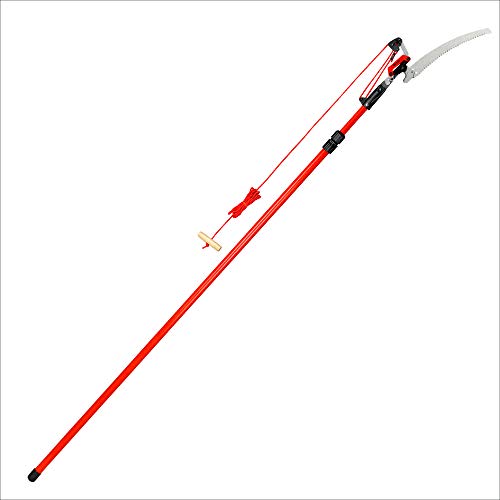
Corona tools TP 4210 DualLink Tree Saw and Pruner 10 Feet,Red
The Corona Tools TP 4210 DualLink Tree Saw and Pruner is a strong choice if you need extra reach and cutting power without using a motorized tool. It features a dual-link compound pulley system that increases leverage and delivers up to 3 times more cutting power. The PTFE-coated, fully heat-treated steel blade handles branches up to 8 inches, while the pruning blade tackles limbs up to 1 inch. Two 6-foot fiberglass sections let you work at different lengths, and you can combine them for 10 feet or use them separately for lighter jobs.
- Reach:10 ft
- Power Source:Manual
- Blade Material:Cutlery steel
- Pole Material:Fiberglass
- Blade Length:8 in saw / 1 in pruner
- Warranty:Not specified
- Additional Feature:Dual-link pulley system
- Additional Feature:3x cutting power
- Additional Feature:Separate pruner blade
Corona TP 6870 MAX RazorTOOTH DualCOMPOUND Action 14-ft. Tree Pruner
Built for heavy-duty orchard pruning and high-reach branch cutting, the Corona TP 6870 MAX RazorTOOTH DualCOMPOUND Action 14-ft. tree pruner gives you serious reach and cutting power. You can handle thick limbs with its compound-action design, steel blade, and curved 13-inch RazorTOOTH saw blade. The 24-inch foam grip helps you stay comfortable and steady, while the exclusive PowerGlide rope pull system keeps operation smooth. If you need a manual pole saw for demanding work, this one delivers. It is backed by a limited lifetime warranty, too.
- Reach:14 ft
- Power Source:Manual
- Blade Material:Steel
- Pole Material:Not specified
- Blade Length:13 in
- Warranty:Limited lifetime
- Additional Feature:RazorTOOTH saw blade
- Additional Feature:Foam grip handle
- Additional Feature:PowerGlide rope system
CAMPNDOOR High Limb Rope Saw with Carrying Case
With its 53-inch rope chain and 25-foot ropes, the CAMPNDOOR High Limb Rope Saw is a strong choice when you need to cut high branches without climbing a ladder. It is a hand-powered, double-sided saw with 68 teeth, TIGERClaw and BULLDOZER design, and 360-degree cutting action for cleaner cuts. The ergonomic handles help you pull smoothly, and the lightweight 2.2-pound build makes it easy to carry. It also includes a case, gloves, a sharpening tool, and a limited lifetime warranty. It is ideal for yard work, camping, and firewood prep.
- Reach:53 in saw / 25 ft reach
- Power Source:Hand powered
- Blade Material:65Mn steel
- Pole Material:Not specified
- Blade Length:53 in
- Warranty:Limited lifetime
- Additional Feature:360 cutting action
- Additional Feature:TIGERClaw teeth
- Additional Feature:Carrying case included
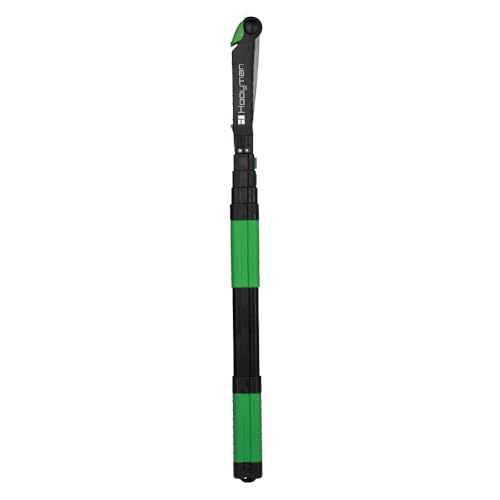
Hooyman Extendable Tree Saw with Telescoping Pole
Hooyman’s Extendable Tree Saw is a good choice if you want a manual pole saw that delivers plenty of reach in a compact tool. It extends to 10 feet and collapses to just 28 inches. The tool includes an I-beam aluminum pole, a cork handle with a no-slip H-Grip, and a wrist lanyard for better control. The 7-inch SK5 steel blade has six impulse-hardened teeth and a lock-back design. You can trim branches from the pole or detach the saw for hand use. At 4 pounds, it is easy to carry, and the limited lifetime warranty adds confidence.
- Reach:10 ft
- Power Source:Manual
- Blade Material:SK5 steel
- Pole Material:Aluminum
- Blade Length:7 in
- Warranty:Limited lifetime
- Additional Feature:Telescoping extension pole
- Additional Feature:Detachable handsaw
- Additional Feature:No-slip H-Grip
27-Foot Manual Tree Pole Pruner with Extendable Saw
When you need to trim tall branches from the ground, the 27-foot manual tree pole pruner with extendable saw is a practical choice. It lets you reach high limbs without climbing a ladder, bending, or kneeling. The epoxy resin pole is lightweight, durable, and corrosion resistant, while the alloy steel handle and 14-inch high hardness blade provide control and strength. The hardened carbon steel jaws use pulley assisted spring action to shear or saw branches up to 4 inches wide. It installs quickly on a 25 mm telescopic rod for safer yard, garden, and forestry work.
- Reach:27 ft
- Power Source:Manual
- Blade Material:Alloy steel
- Pole Material:Epoxy resin
- Blade Length:14 in
- Warranty:Not specified
- Additional Feature:Spring-action pruning jaws
- Additional Feature:25 mm rod compatibility
- Additional Feature:Adjustable height reach
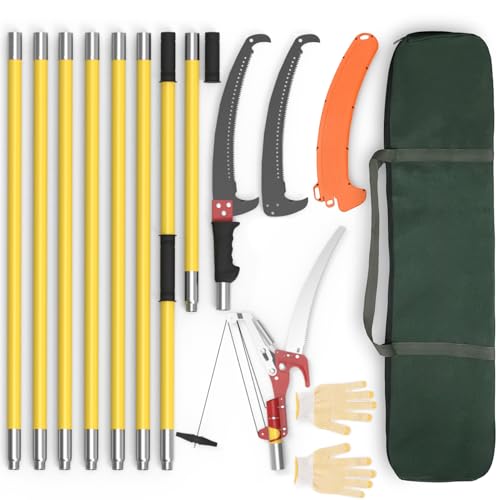
Pole Saw Tree Trimmer Extendable 7.3-27 ft
The LETYANGER Pole Saw Tree Trimmer is a practical choice for anyone who needs a manual, extendable tool to reach high branches without a motor. You can assemble its seven epoxy resin poles to extend from 7.3 to 27 feet, or use about 20 feet with six poles for easier control. The 65 Mn steel blade cuts branches, twigs, and crossings cleanly, while the pruner head adds flexibility. A pulley helps change pulling direction, and the hook knife clears debris. At full length, it weighs 9.5 pounds, so good support is recommended.
- Reach:7.3–27 ft
- Power Source:Manual
- Blade Material:Alloy steel 65 Mn
- Pole Material:Epoxy resin
- Blade Length:Not specified
- Warranty:Limited warranty
- Additional Feature:Spare saw included
- Additional Feature:Pulley system
- Additional Feature:Back support recommended
Factors to Consider When Choosing Manual Pole Saws
Whenever you choose a manual pole saw, first consider reach and length so you can trim safely from the ground. You’ll also want the right blade type, pole material, and cutting capacity for the branches you handle. Do not overlook weight and balance, since a tool that feels steady in your hands is easier to control.
Reach And Length
Reach matters most when you are choosing a manual pole saw, because you need enough length to safely cut target branches from the ground without overreaching. Check the working reach, not just the advertised maximum, since some tools lose practical length once you assemble every section. Manual models commonly range from about 10 feet to 27 feet, often through telescoping poles or multiple sections. A 2 section, 12 foot setup could suit lighter jobs, while a 7 pole system can reach much higher. Keep weight in mind too, because very long poles can weigh about 9.5 pounds and feel tiring overhead. Whenever you will carry it often, look for a collapsed length under 3 feet so you can store and transport it more easily between tasks.
Blade Type
Blade type determines what you can cut and how efficiently you will do it, so match it to the branches you handle most often. When you mainly trim limbs around 1 inch thick, a pruning blade gives you faster, cleaner control. For larger branches, choose a saw blade rated for cuts up to about 8 inches in diameter. Teeth also matter: impulse hardened, fast pull cut teeth, or 4 edge teeth, can speed each stroke and hold up longer. Blade shape affects feel too. Rectangular blades are common, while curved blades often bite harder into wood. Look for tough blade materials like carbon steel, SK5, or 65Mn alloy steel, and choose chrome plating or PTFE when you want better rust resistance and less sap buildup outdoors.
Pole Material
Pole material shapes how easy a manual pole saw is to handle, how stable it feels overhead, and how safe it is around power sources. You will often see fiberglass because it is light, strong, and easy to swing, but you should not trust it near energized lines, and hollow sections can hold moisture. Aluminum gives you a rigid, lightweight feel that works well on extendable and telescoping tools if you want quick control. Epoxy resin can add bearing strength and corrosion resistance for outdoor use. High strength composites improve stability on long reach tools, though extra length can add flex and weight. If you compare options, weigh stiffness, corrosion resistance, electrical safety, and total mass so you can choose a pole that stays controllable and durable.
Cutting Capacity
Cutting capacity tells you the largest branch a manual pole saw can handle, so it should match the kind of pruning you plan to do. If you mainly trim small shoots, a pruner blade with about a 1 inch limit might be enough. For larger limbs, choose a saw head rated for thicker wood, often up to 8 inches. You will usually get more capacity from longer blades, coarse impulse hardened teeth, or compound action designs that help you cut with less effort. Check the stated branch diameter carefully, since pruning jaws suit smaller branches and saw blades suit bigger ones. Select a rating that leaves some margin below your expected branch size, because forcing oversized wood through the tool can slow you down and make each cut less safe.
Weight And Balance
Weight and balance matter because you may hold a manual pole saw overhead for long periods, and a lighter tool is easier to control and less tiring to use. You’ll find models that weigh as little as 2.2 lb, while others can reach about 9.5 lb at full extension, so the difference is significant. Balance is just as crucial. Long pole sections can feel front-heavy, and a tool that stays steady between your hands helps you work with less strain. When you choose a telescoping or multi-section saw, check how it feels at its intended length, since the center of gravity can shift as it extends. Fiberglass and epoxy resin poles often help, since they are strong and relatively lightweight.
Safety Features
Beyond weight and balance, safety features should be a top priority whenever you choose a manual pole saw. You should favor fiberglass or resin poles because they do not conduct electricity like metal or hollow reinforced poles can. That matters whenever you are working near energized lines. Look for lock-back blades, positive extension locks, and secure interlocking sections so the saw stays put while you cut. Blade details count too. Hook heads help pull loose limbs down, twig-removal hooks improve control, and impulse-hardened or fully heat-treated teeth cut more predictably. A lighter saw, usually 2 to 6 pounds, can reduce fatigue and improve handling at height. Also, check for useful extras such as a sheath, carrying case, gloves, or a wrist lanyard for safer transport and use.
Warranty Coverage
When you compare manual pole saws, warranty coverage should be part of the decision because it can show how much protection you really get after the purchase. Look for coverage that names defects in materials and workmanship, since that is the standard protection you will usually receive. A limited lifetime warranty can be more valuable than a short term policy, but you still need to read the terms closely. Make sure the warranty covers the blades, poles, ropes, and locking or pulley parts, not just the frame. Also check exclusions for wear items, misuse, poor assembly, or off-label use because they can void claims. Keep your receipt and product ID handy, since you will need them when you file a warranty request.
Frequently Asked Questions
How Do I Safely Transport a Manual Pole Saw in My Vehicle?
Secure the blade with its cover, collapse the pole, and strap it flat in your cargo area. This helps prevent shifting, scratching, or injury. Do not leave it loose inside your vehicle.
Can Manual Pole Saws Cut Wet or Frozen Branches Effectively?
Wet branches are easier to cut than frozen ones, but the cut may be less clean. You will get better results with sharp, dry-pruning teeth, steady strokes, and patience as sap or ice builds up.
What Maintenance Extends the Blade’s Lifespan the Most?
You’ll extend the blade’s life most by cleaning it after each use, drying it fully, and applying a light coat of oil. You should also sharpen the teeth promptly, avoid cutting dirt, and store it safely.
Are Replacement Blades Widely Available for Most Pole Saw Brands?
Yes, replacement blades are usually available for most major pole saw brands, but availability depends on the model. Check the exact part number first, because older or less common saws can be harder to source.
How Do I Store a Telescoping Pole Saw to Prevent Damage?
90% of tool damage happens in storage. Collapse the pole, clean and dry the blade, loosen the tension, and hang it indoors. Do not leave it loaded, wet, or leaning where it can bend.