

If you are comparing inverter generators for 2026, you are probably balancing power, noise, runtime, and how safely they will run your essentials.
The right unit can keep your home, RV, or sensitive electronics powered without adding much hassle.
But not every model handles those demands the same way, and a few stand out for very different reasons.
Here is what separates the best from the rest.
| Westinghouse 11000 Peak Watt Dual Fuel Inverter Generator |  | Best Overall | Power Output: 9000W running / 11000W peak | Fuel Type: Gasoline / propane | Starting: Remote electric / push-button / recoil | VIEW LATEST PRICE | Read Our Analysis |
| WEN 3600-Watt Portable Inverter Generator (56360i) |  | Best Lightweight Pick | Power Output: 2900W rated / 3600W surge | Fuel Type: Gasoline | Starting: Electric start | VIEW LATEST PRICE | Read Our Analysis |
| Oxseryn 4400W Gas Inverter Generator with ECO Mode |  | Best Mid-Range | Power Output: 3400W running / 4400W peak | Fuel Type: Gasoline | Starting: Electronic ignition | VIEW LATEST PRICE | Read Our Analysis |
| Oxseryn 2800-Watt Portable Inverter Generator for Home Backup |  | Best Compact Pick | Power Output: 2000W running / 2800W peak | Fuel Type: Gasoline | Starting: Cold start | VIEW LATEST PRICE | Read Our Analysis |
| ERAYAK 4500W Portable Inverter Generator for Home Use |  | Best For RVs | Power Output: 3500W running / 4500W peak | Fuel Type: Gasoline | Starting: Electric start | VIEW LATEST PRICE | Read Our Analysis |
| 2550-Watt Portable Inverter Generator for Home Use | 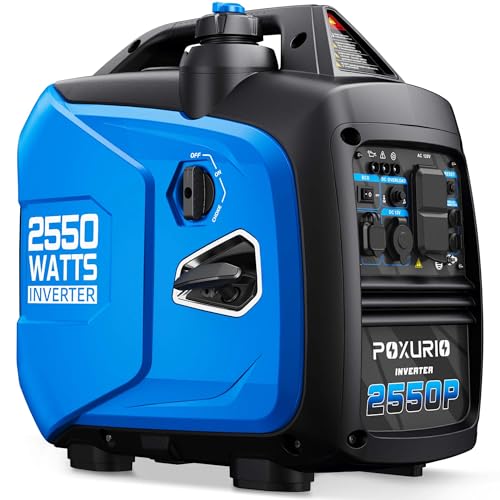 | Best Simple Backup | Power Output: 2550W starting | Fuel Type: Gasoline | Starting: Not specified | VIEW LATEST PRICE | Read Our Analysis |
| WEN 6800-Watt Dual Fuel Portable Inverter Generator (DF680iX) |  | Best Dual Fuel | Power Output: 4500W running / 6800W surge | Fuel Type: Gasoline / LPG | Starting: Keyless electric / recoil | VIEW LATEST PRICE | Read Our Analysis |
More Details on Our Top Picks
Westinghouse 11000 Peak Watt Dual Fuel Inverter Generator
The Westinghouse 11000 Peak Watt Dual Fuel Inverter Generator is a strong choice if you want heavy duty backup power with the flexibility of gasoline or propane. It delivers 9,000 running watts on gas or 8,100 on propane, plus clean power under 3% THD for sensitive electronics. Its 9.8 gallon tank can run up to 17 hours. Start it remotely with the key fob, push button, or recoil. You also get GFCI outlets, transfer switch ready ports, a CO sensor, and an LED display. It is EPA compliant, factory checked, and backed by a 3 year limited warranty.
- Power Output:9000W running / 11000W peak
- Fuel Type:Gasoline / propane
- Starting:Remote electric / push-button / recoil
- Outlets:120V / 240V transfer-ready outlets
- Runtime:Up to 17 hours
- Safety:CO sensor, low-oil shutdown
- Additional Feature:17-hour runtime
- Additional Feature:Rotating digital display
- Additional Feature:Parallel capable
WEN 3600-Watt Portable Inverter Generator (56360i)
With a 149cc engine delivering up to 3600 surge watts and 2900 rated watts, the WEN 56360i is a strong choice for portable backup power at campsites, tailgates, or around the home. Its clean output lets you charge smartphones, tablets, and laptops with confidence. At just 46 pounds, it is easy to move and store. The fuel shutoff feature helps burn off leftover gas and extend generator life. It also includes two 120V outlets, an RV plug, a 12V DC port, two USB ports, and a three-year warranty for added peace of mind.
- Power Output:2900W rated / 3600W surge
- Fuel Type:Gasoline
- Starting:Electric start
- Outlets:120V, RV, DC, USB
- Runtime:Not specified
- Safety:Fuel shutoff
- Additional Feature:Ultralight body
- Additional Feature:46 lb weight
- Additional Feature:Fuel shutoff feature
Oxseryn 4400W Gas Inverter Generator with ECO Mode
Oxseryn’s EDOG10 is a strong pick if you want a portable inverter generator for RV camping or backup power without much noise. It delivers 4400 peak watts and 3400 running watts, plus a 120V RV port, two AC outlets, and a 12V DC port. Its ECO mode can extend runtime to up to 14 hours at 25% load from the 2-gallon tank. At under 72 dBA, it remains fairly quiet. It also includes cold start tech, low oil shutdown, overload protection, and a 56-pound frame with a 1-year warranty.
- Power Output:3400W running / 4400W peak
- Fuel Type:Gasoline
- Starting:Electronic ignition
- Outlets:120V AC, 12V DC, RV
- Runtime:Up to 14 hours
- Safety:Low-oil shutdown, overload protection
- Additional Feature:ECO mode
- Additional Feature:Under 72 dBA
- Additional Feature:56 lb weight
Oxseryn 2800-Watt Portable Inverter Generator for Home Backup
When you need a compact backup power option for essential home use, the Oxseryn 2800-Watt Portable Inverter Generator is a practical choice. It delivers 2800 peak watts, 2000 running watts, and less than 3% THD, making it suitable for sensitive electronics. It can power phones, laptops, drones, cameras, and even a charging station through two AC outlets, USB, Type-C, and 12V DC ports. Its 79.8cc 4-stroke engine, ECO mode, and fuel shutoff help extend the 1.1-gallon tank to 9 hours at 25% load. At under 58 dBA and 40 pounds, it is easy to move, EPA compliant, and backed by a 1-year warranty.
- Power Output:2000W running / 2800W peak
- Fuel Type:Gasoline
- Starting:Cold start
- Outlets:120V AC, DC, USB, Type-C
- Runtime:Up to 9 hours
- Safety:Low-oil shutdown, overload protection
- Additional Feature:Under 58 dBA
- Additional Feature:39-40 lb weight
- Additional Feature:Type-C port
ERAYAK 4500W Portable Inverter Generator for Home Use
ERAYAK’s 4500W portable inverter generator is a strong choice for homeowners who want reliable backup power without the usual noise and bulk. It delivers 3,500 watts of running power, 4,500 watts of peak power, and clean 120V inverter output with low THD for laptops, TVs, CPAP machines, and other sensitive equipment. It operates at just 60.5 dB, and ECO Mode helps extend fuel life for up to 16 hours. You will also appreciate the electric start, 55-pound design, parallel-ready outlets, circuit protection, and included support.
- Power Output:3500W running / 4500W peak
- Fuel Type:Gasoline
- Starting:Electric start
- Outlets:120V AC, 30A, DC, USB
- Runtime:16 hours
- Safety:Low-oil shutdown, breakers
- Additional Feature:0.2% THD
- Additional Feature:Wheel kit compatibility
- Additional Feature:Telescoping handle compatibility
2550-Watt Portable Inverter Generator for Home Use
Need dependable backup power without the roar of a traditional generator? Choose a 2550-watt portable inverter generator that delivers 2550W of starting power for everyday appliances, tools, and home backup. It runs on gasoline, so you can store fuel easily and buy it almost anywhere. Its 4L tank can provide up to 10 hours at 25% load. Thanks to advanced sound reduction, it stays quiet at 59 decibels. Strong wheels and a carbon fiber pull rod make it easy to move for camping, emergencies, and outdoor use.
- Power Output:2550W starting
- Fuel Type:Gasoline
- Starting:Not specified
- Outlets:Not specified
- Runtime:Up to 10 hours
- Safety:Not specified
- Additional Feature:59 decibels
- Additional Feature:Strong load-bearing wheels
- Additional Feature:Carbon fiber pull rod
WEN 6800-Watt Dual Fuel Portable Inverter Generator (DF680iX)
The WEN DF680iX is a strong fit for users who want one generator to cover home backup, RV use, and charging needs. It features a 224cc dual-fuel engine, 240V output, and an EV-ready L14-30R receptacle. You can run it on gasoline or propane, with up to 6,800 surge watts and 5,100 rated watts on gas. It offers keyless electric start, a recoil backup, and clean pure-sine power for sensitive electronics. Its wheels and telescoping handle make it easier to move, while CO shutdown, low-oil protection, and quiet 64-decibel operation add peace of mind outdoors or during outages.
- Power Output:4500W running / 6800W surge
- Fuel Type:Gasoline / LPG
- Starting:Keyless electric / recoil
- Outlets:120V/240V, RV, DC, USB
- Runtime:6–9 hours
- Safety:CO shutdown, low-oil shutdown, overload protection
- Additional Feature:WEN Watchdog sensor
- Additional Feature:8 total outlets
- Additional Feature:Telescoping pull handle
Factors to Consider When Choosing Inverter Generators
As you choose an inverter generator, start by matching its power and wattage to what you plan to run. You should also compare fuel type, runtime, tank size, noise level, and portability. Finally, check the outlets and safety features so the generator fits your needs and remains easy to use.
Power and Wattage Needs
To choose the right inverter generator, match its running watts to the total continuous load you expect to power, since that determines what can run at the same time. Add the wattage of everything you plan to use at once, then make sure the unit can handle any startup surge from motor driven appliances like refrigerators or pumps. If you plan to power several devices or larger loads, pick extra capacity so the generator is not pushed near its limit. For laptops, TVs, and other sensitive electronics, look for stable inverter output with low total harmonic distortion, ideally below 3%. Also confirm whether you need 120V only output or 120/240V support, since voltage capability affects which appliances and backup circuits you can run safely and effectively.
Fuel Type Options
Once you have matched the generator’s wattage to your loads, the next major choice is fuel type. You can choose gasoline, propane, or a dual fuel model that lets you switch based on what is available and what is easiest for you. Gasoline usually delivers the highest peak and running power, while propane often provides slightly less output but stores more easily over time. If you want simpler upkeep, look for a fuel shutoff feature that burns the carburetor dry before shutdown, helping prevent stale fuel problems. Also consider convenience, some units use small tanks, while others support larger fuel reserves. A fuel gauge or level indicator helps you track use and plan refueling.
Runtime and Tank Size
Runtime matters as much as tank size because a larger tank only helps if the generator is also efficient. You should compare both numbers together since runtime depends on fuel use, not just capacity. Many inverter generators list runtime at 25% load, so you will often see much longer hours under light use than near full output. For example, some models can run about 17 hours with a 9.8 gallon tank, while others reach roughly 16 hours from just 2.25 gallons. Even compact units with 1.1 to 4 liter tanks can deliver 9 to 10 hours at 25% load. If you are choosing a dual fuel model, bear in mind that gasoline and propane usually change runtime, so check each fuel’s stated figures before you buy.
Noise and Portability
Noise matters a lot whenever you plan to use an inverter generator around campsites, RV parks, or as backup power at home. Quieter models typically run in the 58 dBA to 72 dBA range at 23 feet. If you want to keep your setup neighbor-friendly, choose a unit on the lower end of that range. Portability matters just as much, especially when you will move it often or store it in a tight space. Lightweight models around 39 to 46 lb are easier for one person to lift, while larger units near 99 lb usually work better with wheels and handles. Look for telescoping pull handles, built-in grips, and compact designs, since they make transport simpler and storage easier.
Outlets and Safety Features
After considering noise and portability, the next thing to check is whether the generator has the outlets and safety features you actually need. Make sure it offers the plugs you will use most, whether that is standard 120V receptacles, an RV style TT-30R, a transfer switch ready 120/240V outlet, USB ports, or a 12V DC port. If you plan to power your home system or pair units, choose one that is transfer switch ready or parallel capable. For electronics, look for clean inverter power with low total harmonic distortion, ideally under 3 percent. Safety matters too. Carbon monoxide shutoff, low oil shutdown, overload protection, and fuel shutoff can prevent damage and accidents. Rubber outlet covers, GFCI outlets, and clear indicator lights or digital displays add another layer of protection and help you monitor operation easily.
Frequently Asked Questions
How Do Inverter Generators Differ From Conventional Generators?
You’ll get cleaner, more stable power from inverter generators, and they are usually quieter, lighter, and more fuel efficient. Conventional generators produce raw power, run louder, and often need more fuel, especially under changing loads.
Can I Run an Inverter Generator Indoors Safely?
No, you should not run an inverter generator indoors. Carbon monoxide can kill hundreds of people each year. Place the generator outside, far from doors and windows, and keep a working carbon monoxide detector nearby. Always follow your model’s ventilation guidance.
Which Fuel Type Is Most Efficient for Inverter Generators?
You’ll usually get the best efficiency from gasoline inverter generators, though propane burns cleaner and stores better, and dual-fuel models let you choose. Your actual efficiency depends on load, engine tuning, and maintenance.
How Often Should Inverter Generators Be Maintained?
You should maintain your inverter generator every 50 to 100 hours, or at least seasonally. Check the oil, filters, spark plug, and fuel system, and test-run it regularly to keep it ready.
Are Inverter Generators Safe for Sensitive Electronics?
Yes, you can safely power sensitive electronics with inverter generators because they deliver stable, clean power. You should still check the wattage, use proper cords, and avoid overloading the generator to protect your devices.