
If your fastener gun could talk, it would probably ask for fewer breaks when you use the right collated screws. You want strips or tubs that feed cleanly, drive straight, and seat flush without fuss.
The best options for subfloor, flooring, wood, and drywall each solve a different job, so choosing the right thread, point, and coating can save you time and a few headaches. Here is what makes each one worth your attention.
| Senco 08F200Y Duraspin# 8 by 2″ Subfloor Collated Screw (1 000per Box) | 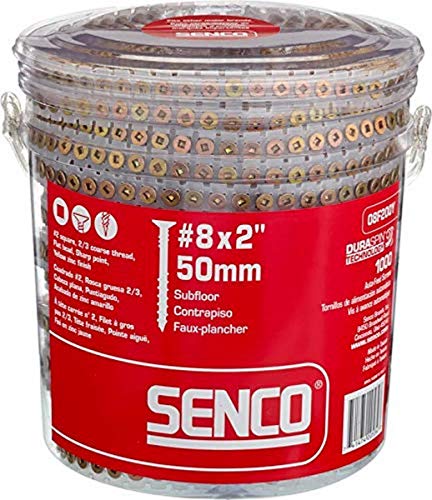 | Best for Subfloors | Screw Size: #8 x 2 in | Drive Type: Square drive | Head Style: Flat head | VIEW LATEST PRICE | Read Our Analysis |
| Senco DuraSpin #8 x 1-1/2-inch Wood Screws (1000 Ct.) |  | Best Wood-to-Wood | Screw Size: #8 x 1-1/2 in | Drive Type: Square drive | Head Style: Flat head | VIEW LATEST PRICE | Read Our Analysis |
| Senco Duraspin #8 x 1-3/4″ Flooring Screws (1000/Box) |  | Best for Flooring | Screw Size: #8 x 1-3/4 in | Drive Type: Square drive | Head Style: Flat head | VIEW LATEST PRICE | Read Our Analysis |
| SENCO Duraspin Collated Wood Screw 8 Gauge 2-1/2 Inch |  | Best for Exterior Use | Screw Size: #8 x 2-1/2 in | Drive Type: Square drive | Head Style: Flat head | VIEW LATEST PRICE | Read Our Analysis |
| Senco Duraspin #7 Drywall to Wood Screws (1000/Box) |  | Best for Drywall | Screw Size: #7 x 2 in | Drive Type: Phillips drive | Head Style: Bugle head | VIEW LATEST PRICE | Read Our Analysis |
| 6×1-5/8 Inch Drywall to Wood Collated Screws (1000 Count) |  | Budget-Friendly Pick | Screw Size: #6 x 1-5/8 in | Drive Type: Phillips drive | Head Style: Bugle head | VIEW LATEST PRICE | Read Our Analysis |
More Details on Our Top Picks
Senco 08F200Y Duraspin# 8 by 2″ Subfloor Collated Screw (1 000per Box)
Need a fast, reliable screw for subfloor work? The Senco 08F200Y DuraSpin #8 x 2-inch collated screw is a smart choice. Each box includes 1,000 steel screws, so you can keep working without frequent reloads. The flat head seats cleanly, and the #2 square drive helps maintain control. Its coarse, partial thread and sharp point let it bite quickly into wood. It is also compatible with Senco DuraSpin screw guns, which can help make flooring jobs smoother and less stressful.
- Screw Size:#8 x 2 in
- Drive Type:Square drive
- Head Style:Flat head
- Thread Type:Coarse, partially threaded
- Finish:Yellow zinc
- Count:1,000
- Additional Feature:Left-hand thread
- Additional Feature:Sharp point
- Additional Feature:Yellow zinc finish
Senco DuraSpin #8 x 1-1/2-inch Wood Screws (1000 Ct.)
Senco DuraSpin #8 x 1-1/2-inch wood screws are a smart choice when you need fast, consistent fastening that still feels secure in wood. The 1,000 collated screws come in a yellow tub, so you can keep working without frequent reloads. Their square drive and flat head help them drive cleanly, while the ultra-sharp point starts quickly and reduces effort. Because they are fully threaded with coarse UNC threads, they grip softwood well and help pull pieces tight for interior wood-to-wood projects, including framing and subfloor work.
- Screw Size:#8 x 1-1/2 in
- Drive Type:Square drive
- Head Style:Flat head
- Thread Type:Coarse, fully threaded
- Finish:Zinc plating
- Count:1,000
- Additional Feature:Ultra-sharp point
- Additional Feature:Fully threaded
- Additional Feature:5000 RPM compatible
Senco Duraspin #8 x 1-3/4″ Flooring Screws (1000/Box)
Built for flooring jobs that need a fast, steady grip, the Senco 08F175Y Duraspin #8 x 1-3/4″ flooring screw is a smart choice when you want secure fastening without slowing your pace. You get 1,000 collated screws in a clear tub, so you can keep work moving and check your supply quickly. The square drive and flat, sharp point help you install them with confidence in wood subflooring. Their yellow zinc finish adds durability, while the Duraspin design supports smooth driving and a strong hold for interior flooring projects.
- Screw Size:#8 x 1-3/4 in
- Drive Type:Square drive
- Head Style:Flat head
- Thread Type:Fully threaded
- Finish:Yellow zinc
- Count:1,000
- Additional Feature:See-through tub
- Additional Feature:Warranted against defects
- Additional Feature:Flooring-to-wood use
SENCO Duraspin Collated Wood Screw 8 Gauge 2-1/2 Inch
If you need a collated screw that keeps pace with jobsite speed, the SENCO Duraspin Collated Wood Screw 8 Gauge 2-1/2 Inch is a solid choice for deck builders, exterior woodworkers, and anyone who wants to avoid loading one screw at a time. It comes with 800 screws in a reusable tub, with 50 screws per strip for fast loading. The #2 square drive, Type 17 point, and coarse thread help you drive cleanly into wood. The Weatherex finish and Miami-Dade approval provide added confidence for demanding outdoor applications.
- Screw Size:#8 x 2-1/2 in
- Drive Type:Square drive
- Head Style:Flat head
- Thread Type:Coarse, partially threaded
- Finish:Weatherex coating
- Count:800
- Additional Feature:Miami-Dade approved
- Additional Feature:Type 17 point
- Additional Feature:Weatherex finish
Senco Duraspin #7 Drywall to Wood Screws (1000/Box)
For anyone who wants clean, fast drywall-to-wood fastening without the usual hassle, the Senco DuraSpin No. 7 x 2-inch collated screws are a smart choice. You get 1,000 silver-gray screws in one strip, so you spend less time reloading and more time working. They fit auto-feed screwdrivers with depth-sensitive clutches and speeds up to 5,000 RPM, including DuraSpin models. Their sharp point, bugle head, and fully threaded steel body bite into drywall, wood, underlayment, and cement board. The collated setup also helps reduce hand strain, wasted screws, and those annoying finger nicks.
- Screw Size:#7 x 2 in
- Drive Type:Phillips drive
- Head Style:Bugle head
- Thread Type:Fully threaded
- Finish:Phosphate
- Count:1,000
- Additional Feature:Bugle head
- Additional Feature:Phosphate finish
- Additional Feature:5000 RPM compatible
6×1-5/8 Inch Drywall to Wood Collated Screws (1000 Count)
When you need a fast, steady way to hang drywall on wood framing, the #6 x 1-5/8 inch Drywall to Wood Collated Screw makes the job easier. You get 1,000 screws in 20 strips, so your auto-feed driver stays loaded and moving. The carbon steel body, black phosphate finish, and sharp coarse thread help you drive cleanly into wood studs without pre-drilling. Because the bugle head seats neatly, your sheetrock sits flush, and the durable bucket keeps strips organized on site.
- Screw Size:#6 x 1-5/8 in
- Drive Type:Phillips drive
- Head Style:Bugle head
- Thread Type:Partially threaded
- Finish:Black phosphate
- Count:1,000
- Additional Feature:20 collated strips
- Additional Feature:Black oxide finish
- Additional Feature:Reinforced neck
Factors to Consider When Choosing Collated Screws
When choosing collated screws, start with screw length because it needs to fit the material without going too deep or falling short. Then match the thread type, head style, drive system, and finish to the job so the screws hold tight, drive smoothly, and resist wear. Getting these details right helps you avoid stripped heads, weak joints, and small project headaches that can slow you down.
Screw Length Matters
Screw length can make or break your fastening job, so picking the right size matters more than it first seems. You want enough bite to reach at least 1 to 1-1/4 times the thickness of the material you are fastening. That gives you solid holding power without wasting length. If you are installing flooring or subfloor on wood, lengths from 1-1/2″ to 2-1/2″ usually work well, depending on the layer stack. Also, choose the shortest screw that still gets the job done, because extra length can poke through the back or split thin stock. When you fasten into metal or thin studs, shorter screws help you avoid bottoming out. If the screw is partially threaded, make sure the smooth shank spans the top layer.
Thread Type Selection
Now that you’ve picked the right length, thread type is the next factor that can make fastening feel solid or frustrating. Coarse threads bite better in softwood and particleboard, so you get a stronger grip and less pullout in subfloors and basic wood joints. Fine threads work better in hardwood and metal to wood applications because they cut cleaner and help keep dense materials from splitting. If you need two pieces drawn tight, choose partially threaded screws, since the smooth shank helps clamp them together. For thin material or shear load, fully threaded screws spread holding power along the shaft. Right hand threads are standard, so direction usually is not a concern. Thread class also matters because tighter tolerances can hold better, but they may require a cleaner pilot hole.
Head Style Compatibility
Head style can make or break how a collated screw performs because the head must match both the job and the tool driving it. If you want a clean finish, choose flat heads, since they sit flush and leave the surface smooth. For drywall, bugle heads help prevent paper tearing and spread force across the board. When you need a strong grip on thin material, pan or truss heads provide more clamping without requiring a countersink. You also need the head size and shape to fit the strip and nosepiece, or feeding becomes difficult quickly. Pick the wrong profile, and even a good screw can feel troublesome. Choose well, and your work goes more smoothly, with fewer snags and less rework.
Drive System Match
Just as vital as the screw shape itself, the drive system has to fit your tool if you want smooth, fast work. If the screw’s drive type does not match your collated gun’s socket, you can get cam-out, stripped heads, and plenty of frustration. Check that your bit size, such as #2 Phillips or #2 square, matches the tool’s tolerance so the screw seats cleanly and stays at the right depth. For heavy jobs, square drives usually give you stronger torque and less slip than Phillips. Also, make sure the strip orientation and recess shape work with the feed system, or jams can stop you cold. If you run a high-RPM driver, choose a drive rated for that speed so your bits last longer and your pace stays steady.
Material And Finish
Once the drive system fits your tool, the next thing to check is what the screw is made of and how it is coated, because that choice can make or break the job. You will usually want carbon steel for everyday work, stainless steel whenever rust is a real threat, and alloy steel whenever you need extra strength. Next, match the finish to the setting. Zinc and yellow zinc work well indoors or under shelter, while weather resistant coatings and stainless hold up better outside or near salt air. Also, pay attention to plating thickness, since heavier coatings last longer. For appearance or paint, choose a finish that blends in. Keep in mind that stainless can gall under high torque, and damaged plated threads can lose protection fast.
Application Specific Use
A smart choice of collated screw starts with the job itself, because the best fastener for one surface can fail fast in another. You should match length and gauge to the material, so #6 to #8 screws at 1.5 to 1.75 inches work well for drywall to wood, while 2-inch or longer screws fit subflooring and decking better. Then choose the thread for the substrate. Coarse threads grab softwood and sheathing, while fine threads help hardwood and metal to wood joints resist splitting. Next, pick the head and drive that suit the finish and your tool. Flat heads sit flush, bugle heads suit drywall, and the right point helps dense stock move faster. Partial threads also clamp better where you need a tight pull.
Collation Strip Format
As you look at collated screws, the strip format matters more than many people expect because it shapes how smoothly the job goes from the first drive to the last. You will see plastic, paper, and magnetic strips, and each one affects feed reliability and debris. If you want less waste, choose recyclable or biodegradable material, since that can reduce cleanup and disposal costs. Next, check strip pitch. A higher count means fewer reloads, so you keep moving, but it also affects on site storage. Then look at flexibility and toughness because a strip that bends well resists breakage and jams during fast work. Finally, match the strip angle and spacing to the magazine so screws seat cleanly and land where you expect.
Tool Compatibility Check
Now that the strip format is clear, the next step is to make sure the screws actually work with your tool. Check the drive type first, because square, Phillips, and Pozidriv heads need the right driver to prevent stripping and feeding jams. Then confirm that the strip pitch and screw count match your magazine and feed path so the strip slides in smoothly. You should also test the shank diameter and head shape against the nosepiece and guiding sleeve, because a snug fit helps each screw seat cleanly and sink to the same depth. Next, make sure your tool handles the screw length you need, along with the correct RPM and clutch setting. Finally, match the collation material to your jobsite, since plastic and paper strips do not behave the same in heat, dust, or cold.
Frequently Asked Questions
Which Collated Screw Type Works Best for Outdoor Projects?
For outdoor projects, you will usually want stainless steel collated screws or coated deck screws. They offer better corrosion resistance, longer lasting hold, and fewer headaches when rain, humidity, and temperature swings affect your work.
Can Collated Screws Be Used With All Screw Guns?
No, you cannot use collated screws with every screw gun. You need a compatible collated screw attachment and a matching screw strip style, so check your tool’s specifications before you start.
How Do I Prevent Collated Screws From Stripping?
Use the right driver bit, set your screw gun’s clutch correctly, and drive straight with steady pressure. You’ll avoid cam-out by matching the screw size, predrilling hard materials, and replacing worn collated strips promptly.
What Screw Length Should I Choose for Layered Materials?
For layered materials, choose a screw long enough to pass through every layer and bite deeply into the base. Aim for at least twice the thickness of the top layer.
Are Collated Screws Suitable for Pressure-Treated Lumber?
Yes, you can use collated screws for pressure-treated lumber, provided they are rated for it. You will want corrosion-resistant coatings or stainless steel, since treated wood can quickly damage standard fasteners and weaken your project.
Final Thoughts
Collated screws can make a long day feel more efficient. When you choose the right drive, thread, and coating, you keep your tool moving and your focus steady. From subfloor work to drywall, the right strip or tub helps you stay in rhythm. Choose carefully, feed cleanly, and drive fast. Then you will finish with fewer jams, less hassle, and more confidence on the next job.