

A 12 gauge extension cord is the backbone of a safe, steady power setup when you need reach without compromise.
You will see which 50 foot workhorses, compact cords, and weatherproof options hold up indoors and outdoors, and why details like 15A ratings, grounded plugs, and SJTW jackets matter.
The right choice can change how you power tools, gear, and outdoor projects, and a few of these may surprise you.


More Details on Our Top Picks
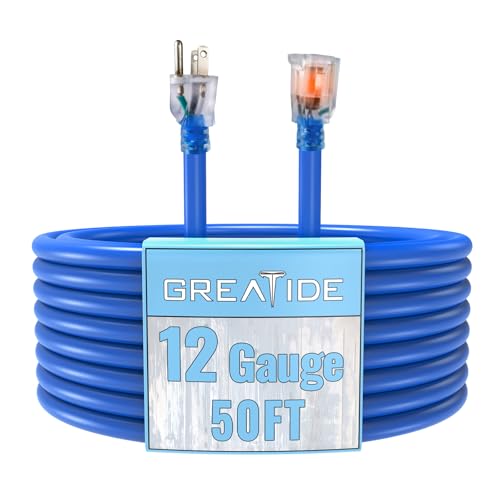
12 Gauge Heavy Duty Outdoor Extension Cord 50 FT
Should you need a tough, reliable 50 ft 12 gauge outdoor extension cord, this GREATIDE model is a strong fit, especially when powering demanding tools or appliances. It features 12/3 SJTW construction, pure copper wiring, and 15 amps at 125 volts for up to 1875 watts. The flexible vinyl jacket resists moisture, abrasion, and sunlight, and it stays workable from -40°F to 140°F without cracking. Its lighted end helps you spot power quickly, and the grounded 3 prong plug adds safety. You can use it for mowers, washers, generators, and holiday lights.
- Gauge:12 AWG
- Length:50 ft
- Amp Rating:15A
- Voltage:125V
- Outlets:1 outlet
- Lighted End:Yes
- Additional Feature:Pure copper wire
- Additional Feature:UL listed
- Additional Feature:Cold-weather flexible jacket
EP 15 Ft Outdoor Extension Cord Heavy Duty
The EP 15 ft outdoor extension cord is a strong choice when you need a compact, heavy-duty option for demanding jobs, thanks to its 12-gauge, 15-amp, 125-volt, 1875-watt rating and pure copper 12/3 SJTW construction. It provides reliable power for lawn mowers, pressure washers, tools, and holiday lights. The LED-lit end helps you spot when it is live, even in the dark. Its flexible vinyl jacket resists moisture, abrasion, and UV exposure, while the UL-listed grounded plug and reinforced blades improve safety. It stays flexible in cold weather too.
- Gauge:12-gauge
- Length:15 ft
- Amp Rating:15A
- Voltage:125V
- Outlets:1 outlet
- Lighted End:Yes
- Additional Feature:Pure copper wiring
- Additional Feature:UV resistant jacket
- Additional Feature:Reinforced blades
Indoor Outdoor Weatherproof Extension Cord 12 Gauge 10FT
Need a rugged short-run power cord for indoor and outdoor jobs? You can reach for this HONDERSON 12-gauge, 10-foot weatherproof SJTW cord. It handles 125V, 15A, and up to 1,875W, so you can power lawn mowers, chainsaws, Christmas lights, heaters, microwaves, computers, and garage gear. The UL-listed, three-prong grounded design adds safety, while moisture resistance, flame retardancy, and slip resistance help outdoors. Its copper conductors, thick vinyl sheath, and low-loss build stay flexible in conditions from -40°F to 140°F. The lighted end shows if it’s energized.
- Gauge:12 gauge
- Length:10 ft
- Amp Rating:15A
- Voltage:125V
- Outlets:1 outlet
- Lighted End:Yes
- Additional Feature:Flame retardant
- Additional Feature:Neon-green color
- Additional Feature:Low transmission loss
KTMC 50ft Outdoor Extension Cord 16AWG Weatherproof Orange
With its 50-foot reach, weatherproof PVC vinyl jacket, and ETL and UL safety ratings, the KTMC 16AWG outdoor extension cord is a smart choice for reliable power for yard tools, patio gear, or household appliances that need extra distance. It delivers 125 volts, 13 amps, and up to 1,625 watts through grounded 3-prong copper wiring. Its SJTW construction resists moisture, abrasion, sun, and harsh weather, so it works well indoors or out. The bright orange cord is easy to see, and KTMC backs it with a quality guarantee and replacement support.
- Gauge:16 AWG
- Length:50 ft
- Amp Rating:13A
- Voltage:125V AC
- Outlets:1 outlet
- Lighted End:Not listed
- Additional Feature:ETL certified
- Additional Feature:100% replacement guarantee
- Additional Feature:Insulated conductors
PlugSaf 12 FT Outdoor Extension Cord with Multiple Outlets
PlugSaf’s 12 FT outdoor extension cord is a smart pick if you want a compact, heavy-duty splitter that can power several tools or appliances at once. It features 12/3 gauge 12AWG SJTW wiring, 15A, 125V AC, and 1875W capacity, plus a NEMA 5-15P to 5-15R 3-prong design. Its 3-outlet layout helps you run multiple devices from one source. The IP65 waterproof jacket, the -40°F to 140°F operating range, and ETL/cETL listing add confidence. You will also like the LED power indicator, bright yellow sheath, and 20,000-bend durability.
- Gauge:12/3 gauge
- Length:12 ft
- Amp Rating:15A
- Voltage:125V AC
- Outlets:3 outlets
- Lighted End:Yes
- Additional Feature:Three-outlet splitter
- Additional Feature:IP65 waterproof
- Additional Feature:20,000 bend lifespan
6ft Waterproof Outdoor Extension Cord 12/3 Heavy Duty
The 6ft Waterproof Outdoor Extension Cord, 12/3 Heavy Duty is a smart choice when you need a short, rugged cord for indoor or outdoor tasks that require reliable power. It can handle lawn mowers, leaf blowers, string lights, and garage tools, as well as microwaves, coffee makers, and toasters. Its UL-listed SJTW construction uses copper wiring, a thick vinyl sheath, and a grounded 3-prong plug for durability. Rated at 15A, 125V, and 1875W, it remains flexible, water resistant, flame retardant, and easy to store in tight spaces.
- Gauge:12/3 gauge
- Length:6 ft
- Amp Rating:15A
- Voltage:125V
- Outlets:1 outlet
- Lighted End:Not listed
- Additional Feature:Flame retardant
- Additional Feature:Water resistant
- Additional Feature:Three-month warranty
Southwire AGRIPRO 12/3 Heavy Duty Extension Cord 25ft
Southwire’s AGRIPRO 12/3 Heavy Duty Extension Cord is a solid choice if you need a tough 25-foot cord for farm, ranch, or workshop use. It features 12-gauge, 3-conductor, all-copper wiring that handles 15 amps at 110 volts for demanding tools. Its SJTOW jacket resists chemicals, oils, and extreme temperatures from -58°F to 221°F. The oversized molded plug helps prevent bending and breakage, and the cord’s UL listing adds confidence. Made in America, this black cord offers one outlet, a 3-prong Type B plug, and a 180-day limited warranty.
- Gauge:12/3 gauge
- Length:25 ft
- Amp Rating:15A
- Voltage:110V
- Outlets:1 outlet
- Lighted End:Not listed
- Additional Feature:Chemical resistant
- Additional Feature:Made in America
- Additional Feature:Limited lifetime warranty
Factors to Consider When Choosing 12 Gauge Extension Cords
When you choose a 12 gauge extension cord, match the cord length to your setup so you do not lose power or create trip hazards. You should also check the amperage and wattage your tools need, then decide whether you need an indoor or outdoor cord based on weather, temperature, and safety certifications.
Cord Length Needs
Choose the shortest 12 gauge extension cord that still reaches the outlet, because extra length only adds bulk and can make handling harder. Since 12 gauge cords come in 6, 10, 12, 15, 25, and 50 foot options, pick the size that fits your setup without excess slack. For tools or appliances near a power source, 6 to 15 feet usually works well. Larger yards, driveways, and job sites often need 25 to 50 feet. Measure the actual route the cord must follow, not just the straight line, because walls, furniture, and outdoor obstacles add distance. If you do not need the extra reach, avoid it. Shorter runs are easier to manage, store, and keep from tangling or becoming a trip hazard.
Amperage And Wattage
After you have picked the right cord length, check the amperage and wattage next. A typical 12 gauge extension cord handles 15 amps at 125 volts, giving you up to 1875 watts. You should match the cord’s amperage rating to, or exceed, the device or tool you plan to run. Wattage is simple, multiply volts by amps. If your load needs more power than the cord can safely supply, you risk overheating, weaker performance, and possible damage. For heavier loads, choose 12 gauge over thinner cords because it carries more current and reduces voltage drop. That extra capacity helps your equipment run more efficiently and keeps the cord within safe limits.
Indoor Vs Outdoor
Indoor and outdoor 12 gauge extension cords may seem similar, but they are built for different conditions. You can usually use an indoor cord in dry, controlled spaces for appliances and electronics, but it will not hold up as well in harsher settings. Outdoor cords use weather-resistant jackets and tougher vinyl or SJTW style insulation to handle moisture, abrasion, and sunlight better. When you need extra flexibility, choose one rated for a wide temperature range, such as -40°F to +140°F. Always check for a grounded 3 prong plug and UL or ETL certification, since both improve safety. For lawn equipment, holiday lights, or yard tools, pick an outdoor rated cord. For everyday indoor use, an indoor rated cord is often enough and more convenient.
Weather And Temperature
If you are choosing a 12 gauge extension cord for outdoor use, the weather and temperature rating matter just as much as the length or load capacity. Pick a cord with a weather-resistant jacket, such as SJTW, so it can handle moisture, abrasion, and UV exposure. Check the temperature range too. Many heavy-duty outdoor cords stay flexible from about -40°F to +140°F. That flexibility helps you work safely in freezing conditions, since a cord that stiffens or cracks is harder to manage and more likely to wear out. If you will use it in rain, snow, or damp areas, choose water-resistant or waterproof construction. Also, make sure the jacket resists direct sunlight, because UV exposure can break it down over time.
Safety Certifications
Safety certifications are one of the quickest ways to judge whether a 12 gauge extension cord is built to handle real work safely, so look for UL Listed, UL certified, or ETL/cETL listed products. Third-party testing helps confirm the cord meets recognized safety standards instead of just claiming them. You should also check that the cord has a grounded 3-prong plug and the proper Type B connector to help reduce shock risk. For outdoor jobs, choose cords labeled weatherproof, moisture resistant, abrasion resistant, and UV resistant. A lighted end or LED indicator can show whenever power is flowing, which helps in dark areas. Finally, match the certification with the cord’s limits, such as 15 amps, 125 volts, and 1875 watts, so you do not overload it.
Outlet And Plug Type
After checking certifications, the next thing to confirm is the outlet and plug type, since that determines whether the cord will work with your equipment and power source. You’ll usually want a standard 3-prong grounded plug with a Type B male to female connection so it fits common household and outdoor outlets. Check the outlet count too. Some cords give you one outlet, while others offer multiple outlets or a 3-way splitter for extra devices. Make sure the plug and receptacle are rated for 125 volts and 15 amps for typical heavy-duty use. If you’ll plug and unplug often, look for reinforced or oversized molded blades to help prevent damage. For easier monitoring, choose a lighted end or LED indicator so you can tell when power is flowing.
Durability And Flexibility
Durability and flexibility matter just as much as amperage rating when you are choosing a 12 gauge extension cord. You want thick conductors and a rugged jacket that can handle abrasion, moisture, and sunlight without failing. Flexible vinyl or SJTW style insulation helps the cord stay easy to coil, resist tangles, and remain usable in cold weather instead of cracking or stiffening. Check the temperature rating too; a range near -40°F to +140°F usually means better outdoor reliability. Reinforced ends and molded grounded plugs also help, because they reduce bending, breaking, and wear where cords usually fail. Copper conductors are a smart choice since they flex well and keep resistance low during repeated outdoor use.
Frequently Asked Questions
Can I Use a 12 Gauge Extension Cord Indoors Safely?
Yes, you can use a 12 gauge extension cord indoors safely if you match the cord’s rating to your device, avoid overloading, keep it uncoiled, and inspect it regularly for damage, heat, or wear.
What Appliances Need a 12 Gauge Extension Cord?
You’ll need a 12 gauge extension cord for power-hungry appliances like space heaters, air conditioners, and heavy-duty tools. I once fried a thin cord on a saw, so think of a 12 gauge cord as a stronger bridge.
How Far Can a 12 Gauge Cord Run Without Voltage Drop?
You can usually run a 12 gauge cord about 100 feet on 120 volts before voltage drop becomes noticeable, though heavier loads will shorten that distance. You will get better results if you keep the cord shorter.
Are 12 Gauge Extension Cords Safe in Wet Conditions?
Yes, if you choose a wet-rated, grounded cord and keep connectors dry. Use GFCI protection, inspect for damage, and avoid submerged or frayed cords.
How Do I Store a 12 Gauge Extension Cord Properly?
You should clean it, dry it fully, and coil it loosely in large loops. Then store it in a cool, dry place away from sunlight, sharp edges, and heavy objects that could damage the insulation.