Address
304 North Cardinal
St. Dorchester Center, MA 02124
Work Hours
Monday to Friday: 7AM - 7PM
Weekend: 10AM - 5PM
Address
304 North Cardinal
St. Dorchester Center, MA 02124
Work Hours
Monday to Friday: 7AM - 7PM
Weekend: 10AM - 5PM

When a stubborn 1/2-inch NPT fitting starts leaking on a Friday afternoon, you quickly learn that the right pipe tap can mean the difference between a fast repair and a wasted hour.
You need a compact set that covers common sizes, handles heat well, and clears chips cleanly.
The best pipe taps for 2026 are not just about cutting threads, they are about staying reliable when the job gets messy, and that is where the details start to matter.
| Drill America NPT Pipe Tap Set in Wooden Case | 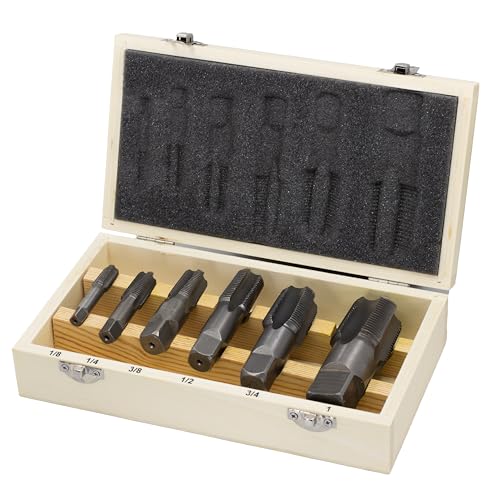 | Best Overall | Piece Count: 6-piece | Pipe Size: 1/8 to 1 | Thread Type: NPT | VIEW LATEST PRICE | Read Our Analysis |
| 5-Piece NPT Pipe Tap Set with Plastic Case |  | Best Value | Piece Count: 5-piece | Pipe Size: 1/8 to 3/4 | Thread Type: NPT | VIEW LATEST PRICE | Read Our Analysis |
| 6-Piece NPT Pipe Tap Set Assorted Sizes |  | Best for Pros | Piece Count: 6-piece | Pipe Size: 1/8 to 1 | Thread Type: NPT | VIEW LATEST PRICE | Read Our Analysis |
| QWORK 1/2″-14 NPT Pipe Tap Thread Repair Tool |  | Best Single Size | Piece Count: Single tap | Pipe Size: 1/2 | Thread Type: NPT | VIEW LATEST PRICE | Read Our Analysis |
| Professional 5-Piece NPT Pipe Tap Set |  | Best Premium Set | Piece Count: 5-piece | Pipe Size: 1/8 to 3/4 | Thread Type: NPT | VIEW LATEST PRICE | Read Our Analysis |
More Details on Our Top Picks
Need a versatile NPT set? The Drill America DWTPT1/8-1SET 6-piece pipe tap set comes in a wooden case, so you can handle common pipe thread repairs with confidence. It includes 1/8, 1/4, 3/8, 1/2, 3/4, and 1-inch NPT taps made from carbon steel with an uncoated finish and round shanks. You can clean or re-thread damaged pipe threads in ferrous or non-ferrous materials. The 3/4-inch per foot taper and 2-1/2 to 3-1/2 thread chamfer help you cut consistent threads. Use thread sealer as needed.
The 5 piece NPT pipe tap set with plastic case offers strong value for clean, leak resistant pipe threads. It includes 3/4, 1/2, 3/8, 1/4, and 1/8 taps, so you can work on common fittings without searching for extras. The precision ground tapered NPT form helps you cut, clean, and re thread internal pipe threads for a secure seal. Its right hand, four flute carbon steel design handles plumbing, automotive, and shop jobs. The plastic case keeps your taps organized, protected from rust, and easy to access. Use it whenever you need dependable threading quickly.
A 6 piece NPT tap set gives pros and serious DIYers quick, accurate hand threading. You get 1″, 3/4″, 1/2″, 3/8″, 1/4″, and 1/8″ taps for cutting internal NPT threads, cleaning damaged ports, or re threading jammed pipe. The high carbon, precision ground steel and four straight flutes help you cut cleanly by hand. Its tapered geometry supports tight, leak resistant connections in plumbing, automotive, construction, and repair work. Keep the set in the plastic case to organize it and help prevent rust between jobs.
QWORK’s 1/2″-14 NPT tap gives you one precise, single-size fix for damaged pipe threads. You can clean or rethread blocked fittings on steel, iron, or copper with its right-hand, clockwise cutting action. The heat-treated steel body gives you strength, hardness, and corrosion resistance for repeated shop use. Its round shank handles easily, and the imperial 1/2-14 NPT size suits common pipe repair jobs. At 4.2 ounces, it is easy to keep nearby. Use it whenever you need a dependable metal thread repair tool from QWORK, model WD3805.
Miucoguier’s Professional 5-Piece NPT Pipe Tap Set is a strong choice if you need a premium, precise threading kit. It includes five straight-flute, two-flute taps in 1/8-27, 1/4-18, 3/8-18, 1/2-14, and 3/4-14 NPT sizes, plus a storage case. The high-carbon steel construction with a nickel finish helps you cut smooth internal pipe threads in metal or plastic, even on rusted or damaged joints. With model 0001 and part number Pipe Taps-001, it is a durable professional set for long-term shop use.
As you choose pipe taps, make sure the thread size matches your project and that the tap follows the NPT standard. You should also check material strength, the set sizes you need, and the cutting direction before you start. Choosing the right tap helps you cut cleaner threads and avoid costly mistakes.
Getting the thread size right is the starting point for a clean, leak-free pipe tap job. Match the tap’s nominal NPT size to the fitting you plan to use, because 1/8″, 1/4″, 3/8″, 1/2″, 3/4″, and 1″ refer to the pipe fitting size, not the tap’s outside diameter. Check the threads per inch too. 1/8″ NPT uses 27 TPI, 1/4″ uses 18, and 1/2″ uses 14. If the TPI does not match, the threads will not bite or seal. Use a true taper tap for tapered pipe threads, and verify the chamfer and taper length whenever rethreading. For schedule or class-rated fittings, confirm the tap fits the bore and spec.
Beyond matching nominal size and TPI, you also need to follow the NPT standard itself. NPT threads taper 3/4 inch per foot, so the diameter shrinks as the tap cuts deeper and the joint tightens into a seal. When you choose a tap, verify the nominal pipe size and pitch, such as 1/2-14 NPT, because the nominal size does not equal the tap’s major diameter. Use the correct chamfer length, usually 2.5 to 3.5 threads, so you can start the cut cleanly and keep alignment. Since NPT seals through metal-to-metal compression on the taper, you should plan on PTFE tape or pipe dope to finish the joint and help prevent leaks.
Material strength matters because the tap has to stay sharp and accurate while it cuts. You should favor high-carbon steel or high-speed steel taps whenever you need hardness and wear resistance on tougher materials. If you thread often or handle heavy-duty work, heat-treated or quenched and tempered tool steel gives you more tensile strength and longer service life. Softer carbon steels can work for occasional jobs in plastics or aluminum, but they dull faster on ferrous metals. Check hardness ratings too. HSS taps around HRC 58 to 64 usually hold an edge well, while lower numbers trade durability for easier regrinding. In humid or reactive settings, choose black oxide, nickel, or TiN coatings so you protect the tap and preserve its strength longer.
When you choose a pipe tap set, start by matching the size range to the pipe diameters you actually work with, such as 1/8″, 1/4″, 3/8″, 1/2″, 3/4″, and 1″. Pick a set that covers the nominal pipe sizes you use most, so you have the right tapered NPT sizes ready. Make sure it includes both the smallest and largest sizes you need, because that helps you avoid extra purchases for in-between jobs. Decide whether a compact 5 piece kit fits your work or whether a 6 plus piece set gives you better coverage. If you handle plumbing or HVAC often, broader ranges pay off. If you are a casual DIYer, smaller kits may be enough. Also check case size, weight, and storage.
Once you’ve narrowed a pipe tap set to the sizes you need, check the cutting direction before you buy or use it. Most pipe taps cut right hand and turn clockwise, so make sure that matches your tap wrench and setup. If you need a left hand tap for a special repair, it will cut counterclockwise, and using the wrong rotation can ruin threads fast. Direction also affects chip flow, so leave room for chips to clear in the direction the tap sends them. With powered holders or drills, set the machine to the tap’s rotation and keep the speed low to reduce breakage. Whenever you back out a tap, reverse slowly and only partway as required to avoid cross threading or extra stress.
Flute design shapes how a pipe tap cuts, clears chips, and holds up under load. You will usually choose 2 flute or 4 flute NPT taps, because fewer flutes leave more space for bulky chips, while more flutes can improve finish and strength. For hand work, straight flutes suit internal tapered threads and keep the tap cutting predictably. If you are working blind holes or through holes, spiral flutes can help lift chips out. Deeper, wider flutes clear debris better when you are rethreading corroded or soft material, but they can weaken edge support and raise breakage risk. Because NPT threads taper, flute length and angle need to match the progressive cut. Precision ground, smooth flute edges cut friction, resist clogging, and help you produce cleaner, leak resistant threads.
A good tap case keeps your pipe taps organized, protected, and ready to grab. Choose one with molded slots or foam cutouts that prevent tools from knocking together and dulling the cutting edges. You will also want a durable, rust-resistant case made from hard plastic or treated wood to shield your taps from moisture and corrosion during storage. Pick a compact layout with clear labels or size markings so you can spot the right tap quickly and avoid cross-use mistakes. A secure latch, hinge, or clasp also matters because it keeps the case shut while you are moving between jobs. If you carry your tools often, choose a lightweight case that still fits larger tap sizes without crowding them.
Material matters more than many people expect when choosing pipe taps. Match tap hardness and geometry to the workpiece. For steel, stainless steel, and cast iron, choose high carbon or HSS taps with tougher heat-treated bodies and gradual chamfers so they can handle heavy cutting loads. For aluminum, brass, copper, and plastics, choose softer carbon-steel taps with sharper cutting edges, fewer flutes, or extra flute relief to clear chips and cut cleanly. If you are threading thin-walled or brittle parts, use bottoming or plug taps, cut lightly, and keep lubrication flowing to avoid cracking or distortion. Also consider chip shape. Long, stringy chips need better evacuation, while short, brittle chips require a different flute pattern.
You can tell by checking the material and coating. High-speed steel with TiN or cobalt usually lasts the longest, especially in tough metals. Match the tap to your work, avoid overheating, and clean taps after use.
Yes, you can use pipe taps on stainless steel fittings, but you will need sharp, high-speed steel or cobalt taps, cutting fluid, and patience. Tap slowly to avoid galling, breakage, and poor threads.
Most pipe taps fit adjustable tap handles with square openings from about 1/4 inch to 3/8 inch. You will need a larger handle for bigger taps, and smaller ones will not grip securely or provide enough torque.
You should sharpen pipe taps whenever cutting slows or thread quality drops. Replace them whenever sharpening cannot restore clean, accurate threads. In regular use, inspect them often and do not wait for obvious damage.
Yes, you can buy left-hand pipe taps for plumbing repair, but they are uncommon. You use them when standard right-hand taps will not work, and you will need matching left-hand fittings.
You might think any old pipe tap will do, but the wrong one can turn a simple job into a leaky mess. If you want clean threads and fewer redo attempts, keep the right NPT sizes on hand, choose durable HSS or heat-treated options, and do not skip lubrication. A compact case helps keep your kit ready instead of rusting in a drawer. In the end, the best tap is the one that saves you from doing the job twice.