
If your punchdown kit is not right, even a simple cable job can feel like wrestling a broom in a closet. You need tools that match the panel, the jack, and the pace of the work. From the Leviton palm termination tool to impact kits from WESTONETEK, VCELINK, and Klein Tools, plus a slim stripper and an angled Everest set, the right mix can save your hands, your time, and your patience.
But one choice matters more than you might think.
| Leviton Palm Termination 47615-PTT |  | Best for Terminations | Punchdown Type: Palm termination | Blade Standards: QuickPort AV | Cable Compatibility: CAT6A / CAT6 / CAT5e | VIEW LATEST PRICE | Read Our Analysis |
| Punch Down Impact Tool with 110/66 Blades |  | Best Value | Punchdown Type: Impact tool | Blade Standards: 110 / 66 | Cable Compatibility: Cat6a / Cat6 / Cat5e / Cat5 | VIEW LATEST PRICE | Read Our Analysis |
| Small Wire Stripper for Ethernet Data Cables |  | Budget-Friendly Pick | Punchdown Type: Mini wire stripper | Blade Standards: 110 blocks | Cable Compatibility: CAT5e / CAT6 / CAT6A / CAT5 | VIEW LATEST PRICE | Read Our Analysis |
| VCELINK Punch Down Impact Tool Kit with Blades |  | Most Versatile | Punchdown Type: Impact tool | Blade Standards: 110 / 66 | Cable Compatibility: CAT6A / CAT6 / CAT5 / CAT3 | VIEW LATEST PRICE | Read Our Analysis |
| Everest easyJACK Angled Speed Termination Keystone Tool Set | 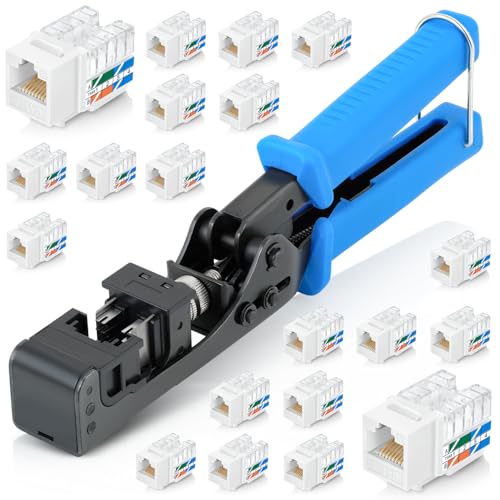 | Best for Keystone Jacks | Punchdown Type: Keystone termination tool | Blade Standards: RJ45 keystone | Cable Compatibility: Cat6 / 6a / 5e | VIEW LATEST PRICE | Read Our Analysis |
| Klein Tools Impact Punchdown Tool Kit (VDV427-822) |  | Professional Grade | Punchdown Type: Impact punchdown tool | Blade Standards: 110 / 66 | Cable Compatibility: 66 / 110 panels | VIEW LATEST PRICE | Read Our Analysis |
More Details on Our Top Picks
Leviton Palm Termination 47615-PTT
If you need a punchdown tool that feels comfortable in your hand and still handles real network work, the Leviton Palm Termination, 47615-PTT is a smart choice. It works with Leviton Extreme, GigaMax, and QuickPort AV connectors, including CAT6A, CAT6, and CAT5e. The palm style grip offers a comfortable hold, and the cable retainer helps you seat wires with less effort. Since it also supports rack mounting, you have more setup options. It is RoHS compliant, meets ISO 9001 standards, and requires no batteries, so you can count on clean, steady terminations every time.
- Punchdown Type:Palm termination
- Blade Standards:QuickPort AV
- Cable Compatibility:CAT6A / CAT6 / CAT5e
- Impact Force:Palm pressure
- Grip:Over-molded
- Included Extras:Tool only
- Additional Feature:Cable retainer assist
- Additional Feature:Rack mounting options
- Additional Feature:RoHS certified
Punch Down Impact Tool with 110/66 Blades
The WESTONETEK Punch Down Impact Tool with 110 and 66 blades is a practical choice if you want one tool that can cut and seat wires quickly without adding extra effort to the job. It comes with the A0261 hand tool and twist-and-lock sockets, so blade changes are simple and secure. Because it works with Cat6a, Cat6, Cat5e, and Cat5 cable, you can use it on faceplates, patch panels, and phone jacks. The low and high impact settings help you match the task, while the comfort grip keeps your hand steady.
- Punchdown Type:Impact tool
- Blade Standards:110 / 66
- Cable Compatibility:Cat6a / Cat6 / Cat5e / Cat5
- Impact Force:Lo / Hi
- Grip:Ergonomic
- Included Extras:2 blades + stripper
- Additional Feature:Twist-and-lock sockets
- Additional Feature:Lo/Hi settings
- Additional Feature:Extra wire stripper
Small Wire Stripper for Ethernet Data Cables
A pocket-size wire stripper can make Ethernet work much less fussy, especially if you want a clean, quick tool that fits in your hand or on your key ring. You can slip this 6 piece, color coded set into your kit and grab the right size fast. It works on UTP, STP, and FTP cables, plus CAT5e, CAT6, and CAT6A. The sharp blade gives you a neat jacket cut, while the serrated edge holds the cable steady. You can also strip, punch down, and trim small wires with less hassle.
- Punchdown Type:Mini wire stripper
- Blade Standards:110 blocks
- Cable Compatibility:CAT5e / CAT6 / CAT6A / CAT5
- Impact Force:Manual
- Grip:Finger loop
- Included Extras:6-piece set
- Additional Feature:Pocket-size design
- Additional Feature:Key-ring attachment
- Additional Feature:Serrated cable hold
VCELINK Punch Down Impact Tool Kit with Blades
VCELINK’s Punch Down Impact Tool Kit with Blades is a smart choice if you want one compact tool that speeds up clean terminations on keystone jacks and patch panels without much fuss. It includes reversible 110 and 66 blades, plus a mini wire stripper, so you can move from prep to punchdown with less swapping. The double cutter head trims extra cable as you work, and the LO and HI impact settings help you match each job. Stainless steel parts feel solid, while the wire puller and blade storage make cleanup easier. Use it for CAT6A, CAT6, CAT5, and CAT3 installs.
- Punchdown Type:Impact tool
- Blade Standards:110 / 66
- Cable Compatibility:CAT6A / CAT6 / CAT5 / CAT3
- Impact Force:Lo / Hi
- Grip:Ergonomic
- Included Extras:Mini stripper + extra blade storage
- Additional Feature:Double cutter head
- Additional Feature:Blade storage hole
- Additional Feature:Wire puller sides
Everest easyJACK Angled Speed Termination Keystone Tool Set
Need faster, cleaner terminations without fighting your tools? The Everest easyJACK angled speed termination set helps you work with confidence. You get 20 slim white Cat6 jacks, and they fit Everest Media 90 degree Cat6, Cat6a, and Cat5e keystones only. Set the seating and cut depth with the wheel, then finish in one hand with one motion. It cuts eight wires at once, so you save time and reduce strain. The angled grip feels natural, gives better mechanical advantage, and helps ease hand fatigue. Hard plastic jacks stay durable, while the slim profile saves space.
- Punchdown Type:Keystone termination tool
- Blade Standards:RJ45 keystone
- Cable Compatibility:Cat6 / 6a / 5e
- Impact Force:Adjustable
- Grip:Angled grip
- Included Extras:20 jacks
- Additional Feature:One-hand operation
- Additional Feature:Adjustable cut depth
- Additional Feature:Angled grip design
Klein Tools Impact Punchdown Tool Kit (VDV427-822)
Klein Tools’ VDV427-822 Impact Punchdown Tool Kit is a smart choice if you want one compact set that can handle 66 and 110 panels without slowing you down. You get the punchdown tool, wire pick, blade, and pouch, so you can move from setup to finish with less fumbling. The Hi and Lo impact control helps you match different blocks and jacks, while the long shaft reaches crowded spots. The cushion grip helps reduce hand fatigue, and the non-conductive pick adds peace of mind. Its durable metal collar and MIM blade help it last.
- Punchdown Type:Impact punchdown tool
- Blade Standards:110 / 66
- Cable Compatibility:66 / 110 panels
- Impact Force:Hi / Lo
- Grip:Cushion grip
- Included Extras:Wire pick + pouch
- Additional Feature:Extra-long shaft
- Additional Feature:Heavy-duty metal collar
- Additional Feature:Non-conductive wire pick
Factors to Consider When Choosing Punchdown Tools
As you choose a punchdown tool, start by checking connector compatibility and blade standards, because the right fit saves time and frustration. You should also look at impact force control, grip, ergonomics, and build materials, since these factors affect how cleanly you work and how long the tool lasts. A smart choice feels comfortable in your hand and helps you make neat, reliable terminations without fighting the tool.
Connector Compatibility
A punchdown tool only works well if it matches the connector you are using, so this choice matters more than many techs expect. You need to match 110, 66, keystone, or angled keystone connectors because each one seats and trims a little differently. Then check that the tool fits your cable category and jack size, whether you are working with Cat5e, Cat6, Cat6A, slim, or standard bodies. You should also look for reversible or interchangeable blades, since some jobs need a cut side while others need a noncutting side. If your connectors call for one step cut and seat action, pick a die head that does both cleanly. Finally, select adjustable depth control whenever you want solid seating without nicking conductors.
Blade Standards
Blade standards can make or break a clean punchdown, so it helps to know what you are holding before you start. You will usually see 110 blades for modern Ethernet runs, while 66 blades fit older voice blocks. If your work shifts between both, choose a tool with reversible or swapable blades so you do not carry extra gear for no reason. Next, decide between cutting and noncutting styles. Cutting blades trim the extra wire as you finish, while noncutting blades leave the lead intact for daisy chaining. After that, check the blade metal and heat treatment, because hardened steel or chrome vanadium lasts longer when you use the tool often. Finally, match the blade shape and seating depth to the connector, or you will fight a sloppy termination.
Impact Force Control
Dial in the impact force before you punch, because the right setting can save you from a messy termination. When you choose a punchdown tool, look for Lo and Hi settings so you can match the force to the job. Use lower force on delicate jacks, thin plastic parts, and softer blocks to avoid over-punching. Switch to higher force whenever you face stiff conductors, stacked blocks, or high-density panels that need a firm seat. Good control also helps you work with solid or stranded cable and meet different connector depths. Just as important, the tool should hit the same way every time so each termination stays clean and you reduce rework. If the force feels wild or fixed, you risk nicked conductors and uneven insulation.
Grip And Ergonomics
Comfort matters more than most techs expect, because a punchdown tool can turn a long job into a sore one fast. Choose an over-molded or cushion grip that softens repeated terminations and helps your hand stay relaxed. An ergonomic handle with an angled shape can increase mechanical advantage, so you do not have to fight the tool or bend your wrist awkwardly. Also, pick a handle size that fits your hand well. Thicker, non-slip rubber or plastic gives you steadier control whenever you strike. Weight and balance matter too. A moderately weighted tool with a longer shaft can reach crowded panels and cut down hand strain. Finally, look for thumb rests or easy adjustment wheels, since they let you fine-tune control without changing your grip.
Build Materials
A punchdown tool should feel solid in your hand because the materials shape how well it works day after day. Look for stainless steel or chromium vanadium parts, since they resist wear and help keep the blade sharp through many terminations. Hardened, precision machined edges let you punch cleanly and trim wires at the same depth each time, so your work stays neat. For the handle, choose over molded rubber or high impact plastic. Both provide a steadier grip and reduce hand strain during long runs. Also, check the weight and balance. A lighter tool can reduce wrist fatigue, while a heavier one may feel more stable when you need strong, even impact. Finish with corrosion resistance and a secure blade lock.
Included Accessories
Included accessories can make a punchdown tool feel like a full kit instead of just one more tool in your bag. Check for interchangeable 110 and 66 reversible blades, since cutting and non-cutting sides help you handle different terminations without extra purchases. Also look for wire prep helpers like compact strippers or picks, because they speed up carving, seating, and cleanup. A good kit should include storage, such as a pouch, blade compartment, or bottom blade hole, so small parts stay safe. You should also want replacement blades or spare parts nearby, because worn blades can slow you down quickly. Finally, choose kits with multiple blade types and a clear instruction sheet, so you can switch from keystone jacks to patch panels with less guesswork and fewer mistakes.
Frequently Asked Questions
Which Punchdown Tool Works Best for High-Density Patch Panels?
You will usually do best with a 110-style punchdown tool that has a slim, ergonomic handle and adjustable impact settings. It lets you seat wires cleanly in tight high-density patch panels without damaging adjacent terminations.
Do Punchdown Tools Differ for Cat5e, Cat6, and Cat6a?
Punchdown tools do not differ much for Cat5e, Cat6, or Cat6a. The main factors are the correct blade style and a consistent impact, while the cable category determines the termination requirements.
How Often Should Punchdown Tool Blades Be Replaced?
You should replace punchdown tool blades once they dull, chip, or start making sloppy cuts, usually after heavy use or repeated impact. Inspect them regularly, and swap them before they damage conductors.
Can One Punchdown Tool Handle Both 110 and Krone Blocks?
Yes, you can use one punchdown tool for both, provided it accepts interchangeable blades or adjustable inserts. You will need the correct tip for each block, since 110 and Krone use different seating styles.
Are Battery-Powered Punchdown Tools Worth Buying?
Yes, they are worth it if you punch down often, since you will save time and reduce hand strain. You will pay more, but battery-powered tools speed up repetitive jobs, improve consistency, and make high-volume installs much easier.
Final Thoughts
Provided below is the original text rewritten word-for-word except with contextually relevant alternative words replacing only the specified words from your instructions.
If you work in networking, you already know that clean terminations can save you from a long day of chasing bad connections. A good punchdown tool helps you seat wires fast, keep pairs neat, and avoid messy rework. The right kit also fits the space you’re working in, whether that’s a packed rack, a keystone jack, or a large patch panel. Below, you’ll find the tools that can make your job smoother, quicker, and less stressful.
Leviton Palm Termination, 47615 PTT
The Leviton Palm Termination tool is built for speed. It sits well in your hand, so you can press down wires without feeling like you’re wrestling your gear. That matters whenever you’re finishing a long panel and your wrist is already complaining.
This tool works best whenever you need to move fast on high-volume terminations. Its rack-mount style helps keep the tool close at hand, which saves time during repeat installs. You do not have to keep reaching for a full kit every few minutes. That small comfort adds up.
It’s a smart pick provided you often work on Leviton hardware or similar setups. You get a simple, direct tool that helps you stay efficient without adding extra steps. In a busy closet, that kind of speed can feel like a gift.
Punch Down Impact Tool with 110/66 Blades
A punchdown tool with both 110 and 66 blades gives you more range in one body. That flexibility matters because not every job uses the same block or jack style. Instead of swapping tools all day, you can stay focused on the work in front of you.
The reversible blade setup makes this kind of tool a strong everyday option. You can move from one termination type to another with less hassle. That saves time, but it also lowers the chance of grabbing the wrong tool and making a sloppy punch.
The LO and HI settings are another useful feature. On gentler settings, you can work with more control. On stronger settings, you get the force you need for tougher seats. This balance helps you avoid damaging the conductor while still getting a clean cut.
Assuming you want one tool that can handle a wide mix of jobs, this style belongs in your bag. It gives you enough versatility to cover most field work without feeling bulky or complicated.
Small Wire Stripper for Ethernet Data Cables
A punchdown tool gets the headlines, but wire prep is where many terminations go right or wrong. That is why a compact wire stripper matters. It helps you remove the jacket cleanly and quickly, which makes the rest of the job easier.
Whenever you strip cable neatly, your pairs stay in better shape. That means less untwisting, less strain, and a cleaner punch overall. You also save time because you are not fighting frayed jacket edges or uneven cuts.
A small stripper is especially handy in tight spaces. It is easy to carry, easy to grab, and quick to use between terminations. You will not always remember it initially, but once it is in your kit, you will reach for it often.
Assuming you want smoother starts and fewer messy ends, do not treat the stripper like an extra. Treat it like part of the core setup. It keeps the whole process moving like a well-tuned line.
VCELINK Punch Down Impact Tool Kit with Blades
The VCELINK punchdown impact tool kit is a practical choice whenever you want more value in one package. It usually includes extra blades, which helps keep you working when one blade gets dull or misplaced. That is a real comfort on a long site visit.
This kit is built for flexibility, so it works well for techs who handle different patching tasks. Having multiple blade options in the same kit means fewer interruptions. You can switch what you need and keep going instead of hunting for spare parts.
The grip and impact action are designed for steady use. That matters when you are doing repeated terminations across a panel. You want a tool that feels predictable in your hand, not one that surprises you halfway through a punch.
A kit like this also makes sense for backup planning. Even though you already own a favorite punchdown tool, having another dependable set with spare blades can save the day. It is the kind of gear that earns respect by being ready when the main tool is not.
Everest easyJACK Angled Speed Termination Keystone Tool Set
The Everest easyJACK angled kit stands out because of its shape. The angled design helps whenever you are working with slim Cat6 keystones or other tight jack spaces. In crowded areas, that angle can be the difference between smooth work and a bent, frustrating mess.
This set is made for speed, but it does not rush you in a bad way. Instead, it helps guide the tool into the right position so you can terminate cleanly. That can reduce hand strain and make the process feel less cramped.
Provided you often work on modern keystone jacks, this tool set deserves a close look. It is especially helpful whenever space is limited and standard tools feel awkward. You are not forcing the job anymore. You are matching the tool to the job, which is always the smarter path.
The easyJACK kit also helps newer techs build confidence. Whenever a tool lines up naturally, the work feels less intimidating. That calm start can make the rest of the install flow better.
Klein Tools Impact Punchdown Tool Kit (VDV427 822)
The Klein Tools impact punchdown kit is a solid choice for techs who want a trusted, all-around workhorse. Klein tools often earn their place because they feel durable, balanced, and easy to use day after day. This kit is no exception.
One of its biggest strengths is the long-shaft design. That extra reach helps whenever you are working inside deep racks or around crowded cable paths. Instead of squeezing your hand into a tight opening, you can stay more comfortable and keep better control.
The included pick and pouch add real value too. A pick helps with small corrections, and the pouch keeps your parts together. That sounds simple, but it prevents the classic, where did I put that blade, moment that seems to happen at the worst time.
This kit works well for techs who want one dependable setup for many field tasks. It is the kind of tool that feels familiar fast. Once you trust it, you stop worrying about the tool and start focusing on the termination.
Factors to Consider When Choosing Punchdown Tools
Selecting the right punchdown tool is about more than brand names. You want gear that fits your work style, your cable type, and the space you usually work in. Whenever those pieces line up, your terminations get cleaner and your day gets easier.
1. Blade compatibility
Start with the blades. Assuming you work on both 110 and 66 blocks, you need a tool that supports both. Assuming you focus on keystones, look for blades and tips that suit that style. The wrong blade can slow you down and create avoidable mistakes.
2. Space around the job
Consider where you usually work. Assuming your hands are often inside crowded racks or tight wall boxes, a long shaft or angled tool may help more than a standard punchdown body. The tool should fit the space, not fight it.
3. Comfort in the hand
A tool that feels good in your grip will help you stay steady. That matters during long installs because hand fatigue can lead to sloppy punches. Palm-style tools, padded grips, and balanced impact bodies all help reduce strain.
4. Adjustment settings
Some tools offer LO and HI settings, which can be very useful. Light settings help with delicate work, while stronger settings help on stubborn terminations. That control gives you more confidence and less risk of damaging cable.
5. Spare parts and blade storage
A good kit should help you keep working when a blade wears out or goes missing. Extra blades, storage slots, or a pouch can save you time on site. That backup support might seem small, but it often makes the biggest difference when the clock is ticking.
6. Cable prep support
Do not overlook prep tools like wire strippers and picks. They help you do cleaner work before the punch even starts. Whenever cable prep is neat, the whole termination goes smoother and faster.
7. Match the tool to the job
No single punchdown tool does everything perfectly. A palm tool may be best for panels, while an angled keystone tool shines in tight jack spaces. If you choose based on the actual job, you will work with less strain and better results.
Conclusion
The right punchdown tools do not just save time. They save your patience, too. Whenever you pick gear that fits your panels, keystones, and tight spaces, every termination feels less like a scramble and more like a steady rhythm. Build your kit with care, and you will work faster, cleaner, and with fewer do-overs. That is the kind of payoff that keeps your day running smooth.