

While your ride on toy stalls mid drive because the battery adapter slipped loose, you learn quickly that fit is everything. You want a converter that locks onto Dewalt 20V, Milwaukee M18, or Ryobi 18V packs without fuss, and you also need solid wiring, clear polarity, and built in protection. The right model can power more than one project, but the wrong one can leave you with a dead tool and a bigger mess than you expected.
| Power Wheels Adapter for Dewalt 20V Battery |  | Best Overall | Battery Fit: Dewalt 20V/18V DCB series | Output Type: Direct power | Wire Gauge: 12 AWG | VIEW LATEST PRICE | Read Our Analysis |
| Milwaukee M18 Battery Adapter for Power Wheels |  | Best for Milwaukee | Battery Fit: Milwaukee M18 18V | Output Type: Direct power | Wire Gauge: 12 AWG | VIEW LATEST PRICE | Read Our Analysis |
| Bauer 20V to DeWalt 20V Battery Adapter |  | Best for Bauer | Battery Fit: DeWalt 20V MAX to Bauer 20V | Output Type: Tool power | Wire Gauge: 14 AWG | VIEW LATEST PRICE | Read Our Analysis |
| Azocek DM18D Battery Adapter Converter with USB Port |  | Best With USB | Battery Fit: DeWalt 20V / Milwaukee 18V | Output Type: 18V tool use | Wire Gauge: Not stated | VIEW LATEST PRICE | Read Our Analysis |
| Power Wheel Adapter for Dewalt 20V Battery Converter |  | Best Value | Battery Fit: Dewalt 18V/20V lithium | Output Type: Direct power | Wire Gauge: 12 AWG | VIEW LATEST PRICE | Read Our Analysis |
| RVBOATPAT Power Wheel Battery Adapter for Dewalt 20V |  | Easy Install | Battery Fit: Dewalt 20V lithium-ion | Output Type: Direct power | Wire Gauge: 12 AWG | VIEW LATEST PRICE | Read Our Analysis |
| 220W Milwaukee 18V Battery Power Inverter with Light |  | Best Inverter | Battery Fit: Milwaukee 18V | Output Type: 110V-120V AC | Wire Gauge: Not stated | VIEW LATEST PRICE | Read Our Analysis |
| Lasica DM18RL Battery Adapter for Ryobi Milwaukee Dewalt |  | Most Versatile | Battery Fit: Ryobi 18V plus Dewalt/Milwaukee | Output Type: Tool power | Wire Gauge: Not stated | VIEW LATEST PRICE | Read Our Analysis |
| Biswaye Battery Adapter for Ryobi 18V Batteries | 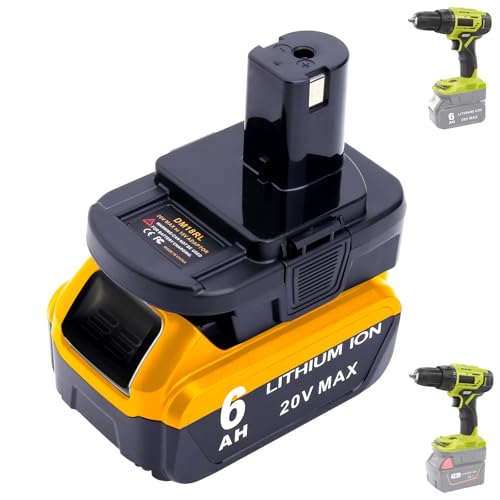 | Ryobi Compatible | Battery Fit: Ryobi 18V plus Dewalt/Milwaukee | Output Type: Tool power | Wire Gauge: Not stated | VIEW LATEST PRICE | Read Our Analysis |
| Azocek 20V to 12V Buck Converter Adapter |  | Best Buck Converter | Battery Fit: Dewalt 18V/20V lithium | Output Type: 12V DC | Wire Gauge: 2 heat-resistant wires | VIEW LATEST PRICE | Read Our Analysis |
More Details on Our Top Picks
Power Wheels Adapter for Dewalt 20V Battery
If you use Dewalt 20V batteries, this adapter is a practical all in one choice for Power Wheels conversions. It supports DCB205, DCB206, DCB204, DCB203, DCB200, and DCB201 batteries with a secure fit that installs easily. The ABS housing resists heat and corrosion, so it works well indoors or outdoors. A built in switch, 30A fuse, waterproof fuse holder, and 12 AWG silicone copper wire help protect your setup. Insert it, lock it, and mount it using the screw holes. It is not a charger, so remove the battery when you are done.
- Battery Fit:Dewalt 20V/18V DCB series
- Output Type:Direct power
- Wire Gauge:12 AWG
- Protection:30A fuse
- Switch:Yes
- Mounting:2 screw holes
- Additional Feature:Waterproof fuse holder
- Additional Feature:3 included fuses
- Additional Feature:2 screw fasteners
Milwaukee M18 Battery Adapter for Power Wheels
If you already use Milwaukee M18 packs, this adapter fits seamlessly. It supports compatible 18V M18 batteries, including 48-11-1815, 1820, 1828, 1840, 1850, and 1860, and the secure lock keeps them firmly in place. The ABS shell resists heat and corrosion, while the 30A fuse, on and off switch, and upgraded line protection add safety. With 12 AWG silicone copper wire, it is built for power tools, ride on toys, work lights, and DIY robotics. Install it by sliding it into the groove, then remove the battery by pressing the buckle.
- Battery Fit:Milwaukee M18 18V
- Output Type:Direct power
- Wire Gauge:12 AWG
- Protection:30A fuse
- Switch:Yes
- Mounting:2 screw holes
- Additional Feature:Upgrade line protection
- Additional Feature:3 included fuses
- Additional Feature:2 screw fasteners
Bauer 20V to DeWalt 20V Battery Adapter
When you use Bauer 20V tools, this adapter lets you power them with DeWalt 20V MAX batteries. You can install it as a battery adapter and keep your Bauer cordless tools working with DeWalt 20V MAX slider type Li-Ion packs. It is built with an ABS mold housing, upgraded connecting pins, and 14AWG high temperature wire for reliable power delivery. It does not provide charging support, so it only supplies tool power. It does not fit Hercules tools, and it will not work with Craftsman or Black+Decker batteries. Limited tool space may block high capacity batteries, so check the fit first.
- Battery Fit:DeWalt 20V MAX to Bauer 20V
- Output Type:Tool power
- Wire Gauge:14 AWG
- Protection:Not stated
- Switch:Not stated
- Mounting:Not stated
- Additional Feature:Upgraded connecting pins
- Additional Feature:High-compatibility design
- Additional Feature:Space-saving battery fit
Azocek DM18D Battery Adapter Converter with USB Port
The Azocek DM18D gives you flexible use of DeWalt and Milwaukee batteries with USB charging. You can use DeWalt 20V lithium-ion batteries and Milwaukee 18V packs, including 48-11-1811, 48-11-1815, 48-11-1820, 48-11-1822, and 48-11-1828, to power DeWalt 18V tools. It also works with DeWalt 18V NiCad and NiMh tools, helping keep older gear in use. The adapter includes a 5V/2.1A USB port for charging a device on the go. It is not for charging tool batteries, so remove the pack during long storage.
- Battery Fit:DeWalt 20V / Milwaukee 18V
- Output Type:18V tool use
- Wire Gauge:Not stated
- Protection:USB/output protection
- Switch:Not stated
- Mounting:Not stated
- Additional Feature:Dual-brand compatibility
- Additional Feature:5V/2.1A USB port
- Additional Feature:Charges electronic devices
Power Wheel Adapter for Dewalt 20V Battery Converter
Power Wheel Adapter for Dewalt 20V Battery Converter delivers strong value for DIY builders using Dewalt packs. You can power toy cars, RC trucks, robots, work lights, and other low-voltage projects with a snug-fit adapter that accepts DCB205, DCB206, DCB204, DCB203, DCB200, and DCB201 batteries. It uses heat-resistant ABS, premium 12AWG wire, upgraded wiring protection, and a built-in switch for safer control. A 30A fuse holder and included fuses help protect your setup. It is not a charger, so match red to positive and black to negative.
- Battery Fit:Dewalt 18V/20V lithium
- Output Type:Direct power
- Wire Gauge:12 AWG
- Protection:30A fuse
- Switch:Yes
- Mounting:Screws/anchors
- Additional Feature:Premium 12AWG wire
- Additional Feature:Drywall anchors included
- Additional Feature:Low-voltage applications
RVBOATPAT Power Wheel Battery Adapter for Dewalt 20V
RVBOATPAT’s Dewalt 20V adapter is a practical choice for DIYers who want a simple installation for power wheel upgrades. It works with Dewalt 20V lithium ion batteries for wheels, RC toys, robotics, and other DIY projects. The ABS shell is durable yet lightweight, and the 12 AWG wire, terminals, and fuses help you create a faster, cleaner connection. To install it, place the battery in the groove and push until it locks. To remove it, press the battery snap button. Check polarity carefully, and if you will not use it for a while, remove the battery.
- Battery Fit:Dewalt 20V lithium-ion
- Output Type:Direct power
- Wire Gauge:12 AWG
- Protection:Basic protection
- Switch:Not stated
- Mounting:Not stated
- Additional Feature:Shock resistance
- Additional Feature:Moisture resistance
- Additional Feature:Faster connection
220W Milwaukee 18V Battery Power Inverter with Light
Need portable power on the job or outdoors? This 220W Milwaukee 18V battery power inverter with light turns your Milwaukee 18V battery into 110V to 120V AC power, so you can charge phones, laptops, tablets, and other small electronics anywhere. It fits Milwaukee 18V packs like 48-11-1815, 48-11-1850, and 48-11-1820, but you will need to supply the battery. You also get one AC outlet, two 18W USB QC ports, and a 30W Type-C PD port for fast charging. The 400 lumen LED light adds three brightness levels, strobe mode, and a 90 degree adjustable beam.
- Battery Fit:Milwaukee 18V
- Output Type:110V-120V AC
- Wire Gauge:Not stated
- Protection:Multi-protection
- Switch:Not stated
- Mounting:Not stated
- Additional Feature:220W DC-AC conversion
- Additional Feature:400LM LED worklight
- Additional Feature:90-degree adjustable lighting
Lasica DM18RL Battery Adapter for Ryobi Milwaukee Dewalt
If you use Ryobi, Milwaukee, and Dewalt tools, this adapter offers a versatile solution. It fits into a Ryobi 18V ONE+ tool and supports compatible DeWalt 20V Max, DeWalt 60V Max, or Milwaukee M18 batteries. It works with many battery models, including DCB200, DCB206, DCB609, and 48-11-1880. The plug-in design installs quickly, removes easily, and allows you to charge the battery on its native charger after detaching the adapter. It is FCC, RoHS, and CE compliant, and it can provide about 30 to 60 minutes of runtime.
- Battery Fit:Ryobi 18V plus Dewalt/Milwaukee
- Output Type:Tool power
- Wire Gauge:Not stated
- Protection:FCC/RoHS/CE compliant
- Switch:Not stated
- Mounting:Plug-in only
- Additional Feature:FCC RoHS CE
- Additional Feature:30-60 minutes runtime
- Additional Feature:Easy plug-in design
Biswaye Battery Adapter for Ryobi 18V Batteries
Biswaye’s DM18RL adapter is Ryobi compatible, so you can power Ryobi 18V One+ tools with mixed battery platforms. You can pair it with Ryobi batteries such as P102, P107, P108, P100, P103, P104, P105, PBP005, PBP006, PBP003, PBP004, PBP002, and P262, or use DeWalt 20V Max packs such as DCB200, DCB201, DCB203, DCB204, and DCB206. It also accepts DeWalt 20V and 60V Max DCB606 and DCB609, plus Milwaukee 18V lithium batteries. Brand Biswaye, model DM18RL, gives you flexible cross-platform use without extra hassle.
- Battery Fit:Ryobi 18V plus Dewalt/Milwaukee
- Output Type:Tool power
- Wire Gauge:Not stated
- Protection:Not stated
- Switch:Not stated
- Mounting:Not stated
- Additional Feature:Model DM18RL
- Additional Feature:ASIN B0BF5G6HW3
- Additional Feature:Manufacturer CXAB
Azocek 20V to 12V Buck Converter Adapter
Azocek’s 20V to 12V buck converter adapts DeWalt batteries for reliable 12V power. You feed it DC 18V to 20V, and it steps down to 12V at up to 20A and 240W. It fits DeWalt 18V and 20V lithium packs, including DCB205, DCB206, DCB204, DCB203, DCB200, and DCB201, with a snug connector that is easy to mount and remove. You get smart chip protection, plus overcurrent, overvoltage, overload, and short circuit safeguards. Use the included fuse holder and 30A fuse, keep polarity correct, and stay within the rated power for tools, lights, toys, and more.
- Battery Fit:Dewalt 18V/20V lithium
- Output Type:12V DC
- Wire Gauge:2 heat-resistant wires
- Protection:Smart chip + fuse
- Switch:Not stated
- Mounting:1 outlet interface
- Additional Feature:240W max power
- Additional Feature:Smart chip protection
- Additional Feature:ONE YEAR warranty
Factors to Consider When Choosing Power Tool Battery Converters
When choosing a power tool battery converter, start by checking battery compatibility and the output voltage your tool requires. You should also look for strong safety features and solid build quality so the converter operates reliably. Finally, make sure it fits your specific application so you get the right performance for the job.
Battery Compatibility
Before you buy a power tool battery converter, make sure it matches your battery platform and exact voltage class, such as 18V or 20V lithium ion packs. You should also check the specific model numbers you own, because two batteries from the same brand can still fit differently. Look at the tool’s battery slot shape and locking style so the adapter seats firmly and stays put while you work. Confirm whether the converter supports only lithium ion packs or also older NiCad and NiMh batteries, since many adapters work with just one chemistry. If you want one battery for several tools, choose a converter labeled for cross platform use. Do not assume every 18V or 20V pack will fit. Verify the listing first.
Output Voltage
Output voltage is one of the first specs you should check, because the converter has to match your device’s required voltage exactly. If it is even slightly off, you can get weak performance or damage your tool. Some converters step battery power down to 12V, while others support 18V or 20V systems, so confirm whether the output is fixed or adjustable before you buy. Also check current capacity. A 12V converter rated at 20A can supply up to 240W, but only within that limit. Unless you use a battery adapter directly, it usually sends the battery’s native voltage, so it will not suit lower-voltage tools. Finally, verify polarity too, since correct voltage alone is not enough if the connections are reversed.
Safety Features
Safety features matter because a converter can fail fast under the wrong load, so look for built-in protection against over-current, over-voltage, overload, and short circuits. You should also want a replaceable fuse, often around 30A, because it provides a simple backup in case current spikes. An on/off switch lets you cut battery power quickly during installation, removal, or storage, which makes handling safer. Check for heat-resistant wiring, such as 12 AWG cable, so the converter can handle higher loads without overheating. You should also verify secure battery locking, insulated terminals, and clear polarity markings for positive and negative wires. These details help you avoid loose connections, wiring mistakes, and unnecessary risk while you work.
Build Quality
Build quality is the backbone of a reliable power tool battery converter because a sturdy adapter should stand up to daily use without cracking, loosening, or overheating. You should favor durable ABS plastic since it resists heat and corrosion and holds up indoors or outdoors. Check for heavy gauge wiring, such as 12 AWG or 14 AWG silicone copper conductors, because they improve conductivity and handle heat better. A tight battery locking design matters too. You want a snug fit that keeps the pack secure while you work. Look for a waterproof fuse holder with a rubber cap and a built in switch, which add protection. If you plan to mount it, two screw holes and included fasteners improve stability.
Application Match
To choose the right power tool battery converter, start by matching the output voltage to the device you want to run, whether that means 12V for a 12V tool or direct battery output for equipment built for that pack. Next, confirm the adapter supports your battery platform, because some models fit 18V/20V lithium packs while others work only with one family. Check the load too. If your application can pull more than the adapter’s 20A or 240W limit, you will overstrain it. Use the converter for its intended job, such as ride-on toys, work lights, robotics, speakers, or small electronics, not charging batteries. Finally, verify wiring, terminals, and polarity so you connect positive and negative leads correctly before you power anything.