

Like a good shield in a forge, the best insulated welding gloves for 2026 help balance heat protection with control. You want gloves that keep your hands warm without turning every weld into a fight for dexterity, and Caiman’s wool lined goat grain and split cowhide options stand out for that reason.
The real difference often comes down to fit, lining, and wrist coverage, and that is where the choice gets interesting.
| Caiman Goat Grain MIG/Stick Welding Gloves (1520) |  | Best For Cold Weather | Insulation: Wool-lined | Material: Split goat grain leather | Stitching: Kevlar thread | VIEW LATEST PRICE | Read Our Analysis |
| Caiman Premium Split Cowhide Welding Gloves (1512) |  | Best Heat Protection | Insulation: Wool-lined | Material: Split cowhide leather | Stitching: Kevlar stitching | VIEW LATEST PRICE | Read Our Analysis |
| Caiman Premium Split Cowhide Welding Gloves (1508) |  | Best Forearm Coverage | Insulation: Fleece-lined | Material: Split cowhide leather | Stitching: Kevlar stitching | VIEW LATEST PRICE | Read Our Analysis |
| Caiman Premium Split Cowhide Welding Gloves (1506) |  | Best Ergonomic Fit | Insulation: Cow fur/fleece-lined | Material: Split cowhide leather | Stitching: Kevlar stitching | VIEW LATEST PRICE | Read Our Analysis |
| Caiman Split Cowhide Leather Welding Gloves (1449) | 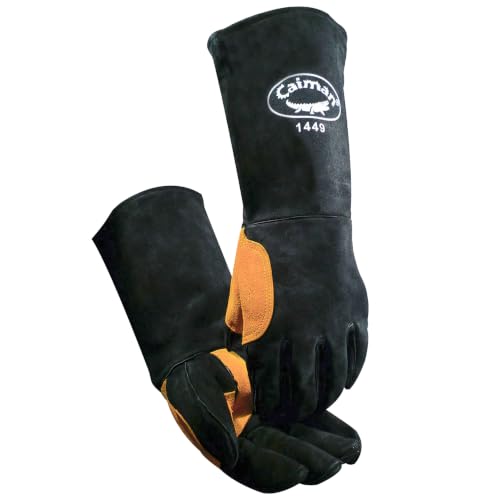 | Best Premium Pick | Insulation: HeatFlect/Aerofoam insulated | Material: Split cowhide leather | Stitching: 100% Kevlar thread | VIEW LATEST PRICE | Read Our Analysis |
| Caiman Split Cowhide Leather Welding Gloves (1440) | 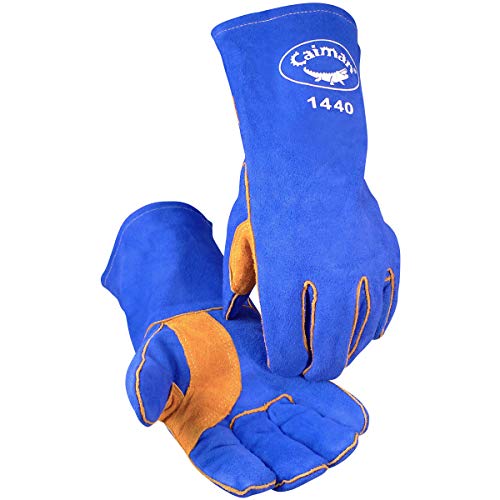 | Best Value | Insulation: Aerofoam insulated | Material: Split cowhide leather | Stitching: Kevlar stitching | VIEW LATEST PRICE | Read Our Analysis |
| LeaSeek Leather Forge Welding Gloves Heat/Fire Resistant | 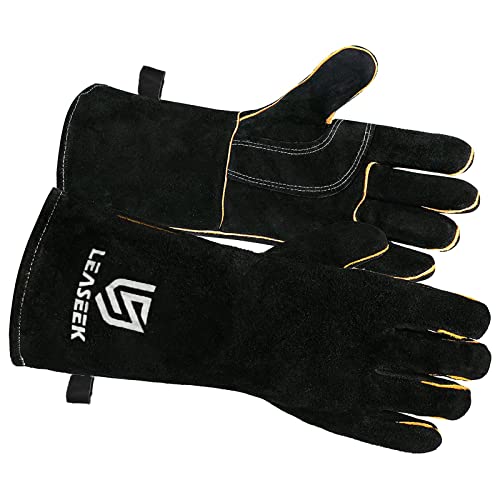 | Most Versatile | Insulation: Cotton/Kevlar insulated | Material: Cowhide split leather | Stitching: Kevlar stitching | VIEW LATEST PRICE | Read Our Analysis |
| ARCCAPTAIN Leather Forge Welding Gloves 16-Inch Heat Resistant |  | Best High-Heat Protection | Insulation: Cotton insulated | Material: Split cowhide leather | Stitching: Double-stitched Kevlar seams | VIEW LATEST PRICE | Read Our Analysis |
| DEWALT Leather Welding Gloves Fire/Heat Resistant |  | Best Brand Option | Insulation: Leather insulated | Material: Buffalo leather | Stitching: Kevlar stitching | VIEW LATEST PRICE | Read Our Analysis |
| Long Welding Gloves 23.6 Inches Heat Resistant Leather |  | Maximum Coverage | Insulation: Cotton-lined | Material: Cowhide leather | Stitching: Kevlar stitching | VIEW LATEST PRICE | Read Our Analysis |
More Details on Our Top Picks
Caiman Goat Grain MIG/Stick Welding Gloves (1520)
Caiman Goat Grain MIG/Stick Welding Gloves (1520) are suited for welders working in cold weather. The wool-lined interior helps trap heat and adds comfort during long jobs. The Kontour design follows the natural shape of your hand, keeping your fingers aligned for precise control. The Kontour Thumb creates a seamless grip without seam pressure. The Kontour Wrist fits securely, reduces slippage, and improves safety. Kevlar thread reinforces the seams, providing durable protection in high-temperature welding environments.
- Insulation:Wool-lined
- Material:Split goat grain leather
- Stitching:Kevlar thread
- Welding Use:MIG/Stick
- Cuff Style:Wrist cuff
- Size:Large
- Additional Feature:Wool-lined interior
- Additional Feature:Kontour thumb design
- Additional Feature:Ergonomic wrist fit
Caiman Premium Split Cowhide Welding Gloves (1512)
If you weld in high-heat conditions, these gloves provide serious heat protection. You get Caiman Premium Split Cowhide MIG/Stick Welding Gloves in blue and gold, size large, with premium split cowhide leather, wool lining, and Kevlar stitching. The supple leather stands up to tough welding jobs while staying durable for long-term use. The Kontour design follows the natural shape of your hand, improving finger alignment and comfort. Wool insulation adds warmth, and the ANSI Contact Heat Level 3 certification with ASTM F1060-18 backing helps protect you up to 392°F.
- Insulation:Wool-lined
- Material:Split cowhide leather
- Stitching:Kevlar stitching
- Welding Use:MIG/Stick
- Cuff Style:Standard cuff
- Size:Large
- Additional Feature:ANSI Contact Heat Level 3
- Additional Feature:ASTM F1060-18 certified
- Additional Feature:Temperature rated 392°F
Caiman Premium Split Cowhide Welding Gloves (1508)
Need full forearm protection for MIG or stick welding? The Caiman Premium Split Cowhide Welding Gloves (1508) provide 18-inch coverage with a scalloped gauntlet cuff and elbow protection for bent-arm work. They feature genuine split cowhide leather, a fleece-lined, sock-lined interior, and thermal insulation for longer welding sessions. Reinforced palms, reinforced index areas, a keystone thumb, and Kevlar stitching help improve durability. The Kontour design follows the shape of your hand, supports finger alignment, and helps you maintain comfort, control, and dexterity while you weld.
- Insulation:Fleece-lined
- Material:Split cowhide leather
- Stitching:Kevlar stitching
- Welding Use:MIG/Stick
- Cuff Style:Gauntlet cuff
- Size:Large
- Additional Feature:18-inch length
- Additional Feature:Scalloped gauntlet cuff
- Additional Feature:Reinforced index area
Caiman Premium Split Cowhide Welding Gloves (1506)
For welders who need a snug, controlled feel, these gloves offer a highly ergonomic fit. You get Caiman’s premium split cowhide MIG and Stick gloves in a large blue and black style 1506, built with genuine leather, Kevlar stitching, and a sock lined design. The Kontour form fitting shape helps you move precisely and reduce hand fatigue. Reinforced palms and thumbs enhance durability, while the side seam sits away from high wear zones. Natural cow fur and fleece lining add insulation for cold jobs. They are ideal for demanding work, and you should hand wash them to preserve performance.
- Insulation:Cow fur/fleece-lined
- Material:Split cowhide leather
- Stitching:Kevlar stitching
- Welding Use:MIG/Stick
- Cuff Style:Standard cuff
- Size:Large
- Additional Feature:Natural cow fur lining
- Additional Feature:Reinforced thumb protection
- Additional Feature:Side seam placement
Caiman Split Cowhide Leather Welding Gloves (1449)
Caiman’s 1449 split cowhide welding gloves are a premium choice whenever you need serious heat protection. They feature premium split cowhide leather, HeatFlect aluminized insulation, and Aerofoam lining that helps reflect radiant heat while keeping you comfortable. Full sock construction, a reinforced palm and thumb, and fully welted seams with 100% Kevlar thread improve durability. They are suitable for MIG, TIG, or stick welding, and the gauntlet cuff adds extra coverage. They are black, large, ambidextrous, hand wash only, and built for extended wear with maximum safety and reliable seam strength.
- Insulation:HeatFlect/Aerofoam insulated
- Material:Split cowhide leather
- Stitching:100% Kevlar thread
- Welding Use:MIG/TIG/Stick
- Cuff Style:Gauntlet cuff
- Size:Large
- Additional Feature:HeatFlect aluminized insulation
- Additional Feature:Full sock construction
- Additional Feature:Keystone Caiman thumb
Caiman Split Cowhide Leather Welding Gloves (1440)
Serious welders need reliable heat protection, and you will appreciate the Caiman Split Cowhide Leather Welding Gloves (1440) whenever you need durable, insulated coverage. They are made with premium split cowhide, a leather palm, a reinforced thumb, and full welted seams for strong abrasion resistance. The insulated back helps shield you from radiant heat, while the Aerofoam lining adds comfort. Kevlar stitching improves seam strength, and the heavyweight build helps the gloves maintain their shape. They are ambidextrous, reusable, and designed for repeated welding tasks, but they are not waterproof.
- Insulation:Aerofoam insulated
- Material:Split cowhide leather
- Stitching:Kevlar stitching
- Welding Use:Welding
- Cuff Style:Self-hemmed cuff
- Size:Large/One Size
- Additional Feature:Insulated back protection
- Additional Feature:Pulse protector
- Additional Feature:DuPont Kevlar stitching
LeaSeek Leather Forge Welding Gloves Heat/Fire Resistant
LeaSeek’s leather forge gloves are built for serious heat protection and control. They feature heavy-duty genuine cowhide split leather, Kevlar stitching, and insulated cotton to help shield your hands from welding sparks, hot cookware, firewood, and burning coal. The 14-inch length also helps protect your forearms during forge, grill, oven, or campfire work. A cotton liner, canvas cuff, and sweat-absorbing construction improve comfort and finger sensitivity, so you can handle tools more steadily. Reinforced stress points add abrasion, tear, puncture, cut, and oil resistance for longer use.
- Insulation:Cotton/Kevlar insulated
- Material:Cowhide split leather
- Stitching:Kevlar stitching
- Welding Use:Welding/forge
- Cuff Style:Canvas cuff
- Size:14-inch
- Additional Feature:14-inch extra-long
- Additional Feature:1.5 mm leather
- Additional Feature:Abrasion-resistant stress points
ARCCAPTAIN Leather Forge Welding Gloves 16-Inch Heat Resistant
ARCCAPTAIN’s 16-inch forge gloves offer strong high-heat protection for welding and demanding thermal work. They feature heavy-duty split cowhide, double-reinforced palm padding, and heat resistance up to 662℉, along with protection from ultraviolet and infrared radiation. Reinforced seams and double stitching help the gloves resist abrasion, sparks, spatter, and flames for extended wear. The soft cotton lining and straight thumb design improve comfort and control, while the long cuff helps protect your forearm from slag, coals, and debris. These gloves are suitable for welding, forging, grilling, and handling hot tools.
- Insulation:Cotton insulated
- Material:Split cowhide leather
- Stitching:Double-stitched Kevlar seams
- Welding Use:MIG/Stick/Flux-core
- Cuff Style:Oversized cuff
- Size:One size fits most
- Additional Feature:Withstands 662°F
- Additional Feature:Straight thumb design
- Additional Feature:Denim cotton inner cuff
DEWALT Leather Welding Gloves Fire/Heat Resistant
DEWALT’s leather welding gloves are a solid brand choice if you need dependable fire and heat protection. They feature grade A buffalo leather, a full leather shell, and Kevlar stitching that helps protect against flames, sparks, slag, and spall. The extended gauntlet cuff slips on quickly and fits over fire resistant sleeves and jackets, while the elastic wrist helps keep the glove secure. With EN407 contact heat level 1 and strong abrasion resistance, they offer better protection and dexterity for welding. Hand wash them to keep them in good condition.
- Insulation:Leather insulated
- Material:Buffalo leather
- Stitching:Kevlar stitching
- Welding Use:Welding
- Cuff Style:Long gauntlet cuff
- Size:One size
- Additional Feature:Grade-A buffalo leather
- Additional Feature:EN407 level 1
- Additional Feature:Elastic wrist
Long Welding Gloves 23.6 Inches Heat Resistant Leather
Need maximum coverage? These 23.6-inch leather gloves shield your forearms from intense heat. They feature 1.5 mm-thick cowhide that withstands temperatures up to 662°F, plus Kevlar reinforcement that resists cuts, tears, punctures, and abrasion. The soft cotton lining helps absorb sweat and improve comfort, while the flexible fit lets you move your fingers and arms with ease. Extra leather on the palm and back adds protection during welding, forging, grilling, or furnace work. Use them whenever you need reliable coverage against sparks, flames, and heavy-duty tasks.
- Insulation:Cotton-lined
- Material:Cowhide leather
- Stitching:Kevlar stitching
- Welding Use:MIG/TIG/Stick/Flux-core
- Cuff Style:Long forearm cuff
- Size:23.6-inch length
- Additional Feature:23.6-inch length
- Additional Feature:Double cowhide layer
- Additional Feature:Bite-proof Kevlar layer
Factors to Consider When Choosing Insulated Welding Gloves
When choosing insulated welding gloves, focus on heat retention and the lining material so your hands stay protected without overheating. You should also look for a fit that provides good dexterity, along with a cuff length that covers your wrist and forearm. Check the seam strength as well, since sturdy stitching helps the gloves hold up under tough welding conditions.
Heat Retention
Heat retention matters most when you are welding in cold conditions, so look for gloves with insulating linings like wool, fleece, cotton, or aerofoam to help keep your hands warm during long shifts. You should also choose gloves with aluminized or insulated back layers because they reflect radiant heat and reduce heat loss from the outer surface. A full sock construction helps trap warmth more evenly around your hand, which can make long sessions more comfortable. Thicker leather, such as split cowhide or heavy duty leather, adds another thermal barrier without sacrificing protection. For extra warmth, pick gauntlet cuffs or long sleeves that cover your wrist and forearm, since they block cold air and help your gloves hold heat where you need it most.
Lining Material
The right liner can make a big difference in how insulated welding gloves perform, especially in cold conditions. You will often see wool, fleece, cotton, Aerofoam, or sock style construction used to trap heat and improve comfort. A thicker thermal liner helps you retain warmth and reduce heat loss, but it should not feel so rigid that it limits control. Soft linings like cotton or fleece also absorb sweat, so your hands stay drier during long welding sessions. Some gloves add aluminized insulation or other heat reflective layers to enhance protection against radiant heat. When choosing a liner, focus on balance: you want insulation, breathability, and enough flexibility that the glove stays warm without feeling overly bulky or stiff.
Fit And Dexterity
Even with strong insulation, your gloves still need to move with your hands, not against them. Choose insulated welding gloves with a contoured, form-fitting shape that follows your natural hand position and keeps your fingers aligned for better control. A snug fit helps you work with more precision, so look for designs that reduce bulk without sacrificing insulation. You will also want a thumb design that avoids seams in the grip area, because it can improve flexibility and make the glove feel smoother in use. A secure wrist fit matters too, since it helps prevent slippage and supports stable movement during detailed tasks. Reinforced but flexible palms, along with ergonomic finger shaping, can reduce fatigue while preserving the sensitivity you need.
Cuff Length
Consider cuff length based on how far up your forearm you need protection from heat and sparks on the job. If you face flying sparks, slag, or hot debris, longer cuffs provide better coverage beyond the wrist. Shorter cuffs feel lighter and allow greater wrist movement, but they offer less protection against radiant heat and splatter. If you wear sleeves or a jacket, gauntlet-style cuffs help cover the gap and keep sparks out. For overhead work or bent-arm positions, extra-long cuffs, such as 16 inches or more, can make a real difference. Match cuff length to the heat level and amount of spatter you expect so you stay protected without adding unnecessary bulk.
Seam Strength
Seam strength matters because high heat welding can expose weak stitching quickly, so you want gloves built with Kevlar thread or Kevlar stitching to handle repeated sparks and spatter. You will get better durability when seams are fully welted or double stitched, since those designs reinforce high stress areas and help prevent premature failure. Look for seam placement that avoids the glove’s main bend and flex points because abrasion there can wear stitching down sooner. Reinforced palms, thumbs, and other stress points also matter because they spread force across the glove instead of concentrating it on one seam. For insulated welding gloves, strong seams do not just last longer, they also help preserve the heat barrier and keep protective coverage consistent over time during demanding work.
Grip Comfort
Grip comfort matters because you need insulated welding gloves that move with your hands instead of fighting them. Look for an ergonomic fit that follows the natural hand shape and keeps your fingers aligned. That shape lets you grip tools more naturally and reduces strain during long welds. Choose gloves with seamless or thumb-contoured grip zones because they reduce rubbing at high-contact points and improve control. A snug wrist closure also helps keep the glove steady, so you do not waste effort adjusting it. When you work in cold shops, wool, fleece, or cotton linings can keep your hands warm without making the gloves stiff. Reinforced palms, thumbs, and other stress points help preserve comfort and grip performance over repeated use.