

Water pressure that climbs into triple digits or lurches when a neighbor fires up a garden hose is more than an annoyance. Hard spikes wear out washing machine valves, burst supply lines behind washing machines, and make faucets spit before settling down. A regulator tames that incoming force, holds it to a sensible level, and protects everything downstream. Choosing well means matching valve size, material, and adjustability to your home’s plumbing, not grabbing whatever sits at the top of a category page.
The roundup below covers regulators for whole-house supply, specialty low-pressure drip lines, hydronic boiler feeds, and backflow prevention, so you can find a fit without wading through everything at once.
A Closer Look At The Lineup
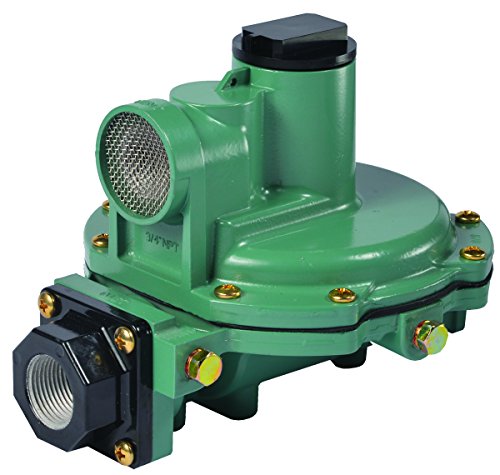
Arikit R622-DFF Propane 2nd Stage Regulator

Pinrui LF25AUB-Z3 3/4″ Pressure Reducing Valve

Watts LF25AUB-Z3 Water Pressure Reducing Valve 1/2″

Pinrui Upgrade 3/4″ NR3XL Pressure Reducing Valve

American Standard M952100-0070A Pressure Balancing Unit

Watts SB1156F Bronze Water Feed Regulator 1/2″

Zurn Wilkins 1-NR3XLDU 1″ NR3XL Pressure Reducing Valve

Vibrant Yard Company 15 psi Water Pressure Reducer Regulator

Zurn Wilkins 34-70XL 3/4″ 70XL Pressure Reducing Valve

Pinrui 1-350 1″ Double Check Backflow Preventer
Meet The Standout Selections
LP gas appliances do not tolerate wobbly pressure, and the Arikit R622-DFF is built for homes where the propane tank runs a generator, a furnace, a water heater, and a range all at once. The 3/4-inch FNPT connections on both sides match standard residential gas piping, so threading it into an existing two-stage system is straightforward.
Unlike the water-focused Pinrui and Watts models reviewed next, this regulator lives on a gas line, not a domestic water line, and the 9–13 inch WC output is what gas valves and burners actually need. Owners commonly mount it near the appliance manifold, where it pulls a steady reading from the first-stage regulator upstream.
What Works In Its Favor
- Handles up to 1,400,000 BTU, covering whole-house propane demand without choking off multiple appliances.
- Maintains a steady 9–13 inch WC output range, which keeps burner performance consistent even when the tank pressure shifts.
- Standard 3/4-inch FNPT connections drop into typical residential propane plumbing without adapters.
- Second-stage design works alongside an existing first-stage regulator for layered pressure control.
Things To Weigh Up
- This unit regulates gas, not potable water, so it cannot be swapped in for the Watts or Pinrui valves elsewhere in this roundup.
- Heavy-duty BTU throughput is more than smaller cabins or single-appliance homes need.
Right Fit For
Homeowners running whole-house propane who already have a first-stage regulator upstream and need reliable second-stage gas control.
Skip It When
Your concern is domestic water pressure, in which case the Pinrui Upgrade 3/4″ NR3XL Pressure Reducing Valve is a more relevant pick.
The Pinrui LF25AUB-Z3 is the broader cousin of the more focused Watts LF25AUB below. Where the Watts targets narrow residential lines at 1/2-inch, this one steps up to 3/4-inch NPT female union threading on both ends, which matches the supply line feeding most mid-sized homes from the meter.
Cast bronze construction (an alloy made primarily from copper with tin and other hardening metals) gives it the kind of corrosion resistance you want on a fitting that will live untouched for years. For homeowners chasing a flexible pressure setup rather than a specific BTU target, this is a sensible middle ground.
The Case For It
- Cast bronze body tolerates mineral-heavy water better than plated steel over the long haul.
- 3/4-inch NPT female union connections fit standard residential supply lines without reducer fittings.
- Stabilizes incoming pressure, which can translate into lower fixture wear and reduced water waste.
- At home in residential, commercial, and light industrial setups, so it works for accessory buildings too.
Worth Noting
- Less name recognition than the Watts LF25AUB, so replacement cartridge sourcing may be slightly less convenient.
- Working pressure ceiling is lower than the Pinrui NR3XL upgrade reviewed in pick 4.
Feature Card
Built With In Mind
Homeowners with 3/4-inch service lines who want a sturdier bronze alternative to the standard Watts design.
Reach For A Different Pick When
You need fine adjustability across a wide psi range, in which case the Pinrui Upgrade 3/4″ NR3XL Pressure Reducing Valve covers more ground.
The Watts LF25AUB-Z3 has been a quiet workhorse in residential plumbing for years, and the lead-free brass body (meaning no added lead in the wetted metal, suitable for drinking water lines) is what makes it the default choice on 1/2-inch service lines. The NPT female union inlet and outlet (NPT stands for National Pipe Thread, the tapered thread standard used on most U.S. metal plumbing fittings) let you unscrew the valve from the line for service without cutting pipe.
Compared with the Pinrui LF25AUB in pick 2, this one trades bronze for brass and drops to 1/2-inch threading. The polymer seat module (a replaceable internal sealing component) is field-serviceable, and Watts replacement parts are widely available, which keeps long-term ownership simple.
Real Benefits
- Lead-free brass construction is rated for potable water, so it can sit on the main service line without concern.
- NPT female union connections make in-line service possible without cutting or re-soldering.
- PEX, CPVC, and quick-connect compatibility (PEX is flexible cross-linked polyethylene tubing, CPVC is chlorinated polyvinyl chloride) opens it up to retrofit projects beyond traditional copper.
- Replaceable seat module extends valve life without replacing the whole body.
Points To Note
- 1/2-inch sizing suits smaller branch lines; whole-house 3/4-inch services may want the Pinrui LF25AUB instead.
- Polymer seat, while serviceable, can wear faster in extremely hot or sediment-heavy water over many years.
Who Should Grab It
Homeowners with 1/2-inch copper, PEX, or CPVC supply runs who want a proven pressure reducing valve with easy service access.
Look Elsewhere When
You are running a 3/4-inch trunk line with higher volume, where the Pinrui Upgrade 3/4″ NR3XL Pressure Reducing Valve handles the load better.
The Pinrui Upgrade NR3XL is what you reach for when off-the-shelf factory settings do not cut it. The adjustable range runs from 15 psi all the way to 75 psi, with the factory default landing at 50 psi, so dial-in is possible for unusual main-line conditions or multi-unit buildings.
Where the Watts LF25AUB above is fixed-output, this one accepts a wrench for output tuning, and the cast bronze body matches the heft you want on a critical main shutoff. Maximum operating pressure is rated to 400 psi, which is far above what a municipal line will deliver, leaving safety margin for hammer spikes.
Useful Touches
- 15–75 psi adjustable range covers anything from a gentle drip system to a high-rise branch line.
- Cast bronze body holds up to repeated pressure cycling without deformation.
- 400 psi maximum operating pressure leaves headroom for surge events on aging municipal lines.
- Factory preset at 50 psi for turnkey installs, with adjustment available later if needed.
Honest Caveats
- Adjustability means it must be set correctly at install, or downstream fixtures may still see spikes.
- Heavier bronze body may need support brackets on horizontal pipe runs to avoid stressing joints.
Spec Overview
Whose Shelf It Belongs On
Homeowners managing multi-unit buildings, accessory dwellings, or unusually high incoming mains who need adjustable downstream pressure.
Swap It Out When
You want a simpler set-and-forget valve with factory-fixed output, in which case the Watts LF25AUB-Z3 1/2″ Pressure Reducing Valve fits the bill.
The American Standard M952100-0070A is a different animal from the rest of this list. It does not sit on the main supply to reduce whole-house pressure. Instead, it lives inside a shower valve rough-in to balance hot and cold pressure at the point of use.
That role matters in homes where a toilet flush or washing machine kick causes the shower to spike suddenly toward scalding. Designed as a direct replacement for American Standard R110, R115, R120, and R125 rough-in valves, it slides into place where a worn balancing cartridge has lost its temper.
Strong Points
- Maintains consistent shower temperature by balancing hot and cold pressure in real time.
- Direct-fit design for American Standard R110, R115, R120, and R125 rough-in valves eliminates guesswork.
- Replacement-grade unit saves the cost of a full trim and valve teardown.
- Reduces sudden temperature spikes that pose a scald risk in family bathrooms.
Some Limits To Know
- Not a whole-house pressure regulator, so it does nothing for mains-side spikes.
- Limited to compatible American Standard rough-in series, restricting cross-brand use.
Best Suited To
Homeowners replacing a worn balancing cartridge inside an existing American Standard shower rough-in who need scald protection without a full remodel.
Consider Something Else When
Your pressure problem is at the main shutoff rather than the shower head, where the Watts LF25AUB-Z3 1/2″ Pressure Reducing Valve makes more sense.
Hydronic boiler systems (heating systems that circulate hot water through pipes and radiators rather than blowing air) need a fill valve that holds water inside the loop without bleeding it back into the domestic supply. The Watts SB1156F is built for exactly that, with a 1/2-inch union solder inlet sized for typical boiler feed piping.
This is not the right valve for a kitchen sink or outdoor spigot, and treating it as a whole-house pressure reducer would be a mistake. Where the Pinrui LF25AUB above protects domestic plumbing, this one keeps a sealed heating loop topped up at the correct pressure.
What Helps Most
- Designed specifically for hydronic boiler fill loops in residential and light commercial systems.
- Bronze body tolerates the higher operating temperatures of heating loops.
- Union solder inlet simplifies connection to copper boiler piping.
- Maintains loop pressure during normal operation without constant operator adjustment.
Less Ideal Details
- Solder connection requires a torch and plumbing experience, unlike threaded residential valves.
- Not interchangeable with domestic PRVs like the Watts LF25AUB, so role confusion is common.
Made For
Homeowners with hydronic boilers who need a feed regulator for the closed heating loop and have soldering experience or a plumber lined up.
Where Another Pick Suits Better
For domestic water pressure control on a normal household service line, the Pinrui Upgrade 3/4″ NR3XL Pressure Reducing Valve is the better category match.
Larger homes and properties with a 1-inch service line benefit from the Zurn Wilkins 1-NR3XLDU, which steps up from the more common 3/4-inch valves elsewhere in this roundup. The double-union FNPT connection on both ends (female national pipe thread) means the valve can be removed for service without cutting or unsoldering the line.
A stainless steel debris screen sits ahead of the cartridge, filtering sediment out before it reaches the sealing surfaces, and the cartridge itself is replaceable once it eventually wears. For homes where water clarity is a recurring concern, that screen alone saves on premature wear.
The Upside
- 1-inch FNPT connection suits larger residential service lines and multi-family buildings.
- Double-union design allows full valve removal for cartridge service without disturbing the line.
- Stainless steel debris screen protects internal components from sediment in untreated or well water.
- Cartridge-style internal design simplifies future rebuilds instead of full replacements.
Practical Considerations
- Larger body requires more clearance around the install point than smaller 1/2-inch valves.
- Sediment screen requires periodic removal and rinsing, which adds a small maintenance step.
Perfect Match For
Homeowners with 1-inch service mains or properties drawing from well water where debris filtration is part of long-term reliability.
A Better Fit Elsewhere
For a typical 3/4-inch residential service, the Zurn Wilkins 34-70XL 3/4″ 70XL Pressure Reducing Valve is the right size.
Drip irrigation lines and soaker hoses need pressure in the 10–20 psi range to deliver water without blowing apart fittings. The Vibrant Yard Company regulator drops hose bib pressure to a nominal 15 psi, which is the sweet spot for drip tape and emitter systems.
The 3/4-inch hose thread screws onto a standard outdoor spigot, and the lead-free brass body is rated for a 125 psi inlet, which is far above typical household pressure. Unlike the whole-house PRVs earlier in this list, this one is a point-of-use accessory for garden plumbing.
Key Advantages
- 10–20 psi output range is purpose-built for drip tape and soaker hose systems.
- 3/4-inch hose thread fits standard outdoor spigots without adapters in U.S. and Canadian homes.
- Lead-free brass construction is safe for garden beds growing edible plants.
- Compact point-of-use format installs in seconds without tools.
Where It Is Less Suited
- Limited to 15 psi nominal output, so it cannot serve as a household pressure regulator.
- Low-flow design means pressure drops if multiple downstream branches run at once.
Who Will Love This
Garden owners running drip irrigation or soaker hose systems who need to step hose bib pressure down to emitter-friendly levels.
Not Your Match When
You are managing whole-house pressure at the main shutoff, in which case the Watts LF25AUB-Z3 1/2″ Pressure Reducing Valve is the proper category.
The Zurn Wilkins 70XL line has been in service for decades, and the 3/4-inch 34-70XL is the size most residential plumbers default to on a standard service line. Lead-free bronze and composite construction (blending cast bronze with a corrosion-resistant polymer bell housing) pairs old-school durability with modern material compliance.
A 20-mesh strainer screen (a fine filter with 20 openings per linear inch) catches sediment before it reaches the cartridge, and the unitized replaceable cartridge means long-term service is a matter of swapping one part instead of the whole valve. For homes where set-it-and-forget-it is the goal, this is a comfortable pick.
The Good Stuff
- Long-proven 70XL platform has decades of field history behind it.
- Lead-free bronze and composite body holds up in treated and untreated water supplies.
- 20-mesh strainer screen reduces sediment reaching the working cartridge.
- Replaceable cartridge design minimizes long-term service costs.
- Wide range of end connection options simplifies installation in mixed plumbing systems.
Things To Weigh Up
- Cartridge replacement requires matching Zurn parts, which may not be interchangeable with other brands.
- Heavier build adds weight that older pipe hangers may need to support.
Feature Snapshot
Who It Suits Best
Standard 3/4-inch residential service lines where long-running reliability and easy cartridge service matter more than adjustability.
Wrong Turns To Avoid
If you need wide-range output adjustability, the Pinrui Upgrade 3/4″ NR3XL Pressure Reducing Valve is the more flexible pick.
Backflow prevention is its own job. The Pinrui 1-350 keeps irrigation water from siphoning back into the domestic supply, which matters when fertilizer or lawn chemicals sit downstream of the tap. Two check valves in series mean that a single failure still leaves protection in place.
Stainless steel and reinforced nylon construction handle outdoor conditions, including freezing exposure, better than all-metal domestic valves. This is an accessory for service line entry points and irrigation hookups, not a substitute for a main-line PRV.
Practical Pluses
- Two check valves in series provide redundant backflow protection if one fails.
- Stainless steel and reinforced nylon construction tolerates outdoor and cold-weather exposure.
- Modular pressure vessel design allows offline service without cutting the line.
- Supports both horizontal and vertical installation for flexible routing at the service entry.
Details To Watch
- Not a pressure regulator, so it cannot replace the Pinrui LF25AUB or Watts PRVs earlier in this roundup.
- 1-inch sizing may require reducers on smaller residential service taps.
Quick Facts
Made For
Irration contractors and homeowners who need code-conscious backflow protection at the irrigation service line entry point.
Where A Sibling Pick Shines
For whole-house pressure reduction rather than backflow blocking, the Pinrui Upgrade 3/4″ NR3XL Pressure Reducing Valve is the right category match.
What Matters Most Before Choosing Home Water Pressure Regulators
Sizing comes first, and it is the easiest detail to get backwards. Measure the diameter of the supply pipe where the valve will live, not the diameter of the existing fixture. A 1/2-inch branch line feeding a bathroom cannot swallow the volume a 3/4-inch main line delivers, and the mismatch shows up as low flow at the fixtures even when the regulator is doing its job.
Material is the next fork. Lead-free brass and cast bronze both handle residential water, with bronze typically favored for heavier-duty or longer-life installs. Polymer components inside the valve, such as seats and cartridges, are serviceable but eventually wear, so part availability matters if you expect to keep the valve for decades rather than years.
Adjustability is worth weighing honestly. Fixed-output valves like the Watts LF25AUB-Z3 work for most homes on typical municipal mains. Adjustable valves like the Pinrui NR3XL pay off when the incoming pressure swings wildly or when running multi-unit plumbing that needs different downstream settings.
What The Numbers Behind Each Valve Tell You
Working pressure ratings tell you what the valve can survive, not what it should run at. A 300 or 400 psi maximum rating simply means the valve will not rupture under unusual surge events, which is what municipal hammer spikes or pump failures can throw at it. Adjustable ranges describe the dial-in window for downstream output, and factory presets sit inside that window.
Connection types, including NPT threads, solder unions, and hose threads, dictate what plumbing the valve can join. NPT threads work on metal pipe; solder unions require copper pipe and a torch; hose threads fit outdoor spigots. The Vibrant Yard Company reducer is the only one in this roundup designed to thread onto a hose bib rather than a hard plumbing line.
Common Shopping Slip Ups
Homeowners often grab a regulator sized for the wrong diameter and wonder why flow drops at fixtures. Matching pipe diameter exactly is the first guard against that mistake. The other common error is treating every pressure device as interchangeable: a hydronic feed valve like the Watts SB1156F is not a substitute for a domestic PRV, and a backflow preventer like the Pinrui 1-350 does not reduce pressure at all.
Skipping sediment pre-filtration is the third slip. Wells and older municipal lines carry debris that wears cartridges early. The Zurn Wilkins models reviewed above include built-in strainers, which is why they survive in sediment-heavy supplies longer than unfiltered valves.
What The Higher Tier Buys
Premium pressure reducing valves earn their step up through materials, adjustability, and serviceability. The Pinrui NR3XL upgrade offers a wide adjustable range and a higher maximum operating pressure ceiling than the basic Pinrui LF25AUB, which matters when incoming mains run unusually hot or when multi-unit plumbing needs precise output tuning. Bronze bodies and replaceable cartridges also reduce the lifetime cost of ownership, since a worn valve does not require full replacement.
For most single-family homes on a stable municipal supply, the mid-tier options cover real needs. For accessory dwellings, multi-unit properties, well water, or unusually high incoming pressure, paying up for the premium tier pays back in longevity and reduced service calls.
Frequently Asked Questions
What psi should a home water pressure regulator be set to? Most homes run comfortably between 50 and 70 psi downstream of the regulator. Lower settings reduce fixture wear but may starve multi-story homes of upstairs flow.
How do I know if my home needs a pressure regulator? Faucets that spit before settling, washing machine hoses that bulge under pressure, and banging pipes when fixtures shut off are common signs that incoming pressure is too high.
Can a regulator reduce water hammer? Pressure regulators help by capping the maximum force behind moving water, but water hammer often also needs water hammer arrestors at quick-closing valves like washing machines.
How long do home pressure regulators last? Service life varies with water quality and usage, but most residential regulators last 10 to 20 years before cartridges or seats need replacement. Bronze-bodied valves tend to outlast polymer-seated units in heavy sediment.
Are lead-free valves required for potable water lines? Modern codes require lead-free components on drinking water lines, so any valve on a domestic service tap should be rated lead-free for potable use.
Final Verdict
Matching the valve to the job is the whole game: a Pinrui or Watts PRV on the main service line, a Zurn Wilkins model where sediment is a concern, a specialty unit like the American Standard balancing cartridge for shower scald protection, and a backflow preventer at the irrigation tap. Run through the actual plumbing diameters and use cases before picking, and the right regulator usually announces itself.
