

A working outdoor faucet is one of those things nobody thinks about until something goes wrong. Winter freezes a cracked spigot, a neighbor borrows water without asking, or a drip line finally gives up after a decade of sun. This list gathers nine hose bib accessories that solve those exact headaches, from winter insulation to security locks to irrigation adapters and rain barrel fittings.
Your Options, Compared

Napredak Garden Hose to 1/4 Tubing Adapter
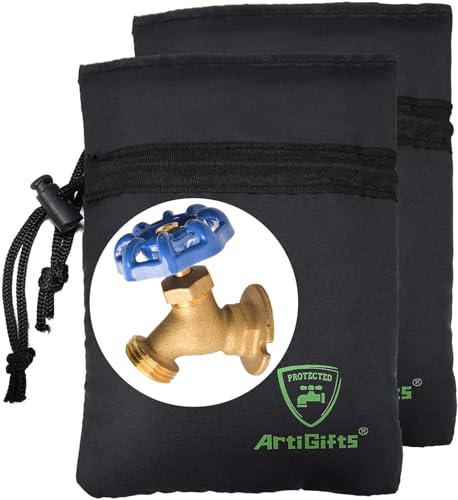
ArtiGifts Pro Outdoor Faucet Cover Socks 5.9″ W x 7.7″ H Black Set of 2

Posnaland Outdoor Faucet Lock Cover with Padlock Black

LUOFANT Brass Rain Barrel Spigot with Bulkhead Fitting Lead-Free 3/4″ GHT

Hometopia 4Pack Outdoor Faucet Covers for Winter 6.7″ W x 8.3″ H

LEIFIDE 2 Set Hose Bib Faucet Extender Garden Spigot Kit Black

Posnaland Outdoor Faucet Lock Cover with Padlock Stainless Steel

Posnaland Outdoor Faucet Locking System with Padlock White Insulated

LEIFIDE 2 Set Hose Bib Faucet Extender Garden Spigot Kit White
A Closer Look At Each Pick
Most outdoor faucets thread onto a standard 3/4-inch garden hose, but drip irrigation and patio misting lines run on skinny 1/4-inch tubing. Bridging those two worlds usually requires a transition fitting, and this Napredak adapter is built specifically for that jump. The body is solid brass rather than plastic, which matters once the fitting lives outdoors through a few summers of UV and hard water.
It also helps that brass resists the cross-threading that ruins cheaper plastic connectors the third time you swap a drip line. Gardeners running raised beds or a small misting array on a patio should find this a clean one-piece solution rather than a stack of reducing washers.
Well-Handled Touches
- Solid brass body shrugs off UV, mineral buildup, and freeze-thaw cycles far better than plastic transition fittings.
- Female GHT (garden hose thread) inlet pairs with any standard outdoor faucet, while the 1/4-inch outlet accepts common drip and misting tubing.
- Compact size keeps the fitting tucked behind a hose reel or under a planter rim.
Points To Note
- Brass weighs more than plastic alternatives, so the outlet end can stress thin 1/4-inch tubing if the run is long and unsupported.
- The 1/4-inch outlet has no built-in shutoff, meaning flow control happens at the faucet itself.
Who It Suits Best
Homeowners converting a single outdoor spigot into a drip irrigation zone or patio misting setup will get the cleanest result from this brass adapter.
Consider Something Else When
If you’re harvesting rainwater into a barrel rather than running drip lines, the LUOFANT Brass Rain Barrel Spigot covers that setup more directly.
Outdoor faucets crack when water trapped inside them freezes and expands, and a foam sock-style cover is the cheapest insurance against a springtime plumbing bill. ArtiGifts builds theirs from a heavyweight polyester pongee shell with PP insulated cotton inside, which means the cover stays put in wind and resists the kind of saturation that turns cheap foam into a soggy mess by January.
Compared to rigid plastic domes, the sock form slides over almost any standard hose bib and tightens around the base, including ones with a slight handle protrusion. For most homes north of the frost line, two covers are enough for the front and back spigots.
What Stands Out
- Outer pongee fabric sheds snow and freezing rain rather than absorbing it, keeping the insulation loft intact.
- Universal 5.9-inch width and 7.7-inch height accommodate most residential wall-mounted faucets and a handle protruding sideways.
- Two-pack covers a typical home’s front and rear spigots without forcing a separate order.
Trade-Offs To Consider
- The fixed dimensions may run tight on unusually large anti-siphon faucet bodies or yard hydrants.
- Hook-and-loop closures need a quick check each fall, since UV degrades the loop pile after a couple of seasons.
Made For
Cold-climate homeowners who want a soft, reusable cover for two standard exterior faucets each winter.
Skip It When
Households with three or more exterior faucets should look at the Hometopia four-pack to cover the whole property in one buy.
Side-yard faucets, vacant-lot homes, and rental properties all face the same problem: anyone walking up can turn the handle and run a hose. Posnaland’s locking cover slips over the entire faucet and accepts a padlock through a built-in hasp, stopping casual water theft before it starts.
The black metallic housing is the cheaper of Posnaland’s two color/material options, which makes it the natural choice when you need security without the corrosion resistance of stainless. Installation is purely mechanical: place, latch, padlock.
Useful Strengths
- Rugged metallic shell blocks both physical access to the valve handle and visual confirmation that the faucet exists.
- Universal fit covers most standard residential outdoor faucets and hose nozzle attachments.
- Lockout design works as a child-safety barrier for households curious about turning the handle.
- Lower cost than the stainless sibling for budget-conscious rentals or side-yard use.
Worth Noting
- Black coating can show surface wear in high-traffic rentals where the cover gets bumped often.
- You should verify your faucet dimensions before ordering, since oversized non-standard bodies may not seat fully inside the housing.
Right Fit For
Property managers and homeowners dealing with unauthorized water use on side-yard or back-alley spigots.
Look Elsewhere When
Coastal homes facing humid, salty air should consider the Posnaland stainless steel lock cover for better corrosion resistance.
Turning a 55-gallon drum into a working rain barrel means drilling a hole, mounting a bulkhead, and threading on a shutoff valve that can take years of outdoor service. LUOFANT packages those three parts in one: a quarter-turn ball valve, a bulkhead fitting with 1/2-inch inlet, and a 3/4-inch male garden hose thread outlet. The body is lead-free brass, which matters when the captured water eventually waters vegetables.
The quarter-turn handle is the real upgrade over the gate valves that come on cheaper kits, since it goes from full off to full on with a quick wrist twist and rarely seizes from mineral deposits.
The Good Stuff
- Quarter-turn ball valve cycles faster than gate valves and resists mineral seizing through wet-dry seasons.
- Lead-free brass keeps stored rainwater free of metal leaching, important for edible gardens.
- Bulkhead fitting fits open-top containers up to a 1/4-inch wall with a 7/8-inch (22 mm) hole.
Honest Caveats
- You must drill a precisely sized hole in the barrel wall; a sloppy hole will leak around the bulkhead gasket.
- Bulkhead fitting is rated for thin walls, so thick-walled IBC totes or rigid plastic tanks will need a different mounting approach.
Best Suited To
DIY rainwater harvesters building their first 55-gallon barrel setup for a backyard garden.
Another Choice May Suit
For simply feeding a drip line from an existing spigot, the Napredak brass adapter handles that conversion without the drilling step.
Most homes have more exterior faucets than people realize: front, back, garage, maybe a hose bib near a pool deck. Buying two-packs adds up fast, which is the pitch behind Hometopia’s four-pack of winter covers at 6.7 inches wide by 8.3 inches tall. Each one slides on without tools, fastening with a hook-and-loop strap and a draw cord.
That extra half-inch of width over the ArtiGifts pair makes the difference on chunkier anti-siphon valves or wall hydrants. For multi-faucet properties, the math favors buying once.
Points In Its Favor
- Four covers stock a typical home with a couple to spare for tenants, guests, or a forgotten side spigot.
- Larger dimensions fit bulkier anti-siphon faucet bodies and wall hydrants that smaller socks miss.
- Tool-free installation means the whole house can be wrapped in under ten minutes before the first hard frost.
- Reusable design folds flat for off-season storage in a single drawer.
Practical Considerations
- Each cover takes a moment to seat properly on offset handles, and a careless wrap can leave a gap where wind-driven cold reaches the pipe.
- Four covers is more than some apartments or small homes actually need, leaving spares that may never get used.
Who Should Grab It
Families with three or four exterior faucets wanting one bulk purchase before winter rather than piecing together two-packs.
Reach For A Different Pick When
A duplex or small home with just two faucets pays less overall for the ArtiGifts two-pack.
Sometimes the existing outdoor faucet is on the wrong side of the wall, buried under landscaping, or simply too close to the house for a hose to reach a planter box. LEIFIDE’s through-wall extender kit adds a brand-new hose bib on the opposite face of the wall, complete with a mounting plate and hex carbon-steel screws.
The brass bib handles outdoor exposure well, and the mounting plate keeps the fixture anchored flat against siding, brick, or stucco. This works best where you have access to both sides of the wall for the supply line connection.
A Strong Showing
- Mounting plate and included screws eliminate a separate hardware store trip.
- Brass bib body outlasts plastic alternatives through seasonal temperature swings.
- Two-pack covers a typical patio plus a planter area in one installation session.
A Few Limitations
- Installation requires drilling through the wall and connecting to a water line, so it’s a step beyond a slip-on accessory.
- Black finish shows mineral spotting from sprinkler splash in hard-water regions.
Whose Shelf It Belongs On
Homeowners adding a new water source on a patio wall or garden bed where dragging a long hose is impractical.
A Better Fit Elsewhere
Renters who can’t modify the building exterior should stay with slip-on accessories like the Napredak brass adapter instead.
The stainless steel sibling of Posnaland’s black lock cover exists for one reason: salt air. Coastal properties, humid climates, and homes near chlorinated pool decks punish metal hardware with constant corrosion, and stainless shrugs off that environment far longer than a coated steel shell. Functionally, the two Posnaland covers operate identically, with the same padlock hasp and weather-resistant design.
For inland properties with normal humidity, the cheaper black option is a reasonable trade, but anyone within sight of a coastline gains meaningful longevity from the upgrade.
Bright Spots
- Stainless steel housing resists corrosion in coastal, humid, and chlorinated environments.
- Same universal fit as the black version covers most residential hose bibs and nozzle attachments.
- Lockout design doubles as a child-safety barrier for curious hands.
Small Caveats
- Costs more than the coated black version, so the upgrade only pays off in genuinely corrosive environments.
- Verify your faucet dimensions before ordering, since oversized bodies may not seat inside the housing.
Perfect Match For
Coastal homeowners or properties with chlorinated pool splash who want security without rust bleed-out.
Swap It Out When
Inland homes without humidity pressure can save money with the Posnaland black version and still get the same locking function.
Most outdoor faucet locks only solve the theft problem, but this Posnaland unit layers in insulation as well. The result is a single piece of hardware that protects against unauthorized use, freeze damage, and casual tampering at the same time, fitting 1/2-inch and 3/4-inch faucets in one adjustable shell.
It belongs in a different category from a plain fabric sock: this is a hard shell, not a soft cover. For vacant properties, vacation homes, and shared property lines where both security and winterization matter, the combined function saves buying two separate items.
Practical Advantages
- Combines lockout security with winter insulation in a single installation step.
- Adjustable fit works with both common 1/2-inch and 3/4-inch residential faucets.
- Included padlock removes the guesswork of matching a separate lock to the hasp.
Less Ideal Details
- Heavier hard-shell design is overkill for mild climates that never see freezing temperatures.
- The white finish can show dirt and mildew in shaded, damp locations.
Built With In Mind
Vacation property owners and landlords needing one device that covers security and freeze protection together.
Where A Sibling Pick Shines
Year-round residents in mild climates who only need a fabric cover should grab the Hometopia four-pack for friendlier seasonal use.
LEIFIDE ships the same through-wall extender kit in white for homeowners whose exterior trim, siding, or stucco makes black hardware look out of place. The functional parts match the black version: brass bib, carbon-steel mounting screws, and a plate that anchors flat against the wall surface.
White also blends visually against painted trim and remains the more common finish on rental-grade fixtures, so landlords adding a patio water source tend to prefer it. The mechanics are unchanged, which means installation demands the same wall-drilling commitment.
What Helps Most
- White finish blends with light-colored siding, stucco, and trim where black looks stark.
- Same brass bib durability as the black version for long outdoor service.
- Two-pack serves a patio plus a planter wall from one purchase.
Where It May Fall Short
- White surfaces show grime, mildew, and irrigation splash more readily than darker finishes.
- Installation still requires drilling through the wall and tying into a supply line, which is beyond a renter’s typical scope.
Who Will Love This
Homeowners with light-colored exterior trim who want the extender kit in a color that disappears into the facade.
Not Your Match When
Anyone adding a spigot to a dark exterior wall gets cleaner visual results from the LEIFIDE black kit.
What Matters Most Before Choosing Hose Bibs
Start with the actual problem you’re solving. A homeowner in Minnesota has a fundamentally different priority list than someone in coastal Florida. Freezing winters push the choice toward insulated covers and weather-resistant materials, while humid coastal climates push toward stainless hardware that won’t corrode within a season.
Thread compatibility matters more than people expect. Most residential outdoor faucets use 3/4-inch GHT (garden hose thread), but rain barrel fittings, drip lines, and through-wall extenders each assume their own standard. Confirming the diameter and thread type before ordering saves a return trip and avoids the spray of mismatched fittings under pressure.
Material choice trades off upfront cost against service life. Plastic fittings handle a season or two cheaply but crack under UV exposure; brass costs more but shrugs off years of weather. Stainless steel adds corrosion resistance for coastal properties that coated metals cannot match. Insulation thickness and outer fabric weight follow the same logic, with heavier pongee shells outlasting thin foam socks.
For multi-faucet homes, bulk packaging matters. Two-packs and four-packs cost less per cover than buying singles, and matching finishes across the property keeps the exterior looking intentional rather than patched together.
Key Considerations Across These Picks
Mistakes Worth Dodging
Skipping a measurement is the most common slip-up. A cover that’s a half-inch too narrow won’t seat over a chunky anti-siphon valve, and a lock that doesn’t fully enclose the handle defeats the security purpose. Pull a tape measure across the faucet body before ordering, including any handle protrusion.
Assuming any outdoor cover handles extreme cold is the second trap. A thin foam dome works in zone 7 but fails in zone 4, where thicker pongee shells or hard-shell insulated locks earn their keep. Match the product to your local frost depth, not a generic “winter” label.
Where The Extra Money Goes
The jump from a basic black lock to a stainless steel housing pays off in corrosion resistance, which matters most near coastlines, pools, or any consistently damp environment. The jump from a plastic fitting to brass pays off in longevity through years of UV exposure and freeze-thaw cycles. In both cases the upgrade is about how many seasons the hardware survives, not how it performs on day one.
Frequently Asked Questions
What size cover does a standard residential faucet need? Most standard hose bibs fit a cover between 5.5 and 7 inches wide and 7 to 8.5 inches tall. Wider anti-siphon valves and wall hydrants sit at the top of that range, so measure across the widest point of the faucet body before choosing.
Can these covers stay on all winter? Yes. Insulated sock-style covers and hard-shell lockouts are designed for continuous outdoor exposure from late fall through early spring. A quick visual check after major windstorms is worthwhile, but most stay seated without intervention.
Are brass fittings worth the higher cost? Brass resists UV, mineral buildup, and freeze damage better than plastic, which extends service life in any climate with seasonal extremes. For gardeners and homeowners using a fitting daily, the upgrade tends to pay for itself in avoided replacements.
Do outdoor faucet locks actually deter theft? A lockout cover stops casual water use by anyone walking up to the property, which covers the majority of incidents at side-yard and vacant-property spigots. Determined intruders with bolt cutters are a different category, but most unauthorized use is opportunistic rather than planned.
How does a hose bib extender differ from a regular faucet? An extender adds a new hose bib through an exterior wall, fed by an internal supply line, whereas a regular faucet connects directly to the home’s plumbing at the point of use. Extenders work where dragging a long hose is impractical, like opposite-side patios or planter beds.
Bottom Line
The right pick depends on what your outdoor faucet actually has to survive: freezing winters, curious children, shared property lines, or a long hose run to a raised bed. Match the product to the problem rather than buying whatever looks closest, and the rest falls into place.
