

Weak showers, slow-filling washing machines, and faucets that trickle when two fixtures run at once are the everyday headaches a booster pump solves. The nine models below cover everything from compact diaphragm units for a single bathroom to whole-house variable-speed systems with app control. Each pick is sized to a real scenario, so you can match horsepower, noise level, and smart features to the way your household actually uses water.
The Picks In Brief
GWANZI 1.2HP Variable Speed Booster Pump 90PSI

czobloik 80 PSI Whole House Booster Pump 115V

MixBubole 1.35HP Variable Speed Booster Pump 90PSI
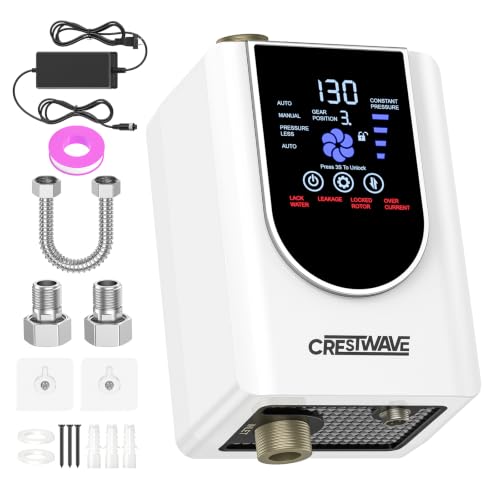
CrestWave Automatic Booster Pump 130W 42PSI 715GPH

CrestWave Automatic Booster Pump 85W 25.6PSI 550GPH

AquaPak PRES-FIX10E-P10 Pressurizer 1 HP 43 LPM

Dreyoo Diaphragm Pressure Pump 115V 4GPM 45 PSI
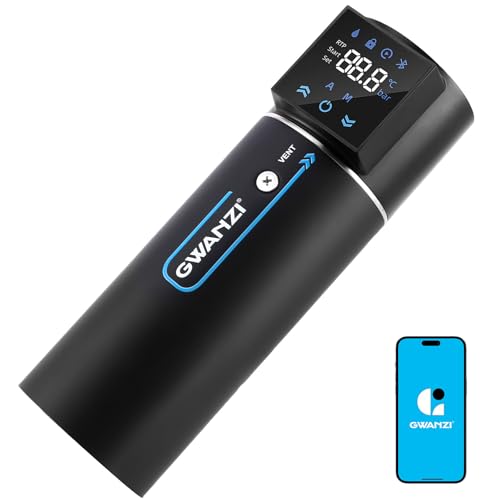
GWANZI 1HP Variable Speed Booster Pump 90PSI
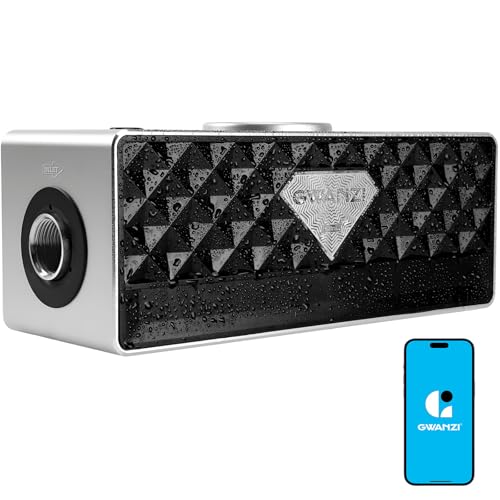
GWANZI 1.5HP Variable Speed Booster Pump 90PSI
More On The Choices That Made The List
The GWANZI 1.2HP sits in the sweet spot for households that want app-level control without stepping up to the largest permanent-magnet unit on this list. A variable-speed drive ramps the motor up and down to match demand, so running one faucet quietly and two showers at once feels less like a power struggle. The 900W motor pushes up to 90 PSI, and OTA firmware updates (over-the-air updates sent through the app) keep the control board current, which matters if you want the pump to grow with smart-home updates.
For a four-person home with a mix of low-flow fixtures and an older pressure tank, you get responsive pressure recovery without the constant on-off cycling of a basic single-speed pump. In our view, the 1500GPH ceiling is plenty unless you regularly fill a large soaking tub in under five minutes.
Useful Highlights
- App-based wireless control for pressure monitoring and adjustment
- Variable-speed operation that scales with household demand
- OTA firmware updates extend usable life without a service call
- 90 PSI ceiling supports multi-story homes with marginal incoming pressure
Worth Noting
- Wi-Fi setup can feel fiddly if your router sits far from the utility room
- Heavier than a basic 1HP unit, so mounting needs solid anchors
- App features rely on the manufacturer keeping the platform active long-term
Built With In Mind
Smart-home households with two to three bathrooms who want app diagnostics and steady pressure without overpaying for the top-tier 1.5HP model.
Look Elsewhere When
The MixBubole 1.35HP is a better fit if quiet, water-cooled operation matters more than smart features in your installation.
The czobloik 80 PSI model takes a more analog approach than the GWANZI units, trading app connectivity for a front-panel adjustment dial. A self-priming integrated structure (the pump can pull air out of its own housing and start drawing water without manual filling) gets the system running faster during installation or after a winter shutdown. For homeowners who want a set-and-forget pressure boost without a smartphone dependency, the simpler interface has real appeal.
Compared to the GWANZI 1.2HP above, this pump trades top-end pressure for straightforward mechanical control. The 80 PSI ceiling suits most municipal-supplied homes where code limits exceed 80 anyway, so overspec’ing is rarely useful.
Bright Spots
- Built-in control panel for manual pressure adjustment
- Self-priming design shortens startup time after maintenance
- Simpler installation with fewer smart-home configuration steps
Trade Offs
- No app or remote monitoring
- Lower 80 PSI ceiling than the 90 PSI variable-speed options
- Single-speed operation can cause short cycling (rapid on-off cycling) in very small households with low flow fixtures
Right Fit For
Mid-sized family homes on municipal water that want dial-in pressure without a connected ecosystem.
A Better Fit Elsewhere
The AquaPak PRES-FIX10E-P10 suits you better if you need stainless internals and a unit rated for two to three full bathrooms.
The MixBubole takes a different route to comfort by attacking pump noise at the source. A water-cooled motor housing (water from the plumbing circulates past the motor to carry heat away, eliminating the need for a cooling fan) replaces the usual fan-cooled aluminum body, dropping operating noise to roughly 30 dB. That is library-quiet territory, which matters when the utility closet shares a wall with a bedroom or home office. The 8000 RPM permanent-magnet motor, a brushless design that uses rare-earth magnets instead of induction coils, also cuts energy use by around 50% compared to traditional pumps.
The 304 stainless steel internal construction keeps water clean and resists the corrosion that turns cast-iron pumps into a cloudy-water problem after a few years. Where the GWANZI 1.2HP above leans on smart features, this one leans on build quality and silence.
Reasons It Performs
- Water-cooled design runs at about 30 dB, suitable for noise-sensitive layouts
- 304 stainless steel internals for cleaner water over time
- Up to 50% better energy efficiency than traditional cast-iron pumps
- Variable-speed permanent-magnet motor matches pressure to real demand
Small Caveats
- Heavier than fan-cooled equivalents, plan for sturdy mounting
- Higher upfront cost than the czobloik analog option
Quick Facts
Best Suited To
Noise-sensitive households with bedrooms or offices adjacent to the utility room who value long-term build quality over app features.
Swap It Out When
The GWANZI 1.5HP fits better if you want a higher-output motor and app control matters more than the quietest operation possible.
The CrestWave 130W leans into flexibility with four operating modes, Auto, Manual, Zero-Pressure Start, and a low-pressure recovery mode, all adjustable through three speed levels. The 130W motor is a step up from the smaller CrestWave below, delivering 715 GPH and 42 PSI of head pressure, which is enough to push water through a long horizontal run or up a floor. For a home with a basement bathroom that loses pressure when the upstairs shower runs, the mode switching gives you a way to prioritize fixtures.
Where the MixBubole above focuses on quiet mechanical refinement, this CrestWave gives you hands-on control over how the pump responds to different demand patterns.
Noteworthy Benefits
- Four operating modes cover auto, manual, zero-pressure, and low-pressure recovery
- 3-speed control within each mode for fine-tuning
- 99 ft max head handles basement-to-attic plumbing runs
Honest Caveats
- 42 PSI ceiling is modest compared to the 90 PSI variable-speed units
- Mode-switching logic can take a week to dial in for first-time users
Who It Suits Best
Multi-zone homes with mixed fixture demands where you want manual control over how the pump responds to different fixtures.
Not Your Match When
The GWANZI 1HP is a stronger fit if you want fully automatic variable-speed behavior and app control without manual mode switching.
The 85W CrestWave is the lightest of the three CrestWave variants, tuned for smaller living spaces where full-house boosting would be overkill. Three modes, Auto, Manual, and Zero-Pressure Start, cover the basics without the mode proliferation of its larger sibling. The 25.6 PSI ceiling and 550 GPH flow handle a single bathroom or a kitchen/laundry combo comfortably.
For an apartment dweller dealing with low building pressure, the compact 85W motor keeps electrical draw low enough for a standard 15-amp circuit. Compared to the Dreyoo diaphragm pump further down, this one trades raw simplicity for a real mode-switching interface.
The Value In It
- Compact 85W motor draws minimal current, suitable for older apartment wiring
- Three-mode operation covers most low-pressure scenarios
- 59 ft max head handles typical single-floor plumbing
Points To Note
- 25.6 PSI is too low for multi-story homes
- Smaller motor means slower recovery between back-to-back uses
Key Product Details
Made For
Apartments, condos, and small homes on shared building pressure systems where modest boost beats full-house horsepower.
Skip It When
The CrestWave 130W is a better match for larger residences that need higher GPH and 99 ft of vertical reach.
The AquaPak PRES-FIX10E-P10 takes a more industrial approach, pairing a 1 HP enclosed motor with stainless steel shaft, body, suction, and discharge components. The Noryl impeller (a glass-reinforced thermoplastic that resists mineral buildup) and self-priming capability up to 9 meters give this pump a serious resume for households that need durability over digital bells. At 43 LPM, the flow is well-matched to two or three bathrooms running off a single pressure source.
Where the GWANZI units above emphasize app and OTA features, AquaPak focuses on mechanical longevity. In our view, this is the right call for installations where the pump lives in a garage or basement and rarely gets touched after setup.
Key Advantages
- Stainless steel shaft, body, suction, and discharge for corrosion resistance
- Self-priming up to 9 meters handles deep well or low-suction scenarios
- Enclosed motor with aluminum housing for thermal protection
- Recommended for 2 to 3 baths, a useful sizing guideline
Points To Keep In Mind
- No smart features or app monitoring
- Heavier mechanical design needs firm mounting and a dedicated outlet
Feature Snapshot
Who Should Grab It
Owners of two-to-three-bath homes who prioritize mechanical durability and corrosion resistance over smart connectivity.
Where Another Pick Suits Better
The GWANZI 1.2HP is a better choice if app control and OTA updates matter more than stainless internals in your installation.
The Dreyoo is the simplest unit in this roundup, a diaphragm pump (a design that uses a flexible membrane to push water in pulses rather than spinning an impeller) rather than a centrifugal booster. At 4 GPM and 45 PSI, the ceiling is modest, but the trade-off is a small footprint and the ability to run dry without damage, a useful safety net for cabins, RVs, or spot-boosting a single faucet. The 1.3-amp draw means it runs off any standard household outlet.
Where the CrestWave 85W above covers small-apartment boosting, this Dreyoo handles even more targeted situations like boosting a single outdoor spigot or a remote sink. The extension on/off switch adds convenience for installations where the pump sits away from the tap.
The Case For It
- Can run dry without damage, safer for intermittent duty
- Self-priming with smooth, quiet operation
- Thermal overload and ignition protection above 70°C
- Extension on/off switch for remote installations
A Few Limitations
- 4 GPM is too low for whole-house use
- 45 PSI ceiling limits vertical reach
Quick Technical Notes
Perfect Match For
Shoppers boosting a single fixture, an outdoor spigot, or a remote sink where whole-house performance is unnecessary.
Consider Something Else When
The CrestWave 85W is a better fit for small apartments that need automatic multi-mode boosting rather than a single-fixture diaphragm unit.
The GWANZI 1HP sits between the 1.2HP above and the entry-level options, hitting the most common whole-house profile. An 800W variable-speed permanent-magnet motor delivers up to 90 PSI with the same app control and OTA firmware path as its larger siblings. For a three-bedroom, two-bath home with average municipal pressure, 1HP is often the right size without paying extra capacity you will not use.
Compared to the czobloik 80 PSI unit further up the list, the GWANZI trades simplicity for adaptive pressure that matches real demand, which reduces the wear that comes from constant on-off cycling.
Real-World Strengths
- 1HP output is well-matched to typical three-bedroom homes
- App-based monitoring and OTA updates match the rest of the GWANZI line
- Variable-speed operation reduces cycling wear over time
Possible Compromises
- Less headroom than the 1.2HP and 1.5HP siblings for very large homes
- Wi-Fi dependent for full feature set
Feature Rundown
Whose Shelf It Belongs On
Average three-bedroom households who want app-driven variable speed without the higher output of the 1.2HP or 1.5HP models.
Reach For A Different Pick When
The AquaPak PRES-FIX10E-P10 is a better choice if your home has two to three full bathrooms and you need stainless internals more than app control.
The GWANZI 1.5HP is the top-output model in the brand’s variable-speed line, with an 1100W motor that targets large villas and multi-bath homes where pressure drops under heavy simultaneous use. The constant-pressure algorithm adjusts motor speed to maintain a steady target, so a filling washing machine and a running shower feel the same as a single open tap. The same OTA firmware path and wireless app control apply, so the platform grows over time.
Where the 1HP sibling above suits typical three-bedroom homes, this 1.5HP is the right call when you regularly have three or more fixtures open at once. You may find the extra capacity unnecessary in a smaller home, but for larger properties it prevents the pressure sag that smaller pumps cannot overcome.
Benefits That Matter
- 1100W motor handles simultaneous multi-fixture demand in large homes
- Constant-pressure algorithm keeps output steady during peak use
- Same app ecosystem and OTA updates as smaller GWANZI siblings
Things To Weigh Up
- Overkill for apartments and small homes
- Higher electrical draw needs a dedicated circuit
- Premium positioning means the price gap over the 1.2HP is meaningful
Who Will Love This
Owners of large villas or multi-bath homes with frequent simultaneous fixture use who need the highest output on the list.
Where A Sibling Pick Shines
The GWANZI 1HP is a smarter spend for average three-bedroom homes that rarely push more than two fixtures at once.
What To Match Against Your Home Before Buying
The right size depends on three things: incoming pressure, the number of fixtures you expect to run at once, and the vertical distance the water must travel. A diaphragm pump is enough for a single remote sink, while a 1HP or 1.2HP variable-speed unit covers most three-bedroom homes. Larger properties with three or more bathrooms usually justify 1.35HP to 1.5HP output, especially on the upper floors.
Variable-speed permanent-magnet motors match pump output to real demand, reducing energy use and the short cycling that wears out pressure switches. Single-speed pumps cost less upfront but cycle more often in low-flow scenarios, which is a common reported issue in households with modern low-flow fixtures.
Noise, Cooling, And Where The Pump Lives
Water-cooled housings like the one on the MixBubole remove the fan noise that makes most boosters audible from the next room. Fan-cooled aluminum housings are lighter and cheaper, but expect them to be noticeable in a quiet utility closet. If the pump will sit next to a bedroom or home office, prioritize water-cooled or low-wattage designs.
Material Matters For Water Quality
Stainless steel internals resist the corrosion that turns cast-iron pumps into a source of discolored water after a few years. In hard-water regions, this difference shows up faster. The AquaPak and MixBubole both lean heavily on stainless wetted parts (metal components that physically contact the water flowing through the pump) for this reason.
Smart Features Or Mechanical Simplicity
App control and OTA firmware updates are genuinely useful if you want to monitor pressure remotely or tweak behavior without a service call. For set-and-forget installations, a front-panel dial and a reliable pressure switch are often all you need, and they avoid any dependency on a manufacturer’s cloud platform staying active.
Key Considerations Across These Picks
Pitfalls Shoppers Hit
Choosing by horsepower alone is a common trap. A 1.5HP pump in a small apartment wastes energy and can short-cycle with low-flow fixtures, while an undersized 85W unit in a three-bath home leaves you with the same low-pressure problem you started with. Match the pump to the number of simultaneous fixtures and the vertical rise, not the spec sheet’s biggest number. Another frequent miss is ignoring the electrical circuit. Higher-output pumps draw more current, and a shared 15-amp circuit can trip the breaker when the pump and another appliance run together.
Where The Extra Money Goes
The jump from a basic single-speed pump to a variable-speed permanent-magnet model pays back through lower energy bills, longer motor life, and quieter operation. Water cooling, stainless internals, and OTA firmware updates add cost up front but reduce the maintenance calls and water-quality issues that show up after a few years of hard use.
Frequently Asked Questions
How do I know what horsepower I need for my home?
Count the fixtures you expect to run at the same time, then add the vertical distance from the pump to the highest fixture. A typical three-bedroom, two-bath home usually sits between 1HP and 1.2HP, while larger multi-bath properties benefit from 1.35HP to 1.5HP.
Will a booster pump work with a private well?
Most of these units are designed for pressurized supply lines, so a well system usually needs a pressure tank and switch already in place. The AquaPak PRES-FIX10E-P10 includes self-priming up to 9 meters, which is useful for shallow well setups, but always confirm compatibility with your well depth and pressure tank configuration.
Are variable-speed pumps worth the higher cost?
For most households, yes. Variable-speed motors scale output to demand, which reduces the constant on-off cycling that wears out single-speed pressure switches and inflates energy use. The trade-off is higher upfront cost and a small dependency on the manufacturer’s app platform.
Can I install a booster pump myself?
Lightweight diaphragm and small centrifugal pumps can go in with basic plumbing tools, but whole-house units often benefit from a licensed plumber, especially when tying into existing supply lines and adding a pressure tank. Local code may also require a permit and backflow prevention.
How loud should I expect a booster pump to be?
Fan-cooled units typically run between 50 and 65 dB, noticeable from a nearby room. Water-cooled designs like the MixBubole drop that to about 30 dB, closer to a quiet library. Placement on a vibration-absorbing mat and away from bedroom walls helps regardless of model.
Final Verdict
The right pump comes down to your home’s size, plumbing layout, and how much you value quiet operation or smart features. A three-bedroom household gets the best balance from a 1HP to 1.2HP variable-speed unit, while larger properties benefit from stepping up to 1.35HP or 1.5HP. For single-fixture or remote applications, a compact diaphragm pump like the Dreyoo handles the job without overspending. Match the pump to your real daily demand, and the difference shows up every time you turn on the tap.
