

A fall arrest kit may meet OSHA requirements and still leave you underprotected if its capacity, anchorage, or fit does not match the task.
When you choose equipment for roofs, towers, or construction work, the details matter more than the label, and the wrong setup can change everything.
Here is how the best kits for 2026 compare, and what you should check before you buy.
| HUAWELL Safety Belt with Adjustable Lanyard |  | Best Adjustable Belt | Product Type: Safety belt kit | Material: Polyester/aluminum | Capacity: Not stated | VIEW LATEST PRICE | Read Our Analysis |
| TRSMIMA Roofing Rope Harness Safety Lanyard Kit |  | Best Roofing Kit | Product Type: Rope harness kit | Material: Polyester/steel | Capacity: 310 lbs | VIEW LATEST PRICE | Read Our Analysis |
| FRONTLINE Fall Protection Harness with D-Ring |  | Best Ventilated Harness | Product Type: Fall protection harness | Material: Polyester/aluminum | Capacity: Not stated | VIEW LATEST PRICE | Read Our Analysis |
| AFP Full-Body Safety Harness with Support Belt |  | Best Support Harness | Product Type: Full-body harness | Material: Polyester/mesh/aluminum | Capacity: 310 lbs | VIEW LATEST PRICE | Read Our Analysis |
| KwikSafety Gibbon Grip 3 ft Safety Anchor Strap | 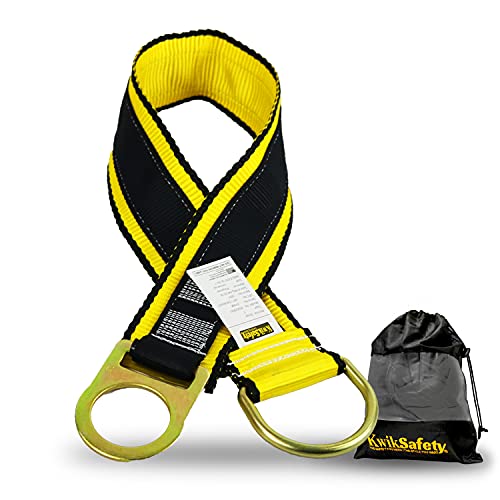 | Best Anchor Strap | Product Type: Anchor strap | Material: Polyester | Capacity: Not stated | VIEW LATEST PRICE | Read Our Analysis |
| KwikSafety Gibbon Grip 6 ft Safety Anchor Strap | | Best Heavy-Duty Anchor | Product Type: Anchor strap | Material: Polyester | Capacity: 310 lbs | VIEW LATEST PRICE | Read Our Analysis |
| AFP Heavy-Duty 18-inch D-Ring Extender with Snap Hook |  | Best Extender | Product Type: D-ring extender | Material: Polyester/steel | Capacity: 310 lbs | VIEW LATEST PRICE | Read Our Analysis |
| KwikSafety Tsunami Braided Rope Vertical Lifeline Kit |  | Best Vertical Lifeline | Product Type: Vertical lifeline kit | Material: Polyamide/polyester/steel | Capacity: 310 lbs | VIEW LATEST PRICE | Read Our Analysis |
| Palmer Safety Harness with Detachable 6 ft Lanyard |  | Best For Comfort | Product Type: Harness kit | Material: Polyester | Capacity: 130–310 lbs | VIEW LATEST PRICE | Read Our Analysis |
| 1D-Ring Fall Protection Safety Harness with Lanyard |  | Best Full-Body Kit | Product Type: Harness kit | Material: Polyester | Capacity: 130–310 lbs | VIEW LATEST PRICE | Read Our Analysis |
More Details on Our Top Picks
HUAWELL Safety Belt with Adjustable Lanyard
Need a highly adjustable belt? HUAWELL fits waist sizes from 32 to 49 inches. The adjustable lanyard extends from 34 to 59 inches, and the side 2 D-rings with self-locking hooks let you connect both ends or just one, depending on the job. The polyester fabric and aluminum alloy hardware are durable, heat resistant, and built for demanding work. It has passed USA ANSI/ASSE 2359 and a CPC test report, so you get gear that meets real standards. Use it for positioning, restraint, tower maintenance, ladder work, or tree climbing. It also includes a 90-day no-question warranty.
- Product Type:Safety belt kit
- Material:Polyester/aluminum
- Capacity:Not stated
- Compliance:ANSI/ASSE 2359
- Adjustability:Adjustable lanyard
- D-Ring:2 side D-rings
- Additional Feature:Self-locking hooks
- Additional Feature:Pad included
- Additional Feature:90-day warranty
TRSMIMA Roofing Rope Harness Safety Lanyard Kit
Built for steep roof work, TRSMIMA’s 50-foot rope kit gives you strong overhead protection. It includes a 0.55-inch braided polyester rope, an alloy steel rope grab, steel snap hooks, and a shock absorber for fall control. The grab features a double-lock screw system and an anti-panic design, while the lanyard supports up to 310 pounds. Its energy absorber helps limit arresting force to 900 pounds and supports up to 6-foot free falls. ANSI and CE compliance add confidence. Use it for roofing, climbing, inspections, gutter cleaning, or rescue.
- Product Type:Rope harness kit
- Material:Polyester/steel
- Capacity:310 lbs
- Compliance:ANSI, CE
- Adjustability:Adjustable
- D-Ring:Rope grab hardware
- Additional Feature:50-foot rope
- Additional Feature:Shock absorber included
- Additional Feature:Anti-panic lock
FRONTLINE Fall Protection Harness with D-Ring
Should you need a ventilated, compliant safety harness for long shifts, FRONTLINE fits the bill. It features polyester fabric, high-tenacity black webbing, aluminum hardware, and safety orange stitching that makes inspection easier. The moisture-wicking back, shoulder, and waist pads help keep you cooler, reduce fatigue, and limit heat buildup. Use the back web loop for twin SRLs, or keep the D-ring ready for rescue or another SRL setup. The reinforced belt and rigid pad support tool belts without sagging. It meets OSHA and ANSI requirements, and integrated suspension trauma straps help protect you after a fall.
- Product Type:Fall protection harness
- Material:Polyester/aluminum
- Capacity:Not stated
- Compliance:OSHA, ANSI
- Adjustability:Adjustable fit
- D-Ring:Back D-ring
- Additional Feature:Moisture-wicking pads
- Additional Feature:Suspension trauma straps
- Additional Feature:Tool-belt support
AFP Full-Body Safety Harness with Support Belt
Should you need all-day comfort and secure fall protection, the AFP Full-Body Safety Harness with Support Belt fits well. You get heavy-duty polyester webbing, vented breathable mesh pads, and soft-edge foam shoulder support that help reduce pressure and sweat. The extra-wide 8-inch back belt adds plush comfort, while five adjustment points let you dial in the fit. Quick-release chest buckles and a spring shoulder adjuster speed setup. Hi-viz stitching, side D-rings, a fixed D-ring, and lanyard keepers enhance convenience. With 5,000 lb tensile strength, a 310 lb capacity, and ANSI/OSHA compliance, it is built for demanding work.
- Product Type:Full-body harness
- Material:Polyester/mesh/aluminum
- Capacity:310 lbs
- Compliance:ANSI, OSHA, CE
- Adjustability:5 adjustment points
- D-Ring:Side D-rings
- Additional Feature:Quick-release chest buckles
- Additional Feature:Cell phone strap
- Additional Feature:SRL adapter
KwikSafety Gibbon Grip 3 ft Safety Anchor Strap
KwikSafety’s Gibbon Grip 3 ft safety anchor strap provides a dependable beam to anchor setup for fall protection. You can wrap it around I beams, web trusses, or concrete beams to create a secure attachment point for your body support, lanyard, SRL, or vertical lifeline. It works well in residential, commercial, and industrial jobs, including roofing, scaffolding, aerial lifts, and gutter cleaning. You will also appreciate its OSHA compliant design for work where compliance matters. It is not shock absorbing, so pair it with a shock absorbing lanyard if needed for safer fall arrest.
- Product Type:Anchor strap
- Material:Polyester
- Capacity:Not stated
- Compliance:OSHA compliant
- Adjustability:Not adjustable
- D-Ring:Double D-ring
- Additional Feature:Cross-arm strap
- Additional Feature:Beam choker design
- Additional Feature:Web pass-thru
KwikSafety Gibbon Grip 6 ft Safety Anchor Strap
Should you need a rugged tie-off point, the KwikSafety Gibbon Grip 6 ft anchor strap stands out. You can wrap this polyester beam choker around a pole, beam, or other solid structure, then use the large double D ring to connect your lanyard, safety harness, or hook. It supports up to 310 pounds and has a 5,000 pound minimum breaking strength, but it is not shock absorbing or adjustable. You will find it useful for roofing, scaffolding, tree trimming, ladders, and industrial work. Use proper training, inspect it before each job, and follow OSHA fall protection practices.
- Product Type:Anchor strap
- Material:Polyester
- Capacity:310 lbs
- Compliance:OSHA compliant
- Adjustability:Not adjustable
- D-Ring:Double D-ring
- Additional Feature:Six-foot length
- Additional Feature:Large D-ring connector
- Additional Feature:Pass-through design
AFP Heavy-Duty 18-inch D-Ring Extender with Snap Hook
Should you need extra reach at the harness D-ring, AFP’s AFAS2018 extender fits the job cleanly. You get an 18-inch heavy-duty polyester extender with a forged steel O-ring and snap hook, plus corrosion-resistant hardware built for rough outdoor use. Its braided lanyard and high-tension stitching help resist tearing and fraying, while the galvanized hook connects to your dorsal D-ring and the O-ring anchors securely. It meets OSHA and ANSI Z359.12/Z359.1-2007 requirements, supports a 5,500-pound rating, and suits single-user fall arrest or restraint work only.
- Product Type:D-ring extender
- Material:Polyester/steel
- Capacity:310 lbs
- Compliance:OSHA, ANSI
- Adjustability:Not adjustable
- D-Ring:O-ring/extender
- Additional Feature:18-inch extender
- Additional Feature:Forged steel O-ring
- Additional Feature:Single-user only
KwikSafety Tsunami Braided Rope Vertical Lifeline Kit
For crews needing a rugged vertical lifeline setup, this KwikSafety kit delivers dependable fall protection. You get a premium yellow and black braided polyamide rope with a hardened plastic thimble, so it stays strong, flexible, and abrasion resistant on demanding jobs. The 100 percent polyester shock absorber deploys during a fall, while the adjustable rope grab helps you move confidently on vertical climbs. Two alloy steel double locking snap hooks, each rated to 5,000 lb, connect easily to compatible anchors. It is OSHA compliant, built for one user, and capped at 310 lb including tools.
- Product Type:Vertical lifeline kit
- Material:Polyamide/polyester/steel
- Capacity:310 lbs
- Compliance:OSHA compliant
- Adjustability:Adjustable rope grab
- D-Ring:D-ring compatible
- Additional Feature:Braided vertical lifeline
- Additional Feature:Hard plastic thimble
- Additional Feature:Not horizontal use
Palmer Safety Harness with Detachable 6 ft Lanyard
Palmer’s full-body harness is designed for comfort and adjustability on long workdays. It includes a heavy-duty fall protection kit with a detachable 6 ft single-leg lanyard, internal shock absorption, and a snap hook for secure connection. It exceeds ANSI/ASSE Z359.11-2021 and aligns with OSHA expectations for work at height. The single dorsal D-ring supports fall arrest, travel restraint, and rescue. It fits users from 130 to 310 lb and from 4’10” to 6’6″. Keep the buckles fastened, the straps snug, and the chest strap centered. Use it with roof anchors or lifelines.
- Product Type:Harness kit
- Material:Polyester
- Capacity:130–310 lbs
- Compliance:ANSI/ASSE Z359.11-2021
- Adjustability:Adjustable fit
- D-Ring:Single dorsal D-ring
- Additional Feature:Detachable lanyard
- Additional Feature:Men and women
- Additional Feature:Travel restraint ready
1D-Ring Fall Protection Safety Harness with Lanyard
Should you need a dependable full-body kit for roofing, construction, or rescue work, WELKFORDER’s WFHL001 fits the job. You get a 1D-ring PFAS with a 6-foot shock-absorbing lanyard, a universal orange fit, and permanent attachment for quick setup. It meets ANSI/ASSE Z359.11-2014, Z359.13-2013, Z359.12-2009, and OSHA 1926.502(d)(16), and each unit is inspected. The dorsal D-ring routes force through your shoulders and thighs, while the lanyard limits arresting force to 900 lbs after deployment. Use it only if a Competent Person trains you.
- Product Type:Harness kit
- Material:Polyester
- Capacity:130–310 lbs
- Compliance:ANSI/ASSE, OSHA
- Adjustability:Universal size
- D-Ring:1D-ring harness
- Additional Feature:Permanent attached kit
- Additional Feature:Nonwoven storage bag
- Additional Feature:Suspension applications
Factors to Consider When Choosing Fall Arrest Kits
Whenever you choose a fall arrest kit, check compliance standards, load capacity, and anchor compatibility first. You will also want a harness that fits well and adjusts easily so it stays secure during long shifts. Comfort matters too, because a kit you can wear comfortably is one you are more likely to use correctly.
Compliance Standards
Compliance standards should be your initial checkpoint, because a fall arrest kit is only as safe as the rules it is built to meet. You should match the kit to the exact standard your job requires, whether that is ANSI/ASSE Z359.11, ANSI Z359.13, ANSI Z359.12, OSHA 1910.140, or OSHA 1926.502. Check for documented testing or lab verification, not just marketing claims. Make sure every part in the system, including the body harness, lanyard, hooks, D-rings, and anchor strap, complies together. Confirm the label matches the intended use, such as fall arrest, travel restraint, or suspension, because products are not always interchangeable. Also verify that the kit clearly states the allowed user range, often up to 310 lb including gear, so you can trust the system’s rated application.
Load Capacity
Load capacity is one of the first things you should check, because your fall arrest kit must support your body weight plus clothing, tools, and accessories without exceeding its rated limit. Many systems top out at 310 lb total, so compare that number with your real working load. Next, check the breaking strength of the support, lanyard, hooks, connectors, and anchor points; you will often see minimum tensile strengths between 3,600 lb and 5,500 lb. Make sure every component matches the others, since the weakest part sets the system’s safe limit. If you are using a single-user kit, stick to the manufacturer’s stated capacity. Whenever an energy absorber is included, it should keep deployment and arresting force controlled, with some systems averaging about 900 lb after deployment.
Fit And Adjustability
After checking load capacity, make sure the kit fits you properly, because a strong system will not help if the harness shifts or rides up during a fall. Match the waist, chest, leg, and shoulder adjustment range to your body size. Some kits fit users from about 4’10” to 6’6″ and 130 to 310 lb. Choose a harness with multiple adjustment points, since 5-point systems usually provide a more secure, customized fit. Tighten straps and buckles so the gear stays snug without limiting movement while you climb, work on roofs, or use ladders. Also confirm that the lanyard length suits the job and can adjust as needed, with common ranges such as 34 to 59 in or 6 ft. Under load, the fit should remain stable and distribute force through your shoulders, chest, and thighs.
Harness Comfort
Even if a support system meets the right safety ratings, it will not help much if it is miserable to wear all day. Look for padded shoulder, back, waist, and leg sections made from breathable or moisture wicking materials, because they help reduce heat buildup and fatigue during long shifts. Vented mesh or water wicking padding can improve airflow and keep sweat from becoming a distraction. Wide, soft edge straps and reinforced belt padding spread pressure more evenly, which makes hanging or suspension less draining. Adjustable shoulder, chest, and leg points also matter, since they let you dial in a snug fit that will not pinch, slip, or sag. Extra touches such as color contrasting stitching, tool belt support, and lanyard keepers can make the support system easier to inspect and wear.
Anchor Compatibility
Anchor compatibility matters just as much as fit, because the kit only works once every connector matches the anchor point it is meant to secure to. Match the anchor type to the kit’s connector design, whether that is a D-ring, snap hook, rope grab, or web pass-through, so nothing forces a bad fit. Check that the anchor is rated for fall arrest and offers about 5,000 lb breaking strength, while related connectors can list 3,600 lb gate strength and 310 lb user limits. Confirm the setup suits fixed lifelines, roof anchors, beam straps, or wrap-around beams, and verify any shock absorbing lanyard or vertical lifeline requirement. Make sure load direction and locking hardware support secure single person arrest.
Material Durability
Material durability matters because a fall arrest kit has to hold up to repeated use, harsh weather, and sudden load forces without failing. You should look for high tensile webbing made from polyester or polyamide, since these materials resist wear, stretching, and outdoor exposure. Check both the webbing and hardware ratings. Durable kits often list minimum breaking strengths around 5,000 to 5,500 lb. You’ll also want components that stand up to abrasion, fraying, tearing, corrosion, aging, and UV damage, especially for outdoor or rough use jobs. Reinforced stitching and multiple sewn terminations help critical load points stay intact. For hardware, alloy steel, forged steel, aluminum alloy, or stainless steel usually last longer, and self locking or double locking connectors add dependable performance.
Shock Absorption
Shock absorption is one of the most essential features to check because it helps lower the arresting force your body takes during a fall. You should choose a kit with an energy absorber that deploys smoothly, since many systems keep average arresting force around 900 lbs after activation. A typical absorber might extend about 48 in, which lets it slow your stop more gradually. If you need free-fall protection, make sure the shock-absorbing component is specifically rated and verified for up to 6-foot free-fall use. You should also confirm the lanyard or lifeline opens or unpacks properly during deployment because that is what lets it absorb energy. Finally, pair it with a system whose minimum breaking strength exceeds 5,000 lb for reliable performance under load.