

If you want an air hose that keeps up in 2026, you need more than the right length. You need airflow, durability, and flexibility that match your tools and workspace.
A 3/8 inch rubber or hybrid hose often hits the sweet spot, but fittings, pressure rating, and cold weather performance can change everything.
The difference shows up quickly once you are under load, and some choices hold up better than others.


More Details on Our Top Picks
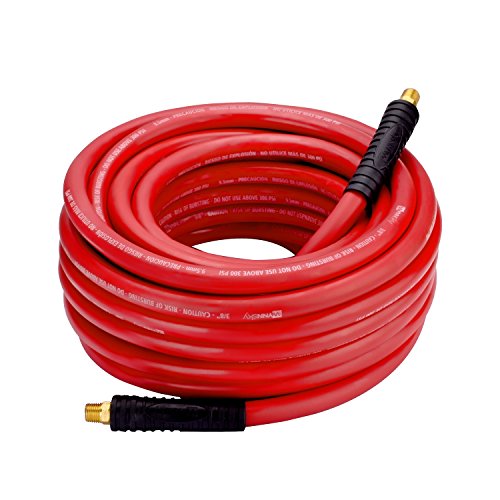
Rubber Air Hose 50ft x 3/8in 300 PSI
For demanding shop work, this 50-foot rubber air hose is a reliable all-around choice. It features a 3/8-inch WYNNsky hose rated for 300 PSI and designed to stay flexible in cold weather, so you can keep working without stiffness getting in the way. The solid brass double 1/4-inch MNPT fittings help resist corrosion and provide a more dependable seal than aluminum, steel, or zinc. Bend restrictors help reduce kinking and extend service life. The red rubber body provides solid reach, weighs 3.95 kg, and includes a 2-year limited warranty plus a 30-day return guarantee.
- Length:50 ft
- Diameter:3/8 in
- Max Pressure:300 PSI
- Hose Material:Rubber
- Fittings:Brass MNPT
- Kink Resistance:Bend restrictors
- Additional Feature:Stays soft cold
- Additional Feature:Solid brass fittings
- Additional Feature:Two-year warranty
Hromee Air Compressor Hose with Quick Coupler Kit
If you need a durable hose that delivers solid value, Hromee’s 50-foot air compressor hose fits the job. It has a 1/4-inch inner diameter and handles industrial, contractor, and home tasks with ease. The blended rubber and PVC construction provides rubber-like flexibility and PVC-like lightness, while resisting abrasion and fading. A 300 PSI working pressure and 900 PSI burst rating add confidence. Brass fittings, an I/M steel plug, and a quick coupler come pre-connected. Bend restrictors help prevent kinks, and the hose stays flexible from -40°F to 150°F in harsh weather.
- Length:50 ft
- Diameter:1/4 in
- Max Pressure:300 PSI
- Hose Material:Hybrid rubber/PVC
- Fittings:Brass coupler/steel plug
- Kink Resistance:Bend restrictors
- Additional Feature:900 PSI burst
- Additional Feature:Pre-connected coupler kit
- Additional Feature:All-weather use
YOTOO Hybrid Lead-in Air Hose 3/8-Inch 6-Feet
YOTOO’s 6 foot hybrid lead in hose is ideal when you need a compact, flexible compressor connection. It features a 3/8 inch inner diameter, 1/4 inch industrial NPT fittings, and a quick coupler plus plug, so you can connect your compressor and tools without buying extra fittings. Its blended rubber and PVC construction keeps it lightweight, kink resistant, and durable enough for all weather use. Bend restrictors on both ends help reduce wear and extend hose life. With 300 PSI working pressure, 1200 PSI burst pressure, and a 2 year limited warranty, it is a dependable choice.
- Length:6 ft
- Diameter:3/8 in
- Max Pressure:300 PSI
- Hose Material:Hybrid rubber/PVC
- Fittings:Industrial NPT
- Kink Resistance:Bend restrictors
- Additional Feature:1200 PSI burst
- Additional Feature:Industrial quick coupler
- Additional Feature:Direct tool connection
DEWALT DXCM012-0204 3/8” x 25’ Premium Hybrid Hose
DEWALT’s DXCM012-0204 delivers a premium hose feel for demanding users who work in harsh conditions. You get a 3/8-inch by 25-foot hybrid line that stays flexible in cold weather and works from -40°F to 175°F. Its oil-resistant, kink-resistant build helps you move air without fighting tangles or damage. With 1/4-inch NPT solid brass male fittings on both ends and bend restrictors, you’ll enjoy a secure, longer-lasting connection. A 4:1 safety factor and 300 PSI max pressure give you confidence when you run demanding air tools on the job.
- Length:25 ft
- Diameter:3/8 in
- Max Pressure:300 PSI
- Hose Material:Hybrid polymer
- Fittings:Solid brass male
- Kink Resistance:Kink resistant
- Additional Feature:Oil resistant
- Additional Feature:4:1 safety factor
- Additional Feature:-40°F to 175°F
Flexzilla Swivel Whip Air Hose 4 Ft (HFZ1204YW4S)
Flexzilla’s 4-foot whip hose provides a reliable swivel setup for tight, high-movement jobs. It offers a 360° swivel and 30° tilt, which improve tool control and reduce strain in cramped spaces. Its lightweight design helps minimize fatigue, while the short length helps reduce wear on your main hose. It resists kinking under pressure, lays flat, and includes bend restrictors plus an abrasion-resistant cover for added durability. With 1/2″ MNPT swivel ends and flexibility from -40°F to 140°F, it is ready for year-round use.
- Length:4 ft
- Diameter:1/2 in
- Max Pressure:N/A
- Hose Material:Hybrid polymer
- Fittings:1/2 in swivel
- Kink Resistance:Won’t kink
- Additional Feature:360° swivel action
- Additional Feature:30° tilt
- Additional Feature:Lowers user fatigue
Flexzilla Swivel Whip Air Hose 3/8 in. x 4 ft
Compact jobs need a swivel whip that will not fight you. You get Flexzilla’s 3/8 in. x 4 ft hose with a 360° ball swivel and 30° tilt, so you can move more easily in tight spaces. Its hybrid polymer build stays flexible from -40° to 140°F, coils easily, lays flat, and does not retain memory. The abrasion-resistant cover, crush-resistant aluminum fittings, and bend restrictor help it handle daily abuse. With 300 PSI max pressure, it works hard in shops, garages, and jobsites. It also protects your main hose and reduces fatigue. ZillaGreen stands out fast.
- Length:4 ft
- Diameter:3/8 in
- Max Pressure:300 PSI
- Hose Material:Hybrid polymer
- Fittings:Aluminum swivel
- Kink Resistance:Kink resistant
- Additional Feature:360° ball swivel
- Additional Feature:Zero memory
- Additional Feature:Crush-resistant fittings
Coiled Nylon Air Hose 1/4 Inch x 12 Feet
Should you need a flexible, compact air line, this coiled nylon hose fits the job well. It has a 1/4 inch inner diameter and a 12 foot coiled length, so it stays tidy while reaching pneumatic tools, compressors, and other air devices. Nylon construction resists abrasion and corrosion, and it weighs just 0.12 kilograms. The hose handles temperatures from -4°F to 212°F, along with 200 PSI working pressure and 800 PSI burst pressure. Brass 1/4 inch NPT fittings with spring support help prevent bending, so you can connect it confidently and keep air moving smoothly.
- Length:12 ft
- Diameter:1/4 in
- Max Pressure:200 PSI
- Hose Material:Nylon
- Fittings:Brass NPT
- Kink Resistance:Spring support
- Additional Feature:Coiled design
- Additional Feature:212°F heat tolerance
- Additional Feature:Spring-supported fittings
Flexzilla Swivel Whip Air Hose 3/8 in x 6 ft
The Flexzilla Swivel Whip Air Hose is highly flexible for pros who need easy movement in tight spaces. You get a 6 foot hybrid polymer whip hose that resists kinking under pressure and stays usable from -40°F to 140°F. It coils easily, lays flat, and leaves no memory, so setup feels quick. The abrasion resistant cover, crush resistant aircraft aluminum fittings, and bend restrictor help it hold up on job sites. With 300 psi working pressure, a 360° ball swivel, and 30° tilt, you can move tools smoothly and reduce fatigue in your garage or shop.
- Length:6 ft
- Diameter:3/8 in
- Max Pressure:300 PSI
- Hose Material:Hybrid polymer
- Fittings:Aluminum swivel
- Kink Resistance:Won’t kink
- Additional Feature:360° ball swivel
- Additional Feature:Zero memory
- Additional Feature:Reduces tool weight
Stainless Steel Air Nozzle Blow Gun with Adjustable Pressure
Need a stainless steel nozzle that clips quickly to your air hose? This blow gun delivers a compact, durable air hose nozzle that clears dust from vents, gaps, grill corners, and tight spaces with ease. Adjustable pressure lets you set strong airflow for mats, AC housings, boxes, and garage corners. The thumb switch lever gives you one handed control, so you can keep the other hand free while cleaning intakes, engine bays, edges, and seams. It is slim, rust resistant, and easy to store on carts, shelves, or hooks.
- Length:N/A
- Diameter:N/A
- Max Pressure:N/A
- Hose Material:Stainless steel
- Fittings:Brass thread
- Kink Resistance:N/A
- Additional Feature:Adjustable pressure
- Additional Feature:One-hand thumb switch
- Additional Feature:Rubber tip
Flexzilla Pro Air Hose with Type D Coupler
Flexzilla Pro Air Hose with Type D Coupler gives pros a durable, flexible line that handles tough jobs. You get a hybrid polymer hose with an abrasion-resistant cover, crush-resistant aircraft aluminum fittings, and a bend restrictor for added durability. It stays extremely flexible from -40°F to 140°F, will not kink under pressure, coils easily, and lays flat with zero memory. With a 300 psi working rating, it is ready for professional jobsites, automotive shops, and your home garage. The 3/8 in. x 25 ft. ZillaGreen hose includes a ColorConnex Red Industrial Type D coupler and plug.
- Length:25 ft
- Diameter:3/8 in
- Max Pressure:300 PSI
- Hose Material:Hybrid polymer
- Fittings:Type D coupler
- Kink Resistance:Won’t kink
- Additional Feature:Type D coupler
- Additional Feature:Field-repairable fittings
- Additional Feature:25-foot length
Factors to Consider When Choosing Air Tool Hoses
When you choose air tool hoses, start by matching the hose length to your workspace and picking a diameter that supports the airflow your tools need. You should also check the pressure rating and material construction so the hose can handle your setup safely and hold up over time. Do not forget fitting compatibility, because the right connections keep everything working smoothly.
Hose Length Needs
For hose length, choose a size that comfortably reaches your work area without stretching. Common options range from 4 ft whip hoses to 50 ft general-use hoses. You will get better control when the hose fits your setup, not the other way around. Longer hoses let you move around a shop or garage more freely, but they are heavier and can clutter storage. Shorter hoses work best when you connect a tool directly to the main line because they cut drag and stay easier to handle in tight spaces. Measure the distance from your compressor to your tool station, then pick the shortest length that still gives you room to work. If you need extra reach and flexibility, pair a longer main hose with a short whip hose.
Diameter And Airflow
Hose diameter has a big effect on airflow, and a larger hose usually allows more air to move with less pressure drop. A 3/8-inch hose will usually provide better airflow than a 1/4-inch hose, which helps many air tools run more steadily, especially over longer runs. If you are using lighter-duty tools, a 1/4-inch hose can still work, but you will notice more restriction as the hose gets longer. Once you reach 25 to 50 feet or more, diameter matters even more because resistance increases with length. Choosing the right size helps keep more air volume moving from the compressor to the tool, so you can maintain better performance without unnecessary loss along the way.
Pressure Rating
Pressure rating is just as essential as diameter when you choose an air tool hose, because the hose must handle the highest pressure your compressor and tools can produce without failing. Match the hose’s maximum working pressure to your air system, and note that many general-purpose hoses are rated around 300 PSI. Check the burst rating too, since it provides a safety margin above normal use, often 800 to 1200 PSI. Choose a hose rated above your compressor’s peak pressure so you avoid failures and pressure loss. Never assume a hose is stronger just because it is shorter or heavier duty, verify the printed PSI. For demanding work, choose hoses with a safety margin or reinforced fittings.
Material Construction
Material matters because it shapes how an air tool hose feels, performs, and lasts in real use. Rubber hoses stay soft and flexible when temperatures drop, so they are a smart choice for cold shops. Hybrid rubber and PVC blends give you a lighter hose that is easier to carry without sacrificing much flexibility. If you want a hose that resists abrasion and weighs less, nylon can be a strong option. It also handles a wide temperature range and resists corrosion. Hybrid polymer hoses go further with kink resistance, zero memory, and all weather flexibility, making them easy to manage on busy jobs. When you compare materials, consider the balance between comfort, durability, and the conditions you work in most often.
Fitting Compatibility
A secure connection starts with the right fittings, because the hose end thread size and type must match your tool and compressor, whether that is 1/4 in. NPT, 1/2 in. MNPT, or an industrial quick-connect. If the threads do not match, the seal will not hold. Check whether your hose includes male or female ends, couplers, and plugs, since some setups need adapters and others do not. You should also confirm the fitting style for your air system, because industrial and general-purpose parts are not always interchangeable. Choose brass or steel fittings if you want better corrosion resistance and repeated-use durability. Finally, make sure the fitting size suits your hose diameter and application, so you do not create a restrictive connection or a weak point under pressure.
Flexibility And Kink Resistance
Once the fittings are matched up, you’ll want a hose that is easy to handle in real use, especially in tight spaces or cold weather. Choose one that stays flexible from about -40°F to 140°F so it will not stiffen and become difficult to move around. Kink-resistant construction matters too, along with bend restrictors at the ends, because they help prevent sharp bends and reduce wear. Hybrid hoses often provide the best balance. They feel rubbery, coil easily, lay flat, and resist twisting or hose memory. You should also look for a hose that will not kink under pressure, since airflow can force weak lines to collapse. A durable outer cover and reinforced fittings help it flex repeatedly without damage.
Weather And Durability
Whenever you are choosing an air tool hose for outdoor use or tough shop conditions, look for one that stays flexible in cold weather and can handle repeated dragging, bending, and abuse without cracking or wearing out. Rubber, hybrid polymer, and blended rubber/PVC hoses usually perform best, and some remain soft from -40°F to 140°F, or even 175°F. Check for abrasion-resistant outer covers and kink-resistant construction so the hose lasts longer in rough use. Bend restrictors at the ends also reduce stress near fittings. For harsh environments, solid brass or crush-resistant metal fittings resist corrosion and wear better than softer metals. If you will use the hose outside, confirm its all-weather operating range and working pressure, such as 300 PSI max, matches your tasks and temperature changes.