
A bright metal surface can go from dull to glass-like once the right buffing wheel meets the right compound.
You will see how drill, angle grinder, and bench grinder kits compare, and why some wheels cut fast while others leave the final mirror finish you want.
The real difference often comes down to wheel density, backing, and heat control, and one overlooked detail can change everything.
| Unicaravan Aluminum Wheel Polishing Kit for Drill |  | Best Drill Kit | Tool Type: Drill kit | Wheel Material: Cotton | Kit Size: 6-piece | VIEW LATEST PRICE | Read Our Analysis |
| SCOTTCHEN Wool Felt Polishing Discs for Angle Grinder (5 Pack) |  | Best for Grinders | Tool Type: Angle grinder disc | Wheel Material: Wool felt | Kit Size: 5-pack | VIEW LATEST PRICE | Read Our Analysis |
| Keadic Buffing Polishing Wheel Kit for Bench Grinder | 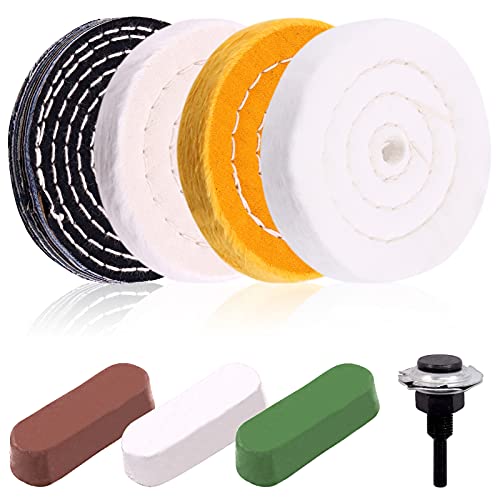 | Most Versatile Kit | Tool Type: Bench grinder kit | Wheel Material: Cotton/denim/sisal | Kit Size: 8-piece | VIEW LATEST PRICE | Read Our Analysis |
| Airway Buffing Wheel Kit 4-Piece for Angle Grinder |  | Best Heavy-Duty Pick | Tool Type: Angle grinder wheel | Wheel Material: Cotton | Kit Size: 4-piece | VIEW LATEST PRICE | Read Our Analysis |
| SALI 4 Pack Bench Grinder Polishing Wheels |  | Best Bench Grinder Set | Tool Type: Bench grinder wheel | Wheel Material: Treated cotton | Kit Size: 4-pack | VIEW LATEST PRICE | Read Our Analysis |
More Details on Our Top Picks
Unicaravan Aluminum Wheel Polishing Kit for Drill
If you want a drill kit for wheel and metal polishing, Unicaravan offers six versatile pads. The set includes yellow and white pads with mushroom, T-shape, and conical heads, so you can work on car wheels, headlights, fenders, bumpers, and more. Start with the yellow pad and matching polish to remove stains and oxidation, then switch to the white pad for a finer shine. The cotton layers resist wear, wash clean, and can be reused easily. You can polish aluminum, chrome, stainless steel, wood, plastic, ceramics, glass, and jewelry without scratching painted surfaces.
- Tool Type:Drill kit
- Wheel Material:Cotton
- Kit Size:6-piece
- Wheel Diameter:65/100/30 mm
- Arbor Size:Drill mount
- Finish Level:Initial/finishing
- Additional Feature:Yellow and white stages
- Additional Feature:Washable reusable cotton
- Additional Feature:Lifetime technical support
SCOTTCHEN Wool Felt Polishing Discs for Angle Grinder (5 Pack)
SCOTTCHEN’s wool felt discs fit 4.5-inch grinders, making them ideal when you are restoring metal quickly. You will use the 7/8-inch arbor on most compatible angle grinders, but check your spindle first. They work well on rust, oxidation, aluminum, brass, stainless steel, iron, stone, auto rims, engine parts, and pipes. Run a variable speed grinder at 3000 to 6000 RPM, add compound, and let the dense felt do the work. The reinforced fiberglass backing keeps vibration down, while the flap design helps prevent overheating. Do not use them on paint or X-Lock tools.
- Tool Type:Angle grinder disc
- Wheel Material:Wool felt
- Kit Size:5-pack
- Wheel Diameter:4-1/2 inch
- Arbor Size:7/8 inch
- Finish Level:Mirror finish
- Additional Feature:Reinforced fiberglass backing
- Additional Feature:Heat-dissipating flap design
- Additional Feature:3000–6000 RPM range
Keadic Buffing Polishing Wheel Kit for Bench Grinder
If you need a versatile kit for bench grinder buffing, Keadic delivers. It includes eight pieces: denim, flannel, yellow 36-ply, and cotton 50-ply wheels, plus green, white, and brown compounds and a 1/2 inch arbor adapter. The cotton, denim, and sisal construction uses multi-layer threads to help resist wear, reduce breakage, and extend service life. It fits most grinders, drills, and polishers, so you can assign compounds by stage. Use it on brass, aluminum, steel, glass, or plastic for polishing, restoring, cleaning, and waxing with efficient, mirror-ready results.
- Tool Type:Bench grinder kit
- Wheel Material:Cotton/denim/sisal
- Kit Size:8-piece
- Wheel Diameter:Varies
- Arbor Size:1/2 inch
- Finish Level:Rough-to-delicate
- Additional Feature:Three polishing compounds
- Additional Feature:Includes arbor adapter
- Additional Feature:Mix-and-match wheel setup
Airway Buffing Wheel Kit 4-Piece for Angle Grinder
If you polish metal regularly, this 4-piece airway kit is a heavy-duty choice. It includes four 8-inch wheels, white, orange, blue, and yellow, so you can move from coarse work to fine finishing without changing brands. Use it on an angle grinder or buffer polisher at 2600 to 3000 RPM for stable, cooler operation. The 12-ply cotton construction, reinforced stitching, and tightly packed cloth layers help resist wear and reduce scratching. It works well on aluminum, brass, copper, stainless steel, and vehicle trim, giving you solid control and a cleaner mirror finish.
- Tool Type:Angle grinder wheel
- Wheel Material:Cotton
- Kit Size:4-piece
- Wheel Diameter:8 inch
- Arbor Size:5/8 inch
- Finish Level:Coarse-to-fine
- Additional Feature:Four color-coded wheels
- Additional Feature:Reinforced stitching construction
- Additional Feature:2600–3000 RPM speed
SALI 4 Pack Bench Grinder Polishing Wheels
SALI’s 4-pack is a solid bench grinder set for serious polishing jobs. It includes two yellow 50-ply cotton wheels for cutting and coarse buffing, plus a loose white wheel for ultra-fine work and a tighter white wheel for a high-luster finish. The 6-inch wheels fit a 1/2-inch arbor, so they work with most bench grinders, polishers, and even drill presses. You can use them on stainless steel, brass, chrome, aluminum, jade, and more for polishing, cleaning, waxing, and restoration.
- Tool Type:Bench grinder wheel
- Wheel Material:Treated cotton
- Kit Size:4-pack
- Wheel Diameter:6 inch
- Arbor Size:1/2 inch
- Finish Level:High-luster
- Additional Feature:50-ply cotton construction
- Additional Feature:Ultra-fine loose wheel
- Additional Feature:High-luster finish wheel
Factors to Consider When Choosing Buffing Wheels
When choosing buffing wheels, start with the wheel material and make sure it matches your tool’s compatibility and speed rating. Also consider the surface type you are working on, since different materials and finishes require different wheel textures. Select the right grit, and you will get better control, cleaner results, and less risk of damage.
Wheel Material
Choosing the right wheel material sets the tone for how a buffing job cuts, blends, and finishes. If you need controlled cutting and smooth progression, choose cotton or linen multi-ply wheels. Higher ply counts cut harder, while softer builds finish finer. For heavy oxide removal and mirror level results, wool and felt wheels work well, but you need to manage heat and run them at lower speeds with the right compound. Sisal and other coarse natural fibers bite fast for stock removal and restoration, yet they leave a scratchier surface that requires follow-up wheels. Foam, sponge, or loose cotton wheels excel at final luster with minimal marring. Also, pay attention to construction. Stitched layers and reinforced backs improve stability and help the wheel resist breakup under load.
Tool Compatibility
Even the best wheel material will not perform well if it does not match your tool. Check that the buffing wheel suits your machine type, whether you use a bench grinder, angle grinder, or drill mounted polisher. You need the correct arbor or hole size, often 1/2″, 5/8″, or 7/8″, and the correct attachment style, or a proper adapter, to keep the wheel centered and secure. Always verify that the wheel’s maximum safe RPM matches or exceeds your tool’s no load speed; otherwise, you risk vibration or failure. Also confirm that the wheel’s backing and construction fit your flange or clamping system. For angle grinders and high speed rotary tools, use wheels made for that tool, not improvised drill pads or bench buffs.
Surface Type
The surface you are buffing should drive your wheel choice. When restoring rough, oxidized, or pitted metal, use coarse, high-ply cotton, sisal, or compressed wool wheels so you can remove material quickly and apply firmer pressure. If you want a mirror finish on metal or stone, switch to fine, dense cotton or felt, and keep the wheel moving at a moderate speed with the right polishing compound. For painted panels, plated trim, plastics, ceramics, or jewelry, choose soft cotton or flannel and use light pressure to prevent scratching or burning. On curves and recesses, use smaller mushroom, conical, or T-shaped wheels. For large flat areas, use wider wheels to cover more surface evenly and control heat.
Grit Selection
Once you’ve matched the wheel to the surface, grit selection becomes the next key decision. Choose coarse grits, around 60 to 120, whenever you need fast cutting, de-rusting, or reshaping before polishing. They strip material quickly, but they can leave marks, so you should follow them with medium and fine stages. Finer grits create smoother, brighter finishes and help erase micro-scratches during final buffing. You’ll also want to factor in the material itself. Hard metals usually handle a coarser start, while soft metals and delicate parts need finer or non-abrasive wheels to prevent tearing. Move through the grits in order, from coarse to fine, and you’ll save time, reduce compound use, and get a cleaner mirror finish with less rework overall.
Speed Rating
Checking a buffing wheel’s speed rating is essential before you ever pull the trigger, because the wheel’s maximum safe RPM must meet or exceed your tool’s no-load speed. Read the wheel’s label, and never run your tool faster than that limit, or you risk wheel failure. Pay attention to diameter and construction too. Larger wheels move faster at the rim, so they usually need lower RPMs than smaller ones. If you are using an angle grinder or another high-speed tool, choose reinforced or stitched wheels rated for higher RPMs to control vibration and improve safety. For heat-sensitive surfaces, stay near the low end of the approved range to avoid overheating or discoloration. Always inspect for cracks, imbalance, or other damage before use.
Compound Match
Choosing the right compound is what makes a buffing wheel cut cleanly instead of just smearing polish around. You will get better results once you match abrasive strength to wheel build. Use fine finishing compounds on soft, high-ply cotton or felt wheels, and reserve coarser cutting compounds for harder, low-ply or sisal wheels. Pick the compound for the metal too. Heavy stock removal on hard metals calls for high-cut compounds, while softer metals need rouge or finishing blends for a mirror shine. Warm the wheel initially, then apply compound sparingly so it beds into the nap. Too much clogs the wheel and lowers bite. Start coarse, then step down through finer compounds. Match wax, grease, or paste to the wheel material for smooth transfer.
Frequently Asked Questions
How Often Should Buffing Wheels Be Replaced?
Replace buffing wheels when they fray, lose their shape, shed heavily, or no longer cut and shine effectively. With regular use, this is often every few months, although careful cleaning and light-duty work can extend their life.
Can One Wheel Work on Aluminum and Stainless Steel?
Yes, one wheel can handle both aluminum and stainless steel, but you will get better results if you use different compounds. Otherwise, you are polishing with one brush and wearing two hats at once.
What Speed Is Safest for Mirror Polishing?
You’ll usually polish most safely around 1,500 to 3,000 RPM, depending on wheel size and material. Start at the low end, test for heat, and increase speed slowly. Too much speed can burn the surface and ruin the mirror finish.
Do Buffing Wheels Require Special Cleaning Products?
Yes, you can clean them with mild soap, warm water, and a soft brush, so they usually do not need special products. Rinse away grime, then air-dry them completely before reuse.
How Do I Prevent Compound Buildup on the Wheel?
Prevent compound buildup by using less compound, cleaning the wheel often with a rake or brush, and applying light pressure. You should also slow the speed and let the wheel breathe between passes.
Wrap Up
You have the tools to turn dull metal into a mirror that catches the light like glass at sunrise. When you choose the right wheel, match the compound, and move through each polishing stage carefully, you will see swirls fade and shine build. Keep your speed steady, your pressure light, and your wheels compatible, and you will finish with a brilliant, reflection rich surface that looks polished enough to see your own grin in.