

Exposed plumbing takes a beating year-round. In freezing climates, water lines can split overnight when temperatures plunge, and in sun-soaked regions, copper refrigerant lines lose efficiency as they absorb radiant heat. The right insulation acts like a quiet shield, holding internal temperatures steady and protecting every outdoor fixture, hose bib, and HVAC line set from the worst of the weather.
These ten covers and wraps cover the most common outdoor pipe situations, from central air mini-split line sets to backflow preventers and exterior spigots. Each option below is built for a specific job, so a quick read of the use-case notes will point you to the right match.
The Main Contenders

Kanosan Outdoor HVAC Copper Pipe Insulation Cover (Black)

nabreeli 2 Pack Outdoor Faucet Covers for Winter Freeze Protection

HNYTLCO Outdoor Faucet Covers for Winter, 2-Pack (Black)

POROLIR Backflow Preventer Pipe Insulation Cover (Khaki)

TOHONFOO Backflow Preventer Insulation Cover (Beige)

DEMEDO Pipe Insulation Tape, 2 inch x 16.5 FT
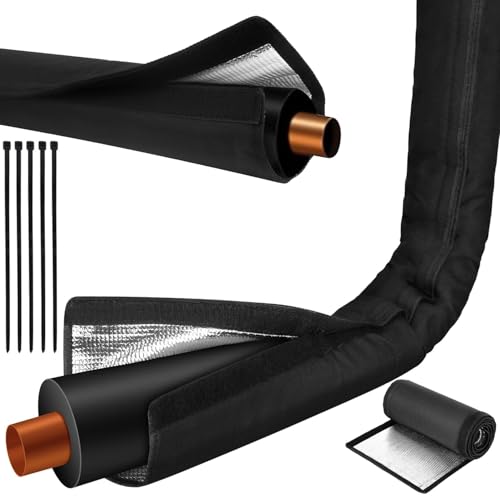
Kanosan Outdoor HVAC Copper Pipe Insulation Cover (Black, 72″)

Kanosan Outdoor HVAC Copper Pipe Insulation Cover (Khaki, 72″)

DEMEDO Pipe Insulation Tape, 3 inch x 16.5 FT
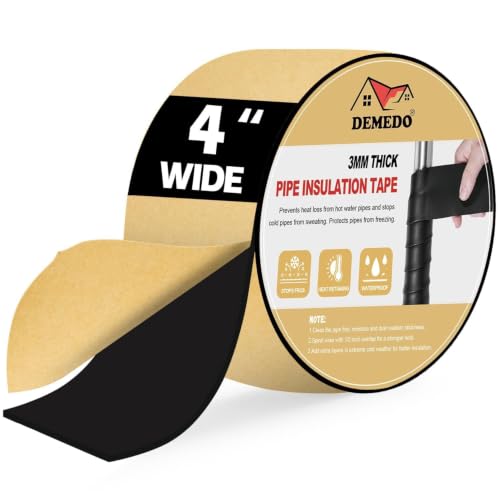
DEMEDO Pipe Insulation Tape, 4 inch x 16.5 FT
The Picks, Examined More Closely
The Kanosan sleeve stretches a full 72 inches long by 10.2 inches wide, which lines up neatly with a typical mini-split line set running from the outdoor condenser to the wall penetration. Built around a 600D Oxford fabric shell, it shrugs off driving rain and UV exposure that would normally bleach or crack bare foam insulation in a single season.
Homeowners running central air or ductless mini-splits on exterior walls get the cleanest fit here, since the long sleeve wraps both the suction and liquid lines in one piece. Compared to the POROLIR backflow cover below, this one targets refrigerant lines rather than irrigation plumbing, so your choice depends on which pipe is exposed.
Why It Works Well
- 72-inch length covers an entire line-set run without seams
- 600D Oxford outer shell resists tearing, fading, and moisture
- Wide 10.2-inch opening slides over both copper lines plus insulation
- Black color hides dirt and grime on shaded exterior walls
Points To Note
- Black absorbs solar heat, so south-facing runs may run warmer in summer
- Single-piece sleeve limits coverage on branched or split line paths
- Snug fit over pre-insulated lines may require trimming the inner foam first
Made For
Homeowners with a single straight mini-split or central air line-set exposed on an exterior wall.
Swap It Out When
Households with sun-baked southern walls will get better heat reflection from the Kanosan khaki version later in this list.
Two covers ship in one box, which suits homes with a faucet on the front and another on the back of the house. Each pouch uses a three-layer build: two layers of 600D Oxford fabric outside sandwiching a thick insulation cotton core, all stitched into a slip-on sock shape.
For most suburban yards, this is the low-effort fix: no foam tape, no tools, just slide the cover over the hose bib and cinch the drawstring. The fabric construction matters here, because cotton fill handles repeated freeze-thaw cycles without crumbling the way rigid foam does.
Benefits That Matter
- Two-pack format covers front and rear faucets in one purchase
- Three-layer design handles snow, freezing rain, and wind
- Slip-on design needs no tape, tools, or disassembly
- Drawstring closure keeps the cover seated during winter storms
Things To Consider
- Stock size may fit awkwardly over unusually large hose bibs or decorative handles
- Cotton fill can hold moisture long-term, so owners commonly dry them between seasons before storing
- Lighter fabric construction may not suit extreme northern climates where rigid foam is more typical
Right Fit For
Suburban homeowners with two standard outdoor spigots needing a one-time seasonal install.
Reach For A Different Pick When
Homeowners with oversized taps or anti-siphon attachments should look at the HNYTLCO faucet covers instead.
The HNYTLCO covers measure 8.3 inches tall by 6.7 inches wide, sizing up roughly two to three inches larger than the most common faucet socks on the market. That extra room matters if your exterior hose bib has a handle, vacuum breaker, or hose connector still attached.
Wrapped in 420D Oxford cloth on both faces, the cover trades a bit of softness for better abrasion resistance against brick edges and stucco corners. It still installs the same way as the nabreeli set, but you trade the softer cotton interior for a more rugged outer shell that holds up to repeated handling.
Key Advantages
- Oversized cut fits large hose bibs and vacuum breakers
- 420D dual-sided Oxford cloth resists scuffs and tearing
- Compatible with exterior faucets, hose bibs, water taps, and garden spigots
- Black finish blends with most home exteriors
Soft Spots
- Larger opening can admit cold air on standard-sized faucets without a snug cinch
- Single-color option limits matching if you want a less visible look
Key Product Details
Whose Shelf It Belongs On
Homeowners with larger exterior faucets, anti-siphon valves, or hose connectors still attached during winter.
A Better Fit Elsewhere
Households with compact, no-frills spigots can save space with the nabreeli two-pack from pick 2.
Sprinkler manifolds and irrigation backflow preventers are the most overlooked freeze points on a property, because they sit low to the ground in the worst wind exposure. POROLIR’s cover wraps a generous 24-by-24 inch area around the assembly and includes a L-shaped cutout for pipe entries.
For most homes with in-ground irrigation, this is the practical pick. The two-way opening helps during servicing since you can pop the cover off without unwinding tape or cutting foam. Compared to the TOHONFOO pouch below, this one trades a tailored fit for a roomier wrap that adapts to multiple valve shapes.
Everyday Wins
- 24″x24″ coverage handles large backflow assemblies and pump heads
- L-shaped cutout accommodates pipe entries without modification
- Two-way opening allows quick removal for seasonal inspections
- Khaki color blends with mulch, soil, and siding tones
A Few Limitations
- Looser fit may need a strap or bungee to stay seated in high winds
- Less tailored than form-fitted covers, so some cold can creep in at corners
Best Suited To
Property owners with lawn irrigation systems, sprinkler valves, or water well pump assemblies exposed to winter weather.
Where A Sibling Pick Shines
Homeowners needing a snugger fit on a standard residential pressure vacuum breaker should consider the TOHONFOO cover instead.
TOHONFOO built this cover specifically for pressure vacuum breakers, the kind mounted on exterior walls beside the main water service. The 13-inch wide by 12-inch tall footprint matches the silhouette of a typical residential breaker rather than a sprawling irrigation manifold.
Inside, the layering steps up: 600D Oxford outside, two cotton insulation layers in the middle, and a PE silver-coated cloth liner. That metallic inner face reflects radiant heat back toward the valve, which can make a real difference during clear, still nights when heat loss is fastest.
Standout Benefits
- Customized shape fits standard pressure vacuum breakers without excess bulk
- PE silver-coated inner layer reflects radiant heat back to the valve
- Five-layer build combines Oxford, cotton, and reflective film
- Double stitching handles repeated seasonal removal
Honest Caveats
- Tailored dimensions mean it won’t stretch to fit larger irrigation manifolds
- Reflective inner layer requires careful storage to avoid creasing the foil
Who It Suits Best
Homeowners with a single wall-mounted pressure vacuum breaker beside the main water service line.
Not Your Match When
Properties with a large irrigation backflow assembly need the roomier POROLIR cover from pick 4.
DEMEDO’s tape is a self-adhesive rubber foam wrap, the kind you peel, stretch, and spiral around a pipe run. At 2 inches wide and 16.5 feet long, this is the narrowest roll in the brand’s lineup, ideal for tight quarter-turn fittings, valve bodies, and short exposed segments where a bulky sleeve won’t fit.
For DIYers insulating odd-shaped plumbing, this tape handles elbows and tee-junctions far better than a rigid foam pipe sleeve ever could. Cut to length with household scissors, wrap with a 50% overlap, and press the adhesive seam together. The narrow width also helps in cramped equipment closets and behind hose reels.
Well-Handled Touches
- Self-adhesive backing bonds without separate tape or glue
- Soft rubber foam conforms to elbows, valves, and tee fittings
- Customizable length reduces leftover waste on short runs
- 2-inch width fits tight spaces where wider rolls cannot wrap cleanly
Trade-Offs
- Adhesive can collect dirt during installation, so a clean pipe surface matters for a lasting bond
- Thin foam profile offers less R-value than rigid pre-formed pipe sleeves
Feature Snapshot
Who Should Grab It
DIYers insulating short pipe runs, valve manifolds, and odd-shaped fittings around outdoor equipment.
Look Elsewhere When
Homeowners covering longer straight pipe runs should reach for the 4-inch DEMEDO roll from pick 10.
This is essentially the same 72-inch Kanosan sleeve as pick 1, but framed around its flexibility rather than its raw length. The Oxford outer shell bends with the pipe rather than forcing the pipe to run dead-straight, which matters when refrigerant lines take a curved path around a corner or down a soffit.
Same trade-off as before: black fabric absorbs solar heat, so this is the cooler pick for shaded north-side runs rather than sun-baked south walls. For households with curved line paths on a shaded elevation, this sleeve bends where rigid foam would gap.
Where It Delivers
- Bendable fabric follows curved line paths without forcing kinks
- 72-inch length matches standard mini-split line-set runs
- 600D Oxford outer shell handles rain and UV exposure
Potential Compromises
- Black color can warm the line in direct summer sun
- Single-piece design limits coverage on branched line paths
Perfect Match For
Homeowners whose HVAC lines take a curved or angled path along a shaded exterior wall.
Consider Something Else When
Homes with sun-drenched line-sets gain more from the Kanosan khaki variant in pick 8.
The khaki Kanosan sleeve shares the 72-inch length and 600D Oxford build as the earlier picks, but the lighter tone reflects solar radiation instead of soaking it up. On south or west-facing walls, that reflectivity keeps the refrigerant line cooler during peak afternoon heat, which helps the AC system hold efficiency through summer.
You get the same multi-layer insulation construction as the black variants, so freeze protection in winter is comparable. The color choice is purely about solar management. For most homes in hot-summer regions, the khaki tone is the smarter long-term pick.
What Earns Its Place
- Lighter khaki tone reflects sunlight rather than absorbing it
- Multi-layer build handles freezing nights and hot summers alike
- Same 72-inch coverage as the black sleeve for line-set runs
Trade-Offs
- Lighter color shows dirt and mildew more visibly on shaded walls
- Single-piece sleeve works best on straight runs
Who Will Love This
Homeowners in hot-summer regions whose AC line-sets run on south or west-facing exterior walls.
Skip It When
Households with shaded north-side line-sets can save a bit with the black Kanosan sleeve from pick 1.
The 3-inch DEMEDO roll sits in the middle of the brand’s width range, hitting a sweet spot for standard residential copper lines. Where the 2-inch tape from pick 6 is ideal for tight fittings, this width lets you cover longer pipe segments with fewer wraps and less overlap fiddling.
Same soft rubber foam, same self-adhesive backing, same 16.5-foot length. The wider face just spreads that coverage across bigger diameter pipes, so you spend less time spiraling the tape and more time getting a clean, even wrap. For most homeowners tackling a single outdoor AC or water line, this is the practical middle-ground choice.
The Good Stuff
- 3-inch width covers standard copper lines with fewer spiral wraps
- Self-adhesive foam eliminates the need for separate fasteners
- Cuts cleanly with scissors for custom lengths around fittings
- Flexible foam bends with the pipe without splitting at the seam
Worth Bearing In Mind
- Wider roll is harder to wrap tightly around small-diameter valves
- Adhesive backing may need a clean, dry pipe surface for the best bond
Best Suited To
Homeowners insulating standard residential copper water or refrigerant lines on a single outdoor run.
A Better Fit Elsewhere
DIYers working on tight quarter-turn fittings will find the 2-inch DEMEDO tape easier to control.
The widest roll in the DEMEDO lineup spreads 4 inches across the pipe face, so each spiral covers more surface with less overlap work. That’s a real time-saver on larger diameter water mains, pool plumbing, or commercial-style refrigerant lines where a narrow tape would take twice as many passes.
Same rubber foam base, same adhesive backing, same 16.5-foot length. The trade-off shows up when wrapping small valves or tight elbows, where the wider tape becomes harder to control. For most residential jobs, this roll suits homeowners tackling one or two large-diameter outdoor pipes rather than a network of small fittings.
Advantages To Know
- 4-inch width speeds up coverage on large-diameter pipes
- Fewer wraps mean fewer seams where cold air can sneak in
- Self-adhesive foam stays put without extra taping or straps
Where It Is Less Suited
- Width is awkward around small valves and tight elbows
- Heavier roll can be cumbersome to hold above shoulder height during installation
Right Fit For
Property owners insulating large-diameter outdoor water lines or pool equipment plumbing on long straight runs.
Where Another Pick Suits Better
Homeowners working around tight valve manifolds will find the narrower DEMEDO tapes far easier to control.
What To Weigh Before Choosing Outdoor Pipe Insulation
Start with the pipe material and exposure. Copper refrigerant lines on a sun-facing wall need a reflective or lighter-colored sleeve, while a shaded hose bib just needs a frost barrier. Match the insulation type to the threat, not the other way around.
Next, measure the run. Pre-sized sleeves like the 72-inch Kanosan options fit straight line-sets beautifully, but branched plumbing or valve-heavy assemblies call for self-adhesive foam tape that conforms to elbows and tee fittings. Backflow preventers and pump heads demand roomier wraps with access openings for service.
Climate matters too. Cold-winter regions need thicker cotton or multi-layer builds to handle sustained freeze-thaw cycles, while hot-summer regions benefit from reflective inner layers or lighter outer colors that bounce solar radiation. Storage also plays a role: foam tape stores flat in a drawer, while fabric covers need a dry bin over the off-season.
Key Considerations Across These Picks
Common Buying Slip Ups
A frequent miss is ordering a faucet cover sized for standard spigots only to find the actual fixture has a hose connector or anti-siphon valve still attached. Measure the fixture, including any protrusions, before choosing between a stock-size cover and an oversized variant. The same caution applies to backflow preventers: a tailored 13-by-12 inch pouch can feel tight on a manifold with extra union fittings, so a generous wrap often serves better.
Another slip is assuming foam tape alone solves every job. Foam handles straight runs and gentle bends, but a fully exposed backflow preventer on an irrigation system needs a dedicated cover with a weatherproof shell. Picking one tool for every situation leaves gaps that defeat the insulation entirely.
Where The Extra Money Goes
Stepping up to a multi-layer cover with a reflective inner film costs more than a basic cotton sock, but the extra layers show up where conditions are harshest. On clear, still winter nights, radiant heat loss is the biggest freeze risk, and a reflective liner pushes some of that heat back toward the valve. Lighter outer colors add a similar benefit in summer by reflecting solar radiation that would otherwise heat the refrigerant line.
For households in regions with both deep winter freezes and intense summer sun, the upgrade pays off across the calendar, not just one season.
Frequently Asked Questions
Do outdoor pipe insulation covers really prevent freezing?
They reduce heat loss significantly and buy valuable time during cold snaps, but they cannot replace proper freeze prevention in extreme climates. For sustained sub-zero conditions, insulation works best alongside other measures like frost-free faucets or heat cables.
Can the same cover work for both winter freezes and summer heat?
Multi-layer covers with reflective inner layers or lighter outer colors do double duty. They slow heat loss in winter and reflect solar radiation in summer, making them a practical choice for year-round outdoor exposure.
How do I know which size sleeve or tape to buy?
Measure the outside diameter of the pipe, including any existing foam, then check the product’s stated dimensions. For pre-sized sleeves, confirm the length matches your line run. For tape, a 50 percent overlap during wrapping typically provides the best coverage.
Is foam tape better than a fabric cover?
They serve different jobs. Foam tape adapts to odd shapes, elbows, and short runs, while fabric covers install quickly on standard fixtures and provide a tougher weather shell. Many homeowners end up using both across different parts of their property.
How long do outdoor insulation covers typically last?
With reasonable care, fabric covers commonly last several winters before the outer shell starts to fade or the stitching weakens. Foam tape can last longer since it isn’t exposed to UV directly, though the adhesive may degrade over many seasons. Storing either dry during the off-season extends the lifespan considerably.
Wrap Up
The right outdoor pipe insulation depends entirely on what you’re protecting and the climate you’re protecting it from. Mini-split line-sets, hose bibs, backflow preventers, and large water mains each call for a different shape, size, and material. Once you match the cover to the pipe and the climate, the rest is just a quick seasonal install and a dry storage bin for the off months.
