

A damp basement is the kind of problem that creeps up on you, a faint musty smell after a storm, a waterline around the sump lid, the slow realization that your storage space is slowly becoming an indoor pond. The right pump changes that story overnight, sitting quietly in the pit until the water table rises, then pulling gallons out before you ever notice. The picks below cover residential basements, utility rooms, and the occasional flooded window well, so you can match capacity and construction to the way your home actually behaves in heavy weather.
The Picks In Brief

WAYNE CDU800 1/2 HP Submersible Sump Pump (5,100 GPH)

Tsurumi Pump LB-480 Submersible Dewatering Pump (2/3 HP)

Little Giant VCMA-20ULST Condensate Removal Pump (80 GPH)

Liberty Pumps 237 1/3 HP Submersible Sump Pump

AQUASTRONG 1 HP Sump Pump (4,500 GPH)

Aquastrong 1/2 HP Thermoplastic Submersible Pump (3,159 GPH)
Aquastrong 1/2 HP Utility Pump with Float Switch (3,159 GPH)

Aquastrong 1/2 HP Automatic Sump Pump (3,159 GPH)
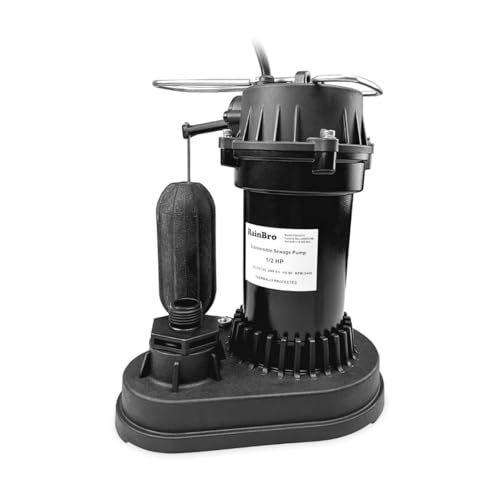
Rainbro 1/2 HP Thermoplastic Submersible Sump Pump (Model PSU051V)

XtremepowerUS Automatic 1/2 HP Submersible Sump Pump (3,800 GPH)
What Each Pick Brings To The Table
The WAYNE CDU800 sits at the top of the list because it does the basic residential job with very little fuss: pull a lot of water, keep doing it for years, and don’t clog. The cast iron and stainless steel body resists corrosion in a damp pit, and the top-suction design (water enters from above the intake screen rather than the bottom) means fewer clogs and no need to drill a weep hole, the small vent hole some pumps require to release trapped air.
For most homeowners with a finished basement or a finished space they care about, this is the kind of pump you can drop in and largely forget. You’ll notice it mostly by its absence: no puddles, no musty smell, no panic during a thunderstorm. Compared with the AQUASTRONG and Rainbro picks later on, the CDU800 trades thermoplastic portability for a heavier, more permanent-feeling installation.
Practical Advantages
- 5,100 GPH output handles heavy spring thaw and summer storms without cycling constantly.
- Vertical float switch rated to roughly one million cycles for years of automatic on/off action.
- Top-suction intake reduces clogging from silt and small debris in older pits.
- Cast iron and stainless construction dissipates motor heat well and resists rust.
Worth Noting
- Heavier than thermoplastic models, so carrying it down basement stairs solo can be awkward.
- Larger footprint than slim-line options like the Tsurumi, which can crowd narrow pits.
Quick Facts
Who It Suits Best
Owners of finished basements in regions with serious storm season who want a set-and-forget primary pump.
Look Elsewhere When
You need to squeeze a pump into a narrow caisson or utility space, where the slim Tsurumi Pump LB-480 fits more comfortably.
The Tsurumi LB-480 comes from a brand that built its reputation on jobsite dewatering, and you can feel that heritage the moment you handle it. Its slimline body drops into an 8-inch caisson, the narrow cylindrical sump often used in tight residential pits or temporary construction setups, and the 32-foot power cord gives you reach without splicing extensions. With 3,780 GPH of throughput and a 2-inch discharge, it is overkill for a dry basement but a comfort in a wet one.
For homeowners with narrow sump pits, multi-basement setups, or anyone whose property sits on a high water table, this is the workhorse pick. The urethane impeller and abrasion-resistant wear plates are designed for dirty water, so it shrugs off the sand and grit that would slowly chew through a basic residential impeller.
Where It Delivers
- Slimline housing fits 8-inch caissons where wider pumps physically cannot.
- Urethane impeller resists abrasion from sand and sediment better than basic plastic.
- 2-inch discharge handles higher flows without bottlenecking the pump.
- Long 32-foot cord reaches distant outlets without an extension.
Trade Offs
- No built-in float switch, so you pair it with a separate controller or use it as a manual dewatering pump.
- More aggressive flow than a typical basement needs, which can short-cycle a small pit.
Made For
Properties with narrow sump basins, high groundwater, or occasional construction-style flooding that other pumps can’t physically reach.
Consider Something Else When
You want a fully automatic residential install with no extra float wiring, where the WAYNE CDU800 is a cleaner drop-in choice.
The Little Giant VCMA-20ULST solves a different problem than the rest of this list: it is not a basement water pump, it is a condensate pump, meaning it removes the small steady trickle of water that drips out of high-efficiency furnaces, air handlers, and dehumidifiers. At 80 GPH it sounds tiny next to a 5,100 GPH sump pump, and that is exactly the point. You don’t need a fire hose for a half-gallon-per-hour drip pan.
The plastic reservoir keeps the unit light, the vertical float switch keeps the footprint small, and the overflow detection switch adds a safety shutoff for when things go wrong. For homeowners who have ever found a soaked ceiling below a poorly drained air handler, this little pump earns its shelf space.
Useful Highlights
- Vertical float design cuts the unit’s footprint, fitting tight utility closets.
- Overflow detection switch adds a second safety layer if the pump ever stalls.
- 20-foot tubing included, so installation often needs nothing extra.
- Compatible with most HVAC condensate pans and dehumidifier setups.
Small Caveats
- Plastic tank can crack if dropped or frozen, so location matters during installation.
- Not a substitute for a true sump pump during heavy groundwater events.
Right Fit For
Homeowners with high-efficiency furnaces, attic air handlers, or basement dehumidifiers that need a quiet way to drain condensate uphill to a sink or floor drain.
Skip It When
Your goal is moving groundwater out of a sump pit, where the Liberty Pumps 237 or WAYNE CDU800 are the proper tools.
The Liberty Pumps 237 is the quietly capable middle child of this list: smaller motor than the WAYNE and AQUASTRONG heavyweights, but built like a piece of plumbing equipment rather than a disposable tool. Its powder-coated aluminum motor housing sheds heat, the vortex-style impeller (a curved-blade design that creates a swirling flow to push solids away from the intake) resists clogging from the small debris that sneaks into pits, and the 1-1/2 inch discharge matches the most common residential plumbing.
For a typical home with a moderate water table and a standard 18-inch basin, the 237 has just enough muscle without being wasteful. Compared with the 1 HP AQUASTRONG later on, this is the calmer, lower-cycling choice that runs less often and runs longer when it does.
Standout Benefits
- 1/3 HP motor handles most residential inflow without constant cycling.
- Vortex impeller pushes solids away from the intake, reducing jam risk.
- Handles 3/8-inch solids, plenty for ordinary groundwater and silt.
- Standard 1-1/2 inch discharge fits common residential discharge piping.
Honest Caveats
- Lower flow than 1/2 HP and 1 HP picks, so very heavy surge events may outpace it briefly.
- Thermally protected motor helps, but prolonged dry running can still shorten service life.
Feature Snapshot
Best Suited To
Owners with mid-size pits and modest groundwater who want a pump that runs less frequently but lasts many seasons.
A Better Fit Elsewhere
For basements that flood hard during every storm, the AQUASTRONG 1 HP delivers more headroom than the 237 can muster.
The AQUASTRONG 1 HP is the high-flow option for basements that fill fast, whether from a chronic high water table or a yard that slopes the wrong way. At 4,500 GPH with a 30-foot maximum vertical lift, it moves serious volume and pushes water up and out where smaller pumps would stall. The bottom-suction design, where water enters through the base of the pump, drains down to about 1/5 inch from the floor of the pit, which matters when you want to empty a flooded basement for renovation work.
Where the WAYNE CDU800 is the steady residential daily driver, this AQUASTRONG is the muscle you bring in when the water table refuses to behave. Hot tub draining, swimming pool cover water, and flooded basement cleanup all fit comfortably in its wheelhouse.
A Few Strong Suits
- 1 HP motor pushes 4,500 GPH, the highest on this list.
- 30-foot vertical lift handles deep pits or uphill discharge runs.
- Handles up to 1/5-inch solids without straining.
- Plug-and-play design with no weep hole required.
Factors To Consider
- More power than small residential pits need, which can shorten cycle life on tiny basins.
- Thermoplastic body is durable but not as rugged long-term as cast iron.
Who Will Love This
Homeowners with flood-prone basements, multi-purpose wet/dry tasks, or anyone who regularly drains pools and hot tubs.
Another Choice May Suit
For routine basement seepage, the Liberty Pumps 237 cycles less aggressively and runs quieter on smaller inflows.
This Aquastrong 1/2 HP model is the manual cousin of the float-switch versions higher up the list. There is no automatic switch built in: you plug it in to run, you unplug it to stop. For a permanently installed sump basin, that makes it a poor primary choice, but for everything else, from a flooded garden pond to a window well full of rainwater, it is the kind of grab-and-go tool that pays for itself the first time you need it.
At 3,159 GPH and 26 feet of vertical lift, it covers most residential odd-jobs. The 10-foot power cord and lightweight thermoplastic body make it easy to carry out to the yard, and the bottom-suction screen pulls water down to a near-dry surface when you need to empty something completely.
Notable Upsides
- Lightweight thermoplastic body makes one-handed carry realistic.
- 3,159 GPH handles pools, ponds, and flooded basements with room to spare.
- Bottom suction pulls water to roughly 1/5 inch from the surface.
- No float switch means fewer parts to snag or jam.
Less Ideal Details
- No automatic operation, so it cannot serve as a hands-off primary sump pump.
- Manual plug-in control means you must remember to shut it off before the pit runs dry.
Perfect Match For
Shoppers who want a multi-purpose pump for pools, ponds, hot tubs, and the occasional flooded basement, kept in a garage rather than installed permanently.
Swap It Out When
You need unattended automatic operation, where the Aquastrong 1/2 HP with float switch (later in this list) does the same job without supervision.
This Aquastrong is the same flow rating as the manual model above, but with a built-in adjustable tether float switch that turns the pump on and off automatically based on water level. A tether float hangs from the pump body on a cord, so you can shorten or lengthen the cord to change where the pump turns on, which is handy in pits of varying depth. Plug it in, drop it in the basin, and let the float handle the rest.
For homeowners who want one pump that handles the sump pit, the garden irrigation draw, the pool cover, and the flooded window well, this is the most flexible tool on the list. The trade-off is that tether floats occasionally tangle or get stuck against basin walls, which is why the next pick uses an electronic sensor instead.
What Pays Off
- Adjustable tether float lets you tune the activation depth to your pit.
- Lock-on mode keeps the pump running continuously when needed.
- Same 3,159 GPH and 1/5-inch solids handling as the manual sibling.
- 10-foot cord reaches most residential basins and yard outlets comfortably.
Practical Considerations
- Tether floats need occasional nudging if they catch on pit walls or debris.
- Not as quiet in operation as fully enclosed cast-iron designs.
Built With In Mind
DIY homeowners who want one pump to cover sump duty plus occasional outdoor tasks like garden pond draining or pool cover water removal.
Reach For A Different Pick When
Your pit is cramped or full of debris that tangles floats, where the Aquastrong 1/2 HP Automatic (electronic sensor) is a cleaner fit.
This Aquastrong swaps the tether float for an electronic water-level sensor with six adjustable activation points, ranging from about 1 inch up to 5 inches of water depth. No moving float to snag on a check valve or pit wall, no mechanical parts to wear out, and a lower profile that fits basins where a tall float ball would not clear the lid.
For tight sump pits, narrow utility spaces, or basements where debris regularly tangles mechanical floats, the electronic sensor is a small but meaningful quality-of-life upgrade. The 3,159 GPH flow matches the rest of the Aquastrong 1/2 HP family, so you trade nothing in raw capacity.
Advantages To Know
- No mechanical float means nothing to snag, tangle, or wear out.
- Six selectable activation levels from about 1 to 5 inches of water depth.
- Pumps down to roughly 0.4 inches, leaving the basin almost dry each cycle.
- Compact vertical profile fits narrow or shallow pits.
Where It May Fall Short
- Electronic sensors occasionally need cleaning to maintain sensitivity in mineral-heavy water.
- Same thermoplastic construction as siblings, not a heavy-duty cast-iron alternative.
Who Should Grab It
Homeowners with cramped or debris-prone basins where mechanical floats have proven unreliable in past installs.
Where Another Pick Suits Better
For a brand-new install with plenty of clearance and the highest possible flow, the WAYNE CDU800 delivers more capacity in a heavier-duty package.
The Rainbro PSU051V is the budget-tier residential option that still does the basic job competently. At 3,600 GPH it actually edges out several of the Aquastrong 1/2 HP models, and the 22-foot maximum immersion depth plus 31-foot head give it solid lift for uphill discharge runs. The thermoplastic body is light, the vertical float switch is automatic, and the 10-foot cord covers a typical residential outlet.
You give up the long-term corrosion resistance of cast iron and the brand familiarity of more established names, but for a light-duty residential sump with normal groundwater, that trade-off is reasonable. It is the pick for a homeowner who needs a working sump pump today and is not looking to overbuild for a problem they do not have.
The Value In It
- 3,600 GPH at a budget-tier price point for the category.
- Vertical float switch for automatic on/off operation.
- 31-foot maximum head handles modest uphill discharge piping.
- Lightweight thermoplastic body simplifies installation.
Points To Keep In Mind
- Thermoplastic housing ages faster in continuously submerged service than cast iron.
- Less established service network than legacy brands if parts are ever needed.
The Right Fit
Owners of homes with light-to-moderate groundwater who want a competent automatic pump without the premium of cast-iron construction.
Not Your Match When
You want the longest possible service life in a continuously wet pit, where the WAYNE CDU800’s cast iron pays off over time.
The XtremepowerUS rounds out the list with a balance most DIYers appreciate: aluminum housing, copper motor, 3,800 GPH flow, and a vertical float switch that runs without drama. The epoxy-coated cast aluminum body is lighter than cast iron but more rugged than pure thermoplastic, and the top-suction design avoids the air-lock problem (when air gets trapped in the impeller chamber and prevents water from flowing) that plagues many budget pumps.
For a first-time sump replacement or a backup pump install, this is a confidence-inspiring choice. The manufacturer claims roughly 15-minute installation with no weep hole to drill, which lines up with how most homeowners describe the actual swap.
A Favorable Mix
- Aluminum housing strikes a middle ground between cast iron and thermoplastic.
- 3,800 GPH handles most residential surges with margin to spare.
- Top-suction design eliminates air lock without drilling a weep hole.
- Vertical float runs automatically once installed.
Details To Watch
- Aluminum can corrode in highly acidic groundwater over many years.
- 10-foot cord is on the shorter side for outlets located away from the pit.
Whose Shelf It Belongs On
First-time installers replacing a failed pump on a tight timeline who want a forgiving, mostly automatic drop-in.
Skip It When
Your pit sees constant heavy flow year-round, where the AQUASTRONG 1 HP gives you more headroom and similar install simplicity.
What To Match Before You Pick a Household Sump Pump
Start with your pit, not the pump catalog. Measure the basin diameter, the depth from the lid to the floor, and the distance from the pump to your discharge point. A narrow 8-inch caisson rules out wider pumps like the WAYNE CDU800 in favor of slim options like the Tsurumi LB-480. A shallow pit that triggers the float often needs a pump that won’t short-cycle, which means paying attention to flow rates relative to inflow.
Horsepower and gallons-per-hour tell you how fast the pump can move water, but the more useful number for residential buyers is how high the pump can push water (its “head” rating) and how much solid debris it can pass without clogging. A 1/2 HP pump with a 25-foot head rating covers most basement setups, while a 3/8 inch solid-handling rating is the practical minimum for groundwater that carries silt.
Float type quietly shapes your day-to-day experience. Vertical and tether floats are reliable but can snag on pit walls, which is why the Aquastrong 1/2 HP Automatic uses an electronic sensor instead. If your pit is narrow, crowded, or full of debris that could tangle a float arm, that electronic option is worth a few extra dollars.
Material matters more than brand loyalty. Cast iron dissipates heat and resists corrosion but weighs a lot. Thermoplastic is light and rustproof but ages faster under constant submersion. Aluminum sits between, which is why the XtremepowerUS works well as a versatile middle-ground.
Finally, decide between primary and backup. A single pump is the minimum for most homes, but in flood-prone regions a second pump on a separate float switch or a battery backup unit can mean the difference between a dry basement and a finished one. Match your primary pump to your worst expected inflow, not your average.
Key Considerations Across These Picks
Wrong Turns To Avoid
The most common sump pump mistake is sizing by horsepower alone. A 1 HP monster in a small pit will cycle on and off dozens of times an hour, which wears the motor and switch faster than steady moderate use ever would. The honest read is that flow rate and head rating, not horsepower, drive how well a pump fits your specific basin. The other classic slip-up is ignoring the discharge run: a pump rated for 30 feet of head loses real flow to friction over long horizontal pipe runs, so undersized discharge plumbing can quietly strangle even a strong pump.
What The Higher Tier Buys
Cast iron construction, heavier-duty float switches with multi-million-cycle ratings, and premium brand service networks all sit at the top of the price ladder. You pay for them in weight and dollars, and you get them back in longer service life and quieter operation. For a finished basement where replacement means cutting into drywall, the upgrade often pays for itself by avoiding a single emergency replacement.
Frequently Asked Questions
How many gallons per hour do most basements require?
Most homes sit comfortably between 2,500 and 4,000 GPH, but the right number depends on inflow rate, not basin size. Measure how fast your pit fills during a heavy rain before deciding.
Can a sump pump run continuously without damage?
Most residential pumps are designed for intermittent duty, and prolonged continuous running can overheat the motor. Thermal protection helps, but sizing the pump to your actual inflow protects it best.
How often should a sump pump be tested?
A quick manual test every few months, dumping a bucket of water into the pit, confirms the float and switch still work. Annual cleaning of the intake screen keeps flow consistent.
What’s the difference between a sump pump and a utility pump?
A sump pump is designed for permanent installation with an automatic float switch. A utility pump is portable and usually manual, suited for pools, ponds, and emergency use rather than unattended basement duty.
Do sump pumps need a check valve?
Yes, a check valve prevents water that has been pumped uphill from flowing back into the pit, which would cause the pump to short-cycle. Most installs include one within a few feet of the pump discharge.
Wrap Up
A sump pump only gets noticed when it fails, which is why choosing one with the right flow, the right head, and the right float for your pit matters more than chasing the largest spec sheet. Start with your basin, match the pump to its shape and your worst-case inflow, and you’ll probably stop thinking about your sump until the next big storm rolls through.
