
Whenever I’m hiking a steep ridge or checking a boat’s heel angle, I want a clinometer I can trust at a glance.
The seven best clinometers for 2026 cover trail use, marine angles, and vehicle tilt, with options that range from sighting compasses to GPS digital units.
I’ll compare the strengths of each, and a few of them might fit your needs better than you expect.
| Proster IP54 Hiking Compass with Sighting Clinometer |  | Best for Hiking | Primary Use: Hiking compass | Angle Range: Slope readings | Mounting: Handheld | VIEW LATEST PRICE | Read Our Analysis |
| Sun Company Lev-o-gage Sailing Clinometer (Marine Model) |  | Best for Boats | Primary Use: Marine clinometer | Angle Range: -45° to 45° | Mounting: Tape mount | VIEW LATEST PRICE | Read Our Analysis |
| Anbte Waterproof Metal Compass with Clinometer and Bag |  | Best for Durability | Primary Use: Compass with clinometer | Angle Range: Slope readings | Mounting: Tripod mount | VIEW LATEST PRICE | Read Our Analysis |
| GPS Car Digital Inclinometer with Head-Up Display |  | Best GPS Pick | Primary Use: Car inclinometer | Angle Range: -40° to 40° | Mounting: Dashboard mount | VIEW LATEST PRICE | Read Our Analysis |
| Timloon Car Inclinometer Tilt Gauge Indicator |  | Easiest to Use | Primary Use: Car tilt gauge | Angle Range: 40° warning limit | Mounting: Flat-surface mount | VIEW LATEST PRICE | Read Our Analysis |
| Pathfinder Sighting Compass with Mirror Clinometer & Whistle | 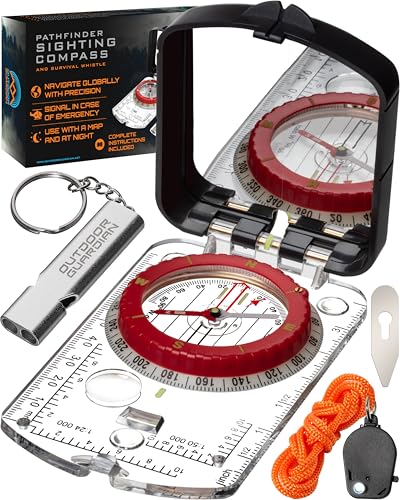 | Best Survival Tool | Primary Use: Sighting compass | Angle Range: Slope readings | Mounting: Handheld | VIEW LATEST PRICE | Read Our Analysis |
| Sun Company Lev-o-gage Heel Angle Clinometer |  | Best Marine Pick | Primary Use: Boat clinometer | Angle Range: -30° to 30° | Mounting: Bulkhead mount | VIEW LATEST PRICE | Read Our Analysis |
More Details on Our Top Picks
Proster IP54 Hiking Compass with Sighting Clinometer
The Proster IP54 hiking compass is designed for hikers who need precise slope and direction readings on the trail. It features a 360° floating dial, an adjustable prism lens, and a sighting clinometer that helps measure slope, height, direction, temperature, and altitude. The aluminum alloy case feels sturdy, and the collapsible metal lid adds protection. Weighing 140g, it remains portable, while the waterproof and shockproof construction stands up to rough weather. It is suitable for hiking, camping, mountaineering, boating, or hunting. The fluorescent display, pouch, lanyard, and 1 year warranty add practical value.
- Primary Use:Hiking compass
- Angle Range:Slope readings
- Mounting:Handheld
- Visibility:Fluorescent display
- Material:Aluminum alloy
- Weatherproofing:IP54 waterproof
- Additional Feature:Adjustable prism lens
- Additional Feature:Temperature readings
- Additional Feature:1-year warranty
Sun Company Lev-o-gage Sailing Clinometer (Marine Model)
For skippers who need a reliable angle gauge at sea, the Sun Company Lev-o-gage stands out. It tracks tilt from -45 to 45 degrees, and the brass ball moves through damping fluid for steady, accurate readings. The bright Saturn yellow tube, engraved numbers, and hand-painted markings make it easy to read in glare. Its rugged copolymer flex tube and ABS housing improve durability, while 3M VHB tape helps you mount it on almost any surface. Made in the USA, this marine model is well suited for bulkhead use on your boat.
- Primary Use:Marine clinometer
- Angle Range:-45° to 45°
- Mounting:Tape mount
- Visibility:Engraved numbers
- Material:Copolymer/ABS
- Weatherproofing:Shatterproof durable
- Additional Feature:Brass ball damping fluid
- Additional Feature:3M VHB tape
- Additional Feature:Made in USA
Anbte Waterproof Metal Compass with Clinometer and Bag
Built for harsh trails, Anbte’s zinc-alloy clinometer is ideal when durability matters most. It features a military-grade, waterproof, shockproof body with IP65 protection, so it can handle extreme weather. The built-in inclinometer, graduated side scale, aiming window, and bubble level help you measure slope and height with greater accuracy. Its luminescent compass card and magnet arrows remain readable after sunlight and glow at night. Pack it in the canvas pouch, clip on the lanyard, or mount it on a tripod. Keep it away from phones and magnets.
- Primary Use:Compass with clinometer
- Angle Range:Slope readings
- Mounting:Tripod mount
- Visibility:Luminous display
- Material:Zinc alloy metal
- Weatherproofing:IP65 waterproof
- Additional Feature:Luminous compass card
- Additional Feature:Tripod screw hole
- Additional Feature:Bubble level accuracy
GPS Car Digital Inclinometer with Head-Up Display
With GPS, tilt sensing, and a head-up display, this is a strong GPS pick for vehicles that need instant slope awareness. You get a GPS automotive slope meter, multi-axis gyroscope, and color LCD that show tilt, pitch, speed, compass, time, altitude, and coordinates at a glance. Use city or off-road mode, and let the alarm beep when pitch or tilt goes beyond ±30°. The speed limit alert helps you stay controlled. It mounts easily, rotates for better viewing, and supports 10 to 30V power. It is ideal for vans, trucks, buses, cars, SUVs, and off-road rigs.
- Primary Use:Car inclinometer
- Angle Range:-40° to 40°
- Mounting:Dashboard mount
- Visibility:LCD display
- Material:Plastic
- Weatherproofing:Outdoor-rated
- Additional Feature:Multi-axis gyroscope
- Additional Feature:Speed limit alarm
- Additional Feature:Satellite positioning
Timloon Car Inclinometer Tilt Gauge Indicator
Timloon’s inclinometer is a smart choice if you want an easy to use tilt gauge for quick driving checks. You can monitor uphill, downhill, left, and right slopes, and the 40° warning limit helps you judge risky grades quickly. Its high sensitivity sensor responds fast, so you can catch angle changes at any time. The 360° rotating base lets you adjust the view for better visibility. Mount it on a flat surface and attach it to your dashboard or front area. If the scale looks off, rotate the outer ring to align it.
- Primary Use:Car tilt gauge
- Angle Range:40° warning limit
- Mounting:Flat-surface mount
- Visibility:Rotatable digits
- Material:Plastic
- Weatherproofing:Outdoor use
- Additional Feature:40° warning limit
- Additional Feature:360° rotation base
- Additional Feature:Rotatable outer ring
Pathfinder Sighting Compass with Mirror Clinometer & Whistle
For hikers and survival trainees, this compass feels like a field-ready lifeline. You get a magnetic mirrored sighting compass with a global needle, so it works in both hemispheres. Adjust declination, read directional markings, and trust the luminous bezel, dial, and LED lanyard light as dusk falls. The folding mirror helps you signal, while the whistle adds emergency backup. Measure slope and height with the clinometer, use the 3x lens and six scales for mapping, and target landmarks precisely. At 2.6 ounces, it is compact, waterproof, and ready for camping, backpacking, and orienteering.
- Primary Use:Sighting compass
- Angle Range:Slope readings
- Mounting:Handheld
- Visibility:Luminous dial
- Material:Metal/plastic
- Weatherproofing:Waterproof
- Additional Feature:Global needle
- Additional Feature:Survival whistle included
- Additional Feature:Declination adjustment tool
Sun Company Lev-o-gage Heel Angle Clinometer
Sun Company’s Lev-o-gage Heel Angle Clinometer is a smart marine choice for skippers who need quick heel readings. You mount it on your bulkhead with the included 3M VHB tape, and its brass ball glides through damping fluid for smooth, accurate tilt checks from negative 30 to 30 degrees. The bright Saturn yellow tube, engraved hand-painted numbers, and shatterproof copolymer body make it easy to read and tough at sea. You get a made in USA model 308-M that weighs almost nothing, yet earns strong praise from boaters who want reliable heel angle monitoring.
- Primary Use:Boat clinometer
- Angle Range:-30° to 30°
- Mounting:Bulkhead mount
- Visibility:Hand-painted numbers
- Material:Brass/plastic
- Weatherproofing:Shatterproof durable
- Additional Feature:High-resolution clinometer
- Additional Feature:Hand-painted numbers
- Additional Feature:UNC thread style
Factors to Consider When Choosing Clinometers
Whenever I choose a clinometer, I first check its measurement range and how accurate and precise it is for the task. I also look at durability, build quality, visibility, and readability so I can trust it in real conditions. If I need to move it often, I also consider mounting options and portability.
Measurement Range
I’d start by matching a clinometer’s measurement range to the job you actually need it for. A narrow range can work well for boat heel or road incline checks, while a wider range is better for hiking, vehicle pitch, steep slopes, or general terrain work. I look for common ranges such as -30° to 30°, -40° to +40°, or -45° to 45°, and I make sure the device measures both upward and downward angles. When I’m checking steep terrain or vehicle tilt, I prefer the wider span because it is less likely to max out on me. For sailing or typical road grades, a smaller range can be enough. I always compare the stated range with the biggest slope I expect.
Accuracy And Precision
Accuracy matters just as much as range, and I look for a clinometer that reads consistently and holds its setting. I want features that reduce error and steady the needle, such as damping fluid, a brass ball indicator, or a bubble level. I also pay attention to the scale itself. Engraved or hand-painted degree markings, along with a luminous or backlit display, help me read fine changes when light drops. If I need to line up on a slope or target, I prefer adjustable elements such as a prism lens, viewing angle, or declination setting, because they make alignment easier. For the most precise results, I choose a model with rigid materials and a secure mount, since a fixed position helps prevent drift during use.
Durability And Build
Durability matters to me just as much as performance, especially when I am taking a clinometer into rough field conditions. I look for a rugged metal or reinforced composite housing because aluminum alloy, zinc alloy, brass, plastic, or ABS can handle abuse better than flimsy shells. If I expect rain, mud, or dust, I want an IP54 or IP65 rating. I also value shockproof and shatterproof construction, since drops and bumps happen. A collapsible metal lid, sturdy sighting parts, and protected fluid damped internals help the tool survive transport and hard use. Even lightweight models around 140 g to 330 g can be tough, but I trust stronger cases and secure mounting more when I am carrying gear through the field.
Visibility And Readability
Whenever I am choosing a clinometer, visibility and readability matter just as much as the scale itself, because I need to catch the angle quickly in changing light. I look for high-contrast markings, engraved numbers, or hand-painted figures that stand out at a glance. Since I often work in dusk or dawn, I want luminous, fluorescent, or glow-in-the-dark displays so I can still read the angle easily. In bright sun, a clear dial and a bold display color help me see the reading on reflective surfaces. I also value larger, well-spaced degree marks and a smooth indicator, such as a ball in damping fluid, because they stay legible and steady. Adjustable viewing features, such as a free-rotating base or prism lens, can also help reduce parallax and sharpen the reading.
Mounting And Portability
After checking how easy a clinometer is to read, I also consider where and how I will use it. I look for models that I can mount on a flat surface, bulkhead, tripod, or vehicle dashboard, since a fixed setup usually keeps the angle steadier and easier to view. I also check for practical mounting aids such as adhesive tape, a screw hole, a free rotating stand, or a lanyard, because they simplify setup and carrying. If I need to move it often, I choose a compact, lightweight unit that fits in a pouch, bag, or pocket. I prefer designs that I can reposition without tools, yet still stay secure during use. I also decide whether I want handheld convenience or permanent mounting, because portability and stability do not always point to the same clinometer.
Intended Use Case
What will you use your clinometer for? I ask that first because your environment should shape your choice. If I am hiking, camping, mountaineering, or surviving outdoors, I want a model that handles rough use and matches how I will carry it. For route finding, I look for one tool that measures direction, slope, height, and angle so I can check bearings and read terrain fast. If I am on a boat, I prefer a limited tilt range, usually around -45° to 45° or -30° to 30°, for tracking heel and vessel motion. For driving, I choose a dashboard or windshield mounted inclinometer with pitch and tilt alerts. At night, I need luminous markings or backlighting so I can trust every reading.
Frequently Asked Questions
How Do I Calibrate a Clinometer Accurately?
I calibrate mine by placing it on a known level surface and zeroing it, then checking it against a precise slope or protractor angle. Repeat the process, make small adjustments, and verify several readings for accuracy.
Can a Clinometer Measure Vertical Tree Height?
Absolutely, I can measure vertical tree height with a clinometer. I sight the top and base, read the angle, then calculate the height, especially when a tape will not reach.
Are Smartphone Clinometer Apps Reliable Enough?
Yes, I would trust smartphone clinometer apps for quick estimates, but I would not rely on them for precise work. I would calibrate them carefully, keep the phone steady, and verify critical measurements with a dedicated clinometer.
What Maintenance Keeps a Clinometer Accurate Longer?
I keep my clinometer accurate longer by wiping away grit, storing it dry, protecting it from drops, checking calibration often, replacing weak batteries, and avoiding extreme heat or cold that can warp sensors.
Do Clinometers Work Differently in Extreme Cold?
Yes, extreme cold can slow batteries, stiffen mechanisms, and slightly affect calibration, so I would let yours warm up before trusting readings. I would also check zeroing often to keep measurements reliable outdoors.