

Whether you’re winterizing a cabin up north or just tired of the cold snap turning exposed basement lines into a guess, picking the right insulation matters. PEX (cross-linked polyethylene) tolerates cold better than copper, but it isn’t invincible, and a good wrap can also stop pipe sweat on humid summer days. The picks below cover the most common scenarios, from quick DIY projects to full mechanical-room retrofits.
A Snapshot Of The Selections

Insul-Lock DS Flexible Closed Cell Pipe Insulation 2-7/8 in

M-D Building Products 50220 1/2 in. Foam Tube Pipe Insulation

Amylove 12 Pcs Pipe Insulation Foam Tube (Black, 1/2 in)
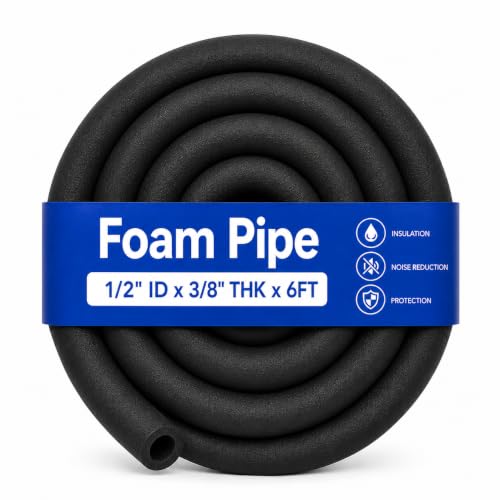
CARGEN 1/2 in. ID Foam Pipe Insulation for Copper & PEX

Rebower Pipe Insulation Foam Tubing 28mm ID (Green, 3.3ft)

Frost King Fiberglass Pipe Wrap Kit 3 in. x 1/2 in. x 25 ft.

Duda Solar 3/4 in. ID Nitrile Rubber Pipe Insulation (6 ft)
Rebower 5/8 in. ID Foam Pipe Insulation 3/16 in. Thick (Black, 6 ft)

Worldity 4 Pack 2 in. Pipe Insulation for Copper and AC Lines

Tsurpcao 5/8 in. Foam Tubing for Plumbing, AC, and More (6 ft)
Taking A Closer Look At The Options
The Insul-Lock DS handles a category of pipe that foam tubes rarely fit well: large-diameter 2-7/8 in. water mains, where generic 1/2 in. residential wraps simply won’t stretch. BriskHeat’s elastomeric (a flexible, rubber-like foam) build arrives as a single pre-slit sleeve, and the locking adhesive flap runs the full length to form a double seal. In homes where the basement trunk line sits against an uninsulated exterior wall, that closure matters; cold air can’t sneak in along the seam.
Unlike the slim foam tubes in the rest of this list, this one targets a mechanical-room audience. The closed-cell structure (a foam with sealed internal bubbles, so moisture can’t wick through) also blocks condensation from forming on chilled lines during humid summers. In our view, the trade-off for the 2-7/8 in. fit is overkill for the small branch lines most homeowners deal with, and you’ll want a clean, dry pipe surface before pressing that adhesive flap shut to get a tight bond.
Practical Advantages
- Double-seal locking adhesive flap keeps seams closed on long runs
- CFC-free elastomeric foam resists moisture and condensation
- Fits the 2-7/8 in. diameter where standard residential sleeves fall short
- Flexible material bends around fittings without tearing
Worth Noting
- Specialty 2-7/8 in. sizing isn’t useful for typical 1/2 in. or 3/4 in. PEX runs
- Adhesive flap bonds best on clean, dry, room-temperature pipe
Feature Snapshot
Who It Suits Best
Anyone insulating a 2-7/8 in. main water line in a basement, garage, or mechanical room where condensation control is a real concern.
Consider Something Else When
The M-D Building Products 50220 Foam Tube is a better match for typical 1/2 in. residential PEX branch lines.
M-D Building Products 50220 is the workhorse of the list. The polyethylene foam tube ships pre-slit with a self-adhesive seam, so you peel the backing, wrap it over the pipe, and press. At 1/2 in. wall thickness and 6 ft long, it covers a typical run of 1/2 in. copper or PEX in a single pass without extra splicing. The R-value of 3.0 (a measure of thermal resistance, where higher numbers mean better insulation) is competitive with the other residential picks here.
Where this tube really pulls ahead is condensation control on cold domestic water lines during humid summers. The closed-cell foam sleeve stops that annoying “sweating” that drips onto basement floors. One thing worth considering: the 7/8 in. inner diameter is sized for 3/4 in. copper and 1/2 in. PVC, so measure your PEX line carefully. Depending on your pipe’s nominal size, you may need to size up or down.
Strong Points
- Pre-slit with self-adhesive strip for fast, no-tool installation
- R-value of 3.0 handles both heat retention and condensation
- Snips cleanly with household scissors for exact length fits
- Works on 3/4 in. copper, 1/2 in. PVC, and iron pipe sizes
Trade Offs
- Only 6 ft of length means longer runs need multiple tubes and taped seams
- 7/8 in. ID is a specific fit, so confirm your PEX size before ordering
At A Glance
Made For
DIYers wrapping 1/2 in. PEX or copper branch lines in a basement, crawlspace, or utility closet with a clean, scissor-and-stick install.
Look Elsewhere When
The Rebower Pipe Insulation Foam Tubing handles larger 28mm copper lines that the 7/8 in. ID here can’t accommodate.
The Amylove 12-pack trades one long sleeve for twelve 1 ft pre-cut pieces, which sounds inconvenient until you realize how useful that is for small repairs. Got a two-foot exposed section behind the water heater, or a vulnerable elbow under the sink? You can wrap it in seconds without measuring, cutting, or taping a long run. The 1/2 in. wall fits standard residential PEX.
PEP foam (polyethylene, the same closed-cell material found in pool noodles) is waterproof, shock-absorbent, and offers a useful secondary job: it doubles as packaging protection or a craft material when you have leftovers. For most full basements, you’ll burn through twelve pieces fast, so think of this as a patch kit, not a whole-house solution. Depending on the run length, you may find yourself ordering a second box.
Useful Touches
- Twelve pre-cut 1 ft pieces eliminate measuring and trimming
- PEP foam is waterproof, shock-absorbent, and resists mildew
- Pre-slit design slides over the pipe without tools
- Useful for both plumbing repairs and craft or packaging projects
Room For Improvement
- Twelve 1 ft pieces aren’t enough for a full basement repipe
- Thinner wall than competing residential picks means lower R-value
Best Suited To
Homeowners patching exposed elbows, short vulnerable runs, or doing quick winterization on a few problem spots without committing to a full roll.
Reach For A Different Pick When
The M-D Building Products 50220 Foam Tube is a better fit for insulating entire 6 ft stretches of 1/2 in. PEX in one piece.
CARGEN builds its tube from nitrile rubber (a denser, more oil- and heat-resistant foam than polyethylene) with a Class B flame-retardant rating, which is a step up from the basic residential foam tubes earlier in this list. The 1/2 in. inner diameter is cut specifically to fit 1/2 in. OD (outer-diameter) copper and PEX lines, so there’s no guesswork about sizing. The elasticity is the real story, since the foam stretches over fittings and recovers its shape without tearing.
Compared to the M-D Building Products 50220 polyethylene tube, this one’s denser build holds up better near water heaters and other high-heat zones. The trade-off is a tighter initial size fit, so you need to measure the actual OD of your pipe before ordering. In most basements with mixed copper and PEX runs, the consistent 1/2 in. ID simplifies stocking.
The Practical Payoff
- Class B flame retardancy adds safety in utility rooms and tight joist bays
- Nitrile rubber handles higher heat than polyethylene foam
- High elasticity slides over fittings without splitting
- Provides sharp-edge protection on exposed stubs and valves
Small Caveats
- Specifically sized for 1/2 in. OD, so other pipe sizes need a different sleeve
- Heavier construction adds a small premium over basic foam tubes
Quick Facts
Who Will Love This
Anyone insulating lines in a mechanical room, near a water heater, or in a jurisdiction where flame-rated materials are required by code.
Swap It Out When
The Insul-Lock DS Flexible Closed Cell Pipe Insulation is the better match for 2-7/8 in. trunk lines this sleeve won’t fit.
Rebower’s green foam tube targets a specific gap in this list: metric-sized 28mm copper (roughly 1-1/8 in. OD) that the 1/2 in. and 3/4 in. residential sleeves can’t reach. At 5mm wall thickness and 3.3 ft long, it’s a focused tool for cold-snap winterizing on larger supply lines, including those feeding outdoor wood boilers or shop plumbing. The foam stays soft down to freezing temps, so it doesn’t stiffen and crack when you need it most.
Same story as the other Rebower sleeve, but the 28mm ID makes this the one to grab for the bigger lines. You may find the 3.3 ft length limiting on whole-house projects, so calculate your footage before buying. In our view, the bright green color is a minor annoyance in finished basements, but functional where it matters.
Standout Benefits
- 28mm ID fits metric copper lines other picks in this list miss
- Soft foam formula resists cracking in sub-freezing conditions
- Doubles as a tool handle grip and equipment cover
- Works on cold, hot, and AC line applications
Honest Caveats
- Only 3.3 ft per tube means longer runs need several pieces and taped seams
- Green color stands out in finished living spaces
Perfect Match For
Anyone winterizing 28mm copper lines in a shop, garage, or older home with metric plumbing that standard 1/2 in. and 3/4 in. sleeves won’t reach.
Not Your Match When
The Worldity 4 Pack is a better fit for 2 in. main supply lines needing thicker 20mm walls.
Frost King takes a different tack from every foam tube in this roundup. The kit ships a 25 ft roll of yellow fiberglass wrap with a 1/2 in. thickness, plus a 25 ft plastic vapor barrier to slip over the top once the insulation is on. Fiberglass handles much higher temperatures than foam, so this is the sleeve of choice for hot water lines near a boiler or steam system. The 1.6 R-value is lower than the closed-cell foams, but the heat tolerance more than compensates.
Compared to the M-D Building Products polyethylene tube, this wrap is a real commitment. You’ll need to cut the roll to length, wrap it with overlap, and seal it with the included vapor barrier. For a quick patch, that’s overkill; for insulating an entire mechanical room or overwrapping electric heat cable, it’s the right tool. The honest read is that this is a trade pick for higher-heat projects, not a casual DIY install.
Useful Strengths
- Fiberglass handles high heat that foam tubes can’t tolerate
- 25 ft roll covers long basement or mechanical room runs
- Plastic vapor barrier prevents moisture penetration into the fiberglass
- Works as overwrap for electric heat cable installations
Factors To Consider
- Multi-step install: cut, wrap, and seal with vapor barrier
- Fiberglass irritates skin, so gloves and long sleeves are essential
- Lower 1.6 R-value than closed-cell foam options
Right Fit For
Homeowners insulating near boilers, steam systems, or electric heat cable where foam would melt or degrade under sustained high temperatures.
Skip It When
The CARGEN 1/2 in. ID Foam Pipe Insulation handles typical residential PEX runs with a much faster install.
Duda Solar’s nitrile rubber sleeve is built for a job most foam tubes can’t handle: solar thermal lines. The 3/4 in. inner diameter, 13mm wall, and 6 ft length target the hot-water loops feeding roof collectors, where surface temperatures can climb well past what polyethylene foam survives. The R-value of 1.95 sits in the middle of the pack, but the thermal conductivity of 0.038 (a measure of how easily heat passes through, where lower numbers insulate better) is the real spec that matters here, and it’s competitive with the other nitrile options.
Same story as the CARGEN tube, but Duda Solar explicitly calls out solar water heater systems. Owners commonly report that the rubber holds up to prolonged UV exposure better than expected, though aluminum overwrap is recommended for direct sun. The trade-off is that this is a specialty pick, and the 3/4 in. ID won’t fit smaller residential PEX branch lines.
Features That Help
- Nitrile rubber tolerates sustained high temperatures from solar loops
- 13mm wall provides solid R-value without excess bulk
- Water-resistant construction prevents moisture wicking
- Standard 6 ft length covers typical solar line runs
Where It Is Less Suited
- 3/4 in. ID is too large for 1/2 in. residential PEX branch lines
- UV exposure degrades unprotected nitrile, so aluminum overwrap is recommended
Built With In Mind
Anyone installing or maintaining a solar water heating system who needs insulation that handles the high fluid temperatures of rooftop collectors.
A Better Fit Elsewhere
The M-D Building Products 50220 Foam Tube is a better match for typical 1/2 in. PEX branch plumbing in a residential basement.
Rebower’s 5/8 in. ID sleeve is the thinnest pick in the roundup, with a 3/16 in. wall that fits where bulkier foam tubes won’t. Tight joist bays, narrow wall cavities, and spots where you’re insulating right next to drywall all benefit from that slim profile. At 6 ft long, the black foam covers a typical short run without seams. The 5mm wall is light-duty compared to the M-D Building Products 50220, but it earns its place when clearance trumps R-value.
Like the green Rebower sleeve, this doubles as a handle grip and equipment cover, so DIYers juggling plumbing and fitness projects get a versatile product. One thing worth considering: the 3/16 in. wall won’t perform as well in truly cold attics or unheated crawlspaces. Assuming a moderate basement or interior wall application, it does the job without forcing you to widen the bay.
A Few Highlights
- 3/16 in. wall fits narrow joist bays and tight cavities
- 5/8 in. ID matches 1/2 in. copper and 3/8 in. PEX lines
- Soft foam formula stays pliable in freezing temperatures
- Doubles as a handle wrap for tools and fitness equipment
Less Ideal Details
- Thin 3/16 in. wall delivers a lower R-value than thicker picks
- Less suitable for unheated attics or extreme cold exposure
Whose Shelf It Belongs On
Homeowners with limited clearance who need to insulate lines packed into narrow joist bays or wall cavities where thicker foam won’t fit.
Another Choice May Suit
The CARGEN 1/2 in. ID Foam Pipe Insulation delivers a more robust flame-rated build for code-sensitive mechanical rooms.
Worldity’s 4-pack handles the big pipes. Each sleeve is sized for 2 in. copper and AC refrigerant lines, with a generous 20mm wall thickness that puts the R-value above most of the other foam tubes in this list. Four 40cm pieces give you roughly 5.25 ft of total length, which works well for insulating short sections of large-diameter main or for sectional repairs. The thick foam also doubles as a cushion, so it protects against accidental bumps in tight mechanical spaces.
Compared to the Insul-Lock DS, this is a more casual install without the locking adhesive flap, so you’ll want foil tape or zip ties to hold the seams closed. For most homeowners, that’s a fair trade for the lower cost and the ability to buy exactly four pieces instead of a long roll. Depending on your project’s scale, the shorter individual lengths may require multiple packs to cover a full main line.
Benefits That Matter
- 20mm wall thickness delivers strong thermal performance on 2 in. lines
- Targets both 2 in. copper supply and AC refrigerant lines
- Four pre-cut pieces simplify sectional repairs and short runs
- Thick foam cushions pipes against accidental impacts
Potential Compromises
- No integrated adhesive closure, so seam sealing requires separate tape
- 5.25 ft total length means longer mains need multiple packs
The Right Fit
Anyone insulating a 2 in. main supply line or a short section of AC refrigerant line where thicker foam delivers real thermal gains.
Where A Sibling Pick Shines
The Insul-Lock DS Flexible Closed Cell Pipe Insulation is a better fit for 2-7/8 in. lines with its built-in locking seam.
Tsurpcao’s foam tube is the multi-tool of the list. The 5/8 in. ID fits small PEX, copper, and even guitar stand posts, and the rubber foam construction grips without slipping, which is unusual among smooth-walled foam sleeves. The high elasticity and tensile strength let it stretch around tight bends and recover its shape, and the material resists aging and repeated bending better than cheaper polyethylene foam. For a DIYer with a mixed project list, that versatility is the real selling point.
Same 5/8 in. story as the Rebower 5/8 in. sleeve, but Tsurpcao leans into the anti-slip grip as a feature, which matters if you’re wrapping tool handles or anything that gets held. In our view, this is a grab bag pick: not the specialist for any one job, but a solid all-rounder when you want one foam tube to cover plumbing, AC lines, and a few non-plumbing uses. You may find the modest wall thickness limits its use in truly cold attics.
Positive Points
- Anti-slip rubber foam grips tools, stands, and pipes without sliding
- High elasticity bends around fittings and recovers its shape
- Aging-resistant material holds up to repeated flexing
- Works on plumbing, AC units, tool grips, and instrument stands
Details To Watch
- Modest wall thickness limits insulation value in extreme cold
- 5/8 in. ID won’t fit 1/2 in. copper or larger supply lines
Who Should Grab It
Multi-project DIYers who want one foam tube for plumbing repairs, AC line touch-ups, and grip wrapping without buying three separate products.
Where Another Pick Suits Better
The M-D Building Products 50220 Foam Tube is a better fit for insulating an entire 1/2 in. PEX branch line in one piece.
What To Weigh Before Choosing Pipe Insulation
The single most important spec is the inner diameter, since a sleeve that’s even 1/8 in. too large leaves an air gap that wipes out much of the R-value. Measure the actual outside diameter of your PEX, copper, or PVC line, then pick a sleeve that fits snugly without forcing. Wall thickness matters next: 1/2 in. walls handle most residential basements, while 20mm or thicker walls earn their place on unheated mains and exterior runs.
Material changes the use case. Polyethylene foam is the everyday pick, easy to cut and self-adhesive, and it handles condensation well in most homes. Nitrile rubber steps up for high heat and code-sensitive mechanical rooms. Fiberglass wrap is the heavy hitter near boilers and steam lines, where foam would degrade over time. For most homeowners, the right call is a polyethylene sleeve for branch lines, a nitrile sleeve where temperatures climb, and a fiberglass wrap only when a boiler or heat cable is involved.
Length and quantity round out the decision. A 6 ft tube covers one or two short branch runs, while a 25 ft fiberglass roll tackles an entire mechanical room. Patch jobs and repairs call for pre-cut 1 ft pieces that slide on without measuring. In our view, the best approach is to sketch your run lengths first, then pick the format that covers the footage with the fewest seams, since every seam is a potential cold-air leak.
Key Considerations Across These Picks
Traps First Timers Fall Into
The most common mistake is ordering by the nominal pipe name instead of the actual OD. “1/2 in. PEX” refers to the nominal ID, but the outside diameter is closer to 5/8 in., which means a sleeve labeled for 1/2 in. OD is the right match. Skipping this step is the fastest way to end up with foam that falls off the pipe.
Another wrong turn is overlooking the vapor barrier in cold or humid spaces. Closed-cell foam handles condensation on its own, but fiberglass wrap needs the included plastic sleeve to keep moisture out, or it ends up soggy and useless. Always seal fiberglass properly.
Where The Extra Money Goes
Higher-tier options like the CARGEN nitrile rubber or Frost King fiberglass kit cost more because they survive conditions that destroy basic foam. Nitrile rubber tolerates sustained high heat near water heaters and solar loops, and it carries flame ratings that meet stricter codes. Fiberglass wrap handles boiler-room temperatures that would melt or degrade polyethylene foam.
The upgrade payoff shows up in two places: lifespan and safety. Premium materials last longer in harsh environments without cracking or losing R-value, and flame-rated builds add a margin of safety in mechanical rooms. For most branch lines in a finished basement, basic foam is fine, but high-heat and code-sensitive spots reward spending up.
Frequently Asked Questions
What R-value do I need for PEX pipe insulation?
For typical residential basements, an R-value of 3.0 handles both heat retention and condensation control. Unheated crawlspaces and exterior walls benefit from R-4 or higher, which usually means a thicker 3/4 in. wall or nitrile rubber construction.
Can PEX pipe freeze even with insulation?
Yes, insulation slows heat loss but doesn’t generate heat, so extended sub-freezing conditions can still freeze PEX if the line has no flow. Pair insulation with heat cable in extreme cold, and let faucets drip during deep freezes to keep water moving.
Is foam pipe insulation safe for hot water lines?
Polyethylene foam handles typical domestic hot water temperatures up to around 200°F. For sustained higher heat near boilers, solar loops, or steam systems, choose nitrile rubber or fiberglass wrap, which tolerate temperatures that would deform standard foam.
Do I need to seal the seams between foam tubes?
Yes, any time two tube ends meet or a slit seam runs along a pipe, seal it with foil tape or compatible adhesive. Unsealed seams let cold air infiltrate the gap and cut the effective R-value of the entire run.
How do I clean and maintain pipe insulation?
Wipe foam tubes with a damp cloth and mild soap as needed, and inspect seams annually for peeling. Fiberglass wrap should stay dry, so check the vapor barrier for tears each season and patch any holes with foil tape.
Wrap Up
The right pick depends on the pipe size, the temperatures involved, and how much clearance you have. For most residential PEX branch lines, the M-D Building Products 50220 delivers reliable, no-tool insulation. High-heat zones reward the CARGEN nitrile or Frost King fiberglass kit, and tight joist bays call for the slim Rebower 5/8 in. sleeve. Match the inner diameter first, then weigh wall thickness and material against your specific room conditions, and your lines will stay protected through every season.
