

Choosing a septic tank pump feels unglamorous until the basement starts smelling off or the drain field backs up after a storm. Homeowners managing off-grid plumbing, lake cabins, or older properties with tight basins need pumps that can chew through solids, lift wastewater against gravity, and keep running without babysitting. The ten picks below cover submersible grinders, deep-well transfer pumps, automatic float-switch models, and a couple of replacement parts worth knowing about. Whether you handle routine drainage or need serious lift head, this roundup lays out the practical trade-offs so you can match the right tool to your setup.
Your Options, Compared

ShuDwrpu 1HP Submersible Sewage Grinder Pump (Stainless)

Zvdhryss 1HP Submersible Sewage Grinder Pump
Sludge Boss Septic Float Switch

Ussuray 004705 Sump Pump Float Switch

Star 1102RP Replacement Pump

VERIWIS 3/4HP Septic Tank Pump
VEVOR 3/4 HP Submersible Sewage Pump

LANCHEZ 1HP Submersible Sewage Pump

AZZUNO 1.1 HP Submersible Septic Pump

VERIWIS 1/2HP Submersible Septic Pump
A Breakdown Of The Leading Choices
If your sewage basin sits deeper than 30 inches and you need serious vertical lift, this ShuDwrpu grinder earns attention. The 1HP motor pushes flow up to roughly 10,400 GPH at zero head and handles a maximum lift of about 52.5 feet, which is more headroom than most residential ejectors can claim. Stainless steel housing shrugs off the corrosive environment that destroys cast iron over time, and the 2-inch NPT discharge accepts standard plumbing fittings for tie-in to existing drain lines.
Real-world value shows up when a household produces regular solids load: laundry lint, food particles, the occasional wipes mishap. The grinder mechanism reduces those solids to slurry before pushing them up and out. Compared to the Zvdhryss below, this model targets the higher-flow end of the 1HP category, which matters in larger basins that fill quickly during storms. For homeowners tired of replacing budget pumps every couple of years, the stainless build is a quiet upgrade worth taking seriously.
What Makes Sense
- 52.5ft max head handles deep basements and lift stations that overwhelm standard pumps.
- Stainless steel housing resists corrosion in constant-moisture sewage environments.
- 2-inch NPT discharge fits common residential plumbing without adapter fuss.
- Grinder design chews through solids that would clog a standard sewage ejector.
- 115V power works on standard household circuits without dedicated 230V wiring.
Things To Consider
- Grinder pumps run louder than effluent models, so placement near living spaces can be intrusive.
- Higher flow claims drop sharply as vertical lift increases, so headroom matters when sizing.
- Stainless models weigh more than plastic alternatives and may need a second pair of hands during install.
Best Suited To
Homeowners with deep sewage basins and regular solids load who want a corrosion-resistant grinder that can lift wastewater over long vertical runs.
Skip It When
Your basin is shallow and your waste stream is mostly greywater, in which case the LANCHEZ 1HP Submersible Sewage Pump handles the same duty with quieter operation.
The Zvdhryss grinder sits in the same family as the ShuDwrpu above but lands at a slightly more modest flow rating, roughly 7,800 GPH max with about 52.5ft of vertical lift. That difference sounds small on paper but translates to a pump better suited for mid-depth residential basins rather than extreme lift-station duty. Stainless housing and a 2-inch NPT discharge give it the same plumbing-friendly install path, and the 115V operation keeps electrical requirements simple.
In practice, this pump tends to fit households that want grinder reliability without paying for the highest-flow bracket. Homes with a 24 to 36-inch basin, occasional laundry discharge, and standard black-water solids will find the flow rating plenty. Where it differs from the heavier-duty ShuDwrpu is in the room above its rating curve: if your basin fills unusually fast or your discharge run climbs high, you may want the extra headroom. For most standard installs, this is the steady, predictable choice.
The Good Stuff
- Stainless steel body provides solid corrosion resistance at a moderate price tier.
- 7,800 GPH flow covers typical mid-sized residential sewage loads without strain.
- Standard 2-inch NPT outlet simplifies tie-in to existing discharge plumbing.
- Grinder mechanism reduces clog risk in homes with regular solids input.
Points To Note
- Flow drops noticeably at maximum head, so long vertical runs may require a larger basin.
- Grinder pumps require occasional blade inspection, especially after heavy solids events.
- Stainless adds weight compared to engineered polymer alternatives.
Made For
Homeowners with mid-depth basins who want grinder clog protection without paying for the highest-flow tier of 1HP pumps.
Consider Something Else When
Your vertical lift exceeds roughly 40 feet, where the ShuDwrpu 1HP Submersible Sewage Grinder Pump provides stronger headroom.
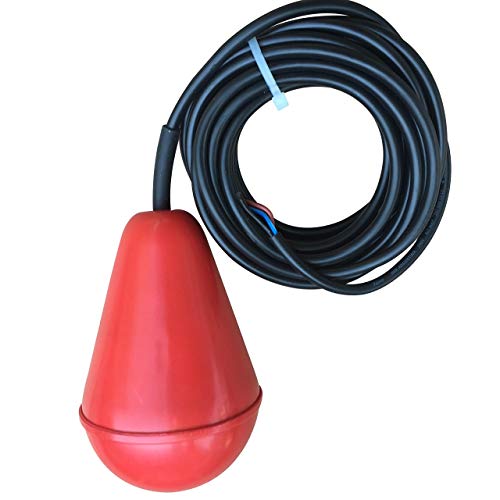
A float switch is the small part that decides when your pump turns on and off, and the Sludge Boss is built for the harshest version of that job. A float switch is a tethered or rigid float that rises and falls with the water level, sending a signal to start or stop the pump. This one is rated to control motors up to ½ HP (or 13 amps) at 120 or 220V AC for non-continuous duty, plus 12V DC loads. That covers the vast majority of residential septic pumps on the market.
The mercury-free, self-orienting design is the headline feature. Mercury switches are quietly being phased out of wastewater equipment because of the contamination risk if a switch ever cracks, and self-orienting floats avoid the tangling that plagues tethered models in tight basins. The 20-foot cable gives flexibility on install depth. Where it differs from the Ussuray below is purpose: the Sludge Boss is a generic upgrade for any pump up to ½ HP, while the Ussuray is a model-specific replacement for Zoeller owners.
Bright Spots
- Mercury-free design removes contamination risk that older switches carry.
- Self-orienting float avoids the cable tangling common with tethered designs.
- Rated for both 120V and 220V AC systems, plus 12V DC.
- 20-foot cable handles deep basin installations without splicing.
Worth Noting
- Capped at ½ HP, so it won’t directly control the 1HP grinder pumps above.
- Specialty part means you only need it when an existing float fails.
Feature Snapshot
Right Fit For
Homeowners with an existing ½ HP or smaller pump whose float switch has failed and who want a mercury-free upgrade that handles viscous wastewater.
A Better Fit Elsewhere
Zoeller owners with specific model numbers should look at the Ussuray 004705 Sump Pump Float Switch for a direct replacement rather than a generic swap.
If you already own a Zoeller sump pump, this Ussuray switch is the part number you actually need. It replaces Zoeller part 004705 and fits the 53, 55, 57, 59, 97, 98, 264, 1053, 1057, 1059, 1097, 1098, 1264, and 3098 series, plus Dayton and Grainger equivalents. A float switch failure is one of the most common causes of a working pump that simply won’t turn on, and matching the exact replacement part saves the trial-and-error of generic substitutes.
The honest read is that this is a niche replacement, not a general-purpose upgrade. Most homeowners will only buy it after a diagnosis points to a bad float. The Sludge Boss above handles broader use cases, but if your pump is on the supported Zoeller list, this Ussuray switch drops in without modification. For property managers maintaining several Zoeller units across rental homes, having a couple of these on hand prevents overnight basement calls.
A Few Strong Suits
- Direct replacement for part 004705 across a wide range of Zoeller models.
- Also fits Dayton and Grainger 2P547, broadening the install base.
- Saves the cost of full pump replacement when only the float has failed.
Trade Offs
- Limited to specific Zoeller model numbers, not a universal upgrade path.
- Repair scenario only; not useful for new septic system installs.
Whose Shelf It Belongs On
Property managers and homeowners with Zoeller 53, 55, 57, 59, 97, 98, or related series pumps who need a model-matched replacement switch.
Look Elsewhere When
Your pump is not a Zoeller or you want a switch rated for higher horsepower, in which case the Sludge Boss Septic Float Switch covers more universal installs.
The Star 1102RP is a drop-in replacement pump designed specifically for the S1101 and S1102 PowerFlush sewage ejector add-on bathroom systems. If your basement bathroom runs through one of those systems and the original pump finally gave out, this is the OEM-spec swap that brings everything back to factory performance. Made in the USA and backed by a 90-day manufacturer warranty, it removes the guesswork of matching an aftermarket motor to an integrated system.
For most shoppers this is the wrong category. This pump only fits two specific Star systems, so unless your bathroom ejector matches those model numbers, look elsewhere. Where it earns its place is in the long tail: homes that installed a PowerFlush unit years ago and now face pump failure rather than full system replacement. Compared to the larger submersible pumps in this roundup, this is a small, targeted, system-specific part that solves one problem cleanly.
Everyday Perks
- OEM-spec replacement maintains factory performance on S1101 and S1102 systems.
- Made in the USA with a 90-day manufacturer warranty for peace of mind.
- Drop-in design avoids plumbing or electrical rework during install.
Room For Improvement
- Only fits two specific Star PowerFlush models, very narrow use case.
- Not a standalone pump for new construction or non-Star systems.
Who Should Grab It
Homeowners with a Star S1101 or S1102 PowerFlush sewage ejector whose original pump has worn out and need a model-matched replacement.
Reach For A Different Pick When
Your system is not a Star PowerFlush, in which case the LANCHEZ 1HP Submersible Sewage Pump handles generic residential ejector duty.
VERIWIS positions this 3/4HP pump as a corrosion-resistant upgrade over standard septic models, and the sealed stainless steel top is the most visible difference. A sealed top design means the motor housing is fully gasketed, reducing the leak paths that cause sudden pump failure in cheaper units. The built-in float switch gives you automatic operation without buying a separate control component, and the capacitor start motor delivers smoother power-ups than standard split-phase designs.
This pump fits a different role than the 1HP grinders above. Without a grinding mechanism, it’s better suited to effluent (greywater plus fine solids) rather than heavy black-water solids. For a basement sump or septic transfer application where the waste stream is reasonably clean, the 3/4HP motor hits a sweet spot between power and electrical draw. Compared to the VEVOR below, this VERIWIS trades some cast iron mass for stainless corrosion resistance and automatic operation.
The Practical Payoff
- Sealed stainless steel top reduces leak risk that kills cheaper pumps.
- Built-in float switch provides automatic operation out of the box.
- Capacitor start motor gives smoother startup under load.
- Thermally protected motor cuts power before overheating damage occurs.
- Corrosion-resistant body suits long-term submerged installations.
Softer Spots
- No grinder mechanism means it cannot handle large solids the way a true grinder pump can.
- 3/4HP limits flow compared to the 1HP options higher in this list.
Feature Rundown
Perfect Match For
Homeowners wanting automatic septic pump operation with corrosion-resistant construction and a moderate 3/4HP power level for effluent-style duty.
Not Your Match When
Your waste stream carries heavy solids that need grinding, in which case the ShuDwrpu 1HP Submersible Sewage Grinder Pump is a better tool.
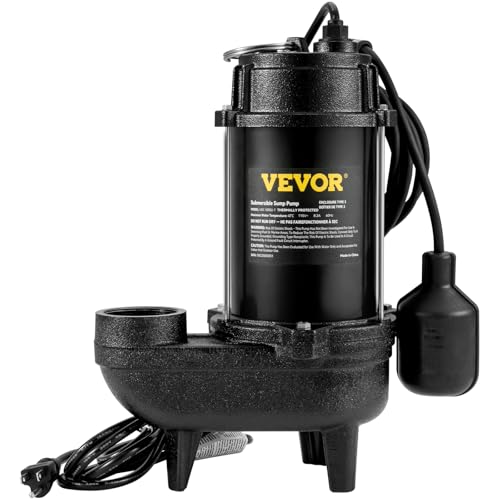
The VEVOR 3/4 HP pump targets the basement-flood-prevention crowd rather than heavy septic grinders. Cast iron construction, a tethered float switch, and a 10-foot power cord cover the practical needs of a residential sump basin. Flow lands around 5,880 GPH at zero head with roughly 37 feet of vertical lift, which is plenty for typical basement drainage during heavy rain or snowmelt.
Where this earns its place is value-driven installs. The copper motor with thermal overload protection adds lifespan that cheaper plastic-housed pumps cannot match, and the cast iron body dissipates heat better during long pump cycles. It lacks a grinding mechanism, so don’t expect it to chew through debris. Compared to the VERIWIS 3/4HP above, this VEVOR trades the sealed stainless top and integrated float for a tethered float and traditional cast iron build. For homeowners managing sump water rather than black-water solids, that’s a fair trade.
Why It Works Well
- Cast iron body handles heat dissipation better than plastic alternatives.
- Thermal overload protection prevents motor damage during dry-run events.
- 5,880 GPH flow clears basement sumps quickly during storm events.
- 10-foot power cord reaches standard basement outlets without an extension.
Honest Caveats
- No grinder means solids need to be small enough to pass through the impeller.
- 37ft max head limits use in deep lift-station applications.
- Tethered floats require adequate basin diameter to swing freely without tangling.
Who Will Love This
Homeowners managing basement sump water during heavy rain who want a cast iron pump with thermal protection at a budget-friendly price point.
Swap It Out When
Your waste stream contains solids that need grinding, in which case the Zvdhryss 1HP Submersible Sewage Grinder Pump handles the same residential install.
LANCHEZ has built a reputation for cast iron sewage pumps that handle continuous residential duty without drama. The 1HP PSC copper motor (PSC means permanent split capacitor, a motor design that runs cooler and quieter than standard induction motors) pushes 6,600 GPH at zero head and about 5,644 GPH at 5 feet of lift, with a maximum vertical lift of roughly 27 feet. The cast iron casing is the calling card: it dissipates heat better than plastic and adds the kind of mass that reduces vibration noise during long pump cycles.
For most homeowners managing standard black-water residential duty, this is the dependable middle-of-the-road pick. The tethered float switch adjusts to your basin depth, the 10-foot power cord reaches standard outlets, and the 2-inch NPT discharge matches common plumbing. It doesn’t grind solids the way the ShuDwrpu does, so think of it as a heavy-duty effluent and sewage pump rather than a true grinder. Compared to the VEVOR above, this LANCHEZ adds horsepower and a longer manufacturer support window.
Practical Advantages
- Cast iron casing improves cooling and reduces long-term corrosion risk.
- PSC copper motor runs cooler and quieter than standard induction designs.
- Built-in thermal overload protection prevents dry-run motor burnout.
- Adjustable tethered float fits a range of basin depths.
- Three-year manufacturer support covers defects beyond the initial install period.
Points To Keep In Mind
- 27ft max head is lower than the 1HP grinder options higher in this roundup.
- No grinder mechanism limits use in heavy black-water solids applications.
Quick Facts
Built With In Mind
Homeowners managing standard residential sewage or effluent duty who want a cast iron, thermally protected pump backed by a multi-year manufacturer support window.
Where Another Pick Suits Better
Basements needing grinder-level solids handling should consider the Zvdhryss 1HP Submersible Sewage Grinder Pump instead.
The AZZUNO pump stretches beyond typical basement-duty into genuine deep-well territory. Running on 230V at 60Hz, the 1.1HP motor delivers 26 GPM with up to 207 feet of head, which is the kind of vertical reach that handles lawn irrigation, deep well draws, and septic transfer over long uphill runs. The 4-inch form factor drops into standard well casings, and the stainless steel body is fully corrosion-resistant for submerged installations.
This is a different category from the basement sewage pumps above. Where those focus on solids handling and basin clearing, the AZZUNO is a transfer pump built for height and steady flow. The 33-foot UL-listed power cord gives you flexibility on install depth without splicing. Where it differs from the smaller VERIWIS 1/2HP below is raw vertical reach: 207ft versus 138ft makes the difference when feeding uphill irrigation zones or pressurizing systems that need real lift.
Advantages To Know
- 207ft max head handles uphill irrigation and deep septic transfer runs.
- 1.1HP motor delivers strong, steady flow at 26 GPM.
- Stainless steel body resists corrosion in submerged well and septic environments.
- 33-foot UL-listed cord supports deep well casing installation.
- Fits standard 4-inch well casings without modification.
A Few Limitations
- 230V power requires dedicated wiring, unlike 115V household-circuit options.
- Bottom-suction design suits clean water transfer rather than heavy solids duty.
Spec Overview
The Right Fit
Homeowners needing uphill water transfer for irrigation, deep septic line runs, or pressurized system feeds where 115V pumps lack the vertical reach.
Wrong Turns To Avoid
Standard basement sump installs do not need this much lift, and the ShuDwrpu 1HP Submersible Sewage Grinder Pump covers that duty on regular 115V household current.
The VERIWIS 1/2HP rounds out the list as the compact, lower-power option for shallow basins and modest transfer duty. Running on standard 115V household current, it moves 26 GPM with up to 138 feet of head, which is plenty of reach for most shallow septic transfer and yard irrigation without dedicated 230V wiring. The multi-stage impeller design (multiple impeller stages stacked to build pressure gradually) maintains consistent pressure through the flow curve rather than dropping off sharply at higher lifts.
Compared to the larger AZZUNO above, this VERIWIS trades raw horsepower and headroom for simpler installation. You won’t run a grinder cycle with a 1/2HP motor, so think of this as an effluent and transfer pump rather than a heavy black-water tool. Capacitor start ensures smooth power-ups, and the 115V operation means anyone comfortable wiring an outlet can install it. For cabins, small properties, or homes with shallow septic systems, this is the no-fuss option.
The Case For It
- 138ft max head handles moderate vertical lift on 115V household current.
- Multi-stage impeller maintains consistent pressure through the flow curve.
- 26 GPM flow supports septic transfer and yard irrigation alike.
- Capacitor start delivers smooth startup without dedicated wiring.
Less Ideal Details
- 1/2HP motor cannot drive grinder-style solids reduction.
- Lower flow means longer run times during heavy basin fill events.
Who Will Love This
Homeowners with shallow septic systems, small cabins, or modest yard irrigation needs who want 115V simplicity without the heavier pump draw.
Consider Something Else When
Your application involves heavy solids or long uphill runs, in which case the AZZUNO 1.1 HP Submersible Septic Pump is the stronger tool.
Factors To Consider Before Picking A Septic Tank Pump
Match The Pump To Your Waste Stream
Septic pumps break into three broad camps: grinder pumps that chew solids into slurry, effluent pumps that handle greywater and small particles, and transfer pumps built for vertical lift rather than solids handling. Grinder pumps suit homes with full black-water flow and the occasional wipes accident. Effluent pumps cover basement sump water and cleaner waste streams. Transfer pumps work best for uphill irrigation or moving water between tanks.
Headroom And Flow Are Not The Same Thing
Head (vertical lift) and flow (gallons per hour) trade off against each other: the higher the pump has to push, the less water it moves per hour. A pump rated for 7,800 GPH at zero head may only deliver half that at 30 feet of lift. Sizing the pump means calculating your actual vertical distance from the basin to the discharge point and adding a margin, rather than chasing the biggest number on the box.
Voltage And Circuit Availability Matter
115V pumps install on standard household outlets and suit most residential retrofits. 230V pumps deliver more power but require dedicated wiring, often a deal-breaker in older homes. Match the pump to your existing electrical panel before falling in love with specs, otherwise the install cost can dwarf the pump itself.
Construction Material Affects Longevity
Cast iron dissipates heat and resists impact but corrodes over years of submersion. Stainless steel resists corrosion but costs more and weighs more. Engineered polymers cut weight and cost but tolerate less abuse. For long-term submerged installations, material choice quietly determines how many years you get before replacement.
Key Considerations Across These Picks
Common Shopping Slip Ups
The most frequent mistake is sizing by max flow number alone. A 10,000 GPH pump at zero head that drops to 2,000 GPH at your actual lift height solves nothing. Buyers also overlook float switch ratings; pairing a 1HP pump with a ½ HP float switch either trips protection circuits or fails prematurely. Last, voltage mismatch creates install delays that inflate project cost.
Why Top Tier Costs More
Premium septic pumps earn their price through corrosion-resistant housings, thermal motor protection, multi-stage impellers, and longer manufacturer support windows. The upgrade pays off in households with high cycle counts, deep basins, or corrosive water chemistry. For a basement sump that runs a few times a year, the premium is harder to justify. For a daily-duty residential sewage pump, the extra cost typically returns through years of avoided replacement and service calls.
Frequently Asked Questions
What Size Septic Tank Pump Do I Need?
Match the pump horsepower and flow rating to your basin size and vertical lift requirement, not to the biggest number on the spec sheet.
Can A Sewage Pump Replace A Septic Ejector Pump?
Only if the pump is rated for the solids load and lift height your system requires; standard sewage pumps often lack grinder capability.
How Often Should A Septic Pump Run?
Normal duty varies by household, but excessive short cycling usually signals a failing float switch or undersized basin.
Do I Need 115V Or 230V For A Septic Pump?
Use 115V for standard residential outlets and 230V only when your electrical panel supports a dedicated high-amperage circuit.
What Maintenance Does A Septic Pump Require?
Annual inspection of the float switch, impeller, and seals prevents most failures, especially after heavy solids events.
Bottom Line
The right septic tank pump comes down to matching your waste stream, vertical lift, and electrical setup rather than chasing the largest specs. Heavy solids need a grinder like the ShuDwrpu, shallow basement sumps pair well with the VEVOR or LANCHEZ, and deep-well transfer duties call for the AZZUNO. Float switches and replacement parts round out the kit for ongoing maintenance. Pick the tool that fits your actual install, and the pump will quietly do its job for years.
