

Hitching up for the weekend means wrestling with campground water pressure. Some parks push 100 psi through the hose, and RV plumbing, pex lines, and faucets are built for 40 to 50. A pressure regulator tames that surge before it reaches your rig. The ten picks below cover adjustable knobs, lead-free brass, built-in gauges, and simple preset bodies, all sized to standard 3/4-inch garden hose threads so setup takes seconds.
The Lineup, Simplified

RVGUARD RV Water Pressure Regulator with Elbow Adapter

Camco Brass Marine/RV Water Pressure Regulator

Hourleey Brass RV Water Pressure Regulator with Filter Screen

Valterra RV Water Regulator Lead-Free Brass

wassermann Brass RV Water Pressure Regulator with Filter Screen

Camco Brass Water Pressure Regulator with Gauge (40064)
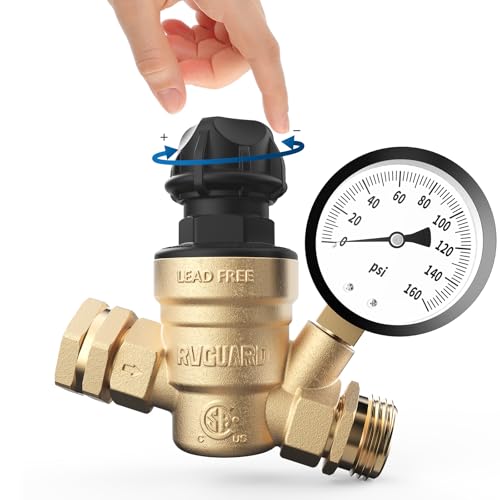
RVGUARD RV Water Pressure Regulator Valve With Adjustable Knob

LIULO TOOL RV Water Pressure Regulator Lead-Free Adjustable
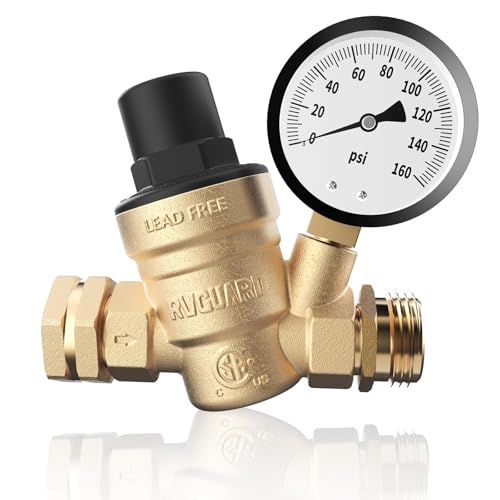
RVGUARD RV Water Pressure Regulator CSA Approved Lead-Free

Valterra A01-2222VP Hi-Flow Water Regulator with 90° Hose Saver
This bundle pairs the RVGUARD adjustable regulator with a 90-degree elbow connector, which is the small but meaningful upgrade for tight utility bays. The regulator uses lead-free brass and ships preset around 45 psi, with an inlet screen that catches sediment before it reaches the diaphragm.
The elbow piece is what sets this kit apart from a basic regulator like the Hourleey below. Heavy hoses and inline filters tend to torque on the spigot, and that strain travels back through the fitting. For most setups with a wall-mounted hookup, this two-piece arrangement keeps everything pointed where it should without kinking the hose.
What Stands Out
- Elbow adapter removes torque on the spigot from a heavy hose run
- Lead-free brass body is safe for drinking water lines
- Inlet screen catches grit that can clog valves downstream
- Hand-adjustable pressure lets you tune for quirky campground hookups
Trade Offs
- More pieces to keep track of in a storage bay than a single-body regulator
- Two-thread connection means slightly more chance of a slow drip if the tape job is rushed
Feature Snapshot
Made For
Riggers with packed utility bays who want strain relief from a heavy hose plus filter stack.
Consider Something Else When
The plain Valterra RV Water Regulator Lead-Free Brass suits anyone who wants a single-body regulator with no extra parts to store.
Camco’s preset brass body is the regulator many full-timers install and forget about. It drops incoming pressure into the 40 to 50 psi range the moment water starts flowing, which protects every pex line and faucet behind the wall. Lead-free brass construction keeps the potable side safe.
There is no gauge and no adjustment knob on this model, which is part of the appeal. Set-and-forget owners tend to prefer a fixed regulator so they cannot accidentally over-pressurize the system when tweaking. Where this one shines is on boats and older RVs where a simple, proven body has earned its reputation.
Standout Benefits
- Drinking-water-safe lead-free brass builds confidence on every fill-up
- Preset output means no fiddling, so a less experienced rig owner can install it without risk
- Brass body handles temperature swings in unheated bays
- Compact form fits between the spigot and a standard hose fitting
Points To Keep In Mind
- No visible gauge means you cannot verify the actual psi at a glance
- Not adjustable if a specific fixture needs a slightly lower setting
Best Suited To
Long-haul travelers who want a permanently mounted regulator with zero learning curve.
Not Your Match When
Anyone who likes to monitor pressure live should step up to the Camco Brass Water Pressure Regulator with Gauge (40064) below.
The Hourleey is a no-frills preset regulator aimed at owners who want a budget brass body with a built-in screen. Output settles in the 40 to 50 psi range, and the threads accept the standard 3/4-inch garden hose fittings found at every campground spigot.
Compared with the RVGUARD Bundle, you give up the elbow adapter and the hand-adjustable knob in exchange for a simpler, lighter body. Weekend campers who do not fiddle with plumbing setups often find that a preset regulator removes one more thing to think about when they arrive at the site after dark.
The Value In It
- Solid brass body resists corrosion in damp storage bays
- Filter screen catches sediment common in older campground lines
- Universal 3/4-inch hose thread drops onto any spigot
- Set-and-forget output removes any pressure-tuning guesswork
Some Limits To Know
- Fixed output cannot be dialed lower for sensitive fixtures
- No gauge means you depend on campground pressure staying consistent
Whose Shelf It Belongs On
Occasional campers who want dependable pressure control without extra moving parts.
Look Elsewhere When
The RVGUARD RV Water Pressure Regulator Valve With Adjustable Knob is the better match for owners who want tool-free pressure tuning.
Valterra’s lead-free brass regulator has been a quiet staple on RV service lists for years. It clamps incoming pressure into the 40 to 50 psi window that plumbing manufacturers recommend, and the body fits any standard campground spigot thanks to its 3/4-inch hose threading.
There is no screen in this particular body, so owners commonly pair it with a separate inline filter when the campsite water looks suspicious. The honest read is that this regulator does the core job well, and shops tend to recommend it when a customer wants one part, not a kit.
Features That Help
- Lead-free brass body meets common drinking-water safety expectations
- Wide compatibility with campers, trailers, and standard spigots
- Preset output suits full-time rigs that never change plumbing layouts
- Replacement parts are easy to source through RV service channels
Honest Caveats
- No internal screen, so a separate sediment filter is a worthwhile add-on
- Output is fixed, so owners wanting adjustable control should look elsewhere
Technical Sheet
Who It Suits Best
Full-time RVers who want a dependable preset regulator backed by long service history.
A Better Fit Elsewhere
The Camco Brass Marine/RV Water Pressure Regulator covers the same role with similar specs for shoppers who prefer the Camco brand.
The wasserman regulator leans into the filter-screen side of the category. A built-in stainless screen sits ahead of the diaphragm to block sediment, sand, and rust flakes common in older campground lines. Brass body, 3/4-inch garden hose threading, output in the 40 to 50 psi range.
Where the Hourleey above also offers a screen, this model markets the screen as a feature on its own. For parks with known gritty water or for owners pulling from older well systems, that extra layer of protection tends to pay back over the first season by keeping shower heads and faucets clear.
Real-World Strengths
- Stainless filter screen blocks debris before it can clog downstream valves
- Brass body holds up against repeated outdoor storage cycles
- Standard 3/4-inch thread drops onto any American campground spigot
- 40 to 50 psi output suits most modern RV plumbing fixtures
Small Caveats
- Screen needs occasional rinsing in parks with heavy sediment
- No gauge, so verifying output depends on a separate inline meter
The Right Fit
Travelers who frequent parks with visibly gritty water and want the screen built into the regulator body.
Reach For A Different Pick When
Camco Brass Water Pressure Regulator with Gauge (40064) makes more sense when a visible reading matters more than debris filtration.
Camco’s 40064 adds an easy-read, color-coded gauge to the brand’s proven brass body. The dial shows the regulated pressure at a glance, so a quick look confirms the system is sitting inside its 40 to 50 psi target before anyone steps inside for a shower.
Compared with the plain Camco Marine/RV regulator above, you trade simplicity for visibility. Owners who have dealt with a hose burst in the past tend to value that extra information, especially in parks where the supply pressure swings during peak hours.
Strengths Worth Knowing
- Color-coded gauge removes any guesswork about output pressure
- Brass body matches the long-running Camco regulator line
- Standard hose threading fits any American spigot
- Helpful when troubleshooting oddly low shower pressure mid-trip
Things To Consider
- Gauge adds a small protrusion that can catch on storage bin lids
- Glass face can fog or craze over years of cold-weather use
Feature Rundown
Who Should Grab It
Riggers who like a visual readout and want to confirm pressure before turning on a fixture.
Swap It Out When
The Valterra A01-2222VP Hi-Flow Water Regulator with 90° Hose Saver fits owners chasing higher flow rather than gauge visibility.
Where the bundled RVGUARD regulator ships with an elbow and screen, this single-body version focuses on hand-adjustable control. The knob turns clockwise to raise pressure and counterclockwise to lower it, with a 45 psi factory setting right out of the box. No tools required.
The trade-off shows up when you compare it to the LIULO TOOL model below. LIULO TOOL adds a gauge and a more refined handle, but RVGUARD keeps the price lower for owners who want adjustability without paying for the full gauge package.
Key Advantages
- Tool-free knob adjustment simplifies pressure tweaks at the spigot
- Factory preset at 45 psi removes setup guesswork on first use
- Brass body holds up in unheated storage bays
- Adjustable range helps when a specific fixture needs lower pressure
Worth Noting
- No gauge means tuning is by feel until you add an inline meter
- Adjustment range can drift slightly over years of vibration-heavy travel
Perfect Match For
Owners who want adjustable output at the lowest entry cost without buying a gauge.
Another Choice May Suit
LIULO TOOL RV Water Pressure Regulator Lead-Free Adjustable is the smarter pick for shoppers who want a built-in gauge alongside the adjustable handle.
LIULO TOOL’s adjustable regulator combines a food-grade lead-free brass body, an ergonomic adjustment handle, and a built-in mesh filter for sediment. The clear gauge gives you a real-time readout while you turn the handle, which removes the by-feel tuning step that pure knob regulators force on you.
Compared with the RVGUARD Adjustable Knob above, you get more control hardware in exchange for a slightly higher price. It also sits closer in spirit to the Camco 40064, though LIULO TOOL adds adjustability on top of the gauge.
The Helpful Details
- Integrated gauge shows exact pressure while you adjust the handle
- Food-grade lead-free brass keeps drinking water lines safe
- Built-in mesh filter reduces sediment at the inlet
- Ergonomic handle makes one-handed tweaking practical
Points To Weigh
- More parts means a slightly larger storage footprint than a plain brass regulator
- Mesh filter still requires periodic rinsing in high-sediment parks
Quick Facts
Built With In Mind
Detail-oriented owners who want adjustability, visibility, and filtration in one body.
Skip It When
RVGUARD RV Water Pressure Regulator Valve With Adjustable Knob handles the adjustment side at a lower price if a gauge is not required.
This RVGUARD variant leans on certification rather than extra hardware. The body uses C46500 lead-free brass treated with a hot casting process, and each unit is tested to contain less than 0.13% lead. It meets NSF/ANSI 61 and NSF/ANSI 372 drinking-water standards, and the listing ships as a two-pack.
Where the RVGUARD Bundle above covers a single rig with an elbow, this set covers two rigs, or one rig with a ready spare. The CSA approval angle matters for owners who want documentation on lead content rather than a generic “lead-free” claim.
Advantages To Know
- Third-party lead-content testing offers documented drinking-water safety
- Two-pack covers a spare rig or a backup regulator stored in the bay
- Standard 3/4-inch garden hose threading fits any spigot
- Hot-cast brass body adds mechanical toughness for travel wear
Possible Compromises
- Two-pack pricing only makes sense if you actually need a second regulator
- No gauge or screen, so filtration and visibility still need separate parts
Who Will Love This
Two-RV households, or single-rig owners who want a certified backup regulator on hand.
Where A Sibling Pick Shines
The RVGUARD RV Water Pressure Regulator Valve With Adjustable Knob is the better call when a single adjustable regulator covers the need.
Valterra’s A01-2222VP is the high-flow sibling to the brand’s standard regulator. It claims roughly 15% to 20% more flow than a typical regulator, and the integrated 90-degree hose saver reduces strain on the spigot. Output stays around 50 to 55 psi when the inlet pressure is high enough.
The catch shows up with older RVs. Valterra specifically flags this regulator as not recommended for older rigs, where the higher sustained pressure can stress aging plumbing. For modern RVs with households that want stronger showers, the flow bump is the headline feature.
A Few Highlights
- Higher flow rate gives showers and galley faucets noticeably stronger output
- Built-in 90-degree hose saver reduces torque on the spigot
- Pass-through design keeps pressure unchanged when inlet pressure is already low
- Screened washer helps block debris from entering the regulator
Factors To Consider
- Not recommended for older RVs that may not handle sustained 50+ psi
- Does not reduce pressure when the campground supply is already below 50 psi
The Right Fit
Modern RVs with multiple shower users who want noticeably stronger water flow.
Where Another Pick Suits Better
Valterra RV Water Regulator Lead-Free Brass is the safer fit for older rigs that need gentler, standard pressure control.
What Matters Most Before Choosing RV Water Pressure Regulators
Pressure range defines how a regulator behaves. Most RV plumbing is rated for 40 to 50 psi, so the regulator’s job is to clamp incoming pressure into that window. Fixed regulators do this without input, while adjustable units let you tune slightly above or below for specific fixtures like a small filter or a low-flow shower head.
Body material is the next decision. Lead-free brass handles corrosion, temperature swings, and the occasional drop on the concrete pad better than plastic bodies. For a freshwater line that touches drinking water, lead-free certification gives documented safety rather than a generic claim.
Filtration and visibility add the next layer. Built-in screens catch sediment common in older parks, while a gauge confirms pressure at a glance. Owners who already use an inline filter downstream may not need a regulator with a screen, and owners who never check pressure may not need a gauge.
Pressure Output
Look for a regulator that lands inside the 40 to 50 psi window, since most RV plumbing fixtures and pex lines are rated for that range. Output above 60 psi starts to stress PEX fittings and can blow a line at a weak joint.
Adjustable models help when you run a low-flow fixture or want a slightly lower setting overnight, but a fixed regulator covers the majority of rigs without any tuning.
Body Material
Lead-free brass is the safest common choice for drinking water lines, and it holds up against temperature swings in unheated bays. Plastic-bodied regulators exist, but they tend to wear faster on travel-heavy rigs.
Stainless filter screens add a useful sediment barrier, particularly in older parks with visibly gritty water. The screen should be removable for occasional rinsing.
Connection And Compatibility
Every regulator on this list uses a 3/4-inch garden hose thread, which is the standard across American campground spigots. Confirm the regulator threads match any inline filter or hose saver you already own before buying.
Gauge And Adjustment
A built-in gauge adds visibility but adds a small protrusion that can catch on storage bin lids. An adjustment knob or handle adds flexibility for finicky hookups, though you trade simplicity for that control.
Key Considerations Across These Picks
Common Shopping Slip Ups
Buying a regulator without confirming it threads onto your existing inline filter or hose saver can leave you with two mismatched fittings. The 3/4-inch garden hose thread is standard, but cheap aftermarket fittings sometimes drift in tolerance.
Ignoring filter maintenance turns a sediment screen into a flow restrictor over time. A quick rinse every few trips keeps the screen clear and protects downstream valves from pressure drops.
What The Higher Tier Buys
Premium regulators add certified lead-free brass, third-party lead-content testing, and integrated gauges. The upgrade pays off on rigs that spend long stretches on city water, where documented safety standards matter more than entry pricing.
Adjustable handles and ergonomic knobs add tool-free control for owners who like to dial pressure by feel. For most weekend setups, that adjustability is a nice-to-have rather than a must.
Frequently Asked Questions
Do RV water pressure regulators reduce flow?
Yes, every regulator lowers pressure slightly, and most cut flow a small amount as well. Hi-flow models like the Valterra A01-2222VP minimize that drop, which is helpful when multiple fixtures run at once.
What PSI should an RV water pressure regulator be set to?
Most RV plumbing performs best between 40 and 50 psi. Fixed regulators clamp output into that range automatically, while adjustable units let you fine-tune slightly above or below.
Can a regulator go bad over time?
Yes, diaphragms and seals wear out after years of use, especially with gritty water. Owners commonly replace regulators every few seasons rather than waiting for a leak or a pressure spike.
Do I need a separate filter if the regulator has a screen?
A built-in screen handles sediment only, not chlorine or bacteria. For taste and odor, a separate drinking-water filter is the better add-on.
Are lead-free brass regulators safe for drinking water?
Yes, lead-free brass bodies are designed for potable water lines. Certified models, like the RVGUARD CSA Approved variant, document the lead content through independent testing.
Bottom Line
Pick the regulator that matches the kind of camping you actually do. Weekend warriors do well with a simple preset brass body. Full-timers and household rigs often want a gauge, an adjustable knob, or a higher flow rate. A solid regulator turns a noisy, risky city-water hookup into a quiet, predictable supply, and any of the ten picks above gets you there.
