

A long wait for hot water is more than an inconvenience; it cools the habit of stepping in early for a morning shower or starting the dishwasher on schedule. Recirculating pumps solve that, pushing tepid water back to the heater so a hot tap opens with usable warmth right away. They also tighten up radiant heating loops, keep boiler runs efficient, and protect pipework from cold spots in winter.
The category is oddly split between whole-home recirculation systems, hydronic heating circulators, and dishwasher replacement parts, which is why this roundup pulls from all three. You will see full DIY kits, replacement valves for existing setups, cast-iron workhorses for heating circuits, stainless options for potable water, and one small manifold for finishing out a radiant layout. Each entry has a clear owner in mind, plus honest notes on trade-offs so you can match the pump to the plumbing rather than the other way around.
The Choices Worth Comparing

Talspity 009-SF5 Water Circulation Pump 1/8 HP
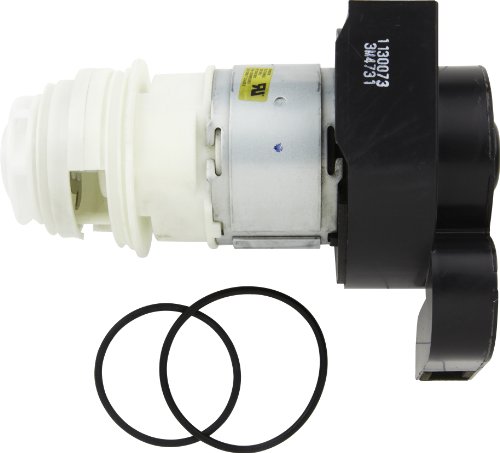
Frigidaire 154844101 Dishwasher Motor Kit

Watts Premier Replacement Sensor Valve

Watts Premier Replacement Sensor Valve Kit

Grundfos GRU-595916 Comfort Recirculating Pump Kit

Bell & Gossett 100Nfi Iron Body Circulator Pump
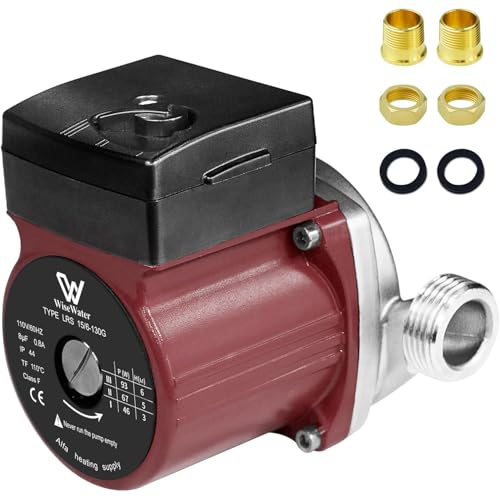
WiseWater 304 Stainless Steel Recirculating Pump, 3-Speed

WiseWater 3-Speed Hydronic Circulator 13 GPM
Watts Heat H2O Recirculation System with Timer

WiseWater 2-Loop Radiant Manifold with ETAs
More On The Choices That Made The List
When an aging Taco 009-SF5 finally spins its last, the Talspity cartridge steps in as a direct-fit replacement, slotting into the same flanged housing without rewiring the whole loop. At 1/8 horsepower with a 3250 RPM motor and 150 PSI head rating, it is sized for hydronic heating circuits, fan coil units, and radiant floor manifolds in mid-sized homes.
For most homeowners who already have a Taco flange set, this is the path of least resistance. Where a full-system kit such as the Watts Heat H2O would be overkill, the Talspity delivers just the moving parts. It keeps the existing plumbing layout and avoids the jump to a whole new pump family.
What Helps Most
- Drop-in compatibility with the 009-SF5 flange footprint, so no repiping for many retrofits.
- 150 PSI head pressure handles multi-zone residential heating without strain.
- 3250 RPM motor speed supports quick recovery across baseboard loops and fan coils.
- 115V operation plugs into standard North American appliance circuits.
- Avoids the cost of replacing the entire circulator assembly if just the cartridge has failed.
Things To Consider
- Flange adapters may be required for 3/4-inch line configurations not already set up for Taco 009 cartridges.
- Not designed as a domestic hot water recirculator, so owners looking for instant-tap warmth should consider a dedicated kit instead.
Key Specs
Built With In Mind
Homeowners with an aging Taco 009-SF5 in a hydronic loop who want a cartridge swap rather than a full pump replacement.
Consider Something Else When
DIYers focused on instant hot water at the tap will find the Grundfos GRU-595916 a friendlier all-in-one route.
It is easy to forget that “recirculating pump” also lives inside the dishwasher, pushing spray water against dirty plates. When that motor fails, dishes come out gritty and a generic replacement is rarely worth the gamble. The Frigidaire 154844101 motor kit is built specifically for Frigidaire and Electrolux dishwashers, with two O-rings included to reseal the sump.
For anyone mid-repair on a stubborn dishwasher, this kit solves a specific symptom rather than an entire kitchen remodel. It is not glamorous, but it restores a daily appliance without buying a new machine.
Benefits That Matter
- Genuine replacement part designed for Frigidaire and Electrolux dishwashers.
- Comes with two O-rings, so the seal job is covered out of the box.
- Targeted fix for the common “dishes come out dirty” symptom caused by a weak circulation motor.
- Costs less than a full dishwasher replacement in most households.
Worth Noting
- Compatibility must be confirmed against the dishwasher model before ordering; this is not a universal motor.
- Installation calls for basic appliance repair skill, including disconnecting water and power lines.
Whose Shelf It Belongs On
Homeowners with a Frigidaire or Electrolux dishwasher whose wash cycle has gone weak and who want a brand-matched repair part.
Reach For A Different Pick When
Anyone chasing whole-home hot water recirculation should skip ahead to the Watts Heat H2O Recirculation System with Timer instead.
The Watts Premier sensor valve is the small thermostatic fitting that tells a 500800 or 500805 recirculation pump when to push water and when to stand down. Without it, the system cannot sense cooling in the branch line, and the pump either runs constantly or not at all. Compared with the sensor valve kit covered next, this is the single-piece replacement for someone whose original is leaking or stuck.
It is the kind of part you only learn about after the shower runs cold for thirty seconds and you trace it back to a failed thermostat. Homeowners with branched hot water lines already on a compatible Watts pump will find it a quiet but essential upgrade.
The Upside
- Direct replacement for the original valve on Watts 500800 and 500805 pumps.
- Designed for branched hot water lines, the common residential layout.
- Restores thermostatic control so the pump only runs when water cools.
- Cheaper than swapping the entire pump for a sensor-only failure.
Points To Note
- Not compatible with dedicated return lines to the water heater.
- Limited to two Watts Premier pump models, so confirm the part number before ordering.
At A Glance
Made For
Owners of a Watts 500800 or 500805 system on a branched hot water layout who need a single replacement sensor.
Not Your Match When
Households running a different pump brand should look at the Grundfos GRU-595916 as a stand-alone replacement route.
Where the previous Watts Premier valve covers two models, this kit widens the net to include the HWRS-WH alongside the 500800 and 500805. It mounts at the furthest point of the hot water run, opening when cooled water arrives and pushing it back to the heater until the line hits 98 degrees F. The result is hot water waiting at the tap without wasting gallons down the drain.
For anyone expanding or reconfiguring an existing Watts setup, the kit covers more ground than a single-model replacement. It is the kind of upgrade that quietly shortens shower wait times across an entire house.
Good Reasons To Consider
- Works across three Watts Premier models, including the HWRS-WH.
- Triggers at 98 degrees F for predictable hot water delivery.
- Suited to branched hot water lines at the furthest fixture.
- Saves water that would otherwise run cold before the hot tap.
Trade Offs
- Not intended for dedicated return lines, so retrofit homes with a return pipe need a different design.
- Requires a compatible Watts recirculation pump to function, so it is not a stand-alone product.
Right Fit For
Households running a Watts Premier 500800, 500805, or HWRS-WH who want to extend coverage to a remote fixture.
Skip It When
Anyone starting from scratch on a home without a Watts pump should pick the Watts Heat H2O Recirculation System with Timer instead.
Grundfos built its Comfort line for the homeowner who wants hot water waiting without hiring a plumber for a dedicated return line. The GRU-595916 ships with a 6-foot line cord, a timer, and the pump itself, so the install comes down to two fittings and a power outlet. At 25 watts with a flow range topping out around 9 GPM, it sips energy compared with older cast-iron circulators.
For most retro-fit homes without a return pipe, this is the cleanest entry point. It is quieter than the iron-bodied Bell & Gossett 100Nfi and far less involved to wire than the cartridge-style Talspity 009-SF5.
Well-Handled Touches
- Full kit with pump, timer, and 6-foot line cord reduces trips back to the hardware store.
- Maintenance-free design skips annual oiling or seal checks.
- Low energy draw at 25 watts for 24/7 hot water availability.
- 3/4-inch male by 3/4-inch FNPT connection fits common residential plumbing.
- Quiet running keeps it livable near living spaces and bedrooms.
Some Limits To Know
- Head range tops out near 6 feet, so multi-story homes may see weak flow upstairs.
- Best suited to single-phase 115V service; not a fit for 220V-only circuits.
Feature Snapshot
Best Suited To
DIYers tackling a first-time hot water recirculation project on a single-story or slab home without a return line.
A Better Fit Elsewhere
Households needing serious flow for radiant baseboards should look at the WiseWater 3-Speed Hydronic Circulator 13 GPM.
The Bell & Gossett 100Nfi is the kind of cast-iron circulator that lives in basements for decades. Oil-lubricated and rated to 225 degrees F at 125 PSI, it is built for hydronic boilers and larger residential heating plants where lighter stainless pumps would wear out prematurely. Compared with the Grundfos GRU-595916, it is heavier, louder, and far more serviceable.
For most professional installs on a hydronic loop, this is the workhorse to plan around. The plastic impeller keeps replacement parts inexpensive, while the iron body shrugs off the heat and pressure a cast-aluminum pump cannot.
Strengths Worth Knowing
- Cast iron body tolerates sustained high temperatures up to 225 degrees F.
- Oil-lubricated bearings extend service life with periodic maintenance.
- Max operating pressure of 125 PSI fits high-head heating circuits.
- Common 1/12 HP single phase 115V specification for residential boilers.
- Plastic impeller keeps repair parts affordable when wear eventually sets in.
Honest Caveats
- Not a fit for domestic hot water recirculation; iron content is unsuitable for potable loops.
- Heavier and louder than stainless pumps, so placement away from living space matters.
- Requires periodic oil checks, which maintenance-free homeowners may forget.
Who It Suits Best
Service pros and experienced homeowners running a multi-zone hydronic boiler system who value longevity over quiet.
Look Elsewhere When
Anyone focused on domestic instant hot water at the tap will find the WiseWater 304 Stainless Steel Recirculating Pump a quieter match.
When the loop is potable, the pump head should not be iron. WiseWater answers that with a 304 stainless head and center screw, an aluminum alloy housing, and a full copper coil, plus brass adapters to keep corrosion at bay. The three-speed switch lets you tune flow to the loop size, which the single-speed Grundfos GRU-595916 cannot match.
For most homes building a fresh domestic hot water recirculation line, this is the cleanest material choice. The PP impeller resists wear and deformation, and the included brass adapters prevent leaks at the most common failure points.
Useful Touches
- 304 stainless head and copper coil are safe for drinking water applications.
- Three-speed switch matches output to loop length without over-pressurizing short runs.
- Brass adapters with rubber gaskets tighten up the leak-prone transition points.
- PP impeller tolerates long run cycles without deformation.
A Few Limitations
- Aluminum alloy housing is corrosion-resistant but softer than cast iron, so impact care matters during install.
- The 1-inch NPT to 3/4-inch NPT adapter pair requires confirmed pipe sizing on the supply side.
Perfect Match For
Households installing a dedicated potable hot water recirculation line who want stainless internals over iron.
Swap It Out When
Anyone focused on raw heating-loop flow should pivot to the WiseWater 3-Speed Hydronic Circulator 13 GPM, which targets boilers rather than drinking water.
Where the stainless WiseWater targets potable loops, this 3-speed sibling pushes water through heating circuits instead. The 13 GPM max flow and 25-foot head rating cover radiant floors, baseboard heaters, and boiler loops with room to spare. Three speed settings give you the same dialing flexibility as the stainless model, just pointed at higher-pressure hydronic work.
For most homes with a multi-zone boiler, the trade-off is straightforward: cast iron inside, not iron leaching into drinking water. Compared with the Bell & Gossett 100Nfi, this is a lighter and quieter alternative for greenfield heating installs.
The Good Stuff
- 13 GPM max flow handles multi-zone heating without starving distant loops.
- 25-foot head rating covers two-story homes with basement-mounted boilers.
- Three-speed switch helps match output to system size and reduce wasted energy.
- 3/4-inch FNPT flanges are common in residential boiler rooms, simplifying fit-up.
Things That May Matter
- Cast iron internals rule out domestic hot water service, so it is a heating-only play.
- Heavier than the stainless model, so mounting hardware should be solid.
Quick Facts
Who Should Grab It
Homeowners running a hydronic boiler with baseboards or radiant floors who need real flow rather than a small domestic loop pump.
Where Another Pick Suits Better
Anyone focused on drinking-water loops will prefer the WiseWater 304 Stainless Steel Recirculating Pump’s safer material set.
The Watts Heat H2O is the closest thing in this roundup to a turnkey solution for instant hot water. The kit includes the pump, two adapters, the sensor valve, mounting screws, and supply lines, so a competent DIYer can finish a half-day install without piecing parts together. Thermal bypass technology pushes cool water back through the cold line at the furthest fixture, removing the need to plumb a dedicated return.
For most homeowners tired of running the tap for a minute before the shower warms up, this is the highest-confidence choice on the list. The programmable timer trims energy use by running only when the household actually needs hot water, which the always-on Grundfos GRU-595916 cannot match.
The Value In It
- All-in-one bundle removes the guesswork of matching pump, valve, and fittings.
- Programmable timer keeps the system from running during low-use times like overnight.
- Thermostatically controlled sensor valve automates cycling without manual input.
- DIY-friendly install path on branched plumbing without a dedicated return.
Less Ideal Details
- Larger upfront commitment than buying just a sensor valve or pump.
- Timer programming requires an initial learning session to set preferred run windows.
Built With In Mind
Homeowners seeking an end-to-end retrofit for instant hot water who want every part from the same brand in one box.
Consider Something Else When
Anyone who already owns a Watts Premier 500800 or 500805 system should add the Watts Premier Replacement Sensor Valve Kit instead.
The radiant manifold is the unsung hero of zone-based floor heating. This WiseWater assembly ships with two pre-installed electric thermal actuators, so the loop opens and closes on a 24V thermostat signal without an extra zone valve purchase. With two loops, one extra drain, and 1/2-inch PEX adapters, it covers a small bath or sunroom layout without overbuilding.
For most greenfield radiant projects, this manifold pairs naturally with the WiseWater 3-Speed Hydronic Circulator 13 GPM and skips the wiring of a separate zone panel. It is a finishing component rather than a pump, but no recirculation loop runs without one.
Notable Upsides
- Pre-wired 24V normally closed thermal actuators simplify zone wiring.
- Two loops cover modest radiant zones like a bathroom or addition.
- High flow capacity up to 1.4 GPM keeps even heating across the loop.
- 1/2-inch PEX adapters integrate with standard residential tubing.
Practical Considerations
- Limited to two loops, so larger homes will need additional manifolds.
- Requires a 24V transformer and thermostat wiring to operate the actuators.
Who Will Love This
DIYers finishing out a small radiant floor zone who want the actuators and manifold from the same kit.
Another Choice May Suit
Anyone wiring a much larger multi-zone layout should add a second manifold rather than stretch this one beyond its capacity.
Choosing a Recirculating Pump That Actually Fits Your Plumbing
The first decision is what the pump actually moves: domestic hot water to a tap, water through a hydronic heating loop, or both. Domestic hot water recirculation favors stainless or brass internals (think the WiseWater 304 Stainless model) because iron in the loop taints drinking water. Hydronic loops accept iron-bodied workhorses like the Bell & Gossett 100Nfi, where the higher pressure rating and cast body earn their keep.
Speed settings matter more than people expect. A single-speed pump is sized for one loop length and struggles when the home does not match. Three-speed pumps, like the two WiseWater entries and the Talspity cartridge, let the installer dial flow to the system, which keeps energy use down and quiets the system at night.
Connection size and voltage round out the practical list. Most residential pumps run on 115V single phase, which is friendlier to retrofit than commercial 220V units. A 3/4-inch FNPT flange is the residential norm, while 1-inch or larger fittings usually signal a heavier commercial install.
Finally, decide whether you need a full kit or a single component. The Watts Heat H2O bundles pump, valve, and lines for a clean DIY path. In contrast, the Watts Premier sensor valves serve homes that already run compatible Watts Premier pumps and only need a thermostat piece swapped out.
Key Considerations Across These Picks
Where Shoppers Go Wrong
The most common slip is matching a heating-loop pump to a drinking water line, or vice versa. Cast iron in a domestic hot water loop is an avoidable problem when the spec sheet is read. Another trap is buying a sensor valve for the wrong pump model; the Watts Premier valves cover 500800 and 500805, and the broader kit adds the HWRS-WH, but anything outside that family will not fit. Pipe size mismatches also slow DIY installs, so confirm 3/4-inch versus 1-inch FNPT before ordering.
When Paying More Pays Off
Spending up usually buys better materials and more speed settings. Stainless heads and copper coils resist corrosion over years of constant use, which pays back in longer service intervals and cleaner drinking water. Three-speed switches also save real money by trimming wattage on short loops, while programmable timers on kits like the Watts Heat H2O limit run time to when the household actually needs hot water.
Frequently Asked Questions
What does a recirculating pump actually do?
It pushes cooled water in the hot line back to the water heater so the next tap opens hot without a long wait.
Can one pump handle both hot water and heating?
Most residential pumps are designed for one loop or the other, since hydronic heating tolerates cast iron while drinking water lines prefer stainless or brass.
How loud are these pumps at night?
Stainless and three-speed units like the WiseWater stainless model and the Grundfos GRU-595916 are quiet enough for utility rooms near living space, while the cast-iron Bell & Gossett 100Nfi is noticeably louder.
Do I need a dedicated return line for hot water recirculation?
No. Systems like the Watts Heat H2O use thermal bypass at the furthest fixture to push cool water into the cold line, so branched plumbing works without a return pipe.
Are replacement parts interchangeable across brands?
Rarely. Watts Premier sensor valves only fit specific Watts Premier pumps, so cross-brand matching usually fails without an adapter.
Closing Thoughts
The right pick depends less on raw specs and more on what is already in your walls. A house without a return line points to a kit like the Watts Heat H2O or the Grundfos GRU-595916, while a hydronic boiler room is the natural home for the Bell & Gossett 100Nfi or the WiseWater 13 GPM circulator. Match the pump to the loop, and the rest of the decision tends to fall into place.
