

Running an oil-heated home means one thing every winter: a quiet, nagging question about how much fuel is left in the tank. A reliable oil tank monitor takes that guesswork out of the equation, sending a real reading to where you can actually see it. This roundup focuses on level gauges and sensors that suit different setups, from basement heating-oil tanks to small engine fuel reservoirs and workshop water wells.
The Essentials At A Glance

Murphy by Enovation Controls L150 Liquid Level Swichgage (15700135)

John Deere Level Gauge M94719
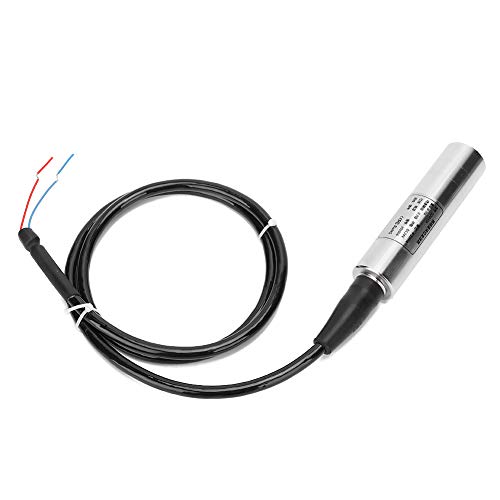
FTVOGUE Submersible 4-20mA Liquid Level Transmitter, 316 Stainless Steel, 0-1m Range

uxcell Motorcycle Scooter Fuel Level Gauge Oil Meter Sensor for GN-125

Akozon 52mm Universal Digital LED Fuel Level Gauge
More On The Choices That Made The List
The Murphy L150 is built for stationary tanks in basements, equipment rooms, and small commercial sites where you want both a visual reading and an automatic warning circuit. Its core idea is straightforward: a float inside a chamber tracks the liquid surface and drives a dial pointer, while a separate internal contact closes when the level drops below a chosen setpoint.
That combined gauge-plus-switch design makes it more useful than a plain sight glass for most home heating-oil setups. Where the John Deere Level Gauge we cover next is really a fuel-system component for compact tractors, the L150 is a wall-or-panel mounted instrument aimed at fixed installations.
The Good Stuff
- Functions as both a level indicator and a low-limit switch, reducing the parts you need on a single tank.
- Mechanical float design means no batteries or external power required for the gauge itself.
- Indicating dial gives you a quick visual check without opening the tank.
- Commonly specified for diesel, heating oil, and similar non-corrosive liquids, so it fits most home heating scenarios.
- Switching contact lets you wire a remote alarm or shutoff, a real upgrade over a passive gauge.
Trade Offs To Consider
- Installation requires proper plumbing into the tank and wiring for the switch, which may call for a technician.
- Mechanical floats can stick if sludge builds up in older tanks, so periodic inspection matters.
- Designed for industrial-style installations; overkill for a small portable fuel container.
Quick Facts
Right Fit For
Homeowners with a stationary heating-oil tank who want a hardwired alarm contact along with a visible dial reading.
Skip It When
You are monitoring a small motorcycle tank, where the uxcell Motorcycle Scooter Fuel Level Gauge Oil Meter Sensor for GN-125 is a far better mechanical match.
The John Deere Level Gauge M94719 is a factory replacement part, not a generic add-on. Its purpose is simple: give owners of compatible John Deere compact tractors a way to swap a worn or failed fuel gauge without guesswork about fitment.
Compared with the Murphy L150, this gauge is much more focused. Where the L150 reads a large stationary heating-oil tank and includes a switch, the M94719 is a small in-dash component designed to report fuel level in a specific piece of equipment.
What Helps Most
- OEM part number M94719 means predictable fit on matching John Deere models.
- Direct replacement removes the need to modify the existing wiring harness.
- Trusted John Deere branding for owners who prefer factory components.
- Compact form factor fits inside equipment cabs without taking up extra space.
Honest Caveats
- Only suitable for specific John Deere applications, not a universal automotive or home-heating gauge.
- Limited published specs, so confirming compatibility with your exact model before ordering is wise.
Made For
Compact tractor owners replacing a failing factory fuel gauge on a John Deere machine that calls for part M94719.
Look Elsewhere When
You need a gauge for a 12V custom car or motorcycle dashboard, where the Akozon 52mm Universal Digital LED Fuel Level Gauge slots in more easily.
The FTVOGUE submersible transmitter is a different class of monitor entirely. Instead of a mechanical float and dial, it drops into the tank and outputs a 4 to 20 mA current loop signal proportional to liquid depth. That signal can feed a PLC (a programmable logic controller used in industrial automation), a dedicated display, or a remote telemetry unit.
Where the Murphy L150 gives you a local dial and a single low-level contact, this transmitter is built for continuous, analog depth data. It suits workshop water wells and shallow tanks rather than a home heating-oil drum, but the same principle applies anywhere you want a real-time reading rather than a go/no-go alarm.
Standout Benefits
- 316 stainless steel body and IP68 sealing for submersion in demanding environments.
- Standard 4-20 mA output integrates easily with industrial controllers and panel meters.
- Submersible design means no external moving parts exposed above the tank.
- Approximate 0-1 meter measuring range covers many shallow well and reservoir applications.
Practical Considerations
- Requires DC24V power and a compatible readout device to interpret the signal.
- Short depth range means it is not the right tool for tall basement heating-oil tanks.
- Wiring must be sealed properly to keep the IP68 rating intact over time.
Feature Snapshot
Whose Shelf It Belongs On
Makers, workshop users, and small-system integrators who need a continuous analog level reading from a shallow tank or well.
Reach For A Different Pick When
You only need a basic visible gauge for a stationary heating-oil tank, where the Murphy L150 Liquid Level Swichgage is a simpler mechanical solution.
The uxcell fuel level sensor for the GN-125 is a tiny mechanical sender designed to drop into a small motorcycle or scooter tank. It uses a float arm that moves with the fuel surface and changes a resistance value, which the dashboard gauge then translates into a reading.
This is the most specialized pick on the list. Where the Akozon 52mm LED gauge offers a clean digital readout and the Murphy L150 targets stationary tanks, this uxcell sensor is a small replacement component for a specific bike platform.
Benefits That Matter
- Compact dimensions (about 6.5 x 3.5 x 8.5 cm) fit inside small fuel tanks.
- Two-terminal design keeps the wiring simple for basic gauge swaps.
- Plastic and metal construction balances light weight with reasonable durability.
- Direct fit for the GN-125, removing the need to fabricate mounting adapters.
Small Limitations
- Only fits the GN-125 and similar tanks with matching mounting hole spacing.
- Small 24 cm cable limits routing options on larger or heavily modified bikes.
- Float mechanism can wear over years of use, especially with ethanol-blended fuels.
Best Suited To
Riders restoring or maintaining a GN-125 motorcycle who need a direct-fit replacement sender.
A Better Fit Elsewhere
Builders of custom automotive dashboards should look at the Akozon 52mm Universal Digital LED Fuel Level Gauge, which is designed for visible mounting.
The Akozon 52mm LED fuel gauge is the display half of a monitor setup. It mounts in a standard 52mm dashboard hole and shows fuel level as a row of blue LEDs, with a yellow indicator for low fuel and a red one for near-empty.
Compare that to the FTVOGUE submersible transmitter we covered earlier. The FTVOGUE unit does the sensing and outputs a current signal; this Akozon gauge does the displaying. Pair the two concepts together and you get a complete custom monitoring rig.
Where It Helps
- LED bar design remains readable in strong sunlight, which is a common weak point of cheap gauges.
- Standard 52mm diameter fits popular gauge pods and dashboard cutouts.
- Simple three-wire hookup (positive, negative, sensor) speeds installation.
- Color-coded warnings give an instant read on fuel state without staring at the gauge.
- Adjustable to work with a range of sender units and 12V systems.
Points To Keep In Mind
- Requires a compatible resistive sender unit (the sensing component that changes resistance with fuel level) to function, which may be sold separately.
- Plastic housing does not feel as rugged as metal-bodied industrial gauges.
- Wiring color labels are simple, but routing must be done carefully to avoid electrical noise from ignition systems.
Who Should Grab It
Custom automotive and motorcycle builders who want a visible 12V fuel gauge that mounts cleanly in a 52mm pod.
Swap It Out When
You only need a compact tank sender for a GN-125 motorcycle, where the uxcell Motorcycle Scooter Fuel Level Gauge Oil Meter Sensor for GN-125 is purpose-built.
What To Weigh Before Choosing An Oil Tank Monitor
Pick the gauge type that matches your tank first. Mechanical float gauges like the Murphy L150 work well for stationary heating-oil tanks because they need no external power. Submersible transmitters suit shallow wells and setups where a controller already exists to read a 4-20 mA signal. LED dash gauges are right for vehicles, not basements.
Match the sensing technology to the liquid. Heating oil is forgiving, but water wells demand stainless steel and a sealed body. Look at the listed material, the IP rating (the Ingress Protection code that rates resistance to dust and water), and the supported fluid types before committing.
Think about how you want to read the data. A wall dial is enough for quick basement checks. A PLC or remote display makes sense for workshop wells and off-grid tanks. Custom dashboards call for a 12V gauge with a clean output that pairs with a matching sender.
Plan installation honestly. Mechanical gauges need tank plumbing and sometimes wiring. Submersible transmitters require proper cable sealing. LED gauges require a sender unit that may not be in the box. Underestimating install time is a common reason monitors end up unused.
Key Considerations Across These Picks
Pitfalls Shoppers Hit
A frequent mistake is matching a gauge to the wrong tank. A 52mm automotive LED looks great in a dashboard pod but does not belong on a basement heating-oil tank. The same goes for submersible transmitters, which are designed for short-depth industrial setups rather than large home fuel reservoirs.
Another trap is ignoring the sender-and-gauge pairing. Many LED and analog gauges require a specific resistive sender (a sensor whose electrical resistance changes as the float moves) to give an accurate reading. Buying the display without confirming sender compatibility is a common reason monitors read incorrectly from day one.
Where The Extra Money Goes
Higher-tier monitors typically buy better materials and broader compatibility. Stainless steel bodies, sealed cabling, and adjustable sensor matching all cost more to manufacture, but they also extend service life and reduce calibration headaches. The upgrade is worth it for permanent installations where swapping a failed gauge every season adds up fast.
Frequently Asked Questions
How Does A Mechanical Float Gauge Differ From An Electronic Sensor?
A mechanical float gauge uses a buoyant float linked to a pointer or switch. An electronic sensor converts level into an electrical signal, either a variable resistance or a 4-20 mA current loop, for a remote display.
Can One Gauge Work On Both Heating Oil And Water Tanks?
Many mechanical units handle non-corrosive fluids like heating oil and diesel, but water applications often require stainless steel bodies and sealed cabling. Match the listed fluid compatibility before installing.
What Does IP68 Mean For A Tank Sensor?
IP68 is an Ingress Protection rating that indicates the unit is dust-tight and rated for continuous submersion in water. That makes it suitable for wells and reservoirs, not just dry mounting.
Do LED Fuel Gauges Need A Special Sender?
Most LED bar gauges expect a resistive sender, and the resistance range must match. Many are adjustable, but confirming compatibility with the sensor you plan to use avoids calibration issues.
How Often Should A Tank Monitor Be Inspected?
Most manufacturers recommend checking mechanical and electronic monitors at least once a year. Floats can stick, seals can age, and wiring can corrode, especially in damp basements.
The Takeaway
The right oil tank monitor depends almost entirely on where you plan to install it. A stationary heating-oil tank calls for a mechanical gauge with an alarm contact, a workshop well wants a submersible industrial transmitter, and a custom vehicle dashboard needs a 12V LED gauge paired with a compatible sender. Match the gauge type, the materials, and the readout style to your actual setup, and the rest falls into place.
