

A garage door takes hundreds of cycles a year, and every one of those open-and-close moments grinds metal on metal unless you keep things lubricated. Skip maintenance long enough, and you’ll hear it: a groan from the rollers, a squeal from the hinges, a thunk from the chain drive that wakes the whole house. The right lube quiets those sounds, reduces wear on tracks and hinges, and keeps the opener from overworking itself.
This roundup covers sprays, greases, and penetrating options suited to different garage setups. Some work best as general-purpose silicone films on tracks and weather seals, others break free seized bolts on older hardware, and a couple double as multi-canvas lubricants around the rest of the house.
A Snapshot Of The Selections

B’Laster Silicone Lubricant Spray 11 oz (12-Pack)

Houdini Lock Lube Set of 2

WD-40 Specialist Penetrant 11 oz (6-Pack)

B’Laster Garage Door Lubricant 9.3 oz (12-Pack)

Bellisinno White Lithium Grease Tube

Bellisinno Food Grade Grease for Stand Mixer 120g

WD-40 Classic Multi-Use 8 oz (6-Pack)
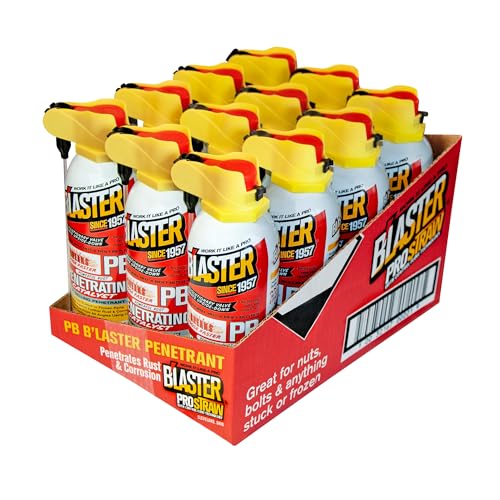
Blaster Penetrating Catalyst 11 oz (Case of 12)

WD-40 Specialist Silicone Lubricant 11 oz
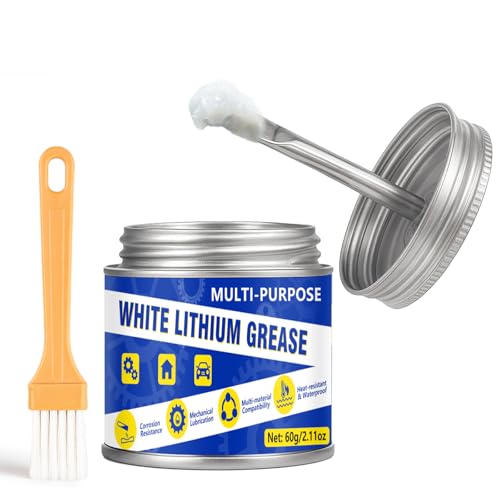
Bellisinno White Lithium Grease 60ml
Meet The Standout Selections
A twelve-pack of 11 oz aerosol cans sounds like overkill until you start using silicone lube on everything that squeaks. B’Laster’s silicone formula is built for rubber, plastic, and vinyl components, which makes it a natural fit for garage door weather seals, window tracks, and the nylon rollers found on many residential doors.
Unlike heavier greases, this spray lays down a thin, transparent film that won’t pick up dust or leave a tacky residue behind. In most garages, a quick pass along the door’s perimeter seals and sliding tracks takes care of the bulk of squeaking without much prep. It’s a good multi-canvas product to keep on the shelf.
Noteworthy Benefits
- Safe on rubber, plastic, vinyl, and O-rings without degrading them
- Dries clear without attracting dust, which matters in a garage setting
- Twelve-can pack suits households with multiple doors or vehicles
- Multi-purpose use across window tracks, sliding doors, and tools
Trade-Offs To Consider
- Aerosol cans require careful storage in heat to avoid pressure issues
- Not a penetrating oil, so seized bolts need a dedicated penetrant instead
- Silicone films can interfere with paint adhesion if oversprayed on finished surfaces
Who It Suits Best
Homeowners who want one silicone spray to handle garage seals, window tracks, and household squeaks without buying multiple cans.
Consider Something Else When
You mainly need to free seized garage door hardware, where the WD-40 Specialist Penetrant is a better fit.
Houdini Lock Lube earns its name by working into tumbler pins and freeing sticky lock cylinders in seconds. The 11 oz aerosol format makes it easy to direct a precise stream into a padlock or deadbolt, and the set-of-two packaging keeps a spare can handy in the garage.
Where this product fits in a garage setting is around the service door lock, any exterior padlocks on storage units, and the keyed release on certain garage door openers. In our view, it’s a niche specialist rather than an all-purpose garage door lube, but it’s a reliable one for what it does.
Useful Touches
- Designed specifically for lock mechanisms and pins
- Aerosol format reaches deep into tumblers and keyways
- Two-can set covers multiple doors or vehicles
- Works as a quick fix on stiff keyed latches
Points To Keep In Mind
- Not formulated for rollers, hinges, or tracks on the door itself
- Smaller niche than general silicone sprays
- Lock-specific solvents can sometimes leave residue on exterior finishes if over-applied
Best Suited To
Homeowners who frequently deal with sticky padlocks or keyed garage entry doors and want a specialist lube rather than a general one.
Look Elsewhere When
Your main goal is quieting noisy rollers, where the B’Laster Garage Door Lubricant is a stronger fit.
Where the original WD-40 formula is a generalist, the Specialist Penetrant is tuned to break rust and corrosion that have fused metal together. The SMART STRAW design flips between a wide spray and a narrow precision stream, which matters when you’re trying to reach a seized bolt behind a torsion spring.
The 6-pack format suits anyone who services older garage doors, outbuildings, or even automotive hardware on the same property. In most cases, a short soak is enough to free nuts, bolts, threads, and chains that haven’t moved in years.
Everyday Wins
- Fast-acting formula breaks rust-to-metal corrosion quickly
- Smart straw allows precise application in tight clearances
- Leaves a protective film to slow future corrosion on treated parts
- Multi-can pack suits heavy users or workshop settings
Practical Considerations
- Not a long-term garage door track lubricant, more of a rescue tool
- Strong penetrant odor in enclosed garages without ventilation
- Owners commonly report needing repeated applications on heavily rusted hardware
Key Specs
Who Will Love This
Owners of older garage doors with rusted hinges, springs, or opener hardware who need a dedicated penetrant alongside their everyday silicone spray.
Not Your Match When
Your door runs smoothly and you only need a routine track lube, where the B’Laster Garage Door Lubricant is the cleaner solution.
Unlike the multi-surface silicone above, this B’Laster product is a purpose-built garage door lube, and that focus shows up in the formulation. The 9.3 oz aerosol is sized for routine seasonal maintenance, and the case-of-twelve packaging is built around property managers or anyone with multiple doors.
Application is straightforward: a short spray on hinges, rollers, and tracks. The tack-free silicone film quiets squeaks without leaving the sticky residue that grease-based products tend to leave in dusty garage environments. Depending on how often you cycle the door, one can covers several maintenance sessions.
Notable Gains
- Silicone film reduces friction on rollers and hinges specifically
- Quiets grinding and squeaking on contact without leaving residue
- Won’t attract dust on garage tracks the way grease can
- Case quantity suits households with two or three doors
Things To Weigh
- Bulk pack is more than a single-door household may need
- Silicone-only formula won’t free hardware that’s already seized
- Some users apply it more often than grease alternatives because the film wears off
Right Fit For
Anyone whose garage door has started groaning on cold mornings and who wants a no-mess silicone spray designed exactly for that job.
Reach For A Different Pick When
You also need to free rusted hinge pins or bolts, where the WD-40 Specialist Penetrant belongs in the toolkit alongside this lube.
Where silicone sprays thin out and need reapplication, white lithium grease stays put. Bellisinno’s tube format with an applicator brush lets you dab grease precisely onto garage door hinges, bearings, gears, and track rails where a spray would drip or overshoot.
Lithium grease handles metal-to-metal contact better than silicone, which makes it the right call on hinges that see heavy load cycles. The trade-off is dust attraction, so you’ll want to apply it sparingly and wipe the excess from open track areas.
The Value In It
- Stays in place longer than silicone spray on hinges and bearings
- Applicator brush gives controlled, targeted placement
- Multi-purpose across automotive, marine, and industrial jobs
- Tube format stores easily in a drawer or toolbox
Where It May Fall Short
- Not suitable for rubber seals or plastic rollers
- Grease attracts dust on open garage tracks over time
- Tube application is slower than aerosol for large surfaces
Perfect Match For
Homeowners with metal-hinged garage doors who prefer a thicker, longer-lasting grease over a thin spray film.
Swap It Out When
Your door has nylon rollers or rubber weather seals, where the WD-40 Specialist Silicone Lubricant is the safer choice.
This one’s a deliberate outlier in the roundup. Bellisinno’s food-grade grease is formulated for stand mixers, where incidental contact with food is a real concern. The applicator stick and brush let you reach the planetary gear housing and motor bearings without overdoing it.
The reason it earns a spot here is that it doubles as a safe grease for any garage tool or appliance that might touch food surfaces. If you also do outdoor cooking on a smoker or pizza oven near the garage, it pulls double duty. For most garage door maintenance, however, a silicone or lithium product is more appropriate.
Notable Upsides
- Food-safe formula suitable for kitchen appliance gear assemblies
- Applicator stick and brush improve precision in tight gear housings
- 120g tube covers multiple maintenance sessions on a stand mixer
- Won’t introduce harsh solvent odors into kitchen-adjacent spaces
Honest Caveats
- Not designed for outdoor garage door weather exposure
- Lacks the penetrating action needed for seized garage hardware
Key Specs
Whose Shelf It Belongs On
Home bakers who maintain their own stand mixer and want a food-safe grease that can also handle small garage tool jobs.
Skip It When
You’re focused on outdoor garage door hardware, where the B’Laster Garage Door Lubricant handles weather exposure better.
The original blue-and-yellow can is the generalist that started the category. The 8 oz Smart Straw variant flips between stream and spray, and the 6-pack keeps one in the garage, one in the kitchen, one in the car without anyone hunting for it. For moisture displacement and light lubrication, it remains hard to beat.
On garage doors specifically, it shines on the opener’s drive chain or screw and on metal components exposed to condensation. The honest read is that it’s not the best primary track lube, since its film is thinner than silicone or lithium products. Used as a maintenance companion, it’s handy.
What It Does Well
- Drives moisture out of electrical contacts and metal assemblies
- Smart straw flips between precision stream and wide spray
- Loosens lightly rusted fasteners and sticky mechanisms
- Multi-can pack keeps one in every work zone
A Few Limitations
- Not a long-lasting track or roller lube compared to silicone sprays
- Solvents evaporate, so the protective effect is short-lived on outdoor parts
- Distinct odor lingers in enclosed garages
Made For
Anyone who wants a familiar, do-it-all lubricant around the house and uses it for moisture control as much as garage door upkeep.
A Better Fit Elsewhere
You want quieter rollers and longer-lasting film, where the WD-40 Specialist Silicone Lubricant outperforms the classic formula.
Blaster’s penetrating catalyst has been creeping into seized fasteners since 1957, and the chemistry hasn’t lost its edge. The 11 oz aerosol with a case-of-twelve packaging suits property managers, fleet operators, or anyone with more than one stubborn bolt to free in a season.
For garage doors, it’s the right pick when a torsion spring hardware, track bolt, or chain link has seized after years of neglect. The formula climbs up, around, and into tight clearances, then leaves a lubricating film that helps prevent fresh rust from forming.
A Favorable Mix
- Capillary action reaches fasteners in tight clearances
- Long track record on automotive and industrial seized hardware
- Residual lubricating film slows future corrosion
- Bulk case suits heavy users and shop environments
Some Limits To Know
- Not formulated as a daily track or roller lubricant
- Strong solvent smell in poorly ventilated garages
- More penetrant than most casual homeowners need on hand
Quick Facts
Who Should Grab It
Shops, property maintenance crews, and homeowners with multiple garage doors or older hardware that frequently seizes up.
Another Choice May Suit
You mostly want a quiet residential door, where the B’Laster Garage Door Lubricant is a friendlier daily option.
Compared to the classic formula above, the Specialist Silicone Lubricant is built for a longer-lasting, weather-resistant film. The triple-action professional-grade formula lubricates, protects, and handles wide temperature swings that would thin out an ordinary spray.
For unheated garages or doors exposed to temperature extremes, this is a sensible upgrade. It works across metal, rubber, vinyl, and plastic surfaces, which covers most garage door components in one product.
Useful Highlights
- Lubricates metal, rubber, vinyl, and plastic without damage
- Dries to a clear thin film that doesn’t attract dirt
- Smart straw allows precision application in tight spots
- Performs across wide temperature ranges for outdoor exposure
Potential Compromises
- Single-can format costs more per ounce than multi-packs
- Silicone film wears off on high-cycle hinges and may need reapplication
- Doesn’t double as a penetrant for seized bolts
Feature Snapshot
Built With In Mind
Homeowners in regions with hot summers or cold winters who need a silicone film that holds up across the seasons.
Where A Sibling Pick Shines
You prefer a grease that stays put on metal hinges without reapplication, where the Bellisinno White Lithium Grease Tube is a stronger match.
The smaller sibling of Bellisinno’s larger grease tube, this 60ml format fits in a kitchen drawer, a glove box, or a small tool caddy. The brush applicator keeps grease off your hands and on the hinge pin where it belongs.
For garage door maintenance, the compact size means it’s a touch-up product rather than a primary supply. In most cases, a tube this size handles a season’s worth of hinge and bearing touch-ups before running dry, which suits renters or those in apartments with smaller doors.
Key Advantages
- Compact tube fits in small storage spaces
- Brush applicator for clean, controlled placement
- Multi-purpose across household, marine, and bike uses
- Forms a protective film against rust and moisture
Details To Watch
- Small size limits use on multi-door properties
- Not suitable for rubber seals or nylon rollers
- Grease attracts dust on open track areas over time
Feature Rundown
Right Fit
Apartment dwellers, renters, or anyone with a single smaller garage door who only needs a compact grease tube for occasional touch-ups.
Not Your Match When
You maintain multiple doors or larger hardware, where the bigger Bellisinno White Lithium Grease Tube or a multi-can silicone pack is the better buy.
Factors That Matter When Choosing A Garage Door Lube
Match The Lube To The Component
Silicone sprays suit tracks, weather seals, and nylon rollers because they lay down a thin film that won’t damage rubber or plastic. Lithium grease handles metal-on-metal contact better, which makes it a better fit for hinges and bearings. Penetrating oils like WD-40 Specialist or Blaster Catalyst are rescue tools, not daily lubricants, and work best on seized fasteners and chains.
Mind The Garage Environment
Dust is the silent killer of garage lubricants. Greases attract it, silicone sprays resist it, and penetrants leave a thin film that can also collect grime. In a garage that sees sawdust, pet hair, or road grime, a silicone spray tends to stay cleaner longer on open track surfaces.
Consider Climate And Cycle Count
A door that opens twenty times a day wears through silicone film faster than a door used twice daily. In cold climates, the WD-40 Specialist Silicone holds up across wide temperature swings, while standard sprays can thicken or lose film integrity on freezing mornings.
Pick The Right Format
Aerosol cans cover broad surfaces quickly but overspray onto finishes you didn’t mean to hit. Tubes with brushes give precise application on hinges and gear housings but slow you down on long track runs. Bulk packs suit households with multiple doors or vehicles; single cans fit smaller storage situations.
Key Considerations Across These Picks
Pitfalls Shoppers Hit
The most common mistake is reaching for penetrating oil as a daily track lube, which works briefly but evaporates and leaves metal dry again within days. Another slip is spraying silicone onto painted surfaces or finished flooring, where the film can interfere with later paint adhesion. Forgetting to wipe excess grease off open track areas is a third issue, since grease that migrates collects dust and slowly turns into grinding paste.
Where The Extra Money Goes
Premium silicone formulas cost more because they hold film integrity across wider temperature ranges and resist wash-off from rain or condensation. Brush-applicator tubes command a higher price because the packaging and applicator hardware add manufacturing cost. Multi-can packs lower the per-can cost but only pay off when you’ll actually use the volume, otherwise the savings evaporate into cans that sit in storage past their useful life.
Frequently Asked Questions
How Often Should You Lube A Garage Door?
Most residential doors benefit from lubrication every six months, with a touch-up if you notice new squeaking. Doors used more than ten cycles per day may need quarterly attention.
Can You Use WD-40 On Garage Door Tracks?
WD-40 classic works as a short-term cleaner and light lubricant, but it evaporates faster than silicone or lithium products. For longer-lasting film, a silicone-based spray is a better daily choice.
Is Silicone Or Lithium Grease Better For Garage Doors?
Silicone suits rubber seals, plastic rollers, and open tracks where dust attraction matters. Lithium grease handles metal hinges and bearings where a thicker, longer-lasting film is the goal.
What Should You Avoid Spraying On A Garage Door?
Avoid heavy grease on nylon rollers and avoid silicone on freshly painted surfaces. Both can cause problems if applied where they don’t belong.
Can One Lube Handle The Whole Door?
A general-purpose silicone spray covers tracks, seals, and rollers in most cases. Hinges and bearings often do better with a lithium grease, and seized hardware needs a separate penetrant.
The Takeaway
A quiet garage door isn’t a mystery. The right lube on the right part, applied every few months, keeps the system running the way it should. Pick the silicone spray for tracks and seals, the lithium grease for metal-on-metal contact points, and keep a penetrant on the shelf for the occasional seized bolt. That small toolkit covers most residential garage doors without overcomplicating the routine.
