

Litter box shopping rarely tops anyone’s fun list, yet the right pan quietly reshapes daily life with a cat. The wrong one scatters granules across hardwood, traps odors in the plastic, or simply feels cramped to a long-bodied feline. This roundup gathers ten well-made options across standard pans, stainless steel upgrades, and self-cleaning machines, so you can match the box to your cat’s size, your cleaning tolerance, and the square footage you have to spare.
The Shortlist At A Glance

TownTime Extra Large Kitty Litter Box with High Sides (Grey)
LEGOURNS Stainless Steel Litter Box 2 Pack, Medium to Large

OneBug Stainless Steel High Sides Cat Litter Box, Medium
OneBug High-Sided Stainless Steel XL Cat Litter Box

OneBug Stainless Steel High-Sided Cat Litter Box with Scoop (Medium)
ZHMZ Automatic Self-Cleaning Litter Box for Multiple Cats

ZHMZ G1 Self-Cleaning Litter Box for Multiple Cats

ZHMZ E2 Automatic Self-Cleaning Litter Box with Weight Tracking
ZHMZ G1 Self-Cleaning Litter Box with Proximity Sensing

ZHMZ E2 Automatic Self-Cleaning Litter Box with Anti-Pinch System
The Strengths Of Each Pick
Big cats need room to circle, scratch, and bury without brushing the walls. The TownTime pan stretches roughly 24.6 inches long and nearly 17 inches wide, which gives a 12-pound Maine Coon enough floor space to fully turn around. The 13-inch walls stop most enthusiastic kicking from sending litter across the laundry room floor.
Setup is genuinely tool-free, so anyone renting or relocating can fold it flat and reassemble it between moves. A non-slip pad underneath keeps the pan from drifting when a heavier cat leaps out mid-business. For multi-cat homes where two pans run side by side, that pad is more useful than it sounds.
Real-World Strengths
- Generous interior footprint fits large-breed and senior cats comfortably
- Tall sides contain scatter from cats that dig aggressively
- Tool-free assembly means no hardware to lose or strip
- Non-slip base reduces sliding on hardwood and tile
Things To Consider
- Plastic construction will eventually hold odors over years of use
- The jumbo footprint requires a dedicated corner or laundry room
Key Specs
Whose Shelf It Belongs On
Households with two or more cats and enough floor space to spare a generous corner.
Where Another Pick Suits Better
Shoppers wanting a more durable, odor-resistant surface should look at the OneBug medium stainless steel option instead.
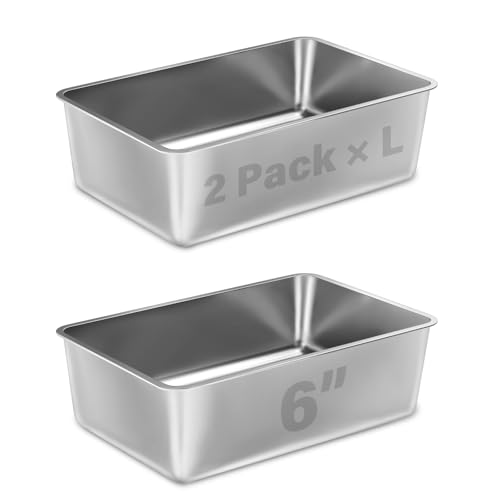
Plastic pans stain and crack within a few years. Stainless steel, by contrast, shrugs off odor absorption and wipes down in seconds. This two-pack from LEGOURNS lands around 18 by 14 inches with 6-inch walls, sized for medium and large adult cats without hogging floor space.
Buying two at once is the practical move: one lives upstairs, one downstairs, and the rotation keeps odor migration in check. Owners of rabbits or other small pets often repurpose the second pan as a hay tray, which stretches the value further.
Useful Strengths
- Uncoated steel resists sticking and odor retention over time
- Two-pack format suits multi-room or multi-cat setups
- Smooth surface wipes clean in seconds under running water
- Taller-than-standard 6-inch walls help block scatter
Worth Noting
- Lower profile than high-walled picks, so heavy kickers may still spray over the edge
- Steel edges can show scratches from scooped litter over months of use
Best Suited To
Shoppers who want a long-lasting, easy-wipe pan and the convenience of a backup box at the same time.
Consider Something Else When
Anyone with a particularly enthusiastic kicker should consider the taller OneBug stainless steel pan reviewed below.
Most plastic pans degrade once the litter scoop scratches the surface. The OneBug medium pan is a single piece of stainless steel, which means there are no seams for urine to wick into or for bacteria to colonize. It’s a true upgrade for anyone tired of replacing cracked plastic every couple of years.
The raised sides run high enough to catch the worst kickers, and the deepened base gives litter a place to settle instead of migrating straight onto the floor. For households dealing with cats that dig like they’re quarrying for gold, this pan earns its keep fast.
Why It Works Well
- Rust-proof stainless steel resists scratching and staining
- One-piece construction eliminates seam leaks and odor pockets
- High integrated sides block scatter better than low-walled pans
- Smooth interior wipes clean with minimal effort
Trade Offs
- Steel weighs more than plastic, so moving it for floor cleaning takes effort
- Medium footprint may feel tight for cats over 14 pounds
Right Fit For
Owners of medium-sized adult cats who dig hard and want a pan that survives years of scooping.
Swap It Out When
Anyone with a larger cat should look at the OneBug XL stainless steel version, which adds several inches of interior room.
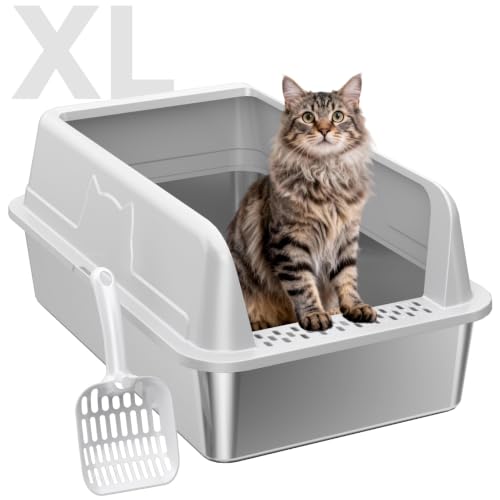
The XL version of the OneBug pan stretches nearly 23 inches long with 10-inch walls, which is enough breathing room for a 15-pound Ragdoll or a senior cat with stiff hips. The integrated anti-tracking step is the kind of detail that quietly saves you from sweeping litter off the bath mat every other day.
Stainless steel at this size feels substantial on the floor. It’s not the pan you shuffle around casually, but it stays put once placed. Owners who have struggled with mid-sized pans that cramped their big cats tend to notice the difference the first day.
Notable Gains
- XL footprint fits large breeds and senior cats with mobility issues
- 10-inch walls contain scatter from vigorous diggers
- Anti-tracking step reduces litter carried onto nearby floors
- Stainless body resists the staining and odor absorption of plastic
Honest Caveats
- Larger size demands a dedicated spot in a bathroom or utility area
- Heavier than smaller steel pans, so routine floor cleaning takes a moment longer
Key Specs
Made For
Owners of large cats, multi-cat homes, and senior pets that need extra room to maneuver comfortably.
A Better Fit Elsewhere
Owners with smaller cats and tighter floor space will do better with the standard OneBug medium pan reviewed earlier.
First-time cat owners often underestimate how much a good scoop matters. This OneBug pan includes one, so there’s no separate shopping trip the day the kitten arrives. The medium 7.87-inch walls suit cats from kittenhood through middle age without needing an upgrade halfway through.
The stainless steel base is the practical bit. Clumps slide off cleanly during daily scooping, and a quick rinse under the faucet handles the deeper weekly clean. For someone still learning litter routines, that ease matters more than any spec sheet suggests.
The Case For It
- Included scoop means a complete starter setup in one box
- Stainless base wipes down quickly and resists odor retention
- Medium dimensions fit most indoor cats comfortably
- Higher walls than standard pans reduce floor scatter
Points To Note
- Medium size may feel small for adult cats over 12 pounds
- Steel pan can be noisier than plastic when cats scratch the bottom
Feature Snapshot
Perfect Match For
First-time cat owners who want a complete, easy-clean setup without buying accessories separately.
Look Elsewhere When
Anyone with a larger or senior cat should consider the OneBug XL stainless steel option for more room.
Self-cleaning boxes used to feel like a luxury, but the ZHMZ E2 makes a strong case for being a practical upgrade. The cycle finishes in under two minutes, which means the box is ready for the next cat quickly in a multi-cat household. Infrared and gravity sensors pause the mechanism the moment a cat steps back inside.
The interior is genuinely roomy: 20 inches tall and 15 inches wide inside, which suits average cats from 2.5 to 15 pounds. The leak-proof mat that ships in the box catches the small amount of litter that escapes during cleaning, so the floor stays tidier than you’d expect from a robotic unit.
What Pays Off
- Sub-two-minute cleaning cycle keeps the box ready between visits
- Dual infrared and gravity sensors halt the rake the moment a cat returns
- Anti-stick waterproof bottom simplifies the weekly deep clean
- Included leak-proof mat catches scatter during operation
Practical Considerations
- Best suited to average-sized cats, with a 15-pound upper limit
- Needs reliable placement on a flat, firm surface to operate correctly
At A Glance
Who It Suits Best
Busy multi-cat households that want daily scooping handled automatically without paying for the top-tier model.
Reach For A Different Pick When
Anyone wanting app control and weight tracking should look at the ZHMZ E2 with weight monitoring reviewed below.
The G1 is the step-up model in the ZHMZ lineup, and the difference shows in the sealed waste drawer. A fully sealed drawer means odor stays locked inside the unit until you’re ready to empty it, which matters in smaller apartments where litter-box proximity to living space is unavoidable.
Wi-Fi support on the 2.4 GHz band lets you switch cleaning modes from a phone, which is handy when a kitten is being litter-trained and you want manual control for a few weeks. The 12-inch opening gives cats easy entry, and the gray finish blends into most home decor instead of screaming “pet appliance.”
Notable Upsides
- Sealed waste drawer contains odor until empty day
- 2.4 GHz Wi-Fi enables app-based mode switching
- Spacious 12-inch opening suits adult cats
- Neutral gray finish fits modern interiors
Points To Keep In Mind
- Should be placed on a flat, firm floor, not on uneven rugs
- Higher-end unit means a bigger upfront investment than standard pans
Who Will Love This
Tech-forward cat parents in smaller homes who want app control and a sealed waste system in one unit.
Not Your Match When
Anyone wanting basic automatic cleaning without the app features should consider the simpler ZHMZ E2 base model.
Tracking a cat’s weight at home usually means a separate scale and a wrestling match. The ZHMZ E2 with weight monitoring reads each cat’s mass during the cleaning cycle and logs it to the app. For multi-cat households, that’s quietly useful: gradual weight loss often shows up here before it shows up anywhere else.
The 10-liter waste bin extends the time between empty days to roughly 10 to 12 days for a single cat, which is a meaningful quality-of-life gain for anyone who travels. Combined with the same safety sensors as the base E2, this version adds the health data layer without sacrificing the hands-free cleaning routine.
Benefits That Matter
- Built-in weight detection helps track each cat’s health trends
- 10L waste bin reduces daily scooping for up to 10 to 12 days
- App-based cleaning schedule adds convenience
- Infrared and gravity safety sensors pause for returning cats
Factors To Consider
- Weight readings are most accurate for cats within the 2.5 to 15-pound range
- Requires 2.4 GHz Wi-Fi to unlock the full app feature set
Quick Facts
Built With In Mind
Multi-cat households that want health tracking bundled into the cleaning routine.
Another Choice May Suit
Anyone focused purely on odor containment should look at the ZHMZ G1 with its sealed waste drawer instead.
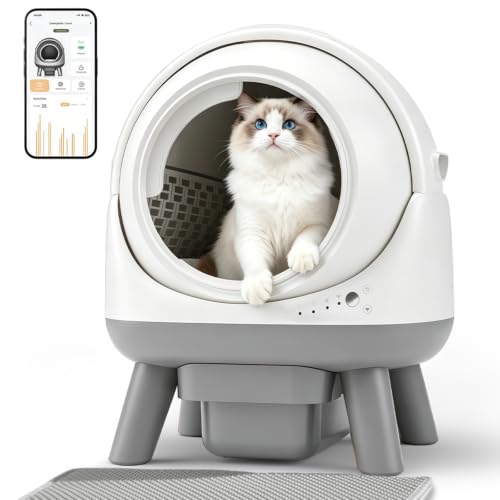
Households with kittens tend to worry about mechanical litter boxes, and rightly so. The G1 with proximity sensing watches for a cat approaching the entry and halts the cleaning cycle before the rake can interact with paws or tails. It’s the same underlying G1 platform, but with the safety layer tuned for younger or more curious cats.
The 12-inch opening helps kittens step in and out without acrobatic leaps, and the sealed waste drawer keeps the smell down between empty days. App control on 2.4 GHz Wi-Fi lets you switch to manual mode during the early training weeks, which prevents the rake from startling a kitten still learning the routine.
The Practical Payoff
- Proximity sensing adds an extra safety layer for kittens
- Manual kitten mode helps during early litter training
- Sealed waste drawer limits odor spread
- Smartphone control over cleaning cycles
Room For Improvement
- Should be placed on flat, firm flooring rather than rugs
- Higher price tier than basic automatic options
Who Should Grab It
Households introducing a kitten to automated cleaning who want extra reassurance around the safety system.
Skip It When
Anyone with adult-only cats and no app-control interest should consider the simpler ZHMZ E2 base unit.
The E2 with anti-pinch hardware layers infrared detection, gravity sensing, and a mechanical anti-pinch mechanism into one safety net. If a curious cat leaps in mid-cycle, the unit stops immediately. For households with multiple cats that tend to investigate at the worst possible moment, that’s the feature that justifies the upgrade.
The rest of the platform matches the standard E2: 20-inch interior height, a waterproof anti-stick bottom, and a leak-proof mat for catching litter kicked during operation. Installation runs through a guided video in the listing, which helps anyone setting up their first robotic litter box.
A Few Strong Suits
- Triple-layer safety: infrared, gravity, and anti-pinch hardware
- Waterproof anti-stick base simplifies deep cleaning
- Included leak-proof mat manages scatter during cycles
- Guided installation video helps first-time setup
Less Ideal Details
- Best suited to cats within the 2.5 to 15-pound range
- Automatic units of any kind are noisier during cycles than silent scooping by hand
The Right Fit
Multi-cat households with curious cats that need an extra-safe automatic cleaning system.
Where A Sibling Pick Shines
Anyone prioritizing weight tracking over mechanical safety should look at the ZHMZ E2 with weight monitoring instead.
Choosing The Right Size And Style For Your Cat
Getting the dimensions right matters more than any single feature on the box. A good rule of thumb: the pan should be at least 1.5 times your cat’s body length, so a 16-inch cat wants a pan that’s 24 inches or longer. Kittens do fine in smaller pans, but they grow fast, and many owners end up replacing undersized pans within months.
Wall height is the second key call. Standard pans run 4 to 6 inches tall, which works for calm adult cats. Enthusiastic diggers and kittens that haven’t learned their aim need 8 inches or more. High-sided picks like the TownTime and OneBug XL excel here, while shorter pans like the LEGOURNS two-pack suit tidy adult cats on a budget.
Material Choice: Plastic Versus Stainless Steel
Plastic is lighter, cheaper, and easier to move, which suits renters or anyone rotating the box between rooms. The trade-off is longevity: plastic absorbs odor over time and tends to crack at stress points after a few years. Stainless steel costs more upfront but resists odor retention and scratches, making it the stronger long-term investment for permanent setups.
When Self-Cleaning Earns Its Place
Automatic boxes justify themselves when daily scooping becomes a chore. Multi-cat households, frequent travelers, and anyone with limited mobility benefit most. Single-cat owners with light schedules may find the cost premium hard to justify, especially since a well-placed standard pan with twice-daily scooping stays perfectly serviceable.
Matching Box To Life Stage
Kittens need low-entry openings and safety-focused mechanisms. Adult cats fit most medium-sized pans. Senior cats benefit from larger footprints and anti-tracking steps that reduce the litter they kick out. Matching the box to life stage prevents the most common reason people end up replacing a pan within a year.
Smart Buying Advice For Litter Boxes
Mistakes Worth Dodging
Buying a pan that’s too small is the most common slip. Cats that feel cramped often eliminate outside the box, which becomes a behavior problem rather than a litter box problem. Measure your cat’s length and choose accordingly. Skipping the high-sided option is another frequent miss, especially for kittens and diggers. The few extra dollars spent on taller walls save countless minutes of sweeping.
Where The Extra Money Goes
Higher-tier models tend to bundle features that earn their keep over time. Sealed waste drawers cut down on odor migration, which matters in apartments. App-based controls and weight tracking add convenience but not essential function. Stainless steel upgrades cost more upfront yet typically outlast plastic pans by years, which often makes them the better long-term value despite the higher starting price.
Frequently Asked Questions
How often should litter boxes be scooped?
Most cats prefer a box scooped at least once daily, with a full litter change weekly. Multi-cat homes may need twice-daily scooping, especially in smaller pans. Self-cleaning units handle the daily scooping automatically and extend the full-change interval based on the waste bin size.
Are stainless steel litter boxes worth the higher cost?
Stainless steel pans resist odor absorption and scratching, which extends their useful life well beyond typical plastic pans. For households committed to a long-term setup, the upfront cost usually pays back through years of service. For renters or those who rotate boxes often, plastic may be the more practical choice.
Can kittens use self-cleaning litter boxes safely?
Kittens can use self-cleaning units that include infrared sensors, gravity detection, and anti-pinch mechanisms. Models with manual or “kitten mode” overrides allow owners to disable the automatic cycle during early training. Standard mechanical boxes without these safeguards are not recommended for kittens under six months.
Where should a litter box be placed?
Litter boxes belong in quiet, low-traffic spots with good ventilation, away from food and water bowls. Avoid placing automatic units near uneven rugs or carpets, since flat flooring ensures proper sensor function. Bathrooms, laundry rooms, and spare bedrooms are common favorites.
How many litter boxes do cats actually need?
The general guideline is one box per cat plus one extra. Two cats typically do best with three boxes, while single-cat homes need at least one. Multi-room placement prevents one cat from blocking access for another and reduces house-soiling risks.
Closing Remarks
The right litter box turns a daily chore into background noise. Large-breed and senior cats usually do best with the high-sided stainless picks, multi-cat homes with curious cats benefit from the sensor-equipped automatic units, and small-space owners can find solid value in the simpler two-pack steel pan. Match the box to your cat’s size, your cleaning tolerance, and the floor space available, and you’ll rarely think about the litter box again, which is exactly the point.
