

Winter weather punishes paver surfaces differently than poured concrete. Joint sand gets washed out, mortar joints crack, and standard rock salt leaves white scald marks that never fully disappear come spring. Homeowners juggling a stone walkway, a paver patio, or a stamped driveway need a deicer that actually works below 20°F without chewing through the surface it sits on. This lineup covers ten solid options across temperature ranges, paver-safe blends, and pet-friendly formulas, so you can match the product to your walkway, your climate, and the four-legged traffic that crosses it.
Your Options, Compared

Home and Country USA Pink Blizzard Ice Melt (45 lbs)

Scotwood Industries 50B-RR Road Runner Premium Ice Melter

PESTELL 683051 Paw Thaw Ice Melt for Pets, 25-Pound

Peladow Calcium Chloride Pellets Snow and Ice Melter, 50 lb.

ECO GARDEN PRO Pet Safe Snow & Ice Melt, 19 lb.

Safe Paw 2 Pack Pet-Safe Ice Melt, 35 lbs
Scotwood Industries 50P-RR Road Runner Premium Ice Melter

Scotwood Industries 20-Pound Road Runner Premium Ice Melter
North American Salt Power 6300 Enviro-Blend Ice Melter, 40 lb.

Premiere Granular Ice Melt, 50 lb. Carton
A Deeper Look At The Lineup
Pavers already take a beating from freeze-thaw cycles, so piling on a corrosive chloride deicer makes a bad situation worse. Home and Country USA Pink Blizzard leans on a triple-action blend of magnesium chloride, agricultural corrosion inhibitors, and sodium chloride, paired with CMA anti-icing technology (a calcium magnesium acetate additive that slows re-freezing) that takes the edge off the typical chloride burn. The pink tracer is the small detail that matters most on a busy morning: you see exactly where the pellets land, so no spot gets double-dosed and bare patches never get missed.
For homeowners with dogs that bolt across the walkway the moment the back door opens, this formula trades some raw melting power for a gentler surface. It’s not the right call for arctic-cold climates, and a 45-pound bag adds up if you have a long driveway. If your winters hover in the teens and you mostly care about a patio and a side path, the trade-off makes sense.
The Value In It
- Pink pellet color makes application coverage visible against snow and gray stone
- CMA additive reduces the freeze-refreeze cycle that wears down joint sand between pavers
- Magnesium chloride base cuts through ice faster than plain rock salt at moderate temps
- Designed to minimize corrosion on metal landscape edging, a common issue near paver borders
- Pet-friendlier formulation gives peace of mind on walkways dogs cross daily
Things To Consider
- Less effective in deep subzero cold compared to pure calcium chloride pellets
- Bag is bulky for small stoops or apartment balcony storage
- Owners commonly report needing a second light pass during ice storms
Who It Suits Best
Dog owners with paver walkways in regions where winter lows typically stay above -10°F.
Look Elsewhere When
Peladow Calcium Chloride Pellets fit better if you deal with extended deep-freeze conditions and want faster melt-down.
Where Pink Blizzard favors gentleness, Road Runner 50B-RR is built for brute-force coverage on long, heavily trafficked surfaces. The pellet blend mixes calcium chloride, magnesium chloride, potassium chloride, and sodium chloride, which sounds like a chemistry roll call but in practice means the product keeps working as temperatures slide toward -15°F. You get fewer repeat applications, which matters when the driveway is 80 feet long and the snow just keeps falling.
This blend is colorless and odorless, so there’s no dye to stain decorative pavers and no sharp smell to track into the mudroom. It’s safe for concrete when you follow the directions, which is a real concern for poured walkways adjoining paver sections. Reach for it when you want a single bag to last through a season of moderate storms without constant restocking.
Strong Points
- Multi-chloride pellet blend holds effectiveness down to -15°F
- Requires fewer re-applications than standard rock salt, saving time during long storms
- Colorless pellets won’t leave visible residue on darker paver colors
- Safe for surrounding vegetation when applied at recommended rates
Honest Caveats
- 50-pound bag is heavy for one person to carry, especially across icy ground
- Still a chloride-based product, so over-application can stress paver joints over seasons
- Lacks a visible tracer, so missed spots are easy to leave untreated
At A Glance
Made For
Homeowners with long driveways and paver-bordered walkways who want fewer repeat applications during storms.
Skip It When
You have a small patio and want a lighter bag; Scotwood Industries 20-Pound Road Runner Premium Ice Melter is easier to haul.
First-time pet owners often grab whatever the hardware store puts nearest the register, then wonder why their dog’s paws are red for a week. Paw Thaw exists for exactly that moment: a chloride blend engineered to be safer around paws, carpets, and leather boots while still pulling its weight on a frozen patio. The 25-pound size is approachable, and the no-residue claim matters more than it sounds when you have interior floors that meet exterior pavers right at the back door.
The product leaves a protective coating on concrete as it melts, which helps slow the surface wear that chloride-heavy products cause over several winters. It’s not the most aggressive deep-cold formula on the list, but for routine morning applications on a small paver patio it’s hard to overcomplicate. Think of it as the training-wheels option before graduating to something heavier.
Practical Pluses
- Safer around paws than standard chloride rock salt when applied as directed
- No sticky residue means less floor cleanup where pavers meet interior tile
- Forms a protective layer on concrete that helps resist repeat surface damage
- 25-pound size is manageable for most homeowners to carry and store
Points To Keep In Mind
- Won’t match the raw melt speed of pure calcium chloride in extreme cold
- Smaller bag means frequent restocking for long driveways
- Still contains chloride components, so very sensitive dogs may need paw rinsing after walks
Best Suited To
First-time pet owners with a small paver patio who want a manageable bag and gentler surface chemistry.
Consider Something Else When
You face long, harsh winters and want maximum melt speed; Safe Paw 2 Pack Pet-Safe Ice Melt handles deeper cold without chloride content.
When the thermometer dips past what most blends can handle, Peladow’s pure calcium chloride pellets keep working. The pellets attract ambient moisture from the air and trigger an exothermic reaction, which is just a chemistry term meaning the product actually gives off heat as it dissolves, accelerating the melt without you needing to chip away at the ice first. Rated effective down to -25°F, this is the bag you keep on hand for those January weeks where nothing else seems to touch the buildup.
The trade-off is the same one pure calcium chloride always brings: it generates heat, which means it can stress sensitive surfaces if over-applied season after season. On dense pavers with tight joints and proper drainage, that’s rarely a problem. On older, more porous stone, you may want to use it sparingly and stick with a gentler blend for everyday applications. Odorless and fast-acting, it earns its place as the cold-weather specialist in any paver owner’s garage.
Useful Strengths
- Rated effective down to -25°F for the coldest northern climates
- Exothermic reaction generates heat on contact, speeding up penetration
- Moisture-attracting formula works even when air humidity is low
- Odorless pellets won’t leave a chemical smell around entryways
- Made in the United States, with consistent pellet sizing for spreaders
Some Limits To Know
- More aggressive on concrete than blended options, especially with repeated heavy use
- Higher cost per pound than multi-chloride blends
- 50-pound bag demands a sturdy container or wheeled cart for storage
Key Product Details
Whose Shelf It Belongs On
Northern homeowners who routinely face deep-freeze stretches and want a fast-acting specialty product.
Reach For A Different Pick When
You mostly handle light overnight frost on a small patio; ECO GARDEN PRO Pet Safe Snow & Ice Melt is easier on the surface.
ECO GARDEN PRO targets the household that has everything to protect at once: a paver driveway, kids on bikes, a dog that refuses booties. The calcium chloride pellets are pitched as a smarter alternative to plain rock salt, and the marketing leans heavily on safety around concrete, paws, and roofing. Compared with the multi-chloride Road Runner pellets earlier in this list, the formula narrows its focus to a single active ingredient plus whatever additives keep it flowing freely in the bag.
The smaller 19-pound size is a feature, not a limitation. It fits in a closet by the front door, so you actually use it instead of dragging yourself to the garage. The pitch is roof-safe, which makes sense for homeowners who also need to clear gutters and roof edges above paver walkways where falling melt could refreeze on the path below.
The Case For It
- Single-ingredient calcium chloride keeps the chemistry easy to understand
- Marketed for concrete, roof, and gutter use, expanding its job beyond walkways
- 19-pound size stores easily in a hallway closet or porch bin
- Positions itself as pet and child safer than traditional rock salt
Worth Bearing In Mind
- Smaller bag means frequent repurchase for large properties
- Calcium chloride still carries some surface risk with repeated heavy application
- Limited additional details available beyond marketing claims in the source listing
Who Should Grab It
Families with young kids and pets who want one product that handles walkways, roof edges, and gutters.
A Better Fit Elsewhere
Peladow Calcium Chloride Pellets suit you better if you need a larger bulk bag for a long driveway.
Safe Paw takes a different route entirely. The granules are salt-free, chloride-free, and acetate-free, which is a short way of saying nothing in the formula matches the corrosive chemistry that ages out paver joints and cracks concrete. The patented dual-effect compound is designed to melt ice down to -2°F and then keep working for up to three days, so a single application can outlast a moderate storm rather than demanding fresh pellets every few hours.
The two-pack format delivers 35 pounds of pellets, which lands in the middle of this lineup’s bag sizes. It’s the right call for households with stone patios, vintage brickwork, or decorative pavers where chloride damage shows up fast and lingers for years. The cost runs higher per pound than chloride blends, and the cold-temperature ceiling sits well below Peladow’s. Where Safe Paw earns its slot is in protecting surfaces that can’t be replaced easily.
Good Reasons To Consider
- Salt-free and chloride-free formula avoids the corrosion that wears paver joints
- Long-lasting effect up to three days reduces reapplication frequency
- Works effectively down to -2°F, covering most temperate-winter storms
- Safer for decorative stonework and historic brick that chloride products damage
Trade-Offs To Consider
- Higher cost per pound compared with chloride-based blends
- Won’t match pure calcium chloride melt speed in extreme cold below -10°F
- Granule texture may require different spreader settings than pellet products
Perfect Match For
Homeowners with decorative stonework, vintage brick, or premium pavers where chloride damage shows up fast.
Where A Sibling Pick Shines
Home and Country USA Pink Blizzard Ice Melt works better if your biggest concern is pet safety on a chloride-tolerable surface.
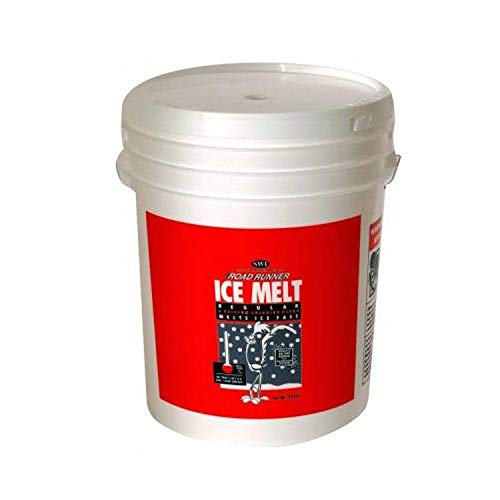
The 50P-RR is the sibling to the 50B-RR covered earlier, sharing the same Road Runner branding and the same concrete-safe claim. Where the 50B-RR leans toward broad-spectrum coverage, the 50P-RR positions itself as the dependable everyday option for paver patios and front steps. Both share a pellet format that lays down evenly without rolling off crowned paver surfaces, which is a small but real advantage over granular products.
The pellet blend uses the same family of calcium, magnesium, potassium, and sodium chlorides that defines the Road Runner line, rated for use down to -15°F. For homeowners who already trust the Road Runner name and want a second bag to keep in the shed, the 50P-RR is the obvious companion purchase.
Reasons It Performs
- Concrete-safe pellet format lays down evenly across paver joints
- Multi-chloride blend keeps working down to -15°F for northern winters
- Colorless and odorless pellets preserve the look of decorative pavers
- Safe for surrounding vegetation when applied at recommended rates
Less Ideal Details
- Heavier bag requires a wheeled cart or help carrying to the application area
- Still chloride-based, so cumulative season-after-season use can stress joints
- Functionally similar to 50B-RR, which may make one redundant for the average homeowner
The Right Fit
Existing Road Runner fans who want a second matching bag for a side walkway or detached garage.
Swap It Out When
Safeguarding historic stonework matters more than raw melt speed; Safe Paw 2 Pack Pet-Safe Ice Melt avoids chloride entirely.
The 20-pound Road Runner is the same chemistry as its 50-pound siblings, just in a friendlier package. Apartment dwellers, townhouse owners, and anyone with a modest paver landing or short front walkway often skip deicing altogether because a 50-pound bag feels like overkill. The 20-pounder solves that hesitation: you can keep it on a porch shelf, drag it out after a frost, and put it back without throwing out your back.
You give up the cost-per-pound advantage of buying in bulk, and you’ll restock more often during long winters. For quick morning applications on a single set of steps or a stoop landing, the convenience factor outweighs the math.
Benefits That Matter
- 20-pound size is portable enough for one person to handle comfortably
- Same Road Runner chloride formula rated for use down to -15°F
- Stores neatly in a closet, shed, or covered porch bin
- Pellet format lays down evenly on crowned paver surfaces
Small Caveats
- Runs higher per pound than the 50-pound Road Runner bags
- Runs out quickly on long driveways during active storm weeks
- Chloride-based formula still requires restraint on delicate decorative stone
Built With In Mind
Townhouse and apartment owners with a small paver stoop or landing who want an easy-to-store bag.
Not Your Match When
You maintain a long shared driveway with multiple vehicles; a 50-pound Road Runner bag covers more ground per purchase.
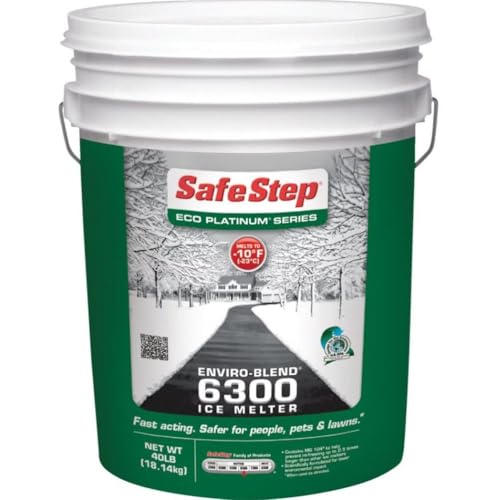
Paver walkways rarely sit alone. They border lawns, shrub beds, and the edges of foundation plantings where runoff matters. North American Salt’s Power 6300 Enviro-Blend markets itself as friendly to grass, shrubs, and vegetation, which puts it on the shortlist for homeowners whose paver path cuts through a landscaped yard. The product is also pitched as non-toxic to children and pets, with a formulation that won’t leave powdery residue on adjacent interior floors.
The trade-off shows up in the temperature rating. Power 6300 holds effective performance down to -10°F, which is fine for most of the country but not enough for the upper Midwest or interior Alaska. In a typical suburban climate with pavement that runs alongside lawn and garden beds, it’s a balanced middle path.
The Upside
- Marketed as vegetation-friendly for yard edges and shrub borders
- Safe for carpets, floors, leather, and shoes when used as directed
- Non-toxic handling profile suits families and casual applicators
- Ready-to-use granule format with no pre-mixing required
Factors To Consider
- Limited to -10°F effective range, weaker in deeper cold than Peladow
- 40-pound bag is middle-of-the-road for storage convenience
- Still contains chloride components, so very salt-sensitive plants need runoff management
Feature Snapshot
Who Will Love This
Homeowners with paver paths running alongside lawns and garden beds who want to protect plantings from runoff.
Another Choice May Suit
Peladow Calcium Chloride Pellets handle deep cold better if your region regularly drops below -15°F.
Premiere rounds out the list with a granular ice melt sold in a 50-pound carton rather than a bag. Cartons stack neatly on a garage shelf, pour cleanly into a spreader, and resist the punctures that leave bagged products half-empty by midseason. The blue-tinted granules include anti-caking agents and corrosion inhibitors, both of which extend shelf life and slow the metal-tool rusting that bagged chlorides tend to cause.
The -8°F effective temperature ceiling makes this a temperate-winter product, suited to southern states, the Pacific Northwest, and Mid-Atlantic regions where extreme cold is rare. For those climates, a 50-pound carton covers a long season of overnight frost without breaking the bank.
A Strong Showing
- Carton format stacks neatly and resists punctures during garage storage
- Anti-caking agents keep granules flowing freely through spreaders
- Corrosion inhibitors slow wear on metal application equipment
- Blue tint helps spot missed coverage on lighter paver colors
Points To Note
- Rated only down to -8°F, so unsuitable for northern interior climates
- Carton requires dry storage to prevent the cardboard from weakening
- Granule format can bounce off crowned paver surfaces more than pellets
Right Fit For
Homeowners in temperate-winter regions who want a storage-friendly carton for a garage shelf.
Look Elsewhere When
You regularly face deep-freeze conditions below -10°F; Peladow Calcium Chloride Pellets is a stronger cold-weather option.
What Matters Most Before Choosing Ice Melts For Pavers
Pavers reward a different deicing strategy than poured concrete. Joint sand washes out, color fades, and sealers break down faster under aggressive chloride products. The first decision point is active ingredient: pure calcium chloride delivers the strongest cold-weather melt but stresses surfaces the most, while chloride-free formulas like Safe Paw trade raw power for surface protection. Magnesium chloride and CMA-blended products sit in the middle, balancing melt speed with reduced corrosion.
Temperature rating matters more than bag size. A product rated to -10°F is useless if your driveway sees -20°F mornings every January. Match the rating to your typical overnight low, not your absolute worst storm. For most temperate climates, a -10°F to -15°F rating handles routine winters comfortably, while northern owners need to push toward -25°F coverage.
Pet and child traffic changes the equation fast. If dogs cross the walkway before anyone has a chance to wipe paws, a gentler chloride blend or a chloride-free formula avoids the paw irritation and stomach upset that traditional rock salt causes. The pet-friendly picks cost more per pound, but the trade-off often shows up in fewer vet visits and cleaner interior floors.
Bag format is more than convenience. Cartons stack better, bags tear more easily, and pellet products stay in place on crowned paver surfaces where granules bounce off. For paved walkways with any slope, pellets typically outperform granules regardless of which chemistry you choose.
Key Considerations Across These Picks
Where Shoppers Go Wrong
The most common mistake is reaching for the cheapest bag without checking the active ingredient and temperature rating. A budget sodium chloride blend rated to 20°F does almost nothing during a January cold snap, which leads to over-application and the white scald marks homeowners later blame on the product itself. Match the formula to your climate first, then weigh bag size and price.
The other frequent slip is treating pavers like poured concrete. Pavers have joints that shift, colors that fade, and sealers that wear thin under repeated chloride exposure. Homeowners who use the same deicer for years without rinsing occasionally often notice the joint sand disappearing long before the surface itself shows wear. A light rinse after major storms and an annual joint sand top-up keep the system intact.
When Paying More Pays Off
Premium ice melts earn their higher price through longer effective duration, safer surface chemistry, and broader temperature coverage. A chloride-free formula like Safe Paw costs more per pound but protects decorative stonework that costs hundreds per square foot to replace. Pure calcium chloride pellets cost more than basic rock salt but melt through conditions where cheaper products stall completely.
The honest read is that spending up makes sense when the surface beneath your feet is expensive, the climate is harsh, or the household includes pets and kids who track melt indoors. For a basic sidewalk in a mild climate, a standard blend handles the job fine, and the upgrade isn’t worth chasing.
