

Climbing a ladder twice a year to scoop soggy leaves out of clogged gutters is a chore most homeowners would happily skip. A solid gutter guard system keeps water moving while keeping debris out, which means fewer overflows during heavy storms and less rot along the fascia board. The picks below cover everything from full-coverage aluminum screens to downspout accessories, with two ladder options included for the install or seasonal cleanup.
The Leading Options At A Glance

A-M Gutter Guard 5″ x 200 Ft Mill Finish Aluminum
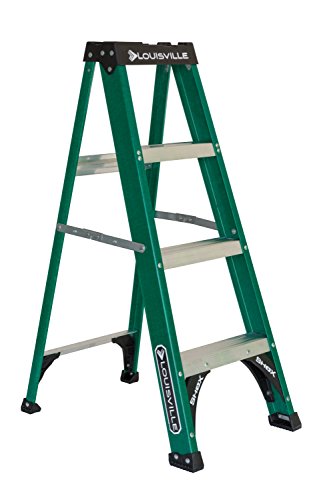
Louisville Ladder FS4004 Fiberglass Step Ladder
A-M Gutter Guard 5″ x 100 Ft Mill Finish Aluminum

FlowGuard 5″ Aluminum Gutter Cover 102 Ft

A-M Gutter Guard Sample Pack 7″ Length

Werner 6206 6-Foot Fiberglass Step Ladder
Hoopmon 5″ Stainless Steel High-Flow Leaf Screen
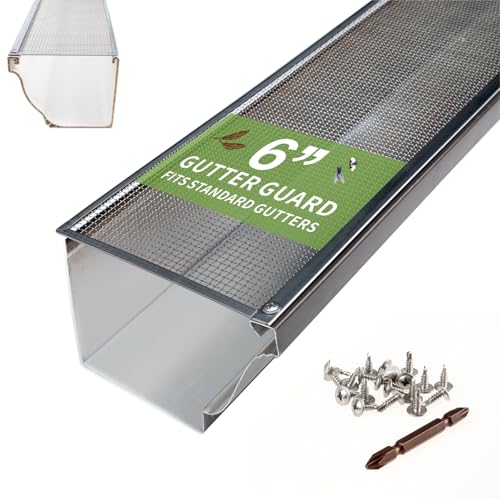
Hoopmon 6″ Stainless Steel High-Flow Leaf Screen

GutterGate 4×3 Type-B Downspout Accessory
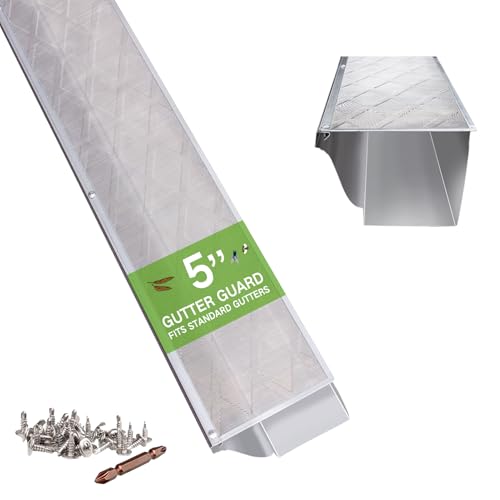
Hoopmon 5″ Stainless Steel Micro-Mesh Screen
Meet The Standout Selections
Long gutter runs are where most DIY projects fall apart, and a 200-foot roll of mill-finish aluminum sidesteps that problem in one purchase. The raised bubble pattern on this A-M Gutter Guard is built to let airflow push debris off the top while water drops through the perforated channel, which matters when spring pollen and oak leaves hit at the same time.
It works with hidden hangers, K-style brackets, and spike-and-ferrule systems, so swapping out an older guard rarely means redoing the whole mount. Homes with several gutter sections or detached garages get clean coverage without splicing three separate rolls together.
A Few Strong Suits
- 200-foot continuous run covers most mid-to-large homes in a single purchase.
- Bubbled perforation design sheds leaves on its own, reducing seasonal cleanouts.
- Mill-finish aluminum blends into most rooflines without obvious shine.
- Compatibility with hidden hangers preserves existing roof warranties.
- Easy to cut with snips for downspout outlets and corner terminations.
Honest Caveats
- Mill finish is bare aluminum, so it will weather to a dull gray over time.
- You still need a stable ladder and gloves for a clean install along second-story runs.
Key Specs
Whose Roofline It Belongs On
Homeowners with long continuous gutter runs on a single-story ranch or split-level get the cleanest, splice-free install.
Consider Something Else When
Cozyal or pine-heavy properties are a better match for the Hoopmon 5″ Stainless Steel Micro-Mesh Screen, which blocks finer debris.
Most one-story gutter work happens at heights where a full extension ladder is overkill, and that’s exactly where a 4-foot fiberglass step ladder earns its place. The Louisville Ladder FS4004 carries a 225-pound rated capacity and weighs enough to stay planted on a patio or driveway without skating sideways.
Fiberglass rails matter when you’re working near service drops or attic vents with wiring. The ProTop molded surface, paint can holder, and small parts magnet are surprisingly useful for hanging a brush and a handful of screws while you work.
Notable Gains
- Non-conductive fiberglass rails add a layer of safety near electrical lines.
- 225-pound Type II rating handles tool belts and a loaded paint bucket.
- Slip-resistant rubber feet stay planted on textured patio surfaces.
- Compact 4-foot height stores flat against a garage wall.
- Top tray holds a paint can, screws, and small tools within arm’s reach.
Worth Noting
- Too short for two-story eaves, where the Werner 6206 is a better reach.
- Hardware tray edges can scuff painted walls during indoor storage.
The Right Fit
Homeowners with single-story eaves, shed roofs, or porch gutter runs get a safer and steadier reach than a folding chair.
Reach For A Different Pick When
Taller two-story fascia boards call for the Werner 6206 6-Foot Fiberglass Step Ladder, which reaches higher with the same non-conductive rails.
Small homes, detached garages, and additions often need less than a 200-foot spool, and that’s where this 100-foot A-M Gutter Guard earns attention. The same mill-finish aluminum build and bubbled perforation pattern as the longer sibling means the engineering carries over, just in a friendlier package for shorter total perimeters.
Pair it with a section-by-section install and you’ll have a weekend project rather than a two-day grind. The perforations handle heavy rain well, and the roll is light enough to carry up a single ladder without help.
Notable Upsides
- Right-sized 100-foot roll avoids leftover material on small homes.
- Bubbled filtration design matches the heavier 200-foot sibling.
- Compatible with hidden, K-style, and spike-and-ferrule hangers.
- Lightweight aluminum is easy to carry up a ladder in short sections.
Things To Consider
- Mill finish weathers visibly in coastal air.
- Larger homes will still need a second roll for full coverage.
Who It Suits Best
Modest single-story homes, detached garages, and additions where a 100-foot run is plenty.
Skip It When
Larger homes with more than 100 feet of gutter should step up to the A-M Gutter Guard 5″ x 200 Ft roll for fewer seams.
Storm regions and snow-belt roofs punish thin aluminum guards, and the FlowGuard system is engineered to take that abuse. The .018 heavy-gauge painted aluminum won’t rust, and the front and rear hem doubles material thickness right where the screws bite in. That’s the area where lesser guards tend to crack after a few freeze-thaw cycles.
White, thermal black, brown, and matte aluminum finishes give you a way to match trim without resorting to paint. Stainless steel fasteners and the .018 gauge add real weight to each section, so plan for a helper during the longest runs.
Useful Touches
- .018 heavy-gauge aluminum resists bending under snow load.
- Front and rear hem doubles thickness at the high-stress mount.
- Painted finish options blend with white, brown, or black trim.
- Stainless steel fasteners resist rust streaks down the fascia.
- 102-foot length suits most ranch and two-story perimeters.
Possible Compromises
- Heavier gauge means a second pair of hands for the longer sections.
- Painted color choices add a small premium over mill-finish options.
Best Suited To
Homeowners in regions with heavy snow loads, high winds, or frequent downpours who want a longer service life from a painted aluminum guard.
Not Your Match When
Budget-focused shoppers on a basic ranch will find better value in the A-M Gutter Guard 5″ x 100 Ft Mill Finish Aluminum.
First-time installers often buy 100 feet of guard, only to discover the perforations are too coarse or the bend sits wrong on the gutter lip. The A-M Gutter Guard Sample Pack solves that problem with a 7-inch sample that fits both 5-inch and 6-inch K-style channels. You get the .018 aluminum construction in a piece small enough to test against the actual fascia.
This is the rare “try before you commit” option in a category where most products ship in full rolls. It’s also handy for matching existing trim or testing a hidden hanger retrofit before ordering the full spool.
Points In Its Favor
- Low-cost way to test fit before committing to a full roll.
- Works with both 5-inch and 6-inch K-style gutters.
- .018 heavy-gauge aluminum matches the full-size sibling products.
- Mill finish offers a neutral tone for matching most trim.
Trade Offs
- Just a 7-inch sample, not a usable run for real installation.
- Doesn’t reveal long-term weathering, only the fit and finish.
Made For
First-time installers and homeowners on the fence about whether a perforated aluminum guard fits their existing gutter style.
Look Elsewhere When
Anyone ready to commit to a full install should jump straight to the A-M Gutter Guard 5″ x 200 Ft Mill Finish Aluminum roll.
Two-story eaves are awkward heights where a step ladder actually works better than an extension ladder for short runs along the fascia. The Werner 6206 is a Type IA fiberglass step ladder rated to 300 pounds, which gives you room for a tool belt, a five-gallon bucket, and the guard roll without feeling cramped on the top step.
Non-conductive fiberglass rails matter when you’re reaching up around service drops or attic vents. The Holster Top with Lock-In accessory slots adds a clean spot to clip a drill or a spare roll of screws.
Where It Delivers
- Type IA 300-pound rating handles heavier users and loaded tool belts.
- Fiberglass rails stay non-conductive near roofline wiring.
- Double-riveted Traction-Tred steps resist slipping in wet conditions.
- Holster Top accessory slots keep drill and fasteners organized.
- 6-foot reach clears most standard first-floor gutters with margin.
A Few Limitations
- Heavier than the Louisville 4-foot option, so it needs a hand to reposition.
- Too short for true two-story work, where an extension ladder is still safer.
Who Will Love This
Homeowners tackling taller first-floor eaves, garage gutter runs, and roofline repairs where a 6-foot fiberglass reach is the sweet spot.
A Better Fit Elsewhere
Compact shed and porch work is a friendlier fit for the Louisville Ladder FS4004, which stores tighter and weighs less.
Coastal salt air chews through aluminum guards within a few seasons, which is exactly the environment the Hoopmon 5″ Stainless Steel High-Flow Leaf Screen was built for. The mesh and the frame are both 304 stainless steel, so the screen won’t pit or soften the way painted aluminum eventually does. That’s a meaningful difference for homes within a mile or two of breaking surf.
The woven 8-mesh pattern (about 1/8-inch openings) sheds maple seeds and small leaves while letting heavy rain pour through. You get genuine stainless performance without paying for the finer micro-mesh option if your debris is mid-sized rather than pine-fine.
Advantages To Know
- 304 stainless steel mesh and frame resist coastal corrosion.
- Woven 8-mesh pattern handles heavy rain without overshooting.
- Holds up to leaf volume better than perforated aluminum guards.
- 5-inch width fits standard residential K-style gutters.
Room For Improvement
- Stainless carries a higher price tag than mill-finish aluminum options.
- Tighter mesh needs an occasional brush-down in heavy pollen season.
Key Specs
Perfect Match For
Coastal, lakeside, and humid-climate homes where aluminum guards pit and stain the fascia after a few seasons.
Swap It Out When
Pine-heavy properties get finer debris blocking and benefit more from the Hoopmon 5″ Stainless Steel Micro-Mesh Screen.
Large roofs and steep roof valleys push a lot of water through a small section of gutter, and that’s exactly when a wider 6-inch channel pays off. The Hoopmon 6″ Stainless Steel High-Flow Leaf Screen gives you the same 304 stainless mesh and frame as the 5-inch sibling, just sized for commercial or oversized residential troughs.
The woven 8-mesh pattern handles a higher gallons-per-minute flow rate than narrower guards, so downspout overflow during a thunderstorm becomes less likely. It’s a smart fit for homes with tile, metal, or complex rooflines that shed water aggressively.
Everyday Advantages
- 6-inch width handles higher water volume from steep or complex roofs.
- Full 304 stainless build handles coastal and humid climates.
- Woven 8-mesh pattern balances debris blocking and water flow.
- Stainless steel frame holds shape under heavy wet leaf loads.
Factors To Consider
- 6-inch width only fits oversized residential or commercial K-style gutters.
- Premium stainless price makes it overkill for small sheds.
Built With In Mind
Homes with steep pitches, tile or metal roofing, or commercial-style 6-inch gutter troughs that move high volumes of water.
Where A Sibling Pick Shines
Standard 5-inch residential troughs get a better price-to-fit match from the Hoopmon 5″ Stainless Steel High-Flow Leaf Screen.
Once the gutter guards are installed, the last weak point is usually the downspout exit where splash-back erodes the soil right next to the foundation. The GutterGate 4×3 Type-B Downspout Accessory fits standard 4×3 residential downspouts and gives you a cleaner way to redirect roof runoff away from the foundation.
Type-B refers to the corrugated rectangular downspout profile most homes built after the 1970s use. The accessory slides on at grade level and creates a tidier discharge point than a splash block or a rock bed.
A Favorable Mix
- Fits the 4×3 corrugated Type-B profile used on most modern homes.
- Directs roof runoff away from foundation plantings.
- Cleaner finish than improvised splash blocks or river rock.
- Lightweight accessory installs without specialty fasteners.
Points To Keep In Mind
- Only matches the 4×3 Type-B profile, not round or 3×4 downspouts.
- White finish may not match older painted downspouts without touch-up.
Who Should Grab It
Homeowners finishing a full gutter upgrade who want a tidier downspout exit and less soil erosion near the foundation.
Where Another Pick Suits Better
Homes with round or oversized downspouts should look for a compatible accessory rather than forcing a 4×3 fit.
Pine needles and shingle grit are the debris that defeats most perforated aluminum guards, and they’re exactly what the Hoopmon 5″ Stainless Steel Micro-Mesh Screen is designed to filter. Both the mesh and the heavy-duty frame use 304 stainless steel, which is a meaningful upgrade over aluminum when you’re dealing with conifers overhead and acidic sap runoff.
The micro-mesh weave is finer than the 8-mesh high-flow option, so you’ll trade a little flow capacity for finer filtration. In a wooded lot, that trade usually pays off within a single autumn season.
Good Reasons To Consider
- Fine micro-mesh blocks pine needles, shingle grit, and seeds.
- Full 304 stainless mesh and frame for coastal durability.
- 5-inch width fits standard residential K-style gutters.
- Reduces spring pollen and seed buildup in the channel.
Honest Caveats
- Finer mesh needs occasional brushing in heavy pollen season.
- Premium stainless build carries a higher price than aluminum guards.
Key Specs
Right Fit For
Wooded lots with pine, fir, or other conifers dropping fine debris that defeats perforated aluminum guards.
Consider Something Else When
Open-sun suburban lots with mostly maple and oak debris get more flow headroom from the Hoopmon 5″ Stainless Steel High-Flow Leaf Screen.
What Matters Most Before Choosing Gutters For House
Match The Guard To The Debris Type
The first real question isn’t brand or color, it’s what falls on your roof. Perforated aluminum guards handle big leaves beautifully but struggle with pine needles and shingle grit. Micro-mesh stainless screens trade a little flow capacity for finer filtration, which matters in wooded lots where smaller debris would otherwise mat against the perforations.
Pick The Right Width And Length
Residential K-style gutters come in 5-inch and 6-inch widths, and the guard has to match the channel opening, not just sit on top of it. Measure total linear footage first, then buy slightly more than you need to account for corner cuts and overlap. Buying a 200-foot roll for a 60-foot perimeter just leaves expensive leftovers.
Think About Climate And Corrosion
Coastal salt air, humid summers, and heavy snow loads each punish guards differently. Mill-finish aluminum weathers to a dull gray and can pit in salt-heavy regions. Painted aluminum adds color but needs heavier gauge for storm regions. 304 stainless steel costs more up front but resists pitting in coastal and humid environments over the long haul.
Plan For Safe Installation
Guards mount from a ladder or a roof, and the wrong ladder choice turns a Saturday project into a trip to urgent care. A 4-foot fiberglass step ladder works for single-story eaves, while a 6-foot Type IA fiberglass ladder handles taller first-floor runs. Fiberglass rails stay non-conductive near service drops, which is a meaningful safety upgrade over aluminum stepladders.
Key Considerations Across These Picks
Common Slip Ups
The most frequent gutter guard mistake is buying the wrong width. A 5-inch guard will not seat properly on a 6-inch channel, and the resulting gap lets debris slip under the lip. Equally common is underestimating total footage, which leads to a second roll with a mismatched batch of perforations. Measure twice and round up.
Where The Extra Money Goes
Premium stainless steel guards cost more because the mesh and frame are both 304 stainless rather than painted aluminum. That upgrade buys longer service life in coastal and humid climates and finer filtration for pine-heavy lots. For inland homes with mostly oak and maple debris, mid-grade mill-finish aluminum is usually the smarter spend.
Frequently Asked Questions
How Do I Know If I Need 5-Inch Or 6-Inch Gutter Guards?
Measure the opening at the top of the existing gutter from back to front. Older homes often have 5-inch K-style channels, while homes with steep or complex roofs may have been upgraded to 6-inch to handle higher water volume. Match the guard width to that measurement, not the gutter’s exterior profile.
Can Gutter Guards Handle Heavy Rain Without Overflowing?
Most perforated aluminum and woven stainless guards handle a normal thunderstorm well. The risk of overflow shows up during cloudbursts or when guards have accumulated debris on top of the mesh. An annual brush-down keeps flow capacity close to factory spec.
Do Gutter Guards Work With All Roof Types?
Most residential shingle roofs pair cleanly with standard K-style gutter guards. Tile, metal, and fortified roofs sometimes require specific hangers to avoid voiding the roof warranty. Check that the guard’s hanger compatibility matches your existing mounting hardware before ordering.
How Often Should I Clean Under Gutter Guards?
Even the best micro-mesh guards benefit from a yearly visual check and occasional brush-down. Fine pollen, shingle grit, and seed husks can mat on top of the mesh over time. A quick pass with a soft brush from a ladder restores full flow without a full tear-out.
Is It Worth Upgrading To Stainless Steel Guards?
Stainless steel guards cost more than mill-finish aluminum and earn that premium in coastal, humid, or pine-heavy environments. Inland homes with mostly oak and maple debris get years of reliable service from mid-grade aluminum. Match the material to your climate rather than buying the priciest option available.
Bottom Line
The right gutter guard depends on roof size, debris type, and local climate more than any brand name. Long runs and big leaves point toward perforated aluminum, while coastal and wooded lots benefit from stainless steel mesh. Pair the guard with a fiberglass ladder that matches the eave height, and you’ve got a setup that handles the next storm season without a Saturday spent scooping muck.
