

Winter has a way of finding weak plumbing. A single deep freeze can split an unprotected outdoor faucet and leave you with soaked siding, a flooded crawlspace, and a repair bill that stings far longer than the cold itself. Frost free hose bibs solve the problem at its root by relocating the actual shutoff valve inside your heated wall, and a small lineup of supporting accessories handles the edge cases the design alone can’t cover. This list walks through ten solid options covering new installations, retrofit upgrades, and budget-friendly insulation patches for spigots you can’t easily replace.
A Quick View Of The Lineup

GBQA Frost Free Sillcock 10 Inch with Vacuum Breaker
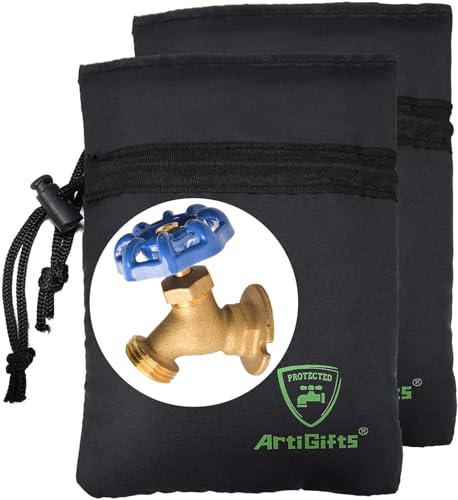
ArtiGifts Pro Outdoor Faucet Cover Socks, Set of 2

GBQA Self-Draining Vacuum Breaker, 3/4 Inch GHT

Hometopia 4Pack Outdoor Faucet Covers for Winter

DEMEDO Outdoor Faucet Cover, 3M Thinsulate, 18 Inch

GBQA 3/4 Inch Brass Vacuum Breaker (1)

GBQA Atmospheric Vacuum Breaker, 1/2 Inch

GBQA 3/4 Inch Brass Vacuum Breaker (2)

GBQA Self-Draining Vacuum Breaker, Chrome Plated
GBQA Atmospheric Vacuum Breaker, 3/4 Inch
More On The Choices That Made The List
The GBQA sillcock is the kind of part you install once and forget about for a decade. A frost free sillcock (also called a frost-proof hose bib) moves the actual shutoff valve back into the heated wall cavity, so the water column that would otherwise freeze in winter stays inside the building. The 10-inch stem gives you enough reach for a standard 2×4 wall with exterior sheathing and siding.
It accepts Crimp PEX, PEX-A expansion, MIP thread, or Push Fit connections on the inside, so most DIYers won’t need to re-run pipe just to make it fit. The body is lead-free brass with a built-in vacuum breaker that stops contaminated water from siphoning back into your supply.
Everyday Perks
- The 10-inch stem clears standard siding plus sheathing without forcing you to recess the supply line.
- Four inlet options cover Crimp PEX, expansion PEX, MIP thread, and Push Fit plumbing.
- The integrated vacuum breaker saves a separate fitting and keeps your potable water supply isolated from hose water.
- Lead-free brass holds up to years of seasonal expansion without flaking or corroding.
Things To Consider
- You will need to open the wall or work from a basement or crawlspace to install it.
- On homes with thicker masonry or stone veneer, the 10-inch reach may come up short.
Feature Snapshot
Right Fit For
Homeowners doing a full hose bib replacement during a remodel or new construction who want a single part that handles plumbing and backflow.
Skip It When
You can’t open the wall, in which case the ArtiGifts Pro Outdoor Faucet Cover Socks give you a no-tools alternative for protecting an existing standard spigot.
When replacing the spigot isn’t an option, an insulated cover is the next best move. The ArtiGifts socks slide over the entire faucet and trap a layer of air between the outdoor air and the metal, which is what actually keeps the temperature around the valve above freezing.
At 5.9 inches wide and 7.7 inches tall with a 1.4-inch thickness, they fit most standard residential hose bibs without bunching. The heavyweight polyester pongee exterior sheds rain and snow, while the inner PP cotton layer does the insulating work.
Where It Excels
- Slip-on install takes about ten seconds and requires zero tools.
- The waterproof outer fabric keeps insulation dry, which is the difference between a working cover and a soggy one.
- Two-pack pricing means you can cover the front and backyard spigots in one purchase.
Worth Noting
- The compact sizing won’t fit larger yard hydrants or anti-siphon towers.
- Owners commonly report that the elastic needs a twist tie in very windy exposures to stay snug.
Made For
Renters and homeowners who need a removable, no-modification winterization for a standard outdoor spigot.
Consider Something Else When
Your faucet has an exposed backflow preventer or unusually tall body, where the larger DEMEDO Outdoor Faucet Cover with 3M Thinsulate gives you more vertical room.
Adding a vacuum breaker to an existing hose bib retroactively gives you the kind of backflow safety that code requires on new installs. This GBQA unit threads onto a standard 3/4-inch garden hose outlet (GHT) and adds anti-siphon protection without any plumbing changes.
The self-draining design is the detail worth noting: when you shut off the faucet, residual water drains out instead of sitting in the valve body. That alone removes one of the most common failure points on standard hose bibs left out through winter.
The Helpful Details
- Self-draining action means no manual cracking open the valve to bleed lines.
- Nickel-plated lead-free brass body resists corrosion in wet outdoor conditions.
- 3/4-inch GHT threads match standard US garden hose fittings with no adapter needed.
- Suitable for outdoor faucets, garden hoses, and frost-free hydrants.
Trade Offs
- It attaches to the spigot end rather than replacing it, so the spigot’s own frost resistance still matters.
- The added height may interfere with the standard ArtiGifts cover sizing.
Best Suited To
Homeowners retrofitting an existing standard hose bib who want automatic draining and backflow safety without touching the supply plumbing.
Look Elsewhere When
You actually need to replace the faucet itself, where the GBQA Frost Free Sillcock 10 Inch handles the full upgrade including the vacuum breaker.
Most houses have more outdoor faucets than people remember. Front, back, garage, side yard by the garden, sometimes one on a balcony. The Hometopia four-pack handles the whole property in one box, which beats buying individual covers and hoping the sizing works out.
The 6.7-inch width and 8.3-inch height swallow most residential spigots, and the hook-and-loop strap closure lets you tighten the fit without needing to wrestle with a drawstring. Reusable construction means you can pack them away in spring and bring them back out next fall.
Benefits That Matter
- Four covers in one pack covers a typical whole-house setup without leaving a faucet exposed.
- The hook-and-loop strap keeps the cover in place during wind and ice, a known weak point of plain elastic designs.
- Reusable design cuts down on seasonal replacement waste.
- Works with garden spigots, hose bibs, and basic water taps.
Room For Improvement
- The fit isn’t tight enough for backflow preventers that stick out from the wall.
Who Will Love This
Families and multi-faucet households who want a single purchase that winterizes the entire property.
A Better Fit Elsewhere
Anyone with a single exposed spigot who doesn’t need four covers would do better with the ArtiGifts Pro Outdoor Faucet Cover Socks two-pack to avoid paying for extras.
Some spigots stick way out from the wall, and some have anti-siphon towers or yard hydrant risers that tower above standard covers. The DEMEDO cover handles those awkward shapes, with an 18-inch height and 14-inch width that wraps around fixtures most sleeves can’t enclose.
The 3M Thinsulate insulation is a known performer in cold-weather gear, and pairing it with 420D Oxford waterproof coating gives you a cover that takes real winter weather. You can use it on garden faucets, yard hydrants, and outdoor kitchen sinks where shorter covers simply won’t reach.
Bright Spots
- 3M Thinsulate insulation holds warmth in conditions where generic polyfill loses effectiveness.
- Double-layer 420D Oxford exterior sheds snow and rain without soaking through.
- The 18-inch vertical clearance fits anti-siphon towers and hydrant risers.
- Compatible with outdoor kitchen sinks and partially shorter garden faucets.
Soft Spots
- The bulk makes it overkill for a basic standard spigot, where a slimmer cover fits better.
- Larger size means it can catch wind if not cinched down carefully.
Built With In Mind
Properties with tall anti-siphon valves, yard hydrants, or outdoor kitchens where standard covers physically won’t fit.
Swap It Out When
Your setup is a plain low-profile hose bib, where the smaller ArtiGifts Pro Outdoor Faucet Cover Socks handle the job with less bulk.
A vacuum breaker attaches to the end of a hose bib or garden hose and stops contaminated water from being siphoned backward into your supply. The GBQA 3/4-inch version threads onto standard US garden hose outlets and keeps a tight seal through repeated seasonal cycles.
The break-off screw is the small but clever detail: it lets you permanently fix the breaker to the faucet so it can’t be removed without tools, which prevents accidental disconnection that would defeat the whole anti-siphon purpose.
Where It Helps
- Heavy-duty brass construction handles outdoor exposure without corroding.
- Pressure rating up to 125 psi covers standard residential water pressure with margin.
- The break-off screw deters casual disconnection that bypasses backflow protection.
- Works on garden hoses, outdoor faucets, and RV water lines.
Small Caveats
- It sits proud of the spigot, so you may need to remove it before fitting some insulated covers.
Who Should Grab It
Homeowners who want code-grade backflow prevention on an existing hose bib or who plumb RVs and need a reliable anti-siphon fitting.
Reach For A Different Pick When
You want a self-draining feature, where the GBQA Self-Draining Vacuum Breaker adds automatic water evacuation when the faucet closes.
Atmospheric vacuum breakers (AVBs) work differently from hose-end models: they mount inline on a plumbing run and use an air gap to break siphons. This GBQA 1/2-inch unit threads into NPT (National Pipe Thread) fittings, which is what most residential irrigation and outdoor plumbing uses.
The chrome-plated brass finish looks clean on visible runs and resists corrosion well. Working pressure up to 125 psi covers standard household supply with comfortable headroom for irrigation cycling.
A Few Strong Suits
- Inline NPT installation is the standard for irrigation manifolds and outdoor kitchen rough-ins.
- Chrome-plated brass looks better on visible plumbing than plain brass.
- Pressure rating up to 125 psi suits residential irrigation cycling.
- The atmospheric design needs no moving seals, which is why these are common on long-life plumbing.
Points To Note
- AVBs must be installed vertically and at least 6 inches above the highest downstream outlet, or they won’t function correctly.
- Not designed for continuous pressure, so it should sit downstream of a valve, not on a constantly-pressurized line.
Perfect Match For
Plumbers and serious DIYers adding code-grade backflow protection to irrigation manifolds and outdoor kitchen water supplies.
Where Another Pick Suits Better
Anyone who only needs hose-end protection should grab the GBQA 3/4 Inch Brass Vacuum Breaker (1), which threads onto a standard spigot without cutting pipe.
This is the same 3/4-inch GBQA brass vacuum breaker as pick number six, but listed as a separate SKU. The spec is identical: lead-free brass body, 125 psi pressure rating, break-off screw for permanent mounting.
Why list it twice? Inventory and pricing fluctuate, and one SKU can go out of stock while the other remains available. Both listings come from the same manufacturer with the same physical product, so you can treat either as interchangeable.
Positive Points
- Brass body holds up to outdoor moisture without corrosion issues.
- The break-off screw installation prevents accidental removal.
- Works on garden hoses, outdoor faucets, and RV water connections.
- 180°F temperature rating covers hot-water washdowns in mild climates.
Honest Caveats
- Functionally identical to pick six, so if neither listing is available in a needed size, look at the GBQA Self-Draining Vacuum Breaker for the same thread pattern with a drain feature.
Whose Shelf It Belongs On
Anyone who needs more than one hose-end vacuum breaker for multiple outdoor faucets or RV hookups and wants a backup SKU in case of stock gaps.
Another Choice May Suit
Homeowners with just one spigot to protect should go straight to pick six rather than double up on the same part.
Pick three and pick nine are the same self-draining vacuum breaker in different finishes. Where the earlier listing has a nickel-plated brass body, this version adds a chrome plating that reads cleaner on visible exterior faucets, the kind that sit right by a back patio or front walkway.
Function is identical: 3/4-inch GHT outlet threads onto a standard spigot, anti-siphon protection stops backflow, and the self-draining action empties residual water each time the faucet closes. The plating just keeps the visible fixture looking sharp through years of weather.
What Helps Most
- Self-draining design removes standing water from the valve body when the faucet shuts off.
- Chrome plating on visible fixtures ages better than plain brass in full sun.
- Lead-free brass core meets drinking water safety standards.
- Suitable for outdoor faucets, garden hoses, and frost-free hydrants.
Points To Keep In Mind
- Chrome plating can show water spots and mineral staining that plain brass hides.
- Identical function to the nickel-plated version, so if your faucet is tucked out of sight, that one is the same protection at a likely lower price.
Right Fit For
Homeowners with exposed front-of-house faucets who care about how the fixture looks year-round.
Where A Sibling Pick Shines
For a hidden backyard spigot where chrome plating makes no difference, the standard GBQA Self-Draining Vacuum Breaker delivers the same self-draining performance.
The 3/4-inch atmospheric vacuum breaker is the larger sibling of pick seven. Where the 1/2-inch model fits residential hose bibs and small irrigation runs, this one is sized for higher-flow applications: outdoor kitchens with multiple fixtures, sprinkler manifolds, and pool-side plumbing.
The chrome-plated brass body and NPT threading keep it consistent with the rest of the GBQA atmospheric line. Working pressure up to 125 psi handles residential supply with room to spare, and the atmospheric design needs no spring or seal that can wear out.
Strengths Worth Knowing
- 3/4-inch NPT fits higher-flow irrigation and outdoor kitchen plumbing.
- Chrome plating improves appearance on visible runs.
- 125 psi working pressure covers most residential supply scenarios.
- Atmospheric design has no moving seals to fail over time.
Possible Compromises
- Must be installed vertically with proper clearance above the highest outlet to function.
- Not for continuous pressure applications; place it downstream of a manual or solenoid valve.
Who Will Love This
Property owners running sprinkler systems, outdoor kitchens, or pool equipment who need code-compliant backflow prevention at the main irrigation tie-in.
Skip It When
You only have a single standard hose bib, where a simpler hose-end breaker like the GBQA 3/4 Inch Brass Vacuum Breaker (1) threads on with no pipe work at all.
What Matters Most Before Choosing Frost Free Hose Bibs
Match the Stem Length to Your Wall
A frost free hose bib works because the valve sits inside your heated space, so the longer the stem, the deeper into the wall it can reach. Measure the wall thickness, including sheathing and siding, and add at least an inch of clearance. The GBQA 10-inch stem covers a typical 2×4 wall with exterior cladding. Thicker masonry or stone veneer calls for a longer reach or a different mounting approach.
Decide Between Replacement and Insulation
True frost free protection comes from moving the valve inside the heated wall, which requires cutting into the supply line. A foam or fabric cover over an existing standard spigot reduces freeze risk but does not eliminate it. Homes with old non-frost-free faucets often benefit from a cover as a temporary measure while planning a full replacement.
Check Backflow and Code Requirements
Most US plumbing codes require anti-siphon protection on outdoor hose bibs. A vacuum breaker stops contaminated water from a garden hose (fertilizer residue, pool water, mud) from being siphoned back into your potable supply. New construction almost always requires this; older homes may have grandfathered faucets, but adding the protection is a smart upgrade regardless.
Match the Thread Type to Your Plumbing
Garden hose outlets use 3/4-inch GHT (Garden Hose Thread). Plumbing pipe uses NPT (National Pipe Thread). PEX plumbing accepts either crimp fittings, expansion rings, or push-fit connections depending on the system. Mixing these up is the most common installation mistake, so confirm what your supply line uses before ordering.
Key Considerations Across These Picks
Common Shopping Slip Ups
The most frequent mistake is underestimating wall thickness. A 4-inch stem sounds generous until you add 1/2-inch drywall, sheathing, and 1/2-inch siding, leaving the valve body sitting right at the exterior sheathing instead of inside the heated cavity. Measure the entire wall assembly before committing to a stem length.
Another slip is buying a cover instead of replacing a non-frost-free faucet on a property with repeated winter failures. Insulation helps, but if your spigot has split twice in five years, the math favors a proper sillcock replacement during the next warm stretch.
Where The Extra Money Goes
Higher-tier frost free hose bibs earn their price through better brass alloys, more precise valve machining, and integrated backflow protection that meets current code. The GBQA sillcock bundles a vacuum breaker into the body, which saves a separate fitting and a potential leak point. Chrome-plated atmospheric breakers cost slightly more than plain brass but age better on visible runs and resist corrosion in coastal climates.
Frequently Asked Questions
How does a frost free hose bib actually work?
The shutoff valve sits at the inside end of a long stem, deep in your heated wall cavity. When you turn the outdoor handle, water flows down the length of the stem to the spigot. Because the valve is indoors, the water column inside the stem drains out by gravity after each use, leaving nothing to freeze.
Do I still need to remove my hose in winter?
Yes. A frost free hose bib only protects itself if the hose is disconnected. A hose left attached traps water in the stem, defeating the design. Disconnect hoses before the first hard freeze, even on a frost-proof faucet.
Can I install a frost free sillcock myself?
Experienced DIYers comfortable with soldering, PEX crimping, or threaded pipe can handle it in a few hours. The work involves opening the wall or working from a basement, shutting off the supply, and connecting to the existing plumbing. If you are not confident with any of those steps, a plumber is worth the call.
What is a vacuum breaker and do I need one?
A vacuum breaker is a small valve that lets air into the line when pressure drops, preventing contaminated hose water from being siphoned back into your clean supply. Most US codes require one on outdoor hose bibs, and adding one is a smart upgrade on older faucets.
Will an insulated cover work on a non-frost-free faucet?
A cover helps but does not match the protection of a true frost free sillcock. In moderate climates where temperatures rarely drop far below freezing for long, a quality cover is often enough. In regions with sustained deep freezes, the only reliable solution is replacing the faucet with a frost free model.
Final Take
The right pick depends on what your home already has and how much wall work you’re willing to do. New builds and remodels get the most value from a true frost free sillcock with an integrated vacuum breaker. Older homes with intact standard spigots can ride out most winters with a quality insulated cover, ideally paired with a hose-end backflow preventer for the safety side. Whichever direction you go, the small investment now beats a flooded wall and a plumber’s emergency visit in February.
