

Winter has a way of finding the weak spot in your plumbing. A single night below freezing can split an unprotected hose bib wide open, and the repair rarely ends at the spigot: water migrates behind drywall, soaks subflooring, and turns a $15 part into a weekend of frustration. The picks below are built around three practical strategies: re-engineered faucets that keep the valve seat inside your heated wall, insulated cover-ups for existing spigots you don’t want to swap, and vacuum-breaker accessories that close the gap on backflow and residual water. Mix and match based on how exposed your setup is, how cold your winters actually run, and whether you want a permanent fix or a seasonal one.
The Lineup, Simplified

GBQA Frost Free Sillcock 10 Inch with Vacuum Breaker (Crimp PEX)
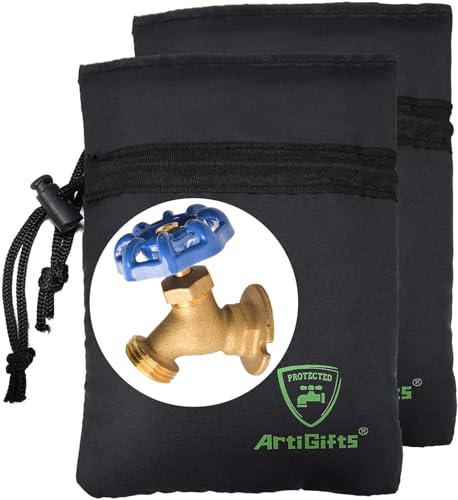
ArtiGifts Pro Outdoor Faucet Cover Socks for Winter Freeze Protection (Set of 2)

Hometopia 2-Pack Outdoor Faucet Covers for Winter Freeze Protection (Blue)

GBQA Self-Draining Vacuum Breaker, Lead-Free Brass Anti-Siphon Backflow Preventer

GBQA 3/4″ Brass Vacuum Breaker, Backflow Preventer for Garden Hoses and Faucets

GBQA Atmospheric Vacuum Breaker, 1/2″ Brass Chrome-Plated Anti-Siphon Valve

GBQA 3/4″ Brass Vacuum Breaker, Backflow Preventer for Hoses, Faucets, RVs (Pack of 2)

GBQA Self-Draining Vacuum Breaker, Chrome-Plated Lead-Free Brass Anti-Siphon Valve
GBQA 3/4″ Atmospheric Vacuum Breaker, Chrome-Plated Brass Anti-Siphon Valve

GBQA ASSE 1019-A Vacuum Breaker Repair Kit for Outdoor Frost-Free Faucets (2 Pack)
More Details On Our Top Picks
A frost-free sillcock, sometimes called a frost-proof hose bib, is the most thorough answer to winter pipe damage because it relocates the actual shutoff valve deep inside your heated wall cavity. Instead of sealing water at the exterior handle, the working mechanism sits 8 to 12 inches back where the air stays warm. When you close the handle outside, a long stem pushes water back into the heated zone and lets gravity drain the exterior portion.
GBQA’s lead-free brass sillcock comes in a 10-inch stem length with a built-in anti-siphon vacuum breaker that blocks contaminated water from being siphoned back into your potable supply. The Crimp PEX inlet matches the PEX-A Expansion, MIP Thread, and Push Fit variants the same brand offers, which makes picking the right connection for your existing plumbing easier. For homeowners tired of seasonal cover-ups and ready to commit to a permanent swap, this is the more durable route.
What Makes Sense
- The 10-inch stem reaches well past the exterior wall sheathing and into the heated envelope of a standard home, so the working valve stays above freezing in most climates.
- Lead-free brass resists dezincification and corrosion, the two failure modes that shorten the lifespan of outdoor plumbing.
- Anti-siphon vacuum breaker built into the body removes the need to buy and attach a separate backflow device at the spout.
- Four connection options across the GBQA line (Crimp PEX, PEX-A Expansion, MIP Thread, Push Fit) cover nearly every residential supply line currently installed.
Things To Consider
- Installation requires opening the interior wall, cutting the supply line, and soldering or crimping a transition fitting, so most homeowners hire a plumber.
- A 10-inch stem is correct for a standard 2×4 wall with siding, but homes with brick, stone veneer, or deep foam insulation may need a longer or shorter stem.
Key Product Details
Who It Suits Best
Homeowners replacing a chronically frozen or leaking spigot during a remodel or repipe who want a permanent, plumbing-grade fix rather than a seasonal workaround.
Look Elsewhere When
Renters or anyone unable to open a wall should reach for the ArtiGifts Pro Outdoor Faucet Cover Socks instead, which deliver protection without touching the supply line.
Insulated faucet socks are the lazy Saturday answer to winter prep: slide one on, cinch the strap, walk away. They work by wrapping the spigot in layered fabric, typically a waterproof outer shell around a thick insulating fill, which keeps radiant heat loss down and blocks wind chill from stripping what little warmth remains.
ArtiGifts’ set arrives as a pair for under a typical single-pack price, with each cover measuring 5.9″ wide by 7.7″ tall and 1.4″ thick. That’s enough room for a standard residential hose bib with a hose still attached, which matters because disconnected, drained faucets freeze far less often than ones that still have a hose holding water against the valve. For most backyards in zone 6 or warmer, this is genuinely sufficient.
Reasons It Performs
- Heavyweight polyester pongee outer shell sheds freezing rain and wet snow without soaking through to the insulation.
- PP-insulated cotton fill holds a useful thermal barrier around the metal spigot and valve stem.
- Two-pack pricing covers front and back faucets for the cost most single covers charge.
- Universal 5.9″ x 7.7″ footprint fits the standard residential hose bib without forcing you to remove the hose first.
Trade Offs
- Fabric covers only buy a few degrees of protection; in zones 4 and colder, a hard-shell foam cover or a frost-free sillcock is the safer call.
- Outer fabric can fade or stiffen after two or three seasons of UV exposure, which owners in sunny climates commonly report.
Right Fit For
Homeowners in mild-to-moderate climates who want a fast, no-tools way to protect standard exterior spigots through a normal winter.
Reach For A Different Pick When
You have a non-standard oversized spigot or live in a region with sustained sub-zero temperatures, in which case the Hometopia 2-Pack Outdoor Faucet Covers offer a taller cut and more clearance.
Where ArtiGfits’ sock fits a tight residential bib, Hometopia’s version steps up to a 6.7″ by 8.3″ footprint that swallows chunkier fixtures. That extra inch matters more than it sounds: anti-siphon vacuum breakers, lever-style handles, and yard hydrants with integral check valves often refuse to slip into smaller covers. Hometopia’s cut is generous enough to dress them all.
The cover uses a hook-and-loop strap plus a draw cord to lock itself around the faucet, so install takes about ten seconds even with gloves on. It’s also reusable across seasons, which softens the per-year cost if you treat it like part of your fall routine.
What Pays Off
- Wider 6.7″ x 8.3″ interior accepts anti-siphon attachments, lever handles, and hydrant-style faucets that fight smaller covers.
- Slide-on design with hook-and-loop strap and cord means no tools, no screws, and no fuss at dusk in the cold.
- Reusable construction stores flat between seasons and holds up across multiple winters with reasonable care.
- Two-pack format covers a primary and a secondary spigot without leaving you short.
Points To Note
- Bulkier fit means more wind catch on exposed walls, so the strap really does need to be cinched tight or the cover can ride up.
- Hook-and-loop closures collect lint and pet hair over time, which can weaken grip if you never clean them.
Made For
Households with non-standard or accessory-heavy spigots who keep tripping over the limited clearance of standard-size covers.
Skip It When
Your setup is a basic residential bib and you’d rather save money; the ArtiGifts Pro Outdoor Faucet Cover Socks cover that profile for less.
A vacuum breaker is the small brass cylinder screwed onto the spout of a hose bib that prevents backflow. Backflow is what happens when a hose sitting in a puddle suddenly pulls contaminated water backward into your household supply if pressure drops inside the home. Required by code in most jurisdictions, often skipped in older homes, and absolutely worth retrofitting if yours is missing.
GBQA’s self-draining version adds a clever twist: when you shut off the faucet, the breaker automatically empties any water trapped inside the unit, which is exactly the water that would otherwise freeze and crack the body. The lead-free brass is nickel-plated for corrosion resistance, and the 3/4″ GHT (Garden Hose Thread) outlet threads onto any standard hose bib or frost-free hydrant.
Standout Benefits
- Self-draining action clears residual water from the body the moment the faucet closes, eliminating the freeze-and-crack cycle.
- Lead-free brass body meets current drinking water contact standards, which matters if you ever drink from a hose.
- 3/4″ GHT outlet matches the universal hose thread used on virtually every U.S. residential hose bib.
- Anti-siphon check stops fertilizer, soap, or stagnant hose water from being pulled back into your home supply.
Worth Bearing In Mind
- Self-draining breakers must be installed upright; sideways mounting breaks the drain path and can leave water pooled inside.
- Like all vacuum breakers, the internal seal wears out every few years and may need replacement rather than the whole unit.
Who Will Love This
Homeowners who already have a frost-free sillcock but want to upgrade the spout protection to one that clears its own water between uses.
A Better Fit Elsewhere
Anyone hunting a purely cosmetic chrome upgrade at the spigot should look at the GBQA Self-Draining Vacuum Breaker in chrome, which offers the same function with a shinier finish.
Sometimes you just need a hose-bib vacuum breaker that does its job, fits a standard spout, and doesn’t require a parts drawer to install. GBQA’s basic 3/4″ brass breaker is exactly that: a heavy-duty, corrosion-resistant brass body that handles up to 180°F water and 125 psi working pressure, with a break-off screw for permanent attachment so it can’t wander off.
It’s listed to meet ASSE 1011, CSA B64.2, and ANSI/NSF 61-9 safety standards, which is the alphabet soup inspectors and code officers look for. Compatible with most standard hoses and outdoor faucets, it’s a straightforward retrofit for any hose spigot that’s currently unprotected.
Positive Takeaways
- Heavy-duty brass body stands up to years of UV, rain, and temperature cycling without cracking.
- Break-off screw gives a tamper-resistant permanent install that meets code in places that require it.
- Standard 3/4″ GHT threads onto any residential hose bib, frost-free hydrant, or RV water connection.
- Pressure rating to 125 psi covers virtually any residential water supply without complaint.
Room For Improvement
- Does not self-drain, so a small amount of water stays in the body between uses and can freeze in severe cold.
- Single-unit pack means buying a second breaker for a second spigot doubles the cost.
Best Suited To
Homeowners and RV owners who want a code-compliant vacuum breaker on a single spigot without paying for self-draining features they may not need.
Consider Something Else When
You want to cover two spigots at once and prefer the multi-pack value of GBQA’s 2-pack variant, which is the same breaker bundled together.
Atmospheric vacuum breakers are a slightly older style of anti-siphon valve that uses an air gap rather than a self-draining chamber. They must be installed vertically with at least six inches of clearance above the highest downstream outlet, which is a non-negotiable spacing rule for inspectors but a real constraint on cramped hookups.
GBQA’s 1/2″ version is the chrome-plated sibling of the basic brass breaker. The chrome finish resists corrosion and matches the trim of modern outdoor kitchens, hose reels, and visible irrigation manifolds where appearance actually matters. Female NPT threads drop directly into a 1/2″ irrigation line or a hose-bib adapter without extra fittings.
The Case For It
- Chrome plating over brass gives a polished finish that blends into visible outdoor plumbing instead of looking like a utilitarian afterthought.
- Female NPT thread drops into standard 1/2″ irrigation manifolds and hose bibs without adapter hunting.
- Handles up to 125 psi working pressure for typical residential supply lines.
- Heavy-duty brass body underneath the chrome resists dezincification and the green oxidation common on cheaper pot-metal fittings.
Honest Caveats
- Atmospheric breakers cannot be installed under constant pressure; they only work on valves that open and close between uses.
- Vertical-only orientation plus the 6″ clearance rule makes them impractical for tight hose reels or wall-mounted manifolds.
Perfect Match For
Visible front-of-house spigots and irrigation hookups where finish quality matters as much as function.
Where Another Pick Suits Better
Anyone needing a 3/4″ hose thread should pick the GBQA 3/4″ Brass Vacuum Breaker, which shares the spec sheet but matches standard hose bibs.
The two-pack version of GBQA’s standard 3/4″ brass vacuum breaker is the same spec sheet as the single unit: 180°F temperature handling, 125 psi pressure rating, ASSE 1011, CSA B64.2, and ANSI/NSF 61-9 compliance. The difference is purely quantity, and that’s exactly what makes it interesting.
For households with two or more hose bibs, the bundled version is meaningfully cheaper per unit and removes the “do I really need to do the back one too” hesitation that leaves half a home unprotected. RV owners running two freshwater hookups or gardeners splitting a yard into two irrigation zones get the same logic.
Strong Points
- Two-pack pricing cuts the per-breaker cost noticeably versus buying singles.
- Same ASSE 1011, CSA B64.2, and ANSI/NSF 61-9 certifications as the single-pack version, so code compliance stays intact.
- Break-off screw works on both units for tamper-resistant permanent installation.
- Compatible with hoses, faucets, and RVs, which keeps inventory simpler for mixed-use properties.
Small Caveats
- Single-pack is the better value if you only have one hose bib to outfit.
- Like the single unit, neither valve self-drains, so internal water can freeze in extreme cold.
Who Should Grab It
Property owners with multiple outdoor faucets, RV travelers managing two freshwater hookups, or anyone wanting a spare on hand before a failure.
Not Your Match When
You only have one hose bib and want self-draining behavior; the GBQA Self-Draining Vacuum Breaker solves both problems with one valve.
Functionally identical to GBQA’s standard self-draining vacuum breaker, this chrome-plated variant exists for the same reason people pick chrome bathroom faucets over chrome-painted ones: the finish wears better, looks sharper, and stands up to UV without fading to dull gray in two summers. It’s the same automatic self-draining chamber, the same lead-free brass body, the same 3/4″ GHT outlet.
The chrome adds essentially no cost in functionality but does wonders for curb appeal on front-yard hose bibs, decorative hose reels, and outdoor-kitchen prep sinks. Worth knowing that the plating can scratch if you twist the unit with pliers during install, so hand-tightening only.
Points In Its Favor
- Self-draining chamber clears residual water when the faucet closes, removing the freeze-and-crack cycle.
- Chrome-plated finish maintains its look across seasons of UV and rain better than painted or unfinished brass.
- Lead-free brass body complies with drinking water safety standards for outdoor hose use.
- 3/4″ GHT outlet drops onto any standard residential hose bib without adapters.
Practical Considerations
- Chrome plating can scratch during wrench installation, so hand-tighten only and use a strap wrench if leverage is needed.
- Must be installed upright to keep the self-draining path clear, which limits placement on horizontal hose reel arms.
Built With In Mind
Homeowners with visible front-yard or patio spigots who care about both freeze protection and a finish that complements their home exterior.
Swap It Out When
You need anti-siphon protection on a hidden side-yard hose bib where finish doesn’t matter; the plain-brass GBQA Self-Draining Vacuum Breaker handles that job for less.
For irrigation systems, sprinkler manifolds, and drip-line headers, the 3/4″ atmospheric vacuum breaker is the size you’ll most often see specified. It’s the same chrome-plated brass construction as the 1/2″ model, just scaled up to the larger female NPT thread that matches standard sprinkler valves and main irrigation feeds.
The trade-offs of atmospheric design apply again: must be installed vertically, requires six inches of clearance above the highest downstream outlet, and can’t sit under constant pressure. For a properly designed irrigation system that opens and closes zones rather than running constantly, none of those rules are deal-breakers.
Notable Gains
- 3/4″ female NPT drops directly into standard sprinkler manifolds and irrigation headers without reducer fittings.
- Chrome plating over heavy-duty brass resists corrosion through seasons of wet, fertilized soil contact.
- Pressure rating to 125 psi handles irrigation pumps and elevated supply pressures without leaking.
- Atmospheric design is widely accepted by irrigation inspectors as a code-compliant backflow device.
Less-Strong Areas
- Vertical-only orientation plus the 6″ clearance rule can force awkward manifold placement in tight valve boxes.
- Not suitable for continuous-pressure applications like a constantly primed drip line.
Whose Shelf It Belongs On
Homeowners running a multi-zone sprinkler or drip irrigation system who need a code-compliant backflow preventer at the irrigation main.
Another Choice May Suit
A simple garden hose setup is better served by GBQA’s standard 3/4″ brass vacuum breaker, which threads directly onto a hose bib without NPT adapters.
Not every freeze protection problem requires a new fixture. If your frost-free sillcock or hose bib has started dripping continuously from the spout even when the handle is fully closed, the culprit is almost always a worn vacuum breaker seal, and replacing the seal is a five-minute job that costs a fraction of a new faucet.
GBQA’s ASSE 1019-A repair kit is built specifically for frost-free outdoor faucets and arrives as a two-pack, so you fix the leak now and keep a spare for the next service. ABS plastic body and quality rubber seals hold up to the same conditions that destroy a stock breaker, and the design is intended to keep the frost-free faucet in service far longer than its original seals would.
Useful Highlights
- Two-pack format covers the current leak and the next one without a second order.
- ASSE 1019-A certification keeps the repair compliant with U.S. plumbing codes after installation.
- ABS plastic body resists the corrosion that destroys lower-grade plastic repair parts.
- Designed specifically for outdoor frost-free faucets, so the dimensions match common sillcock breakers.
Soft Spots
- Repair kit only addresses the vacuum breaker portion of the faucet, not the stem or packing nut, which are separate wear points.
- Not a substitute for a cracked or split sillcock body; if the brass itself has failed, a full replacement is the only fix.
Right Fit For
Homeowners with an older frost-free sillcock that’s started dripping from the spout despite a fully closed handle.
Where Another Pick Suits Better
Anyone buying a brand-new frost-free faucet should start with the GBQA Frost Free Sillcock, which ships with a working vacuum breaker already installed.
What To Weigh Before Choosing Freeze Proof Outdoor Faucets
A “freeze proof” claim covers a wider range of products than most shoppers expect, and the right answer depends on three questions: how cold your winters actually get, how much wall access you have for plumbing work, and whether your existing spigot is already a frost-free design or a standard hose bib that bleeds heat through the exterior wall.
In mild climates, an insulated cover over a standard hose bib is genuinely sufficient. The ArtiGifts and Hometopia covers wrap the metal in enough thermal mass to ride out a typical zone 7 winter without trouble, and they install in seconds without tools. In zone 5 and colder, covers alone become wishful thinking: extended sub-zero stretches will eventually chill the water column behind the valve to freezing, and the wall behind it can frost too. A frost-free sillcock like GBQA’s 10-inch stem model relocates the working valve deep inside the heated envelope, which is the only reliable answer for cold climates.
Vacuum breakers are the third leg of the stool. Backflow prevention is required by code in most jurisdictions, and a frost-free faucet without a working vacuum breaker is technically non-compliant. The self-draining versions add a layer of protection by clearing residual water between uses, which matters in cold weather because standing water inside a brass body is exactly what expands and cracks it. RVs and homes with irrigation systems have specific thread sizes (3/4″ GHT versus 1/2″ or 3/4″ NPT) that must match the existing plumbing, so check the outlet before ordering.
Stem length and wall depth
A frost-free sillcock’s stem must reach far enough back into the heated wall that the working valve sits in conditioned air. For a standard 2×4 wall with siding, an 8-inch stem is borderline, a 10-inch stem is comfortable, and a 12-inch stem covers deep walls or thick foam insulation. Mismatch in either direction causes problems: too short and the valve still sits in the cold; too long and you have to rework the supply line inside.
Cover size versus fixture bulk
Fabric covers fit standard residential hose bibs but often refuse to slide over anti-siphon attachments, lever handles, or yard hydrants with integral check valves. Measure the widest point of your faucet, including any protruding hardware, before ordering. The Hometopia cover’s larger 6.7″ x 8.3″ cut exists specifically for fixtures that the standard size can’t swallow.
Vacuum breaker type and orientation
Atmospheric vacuum breakers must be installed vertically with 6″ clearance above the highest outlet, while self-draining pressure vacuum breakers work in any orientation as long as the drain port faces down. Continuous-pressure applications like drip irrigation need a different device entirely. Match the breaker type to the use case, not just the thread size.
Smart Buying Notes Across These Picks
Where Shoppers Go Wrong
The single most common mistake is buying a frost-free sillcock without checking the wall depth first. A 10-inch stem that bottoms out against an interior stud or sits in unconditioned attic air defeats the entire purpose. Measure from the exterior wall surface inward to the nearest cold zone, then pick the stem length that places the valve seat firmly in heated space. Equally common is forgetting that an old hose bib needs the supply line opened up to accept a frost-free swap, which often turns a $40 part into a $300 plumber visit.
Where The Extra Money Goes
Higher-tier picks earn their cost in three places: material (lead-free brass versus pot-metal zinc), drain behavior (self-draining chambers versus static reservoirs), and certifications (ASSE 1011, 1019-A, ANSI/NSF 61-9 listings that inspectors actually look for). A self-draining breaker is worth the upgrade in cold climates because it eliminates the failure mode that cracks standard breakers. Chrome plating adds nothing functional but matters on visible front-yard spigots where plain brass reads as an afterthought. Two-packs save real money only when you genuinely have two spigots to outfit; otherwise they’re inventory you’ll never open.
Frequently Asked Questions
Do freeze proof outdoor faucets really work?
Yes, but only when the working valve seats inside the heated envelope of the wall. A frost-free sillcock with a 10-inch stem keeps the actual shutoff about 8 to 12 inches back from the exterior handle, where the air stays warm enough that the water column never freezes solid. The exterior spout still drains on its own when the handle closes, so no water sits in the vulnerable section.
Should I cover my frost-free faucet in winter?
It helps but isn’t strictly required in most climates. A frost-free sillcock is engineered to drain itself between uses, which is what prevents freezing. Adding an insulated cover reduces wind chill and cuts heat loss through the spout body, which is useful insurance in zones 4 and colder, especially for faucets mounted on the windward side of the house.
What is a vacuum breaker and do I need one?
A vacuum breaker is a small valve screwed onto the spout that prevents hose water from being siphoned back into your household supply if pressure drops. It’s required by plumbing code in most U.S. jurisdictions for any hose bib, and it’s especially important if you ever drink from a hose, fill a pool from the tap, or run fertilizer through a sprayer attached to the spigot.
Can I install a frost-free sillcock myself?
It depends on your comfort with basic plumbing. The exterior side is a straightforward swap with PEX or MIP connections, but the interior side requires opening the wall, cutting the supply line, and adding a transition fitting. Homeowners with solder or crimp experience can usually handle it; everyone else should plan on a plumber’s visit.
How long do vacuum breakers last?
Most residential vacuum breakers last three to five years before the internal seal hardens and starts to drip. Replacement is usually cheaper than swapping the whole unit, and ASSE 1019-A repair kits exist specifically for that purpose. Once a breaker drips continuously from the spout even with the faucet closed, the seal has failed and replacement is overdue.
Bottom Line
The right freeze protection depends on where you live, what your wall looks like on the inside, and how much work you want to do. Cold-climate homeowners planning a real remodel should start with a frost-free sillcock and add a self-draining vacuum breaker at the spout. Everyone else can ride out winter with an insulated cover over the existing bib, then upgrade the hardware when the timing is right.
