

Adding a half bath below grade used to mean jackhammering concrete to run a new drain line. A modern ejector pump skips all of that, lifting wastewater uphill to your main stack so a basement powder room, wet bar, or laundry room becomes a weekend project instead of a full renovation. The trick is matching the pump’s horsepower, head height, and inlet layout to the fixtures you actually plan to run. This list rounds up nine solid options worth a closer look, from compact macerating units sized for a single toilet to cast iron submersible workhorses built for whole-bathroom duty.
The Essentials At A Glance

MixBubole 1.2HP Macerator Pump Toilet System

Patio Zone 750W Macerator Pump 36ft Lift

LEO 1/2 HP Submersible Sewage Pump

Superior Pump 93020 1/2 HP Cast Iron

Liberty Pumps P382LE51 Pro380 Simplex System
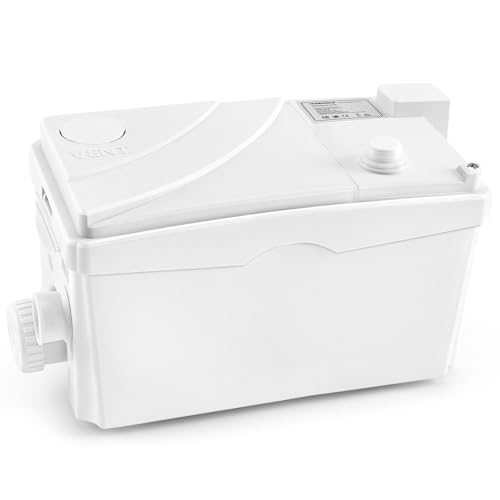
MixBubole 500W Utility Sink Pump Upflush 23FT

MixBubole 1 HP Utility Sink Pump Upflush 36FT

MixBubole 600W Utility Sink Pump Upflush 25FT
MixBubole 1200W Macerator Pump 39.4FT Head
The Strengths Of Each Pick
The MixBubole macerating unit is built around a 1.2 HP motor that pushes wastewater up to 32.8 vertical feet, which covers most residential basement-to-stack distances without straining. Four water inlets and a single discharge give you room to plumb a toilet, a sink, a shower, and a laundry basin into one compact box tucked behind the wall.
For households finishing a basement rec room into a guest suite, this pump takes the place of a traditional sewage ejector basin, since the macerator grinds solids before sending them on their way. You trade a buried pit for a wall-hung module, and the install footprint stays small enough for tight mechanical rooms.
Practical Pluses
- Four inlet ports mean one pump can serve a toilet plus three additional fixtures, useful when you want a half bath that also handles a utility sink
- Up to 32.8 ft of vertical lift handles two-story basements where the main stack sits well above floor level
- PCB-based control improves how the unit starts and stops during each flush cycle
- Solid 1.2 HP motor output handles heavier residential solids without bogging down
Things To Consider
- Macerating pumps in general are louder than gravity-fed plumbing during the grinding cycle
- Annual descaling helps keep the grinding chamber from clogging in hard-water regions
Who It Suits Best
This pump makes sense for homeowners finishing a full basement bathroom where a single macerating unit needs to feed a toilet, sink, and shower up to the main stack.
Consider Something Else When
Choose the LEO 1/2 HP Submersible Sewage Pump instead when you already have a sump pit and want a traditional submersible basin setup.
The Patio Zone upgrade pairs a 750W copper-wound motor with a stainless steel housing aimed at cutting down on corrosion in damp mechanical spaces. A 36-foot vertical rating gives it more lift than many macerating units in this bracket, and the horizontal reach stretches past 300 feet for long pipe runs to a remote stack.
For older homes where the only viable drain path is a long horizontal chase to a utility room, this model earns its keep by reducing the head loss that throttles smaller pumps. The stainless shell also resists the rust bloom that shows up on stamped steel housings after a few humid summers.
Key Advantages
- Copper motor windings handle heat better than aluminum, which matters during back-to-back flush cycles
- Non-clog stainless shell design keeps stringy debris from snagging inside the pump chamber
- 36 ft vertical lift plus a 360 ft horizontal ceiling handles unusually long plumbing runs
- Solid build quality for owners who prefer a heavier-feeling component in a basement utility closet
Worth Noting
- Stainless construction adds weight, so mounting needs solid backing rather than a simple drywall bracket
- Higher lift ratings assume a clean discharge pipe with minimal elbows
Made For
Homeowners retrofitting a basement bath in an older home with a long horizontal run to the main drain stack.
Look Elsewhere When
The MixBubole 1200W Macerator Pump is a better match when you need the highest head rating and the deepest basement layout in this roundup.
LEO’s 1/2 HP submersible is the kind of workhorse you drop into a pre-cast sewage basin and forget about. Cast iron housing absorbs vibration and shrugs off the kind of accidental drops that happen during service. A 6000 GPH rating puts it in the high-volume category for residential pits.
Compared with the macerating units earlier in this list, the LEO takes a different approach: it lives inside a basin, lets gravity collect the waste, then pumps uphill only when the float switch tells it to. That setup suits basements where a builder already poured a sump pit and you want a traditional sewage ejector layout.
Where It Delivers
- 6000 GPH throughput handles heavy fixture loads during peak morning use
- 29 ft maximum head covers most residential basement depths without choking
- Oil-filled split capacitor motor stays cooler than air-cooled alternatives during long pump cycles
- Cast iron body tolerates years of submerged service in mineral-rich water
Trade Offs
- Requires a separate basin and plumbing rough-in, so retrofit cost climbs quickly
- 1/2 HP motor falls behind the 1.2 HP MixBubole for extreme vertical lifts
Key Product Details
Right Fit For
Property owners with an existing sump pit who want a traditional submersible setup over a macerating wall unit.
A Better Fit Elsewhere
Choose the Superior Pump 93020 instead when copper motor windings and a tethered float switch matter more than peak flow.
The Superior Pump 93020 leans on quality internal components, including solid copper motor windings and double O-ring seals at the motor plate, that tend to outlast cheaper stamped assemblies. A tethered vertical float switch gives the installer freedom to adjust the on/off trip points without disassembling the housing.
For homeowners who treat a basement bathroom as a long-term fixture rather than a quick flip, this model fits a service-first mindset. Parts like the stainless steel jacketed shaft seal are designed for the kind of continuous submersion that happens when a sewage basin sits idle for years between cycles.
Real Benefits
- Copper windings resist heat damage better than aluminum alternatives during hot summer runs
- Double O-ring seals reduce the chance of slow leaks at the motor plate
- Tethered float switch lets you dial in the activation height to match your basin depth
- 2-inch solids handling passes typical residential wastewater without screening
Points To Note
- Requires a separate basin and cover purchase for a complete install
- Replacement parts can take longer to source than off-the-shelf consumer units
Feature Snapshot
Best Suited To
Homeowners planning a permanent basement install where a quality submersible pump with replaceable wear parts matters more than upfront cost.
Skip It When
Pick the Liberty Pumps P382LE51 instead when you want a fully pre-assembled simplex system in a single basin rather than separate component sourcing.
The Liberty Pumps P382LE51 is sold as a complete simplex package, meaning the basin, cover, pump, and check valve arrive together rather than as separate purchases. A 24-inch shallow design simplifies burial in tighter excavations, and the 41-gallon capacity swallows a full bath’s worth of drainage before the float switch trips.
For contractors and ambitious DIYers, this all-in-one approach cuts a long rough-in day down to a few hours. The anti-flotation collar keeps the empty basin from floating up out of the excavation during a high water table, which is a real risk in spring rainy regions.
What Earns Its Place
- Pre-assembled basin and pump eliminate the guesswork of matching components from different brands
- 24-inch shallow profile fits installations where deep excavation is impractical
- 41-gallon working capacity handles whole-bathroom flush cycles without rapid cycling
- Anti-flotation collar anchors the basin against high groundwater pressure
Honest Caveats
- Larger basin footprint demands more floor space or a deeper excavation than compact macerating units
- System-level pricing sits above individual pump purchases
Quick Facts
Who Should Grab It
Contractors and serious DIYers who want a complete, code-ready sewage system rather than a piecemeal pump-and-basin build.
Another Choice May Suit
Choose the MixBubole 1.2HP Macerator Pump instead when a small wall-mounted footprint matters more than a traditional buried basin.
The MixBubole 500W utility pump is sized for the lightest end of the basement retrofit spectrum, ideal for an under-sink installation that just needs to clear grey water from a bar sink or single laundry basin. The 23-foot vertical lift covers shallow basement depths where the main stack sits just one floor up.
Compared with the full-flush macerating units earlier, this one is positioned as a small-footprint helper for properties that need a quick grey water solution without committing to a full bathroom. It pulls only 500W, so it plays nicely with a standard 15-amp household circuit.
Reasons It Performs
- Three water inlets handle a sink plus two auxiliary fixtures like a wash bin or bar tap
- Compact 12-inch-deep housing fits shallow under-basin cabinets where depth is tight
- Lower 500W draw fits existing 15-amp circuits without a panel upgrade
- 1600 GPH throughput handles steady grey water flow from a laundry or bar sink
A Few Limitations
- 23 ft vertical head is the lowest in the lineup, so deep basements are out of reach
- Utility category limits it to grey water rather than full toilet solids
Whose Shelf It Belongs On
Apartment owners and basement bar builders who want a quiet, low-power grey water pump rather than a full sewage solution.
Reach For A Different Pick When
The MixBubole 1.2HP Macerator Pump fits better when you need toilet-grinding capability in addition to grey water handling.
The 1 HP step up from MixBubole’s 500W model triples the head rating to 36 vertical feet and pushes flow to 2200 GPH. Three water inlets let you connect a sink plus two more fixtures, making this a versatile under-sink upgrade for basements with deeper footprints than the 500W unit can reach.
For homeowners with a mid-depth basement that needs more than a basic grey water pump but does not require a full macerating toilet system, this fills the middle ground. The 800W rating still runs on a standard 110V to 120V household outlet without rewiring.
Noteworthy Benefits
- 36 ft vertical head handles mid-depth basements where the basic 500W model runs out of lift
- 2200 GPH throughput supports steady grey water from a busy utility sink
- PCB function keeps start and stop cycles consistent across long service life
- Three inlets and one outlet match a typical wet bar plus laundry corner
Smaller Caveats
- Utility category still excludes toilet solids, so a full bath needs a different pump
- Higher wattage draws more current than the 500W sibling during peak cycles
Perfect Match For
Homeowners upgrading a basic grey water pump to handle a deeper basement layout with multiple fixtures on one outlet.
Swap It Out When
The MixBubole 1200W Macerator Pump is the better choice when the install requires a true macerator for toilet waste rather than grey water only.
MixBubole’s 600W sink pump slots neatly between the 500W and 1 HP siblings, lifting 25 vertical feet at 1700 GPH while keeping the housing compact enough to disappear under a standard bar sink. The upgraded switch and internal structure aim at better sealing, which matters in tight under-basin cabinets where moisture control is already a chore.
For basement wet bars and small kitchenettes where every cubic inch counts, this pump’s footprint stays out of the way. ETL and UL certifications also help in jurisdictions where inspectors look for third-party listings on electrical equipment.
The Helpful Details
- Compact 12 by 7 by 7 inch dimensions fit shallow under-basin cabinets without major modifications
- ETL, UL, and FCC listings simplify approval with local inspectors
- Upgraded switch design improves sealing and reduces failure rates during long service life
- Three 40mm universal inlets accept standard sink drain sizes
Things To Weigh Up
- Limited to grey water service rather than full sewage grinding
- 25 ft head falls short of the 1 HP model’s 36 ft reach
Built With In Mind
Basement wet bar owners and small kitchenette remodels where a shallow under-sink footprint matters more than maximum vertical lift.
Not Your Match When
Pick the MixBubole 1.2HP Macerator Pump when your basement bathroom needs a true macerator that handles toilet solids.
MixBubole’s 1200W top-of-line macerator posts the highest vertical lift in this roundup at 39.4 feet, paired with a 2800 GPH flow rate and four water inlets plus two outlets. For deep basements where the main stack sits well above grade, that extra head prevents the flow-starved surges that plague smaller pumps on long vertical runs.
Compared with the 1.2 HP MixBubole unit reviewed earlier, this model pushes the inlet count higher and adds a second outlet for splitting the discharge into multiple fixtures. It also spins at 5000 RPM, which speeds up the grinding cycle for households that flush often.
Notable Gains
- 39.4 ft vertical head covers deep basement remodels where most macerators stall out
- 2800 GPH flow rate keeps up with rapid back-to-back flush cycles
- Four water inlets and two outlets handle the most fixture combinations in the MixBubole line
- 5000 RPM grinding chamber clears solids quickly to reduce the chance of backflow
Potential Compromises
- Higher wattage draws more power than mid-range models, so circuit load planning matters
- Larger overall housing footprint than smaller macerating units
Feature Rundown
Who Will Love This
Homeowners tackling a deep basement remodel where the head rating of smaller macerators would leave the system flow-starved.
Where A Sibling Pick Shines
Choose the MixBubole 1.2HP Macerator Pump instead when the install fits within a 32.8 ft lift and you do not need the extra head or outlets.
Picking The Right Ejector Pump For Your Layout
Head Height And Flow Rate Basics
Head height is the vertical distance the pump must push wastewater, measured from the pump inlet to where the discharge line meets the main stack. Flow rate, measured in gallons per hour, decides how fast the pump clears a flush cycle. A shallow basement powder room with a single toilet and sink gets by on a 23 to 25 ft head and modest flow, while a deep basement full bath with a shower calls for 30+ ft of vertical lift and higher GPH.
Solids Handling And Macerating Versus Submersible
Macerating pumps grind solids into slurry before pumping, which lets them sit behind a wall without a basin. Submersible pumps live inside a buried sewage basin and rely on gravity to collect waste, then push it uphill when the float switch triggers. Macerating units win on install footprint and retrofit ease, while submersible systems tend to last longer under continuous submersion.
Inlet Count And Electrical Circuit
Count the fixtures you plan to connect before choosing a pump. A toilet plus sink needs at least two inlets, and adding a shower or laundry basin bumps the count to three or four. Wattage matters too, since most macerating pumps run on a standard 110V to 120V outlet, but higher horsepower units draw more amps and may need a dedicated circuit.
Key Considerations Across These Picks
Mistakes Worth Dodging
Undersizing the head rating is the most common slip up, and it shows up as slow drains and pump cycling that never quite finishes a flush. Measure the vertical run from the planned pump location to the main stack, then add a margin for elbows and horizontal friction loss. Forgetting inlet ports is another quiet trap, since adding a shower after install often means buying a second pump or re-plumbing the first.
Where The Extra Money Goes
Premium models in this category tend to spend the budget on stainless housings, copper motor windings, and improved sealing at the motor plate. Those upgrades buy longer service life in damp basement conditions and reduce the chance of slow leaks that ruin pump windings over time. For a guest bath used twice a month, the entry-level MixBubole units handle the workload fine, but a primary residence basement bath used daily benefits from the heavier-duty Superior Pump or Liberty Pumps builds.
Frequently Asked Questions
What is the difference between an ejector pump and a sump pump?
An ejector pump handles sewage from toilets and other plumbing fixtures, while a sump pump clears groundwater that collects in a basement sump pit. Ejector pumps must pass or grind solids, while sump pumps only move water.
Do macerating pumps smell bad?
Modern macerating units with proper sealing rarely produce odors, especially when the discharge line includes a check valve and the unit is installed in a ventilated area. Annual descaling helps keep the grinding chamber clean.
Can one ejector pump handle a full basement bathroom?
Yes, a pump rated for 30+ feet of vertical lift with multiple water inlets can service a toilet, sink, and shower from a single unit. Higher horsepower models like the MixBubole 1200W unit are designed for this workload.
How long do ejector pumps typically last?
Submersible cast iron models tend to last 10 to 15 years with basic maintenance, while macerating units generally last 8 to 12 years depending on use frequency and water hardness.
Do I need a separate circuit for an ejector pump?
Most macerating pumps under 1000W run on a standard 15-amp household circuit, but higher horsepower units above 1000W often benefit from a dedicated circuit to avoid nuisance breaker trips during heavy use.
The Takeaway
Your basement layout, fixture count, and vertical distance to the main stack decide which pump earns a spot in your project. Shallow retrofits with a single sink point to the compact MixBubole 500W or 600W models, mid-depth full baths favor the 1 HP or 1.2 HP options, and the deepest installs benefit from the 1200W top-tier unit. For traditional basin setups, the LEO, Superior Pump, and Liberty Pumps picks cover a range of service-life priorities.
