

Choosing a black front door sounds simple until you’re staring at seven nearly identical listings, each promising the same classic look. Fiberglass construction, left-hand inswing, decorative glass, blah blah. The differences show up in the details: glass size, woodgrain texture, whether the core is reinforced, and how well the finish holds up to a few winters of real weather. This guide walks through seven solid options, most of them black but a couple of close cousins in gray and grayish brown, so you can match the door to your house, your climate, and the kind of curb appeal you want without second-guessing the purchase.
Your Options, Compared

Fefunivita Black Fiberglass Door, Oval Glass

Fefunivita White Fiberglass Door, Oval Glass

Fefunivita Black Door with 22″ Decorative Glass

Fefunivita Fiber-Reinforced Panel Door

Fefunivita Black Door with Wrought Iron Glass

Fefunivita Light Gray 4-Lite Entry Door
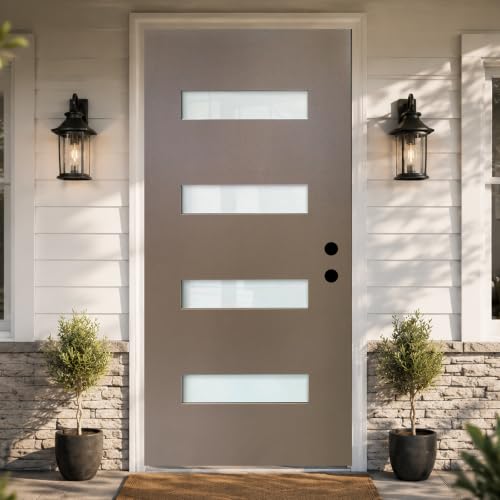
Fefunivita Light Grayish Brown Entry Door
Inside Each Recommended Option
The 36″x80″ black fiberglass front door with oval glass opens up the typical entryway in a way few solid-panel doors manage. Triple-layer textured glass softens the incoming sunlight while keeping the inside of the foyer reasonably private, so you get curb appeal without turning your living room into a fishbowl.
For homeowners replacing a dated builder-grade slab, the fiberglass skin handles seasonal swings better than wood in most climates, and the oval centerpiece reads as classic rather than trendy. Compared to the white oval-glass version later in this list, the black finish anchors the facade and pairs well with brick, lap siding, or stone veneer.
Real-World Strengths
- Classic oval glass with a star-inspired textured pattern that softens daylight without sacrificing privacy
- Fiberglass skin resists warping, swelling, and surface cracking through humid summers and cold winters
- Pairs naturally with traditional and transitional facades, from colonial to craftsman
- Requires far less refinishing than a true wood door, a real plus for busy households
- The dark finish helps hide everyday smudges around the handle and kickplate area
Worth Noting
- Black finishes can show sun-fading over many years, especially on south-facing entries
- Glass inserts mean slightly less insulation than a fully solid slab
- Professional installation is often the safer bet for a snug weather seal
Who It Suits Best
Traditional homeowners who want a refined oval centerpiece and reliable fiberglass durability for a 36″x80″ entry.
Consider Something Else When
Shoppers wanting a brighter facade should look at the Fefunivita White Fiberglass Door with Oval Glass, since the same glass detail lands softly against brick and stone.
The 36″x80″ white fiberglass front door with oval glass is essentially the same construction as the black oval door above, but with a clean white finish that lifts the entire front of the house. Triple-layer textured glass filters daylight into the foyer while keeping the entry feeling open and welcoming.
Where the black oval door anchors a darker palette, this white version earns its keep on brick ranches, stone veneer, or homes with cream and gray siding. The fiberglass skin handles seasonal humidity swings better than wood in most climates, and you skip the periodic repainting that wood doors demand.
Key Advantages
- Crisp white finish brightens facades that lean darker, especially red brick
- Same textured oval glass as the black version, providing privacy without dimming the entryway
- Fiberglass construction avoids the warping that plagues wood doors in wet climates
- Versatile across siding, brick, and stone exterior materials
Small Caveats
- White shows dirt, scuffs, and pollen more readily than darker finishes
- Touch-up paint is occasionally needed at hardware contact points over the years
Feature Snapshot
Made For
Homeowners with brick, stone, or earth-tone exteriors who want a bright, classic oval entry without committing to a darker color.
Skip It When
You prefer the darker anchor aesthetic, in which case the Fefunivita Black Fiberglass Door with Oval Glass is the closer fit.
The 36″x80″ black fiberglass front door with decorative glass swaps the small oval of the earlier picks for a generous 22″ x 48″ vertical glass panel. That taller proportion gives the entire entry a more contemporary feel without leaning into trendy territory.
The flowing ornamental pattern in the glass adds visual depth, so the door reads as architectural rather than utilitarian. Compared to the oval-glass version above, this one pulls more daylight deep into the foyer, which homeowners with north-facing entries tend to appreciate.
Where It Helps
- Larger 22″ x 48″ decorative panel pushes natural light deeper into the foyer
- Elongated glass profile delivers a more contemporary silhouette
- Black finish pairs well with modern siding, metal accents, and minimal trim
- Fiberglass build holds up through freeze-thaw cycles better than untreated wood
Honest Caveats
- Patterned glass still allows general silhouettes to be seen from outside at night
- The taller glass reduces the available solid surface for impact resistance
Best Suited To
Transitional and modern homeowners who want a black door with a taller, more prominent glass statement rather than a compact oval.
Look Elsewhere When
You’d rather have a more ornamental, iron-inspired aesthetic, in which case the Fefunivita Black Fiberglass Door with Wrought Iron Glass is the better match.
The 36″x80″ front door with upgraded fiber-reinforced panel trades decorative glass for a tougher FRP construction aimed at long-haul durability. The through-color process bakes the black brushed woodgrain finish deep into the panel, so small scratches tend to be less visible than on a painted surface.
Compared to the glass-front picks earlier in this list, this door prioritizes structural performance over daylight. For homes in coastal zones, mountain climates, or anywhere weather swings hard, that tradeoff usually pays off.
Positive Takeaways
- FRP exterior panel offers enhanced structural stability over standard fiberglass skin
- Through-color black brushed woodgrain resists fading better than surface paint in many cases
- Protective top coat helps the door hold up to daily use and weather exposure
- Solid-panel layout gives the maximum insulation surface for an entry
Potential Drawbacks
- No decorative glass means the foyer relies entirely on sidelights or interior lighting
- Heavier FRP panel typically requires a solid-handling installer
- Brushed woodgrain reads slightly less refined than a smooth contemporary finish
Feature Snapshot
Right Fit For
Homeowners in extreme weather regions who prioritize a reinforced FRP build over glass, and who want a black door that ages gracefully.
Another Choice May Suit
Buyers wanting glass and a softer aesthetic should consider the Fefunivita Black Fiberglass Door with Oval Glass for a more decorative entry.
The 36″x80″ black fiberglass front door with wrought iron glass leans into old-world ornament. The textured smooth surface keeps the body of the door looking clean while the decorative glass carries the visual weight.
Compared to the simpler oval-glass option at the start of the list, this one reads as more dramatic, closer to a Mediterranean or rustic-tudor entry. The fiberglass skin and reinforced LVL construction focus on keeping that heavier glass panel structurally stable over time.
Useful Touches
- Wrought-iron-inspired glass pattern gives the entry a distinctive, ornamental character
- Textured smooth surface is easier to wipe clean than deeply embossed panels
- Reinforced LVL (laminated veneer lumber) core adds structural rigidity behind the glass
- Fiberglass skin avoids the denting that real wood doors often suffer at hardware points
A Few Limitations
- Decorative glass cleaning takes more time than a smooth solid-panel door
- Patterned glass reduces the actual daylight transmission somewhat
- Ornamental style may feel out of place on very minimalist facades
Who Should Grab It
Homeowners with Mediterranean, rustic, or transitional-tudor exteriors who want a statement glass pattern rather than a plain oval.
Reach For A Different Pick When
You want a cleaner, more contemporary look, in which case the Fefunivita Black Door with 22″ Decorative Glass offers a taller, simpler profile.
The 36″x80″ light gray fiberglass entry door with 4-lite glass breaks from the black options in this lineup without straying far in style. The 4-lite grid layout splits the glass into four smaller panes, giving the door a craftsman or farmhouse flavor that pairs nicely with white trim and natural stone.
The fiberglass skin with reinforced LVL core handles warping and denting better than a comparable wood door, and the muted gray finish hides dust a bit better than the white oval version. For homeowners who want the same structural family as the black picks but a softer visual weight, this one earns a real look.
Practical Advantages
- 4-lite grid glass layout reads as classic craftsman or farmhouse
- Light gray finish bridges the gap between white and black palettes
- Fiberglass skin resists warping, cracking, and denting through seasonal shifts
- Smaller glass panes are easier to handle and clean than one large panel
Things To Consider
- Light gray may not deliver the same curb-appeal contrast as a true black door
- Multiple glass panes mean more grout lines to keep clean over the years
Perfect Match For
Craftsman, farmhouse, and coastal-style homes where a softer neutral reads better against the existing exterior palette.
Swap It Out When
You want a bolder black entry, in which case the Fefunivita Black Fiberglass Door with Oval Glass is the closer starting point.
The 36″x80″ light grayish brown fiberglass entry door rounds out the list with the warmest tone of the bunch. Its mahogany wood-grain texture offers a natural wood look without the maintenance headaches that real mahogany demands.
This door works hardest for homeowners with earth-tone siding, tan brick, or muted southwestern palettes. The same reinforced LVL construction used in the other picks helps it stay square through humidity changes that would warp a true wood slab.
The Good Stuff
- Mahogany wood-grain finish delivers warm wood aesthetics without routine refinishing
- Fiberglass skin with reinforced LVL core holds its shape through seasonal humidity swings
- Light grayish brown tone blends with tan, taupe, and warm-gray exteriors
- Smooth surface texture wipes down quickly compared to deeply embossed panels
Room For Improvement
- Wood-grain finish may not match homeowners wanting a true black door
- Solid-panel layout means less natural light than glass-front options
Built With In Mind
Homeowners with warm-tone palettes who want a wood-grain look without committing to a real wood door’s upkeep.
Where Another Pick Suits Better
If you specifically want black, the Fefunivita Black Fiberglass Door with Oval Glass delivers that anchor color with classic decorative glass.
What To Weigh Before Choosing a Black Exterior Door
Picking a black front door isn’t just about the color. The material, glass layout, and core construction decide how the door holds up over the next decade, so it’s worth slowing down and matching the spec to your actual climate and use case.
Material And Core Construction
Fiberglass skin over a reinforced LVL or FRP core is the sweet spot for most homes today. Fiberglass resists warping and denting far better than wood in humid or freeze-thaw climates, and the reinforced core keeps the slab square around the hinges and lockset. Solid-panel doors offer more insulation and privacy but sacrifice daylight.
Glass Style And Privacy
Oval glass reads traditional, elongated decorative panels feel more contemporary, and wrought-iron-style patterns lean ornamental. Triple-layer textured glass is a smart pick because it filters light without giving passersby a clear view inside. If your entry faces a busy street, prioritizing texture over clear glass pays off.
Finish And Long-Term Care
Black finishes tend to hide everyday smudges but can show UV fading on south-facing entries over many years. White finishes brighten facades but reveal dirt faster. Brushed wood-grain textures hide minor wear well, while smooth contemporary finishes look refined but show scuffs at hardware contact points.
Size, Handing, And Installation
A 36″x80″ slab fits most U.S. single entries, but always measure the rough opening before you order. Left-hand inswing means the hinges sit on the left when you’re facing the door from outside. A professional installer usually delivers a tighter weather seal than a DIY install, which matters on exterior doors exposed to wind-driven rain.
Key Considerations Across These Picks
A few practical missteps tend to trip up first-time door shoppers, and understanding where the extra spend actually pays off makes the difference between a regret purchase and a solid upgrade.
Pitfalls Shoppers Hit
The most common mistake is choosing a door for its color alone and ignoring the handing (left-hand vs. right-hand inswing), which forces a return or a rework at install. Another pitfall is underestimating how much weather the door actually faces; a south- or west-facing entry benefits far more from a reinforced FRP core than a shaded porch ever will. Finally, ordering the wrong rough-opening size without measuring first is a frequent and expensive error.
When Paying More Pays Off
Higher-tier fiberglass and FRP doors earn their price through thicker cores, layered glass, and through-color finishes that age better than surface paint. You pay more for the engineering that keeps the slab square, the glass sealed, and the color consistent through years of sun and rain. For homes with strong weather exposure or high daily traffic, that upgrade tends to return the investment in lower maintenance and longer service life.
Frequently Asked Questions
Are fiberglass exterior doors better than wood?
Fiberglass resists moisture, warping, and insect damage far better than wood in most climates, and it needs much less refinishing over its lifespan.
What does “left-hand inswing” mean?
The hinges sit on the left when you face the door from outside, and the door swings inward toward you, which is standard for most U.S. entryways.
Do black doors fade in sunlight?
Surface paint can fade over many years on south-facing entries, which is why through-color finishes and UV-protective top coats are worth prioritizing.
How do I measure my doorway for a new door?
Measure the width and height of the rough opening (the framed space, not the existing door slab) and compare against the 36″x80″ standard before ordering.
Can I install a fiberglass entry door myself?
Homeowners with carpentry experience can manage it, but a professional installer typically delivers a tighter weather seal, which matters for energy efficiency and long-term durability.
Closing Remarks
The right black exterior door comes down to matching your home’s style, your climate, and how much glass you actually want in the entryway. Each door in this roundup covers a slightly different combination of those factors, so the best move is to start with the finish and glass style you like, then confirm the core construction can handle your weather. Once those three things line up, the rest of the decision tends to take care of itself.
