

A travertine patio or pool deck takes a beating from rain, sprinkler water, barbecue grease, and the kind of leaf stains that show up the morning after a party. The right sealer keeps the stone breathing while blocking the stuff that ruins its color. Pick wrong and you end up with a film that traps moisture, a glossy finish that looks plasticky, or a coating that flakes off after one winter.
This list walks through eight sealers worth your attention, from clear penetrating formulas to color-enhancing options for older stone. Each one suits a slightly different situation, so the notes below flag where each one fits best and where you may want to keep looking.
The Choices Worth Comparing

SHENGWEI Polyurethane Waterproof Sealant 1 Gallon Clear

Granite Gold Granite Sealer 24 oz Spray

Miracle Sealants 511 Porous Plus Penetrating Sealer Pint

SENVEN Foundation Sealant 35oz Rubber Silicone Black

SHENGWEI Waterproof Sealant 1 Gallon Grey
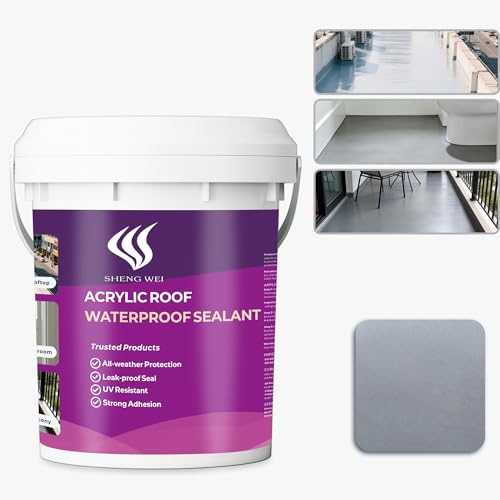
SHENGWEI Polyurethane Waterproof Sealant 3 Gallon Gray

Miracle Sealants 511 Impregnator Penetrating Sealer Gallon

Tenax Tiger Ager Color Enhancing Sealer 1/4 Liter
The Details Behind The Selections
Travertine is a calcium-rich sedimentary stone, which means it stays cool underfoot but also soaks up liquids faster than granite or slate. SHENGWEI’s clear polyurethane sealant is a water-based formula designed to cure into a transparent, rubberized membrane that bridges hairline cracks without changing the stone’s tone or texture. For homeowners who want invisible protection on tumbled travertine pavers, that matters: a glossy or yellowing film is the quickest way to ruin the natural look.
The single gallon is sized for about 120 square feet, which lines up neatly with a modest patio or a side yard’s worth of pool coping. It’s worth measuring your area twice before you commit, because going back for a second can is annoying on a project with a 24-hour cure window. Unlike the spray-bottle convenience of Granite Gold later on this list, this one wants a roller or brush and a dry forecast.
A Strong Showing
- Cures fully transparent, so tumbled or filled travertine keeps its matte, natural look
- Rubberized film stretches over hairline cracks instead of cracking with the stone
- Water-based formula is easier to clean up than solvent-heavy alternatives
- One gallon covers roughly 120 square feet, enough for most mid-size patios
- Bridges porous surfaces, sealing the small pits and voids common to travertine
Things To Consider
- Needs at least 24 hours of dry weather after application, which can stall weekend timelines
- Brush or roller application is messier than the spray options further down this list
- Not the right pick for color refresh on older, faded stone (Tenax Tiger Ager handles that)
Key Specs
Who It Suits Best
Homeowners with new or recently cleaned travertine who want invisible waterproofing and have a dry weekend to commit.
Where Another Pick Suits Better
For small touch-up jobs or sealed stone that just needs a quick refresh, Granite Gold Granite Sealer is faster and far less wasteful.
Spray-and-wipe products earn their keep when the job is small and the stone is already in decent shape. Granite Gold’s 24-ounce spray targets travertine, limestone, marble, and slate, so it’s the kind of bottle you keep around between bigger sealings. For someone resealing a small entry pad or wiping down a grill-area surround, this is more proportionate than cracking open a gallon.
Compared to the SHENGWEI gallon above, you’re trading bulk coverage for convenience. The 24-ounce format works in your kitchen and your patio alike, and owners commonly use it on both counters and outdoor stone. It won’t replace a full penetrating sealer on a heavily worn surface, but for maintenance coats it’s hard to argue with.
What Pays Off
- Spray format means no roller, no tray, no brush cleanup
- Works on travertine plus marble, granite, slate, and limestone, so one bottle covers multiple surfaces
- Compact size stores easily on a garage shelf between uses
- Good fit for quick seasonal refreshes on already-sealed stone
Points To Keep In Mind
- Not enough volume to seal a large patio from scratch (SHENGWEI’s gallon fits that bill)
- Wipe-on application takes elbow grease on textured travertine
- Light maintenance product, not a heavy barrier for high-traffic areas
Who Should Grab It
Anyone with a small outdoor stone surface, or homeowners who already sealed once and want a maintenance top-up without buying a whole gallon.
Swap It Out When
On larger patios or first-time seals, step up to Miracle Sealants 511 Porous Plus for the volume and the deeper penetration.
Penetrating sealers work below the surface rather than on top of it, soaking into the pores of the stone and forming a barrier from within. That’s why the 511 Porous Plus line has been a contractor favorite on honed travertine for years. The pint format is the right size for testing on a small patch, sealing a single patio section, or topping up an outdoor kitchen island.
It carries the Indoor Advantage Gold designation, which signals that the cured product meets indoor air-quality benchmarks. For a covered patio that flows into a screened porch, that can matter. Compared to SHENGWEI’s film-forming sealant above, this one doesn’t bridge cracks, so it’s a different tool for a different stone condition.
Real-World Strengths
- Penetrates deeply into porous travertine and limestone, so the protection lives below the surface
- Pint size is ideal for trial runs or single-room projects
- Does not change the stone’s color or finish once cured
- Indoor Advantage Gold certification, useful for covered or semi-enclosed outdoor areas
Honest Caveats
- Won’t bridge cracks the way a film-forming sealant like SHENGWEI Clear does
- Multiple coats are commonly needed on highly porous stone, which adds time
Quick Facts
Best Suited To
Homeowners with honed or tumbled travertine who want invisible, breathable protection and don’t need crack-bridging.
Reach For A Different Pick When
If your travertine has visible cracks or wider grout joint movement, the SHENGWEI Clear polyurethane sealant above seals those gaps better.
SENVEN’s rubber-silicone sealant isn’t a typical travertine topcoat. It’s a thick, brushable membrane designed for foundation walls, basement leaks, and the kind of active cracks that show up where a patio meets the house. The formula advertises significant elongation, which is the technical way of saying it stretches with the substrate instead of tearing apart.
For most travertine projects, this lands in a supporting role. Use it to repair the slab or foundation wall beneath your travertine before applying a stone-specific sealer on top. Compared to the clear SHENGWEI formula reviewed earlier, this one is black, heavy-bodied, and intended for structural repair rather than decorative sealing.
The Practical Payoff
- Heavy rubberized body fills and seals active foundation cracks
- Stretches with substrate movement instead of cracking apart
- Compatible with self-leveling concrete overlays, useful when prepping before re-laying stone
- Black color hides repairs on dark substrates and foundation walls
Softer Spots
- Not a finishing sealer for visible travertine faces, the black color would ruin the look
- Overkill for stone in good condition that just needs surface protection
Made For
Property owners prepping a foundation or slab repair beneath a stone installation, especially where active water intrusion has been a problem.
Look Elsewhere When
If your travertine is sound and you only need surface protection, the SHENGWEI clear gallon covers that without the heavy-bodied texture.
The grey sibling to the clear sealant above is built for surfaces where you don’t want an invisible finish. Think worn concrete patios that sit beneath travertine, basement floors, and utility decks where a tinted industrial coating reads as feature rather than flaw. For a stone patio in perfect condition, you’d still want the clear version, but this grey formula solves a real problem on bare or patched concrete.
It carries the same roughly 120-square-foot coverage per gallon as the clear SHENGWEI, which keeps planning simple. Where this one differs from the rest of the list is its heavier, paint-like consistency, so a roller with a thicker nap and a stir stick earn their keep.
Useful Highlights
- Grey tint hides discolorations and patchy concrete beneath stone overlays
- Industrial-grade coating suited to basements, garages, and utility decks
- Same 120-square-foot coverage as the clear version, so your planning math stays simple
- Suitable for both interior and exterior applications
Some Limits To Know
- The grey finish will darken or change the appearance of light-colored travertine
- Not designed as a topcoat over finished decorative stone
Right Fit For
Homeowners sealing bare concrete, basement floors, or worn utility surfaces where a tinted industrial finish is desirable.
A Better Fit Elsewhere
For sealing visible travertine you want to preserve as natural-looking stone, the SHENGWEI clear polyurethane sealant keeps the original color.
When the project is large enough that one gallon won’t cut it, stepping up to a three-gallon kit keeps the workflow continuous. SHENGWEI’s bulk kit covers up to 360 square feet, which lines up with substantial driveways, full back patios, or commercial walkways. You may find the gray tint useful on bare concrete or as a base layer beneath stone overlays.
Compared to the single-gallon clear version reviewed earlier, this is the same family scaled up. The application behavior, water-based formula, and roller-friendly body are all consistent, so there’s no new technique to learn.
What Earns Its Place
- Three-gallon bulk kit saves the interruption of mid-project refills
- Up to 360 square feet of coverage per kit for expansive projects
- Gray tint works as a base coat beneath stone or as a finish on bare concrete
- Same water-based polyurethane chemistry as the smaller SHENGWEI options
Less Ideal Details
- Oversized kit is wasteful for small patios; the 1-gallon SHENGWEI is a smarter pick there
- Gray color changes the look of light natural stone, so it’s not a topcoat choice
- Requires careful planning, because once mixed or opened, leftover has a limited working window
Who Will Love This
Contractors or homeowners with expansive driveways, large back patios, or commercial-scale outdoor stone installations.
Skip It When
For modest patios or single-feature projects, the 1-gallon SHENGWEI Clear is a more proportionate pick.
The 511 Impregnator is the workhorse sibling of the 511 Porous Plus reviewed earlier. Where the pint is for trial runs, the gallon is the size most contractors actually buy for whole-property projects. It’s designed for medium to dense porous surfaces, and travertine falls neatly into that range, especially when the stone is filled and well-prepped.
What separates this from the SHENGWEI films reviewed above is vapor transmission. The 511 lets the stone breathe, which is critical for outdoor stone that goes through freeze-thaw cycles. A breathable sealer lets trapped moisture escape; a film-forming sealer can trap it, leading to spalling when winter hits.
Benefits That Matter
- Penetrates and forms a transparent layer below the surface, so finish and color stay natural
- Allows vapor to escape, reducing risk of freeze-thaw spalling in cold climates
- Provides water, stain, and slip protection for outdoor stone and tile
- Gallon size suits driveways, large patios, and multi-area projects
Factors To Consider
- Doesn’t bridge cracks like film-forming sealers, so repairs need separate products
- On highly porous unfilled travertine, multiple coats are commonly needed for full protection
Feature Snapshot
Built With In Mind
Homeowners sealing a whole-property installation of travertine or mixed natural stone, especially in climates with cold winters.
Not Your Match When
If your travertine has visible cracks that need bridging, SHENGWEI Clear polyurethane handles that with its rubberized film.
Every other pick on this list is designed to leave the stone looking the way it did before you sealed it. Tenax Tiger Ager does the opposite: it’s a color-enhancing sealer that deepens and enriches stone tones without the polished sheen of a topical wax. On a travertine patio that’s gone gray and washed out from years of weather, that darker, richer appearance can be a deliberate design choice.
The quarter-liter bottle is small, but it covers a meaningful area when applied properly and is sized for touch-ups and accent areas. Compared to the bulkier SHENGWEI gallons, this is a specialty product, not a whole-patio solution. For a feature wall, an outdoor kitchen front, or a smaller patio where you want the stone to read as warmer, it earns its place.
What Makes Sense
- Deepens and enriches natural stone color without a glossy film
- Hides minor scratches and color-matching issues between polished and unpolished edges
- Forms a protective barrier against spills, oils, and outdoor elements
- Works on travertine plus granite, marble, slate, and limestone
Where It May Fall Short
- Small 1/4 liter bottle is impractical as a sole sealer for large patios
- Color-enhancing effect won’t suit homeowners who want original stone tone preserved
Perfect Match For
Homeowners with older, weathered travertine who want to deepen its natural tones while adding a layer of stain protection.
Consider Something Else When
If you prefer your travertine to keep its current pale color, the SHENGWEI Clear sealant preserves it without darkening.
Matching Sealer to Stone and Climate
Picking an outdoor travertine sealer comes down to three things: the stone’s condition, the climate you live in, and the finish you want. Each of those rules out a few options and lines up nicely with one or two of the picks above.
Penetrating versus film-forming sealers is the first fork. Penetrating products, like the Miracle Sealants 511 line, soak into the pores and cure below the surface. They let the stone breathe, which matters anywhere temperatures drop below freezing. Film-forming products, like the SHENGWEI polyurethane gallons, sit on top and bridge small cracks. They shine on worn stone with surface damage but can trap moisture if the underlying slab isn’t dry.
Finish preference is the next fork. Clear formulas preserve the natural color and matte texture that makes travertine look like travertine. Color-enhancing formulas, like Tenax Tiger Ager, deepen the tones and read as a deliberate design choice. Tinted grey sealants from SHENGWEI serve a different purpose entirely: they’re for bare concrete beneath stone, not the stone itself.
Climate and traffic round out the decision. In freeze-thaw zones, breathable sealers reduce spalling risk on pool decks and walkways. Around a barbecue or outdoor kitchen, stain resistance climbs the priority list, and a penetrating sealer with stain protection is the practical call. For high-traffic entries, multiple coats are commonly needed, so plan on buying a gallon rather than a pint.
Key Considerations Across These Picks
Pitfalls Shoppers Hit
The biggest mistake is grabbing any waterproof sealant off the shelf and assuming it works on travertine. Many waterproofing products are designed for concrete or foundations, and they’ll trap moisture in stone, leaving you with white haze or spalling after one winter. The SENVEN foundation sealant reviewed earlier is a perfect example of a product that solves a real problem but should not be the sealer on your travertine.
The second common slip-up is skipping surface prep. Travertine needs to be clean, dry, and free of old sealer before you apply anything new. A quick sweep isn’t enough; degreasing and rinsing pays off in how evenly the new coat cures. Skipping this step is the most common reason sealers look patchy on day one.
Where The Extra Money Goes
Higher-tier sealers earn their keep through better breathability, longer working times, and more reliable stain protection. The Miracle Sealants 511 line costs more per gallon than a generic waterproofing paint, but it lets the stone release moisture, which extends the life of both the sealer and the stone itself. You’re paying for chemistry that doesn’t trap the problems it claims to solve.
Premium options also tend to cover more square footage per coat, which softens the price gap when you compare cost per square foot. On a 300-square-foot patio, the difference between a budget film and a quality penetrating sealer is often less than people expect once the project is done.
Frequently Asked Questions
How often should outdoor travertine be resealed? Most penetrating sealers last two to four years on outdoor travertine, depending on weather exposure and traffic. Film-forming sealers may need refreshing sooner, especially around pools where chlorine and salt wear the surface faster.
Can the same sealer work on travertine and surrounding concrete? In some cases, yes. A penetrating sealer like Miracle Sealants 511 Impregnator works on travertine and concrete alike. Tinted film-forming sealers like SHENGWEI Grey are designed for concrete and will change the look of natural stone, so don’t use them interchangeably.
Is a glossy finish a bad choice outdoors? Glossy sealers can look attractive on freshly sealed travertine, but they tend to show scuffs, footprints, and water spots more visibly outdoors. For patio and pool-deck use, matte or natural finishes are usually the more practical long-term call.
Will a sealer prevent all staining? No sealer is fully stain-proof. Quality sealers give you time to wipe up spills before they penetrate, which is the real-world benefit. Red wine, barbecue grease, and leaf tannins can still mark the stone if left to sit, especially on pale unfilled travertine.
Should new travertine be sealed before installation? Many installers recommend pre-sealing the underside and edges of travertine before laying it, which helps protect against moisture wicking up from the substrate. The top surface still benefits from a finishing coat after the patio is laid and grouted.
Closing Thoughts
The right outdoor travertine sealer depends less on brand loyalty and more on what your stone actually needs. Breathable penetrating formulas suit most climates, while film-forming products earn their keep on cracked or worn surfaces. Measure your square footage before you buy, plan around a dry forecast, and don’t skip the prep work. Done right, a quality sealer keeps travertine looking the way you fell in love with it for years to come.
