

Mold rarely announces itself before it takes hold. A musty closet, a basement that feels heavy after a storm, or a recurring sinus headache you can’t quite explain often points to the same hidden culprit: moisture that quietly fed spores behind drywall or under flooring. The right detection tool turns guesswork into a clear, actionable reading so you can address the source before it spreads. This roundup covers the most practical options on the market, from lab-style air samplers to simple pin meters that fit in a kitchen drawer.
The Picks In Brief

Ciormui DIY Mold Test Kit 8 Tests

Klein Tools ET140 Pinless Moisture Meter
General Tools MMD4E Moisture Meter

RDINSCOS Digital Pin Moisture Meter
GOT MOLD? Air-O-Cell Cassette Refill

GOT MOLD? 1 Room Air Test Kit
GOT MOLD? 3 Room Air Test Kit

Lignomat Mini-Ligno E/D Pin Meter
A Breakdown Of The Leading Choices
The Ciormui DIY kit suits anyone facing their first real mold scare, especially renters and new homeowners without testing experience. The package arrives as a complete starter set: eight petri-dish-style sampling plates, cotton swabs, gloves, label stickers, and a printed guide that walks through sample collection and reading the growth afterward. Because the kit covers both surface and air sampling, you can swab a suspicious closet corner, expose a plate in a basement, and label each test by location for cleaner follow-up.
It pairs neatly with the moisture meters below: use a meter to flag high-moisture zones first, then deploy the Ciormui kit where the readings spike. The trade-off is patience, since results typically take several days of incubation. If you need an instant number or a lab-style spore count, a GOT MOLD? kit from later in this list fits the job better.
Everyday Wins
- Eight separate tests let you sample multiple rooms in a single purchase
- Included identification guide helps decode common mold varieties without extra research
- Works for both air sampling and direct surface swabs
- Gloves and labels keep the process organized from start to finish
Things To Consider
- Results require several days of incubation, so it’s not a same-day answer
- Identification depends on visual judgment rather than lab analysis
Who It Suits Best
First-time homeowners and renters who want a low-commitment way to confirm a mold concern across several rooms.
Consider Something Else When
The Klein Tools ET140 fits better if you want immediate moisture readings before committing to a culture-based test.
The Klein Tools ET140 solves a problem most pin meters create: visible holes. Its pinless sensor reads moisture up to roughly 3/4 inch below the surface, which means you can sweep across finished drywall, hardwood floors, or masonry without leaving puncture marks. For checking behind a recently painted wall or a sealed concrete slab, that non-contact approach removes a lot of hesitation about where to test.
A mode button lets you switch between drywall, softwood, hardwood, and masonry so the readings stay calibrated to the material under the pad. Compared to the General Tools MMD4E that follows, the ET140 trades pin-level precision for zero surface damage, which matters in rental units and finished basements. The reverse-contrast display with an LED bar graph stays readable in dim utility rooms and crawl spaces where you often end up using it.
The Practical Payoff
- Pinless design leaves no marks on walls, ceilings, or hardwood floors
- Material-specific modes improve reading accuracy across surfaces
- Reverse-contrast display holds up in low-light crawl spaces
- Wide scanning depth catches moisture that surface meters miss
Points To Keep In Mind
- Not a mold test, only a moisture indicator that flags conditions favoring growth
- Pin meters like the General Tools MMD4E can outperform it on direct wood measurements
Made For
Homeowners who want to survey finished surfaces for hidden moisture without damaging paint, paneling, or flooring.
Look Elsewhere When
Turn to the Lignomat Mini-Ligno E/D if your work centers on firewood, lumber, or woodworking projects that need pin-level wood moisture accuracy.
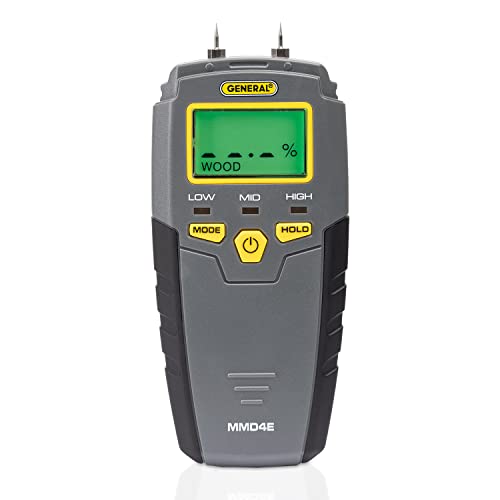
The General Tools MMD4E is the kind of meter contractors toss in a truck and forget about until the next leak call. It uses two stainless steel pins that you press into the material being tested, and the LCD returns a quick percentage reading for wood or a relative value for drywall, concrete, and subfloor. Holding it in one hand feels natural, and the ergonomic shape keeps fatigue low when you’re checking a whole room.
Unlike the Klein ET140 that scans without contact, this MMD4E goes into the surface for a more direct reading on wood framing, trim, and subfloor material. The trade-off is cosmetic: pin holes in finished wood. For raw framing, joists, and subfloor repairs, the holes don’t matter. Owners commonly store it in a toolbox with a small cap over the pins to blunt the tips between jobs.
Where It Delivers
- Direct pin contact produces reliable readings in framing and subfloor material
- One-handed ergonomics help during long inspection sessions
- Compatible surfaces include wood, drywall, concrete, and subfloor
Honest Caveats
- Pin holes make it a poor choice for finished hardwood or visible trim
- LCD visibility can suffer in bright outdoor light
Best Suited To
DIYers and contractors who work on framing, subfloor, and drywall repairs where a small pin mark is acceptable.
A Better Fit Elsewhere
The RDINSCOS Digital Moisture Meter makes more sense if you want similar pin accuracy at a tighter price point and don’t need General’s brand recognition.
The RDINSCOS pin meter covers the basic moisture-check job without inflating the price tag. The two pins push into wood to roughly 10 millimeters of depth, leaving only small pinholes that disappear in most unfinished surfaces. A full-length electrode design helps the reading reflect interior moisture, not just a wet outer layer, which is useful when firewood or stored lumber has dried on the surface but stays damp inside.
Compared to the General Tools MMD4E, this model skips some of the contractor-grade housing and brand pedigree in exchange for a more approachable price. The display reads large enough for most adults, and the unit fits comfortably in a glove box or kitchen drawer for quick spot checks. The honest read is that you trade long-term durability for short-term savings, so treat it as a starter tool rather than a daily job-site companion.
Where It Helps
- Full-length electrodes surface interior moisture readings on wood
- Compact body fits into a drawer or glove box for grab-and-go use
- Accessible price point for homeowners testing on a tight budget
Possible Compromises
- Build quality feels lighter than contractor-grade meters like the General Tools MMD4E
- Limited material presets compared to higher-tier moisture meters
Right Fit For
Casual homeowners who want to spot-check wood framing, firewood, or furniture without investing in a professional-grade tool.
Swap It Out When
The Klein Tools ET140 serves better if you need non-contact scanning across finished drywall or hardwood where pin holes aren’t acceptable.
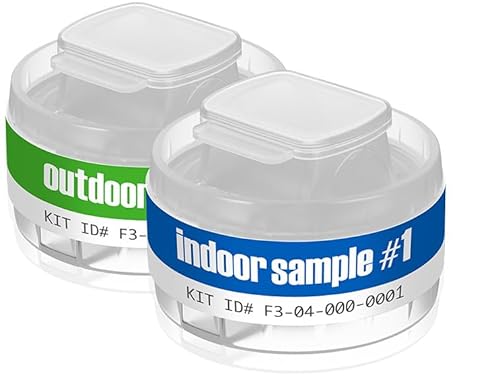
The GOT MOLD? cassette refill is the consumable half of a lab-grade sampling system. Each Air-O-Cell cassette captures airborne spores on a sticky surface inside the housing, and you ship it back for full type and quantity analysis. This is the cartridge, not the pump, so you only buy it once you already own the reusable BioVac air sampler. That’s a meaningful distinction: this refill is for repeat testers and professionals who need consistent baseline data across seasons.
The same Air-O-Cell technology shows up in commercial IAQ (indoor air quality) work, so the analysis carries real weight with remediation contractors. Compared to the Ciormui DIY kit earlier in the list, this path trades speed and simplicity for hard numbers and species identification. Most homeowners testing for the first time should start with the full GOT MOLD? kit below before chasing the refill path.
What Works In Its Favor
- Air-O-Cell cassettes match a widely used commercial sampling standard
- Lab analysis returns species identification and spore counts, not just presence
- One-room format keeps costs focused on a single problem area
Things To Weigh
- Requires the reusable BioVac sampler, which is sold separately
- Adds lab turnaround time on top of the sampling step
Whose Shelf It Belongs On
Existing BioVac owners and IAQ professionals who already have the pump hardware and need fresh cassettes for ongoing monitoring.
Reach For A Different Pick When
The GOT MOLD? 1 Room Kit makes more sense if you don’t yet own the BioVac sampler and need the full starter package.
The GOT MOLD? 1 Room Kit brings professional-grade air sampling into a single-room package. You get the reusable BioVac air sampler, the Air-O-Cell cassette for one room, and all the lab fees bundled in, so the total cost lands as a single transaction rather than a piecemeal order. The sampler draws air at the push of a button, with each run taking about five minutes per room, then you ship the cassette for full type and quantity analysis.
This kit suits a homeowner who has narrowed the problem to one suspect room, like a musty bedroom or a recently flooded basement, and wants documented lab results rather than a culture-based estimate. Compared to the Ciormui DIY kit, the learning curve is gentler since the pump automates the air draw, and the output is a quantitative spore count. The fee-inclusive pricing also removes the surprise of separate lab invoices after the fact.
The Case For It
- All-inclusive pricing covers the sampler, cassette, and lab analysis in one purchase
- Reusable BioVac lowers the cost of follow-up testing with cassette refills
- Lab report includes species identification and spore counts for documentation
Small Caveats
- Total turnaround stretches across shipping and lab processing time
- Only covers a single room, so multi-room homes may need the 3-room version
Who Should Grab It
Homeowners with a single suspect room who want lab-grade documentation without hiring an inspector.
Where A Sibling Pick Shines
The GOT MOLD? 3 Room Kit fits better when you need whole-home coverage and want to compare multiple rooms against each other.
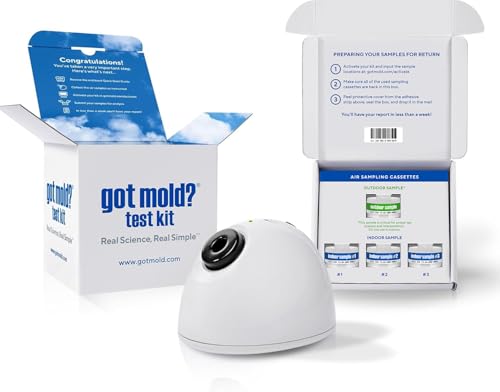
The GOT MOLD? 3 Room Kit extends the same BioVac sampling approach across a whole residence, which matters because mold rarely stays in one room once spores become airborne. Bundling three cassettes plus the reusable pump into a single purchase means you can sample a basement, a main living area, and an upstairs bedroom in a single afternoon, then compare the lab numbers against each other. Relative readings across rooms often reveal the source more clearly than a single absolute number.
For homeowners chasing a recurring musty smell or a health symptom that follows them from room to room, the multi-room data tells a stronger story than a one-room snapshot. The trade-off is cost and processing time, since three lab analyses take longer than one. If you have a tight suspect area already pinned down, the 1-room version above is the leaner choice.
What It Does Well
- Three-room format captures relative spore levels across a home
- One-time sampler purchase keeps refills affordable for future tests
- All lab fees included to avoid post-purchase invoices
Trade-Offs To Consider
- Higher upfront spend than the 1-room version, which may be excessive for a known problem area
- Multi-room lab processing extends total turnaround time
Who Will Love This
Homeowners dealing with vague or whole-house mold suspicions who want comparative data to guide remediation decisions.
Skip It When
The GOT MOLD? 1 Room Kit makes more sense if you have already isolated the problem to a single room and don’t need the extra cassettes.
The Lignomat Mini-Ligno E/D earns its place as the wood specialist in this lineup. Two built-in calibration groups cover softwood, hardwood, panel products, and veneer, with a measurement range that stretches from roughly 6% to 45% moisture content. That range is wide enough to verify construction lumber before framing closes up and to confirm firewood has seasoned below the 20% threshold where clean burning actually starts.
Compared to the RDINSCOS model, the Lignomat carries a higher price and a longer track record among woodworkers and flooring installers. You feel the difference in the build: the housing is solid, the pins are replaceable, and the readings stay consistent across years of use. For wood-only projects, this is the meter that tends to outlast cheaper options. For general home moisture checks across drywall and concrete, the General Tools MMD4E earlier in the list is a more versatile pick.
Everyday Advantages
- Two wood-group calibrations cover softwood, hardwood, panels, and veneer
- Wide 6% to 45% range handles lumber, flooring, and firewood alike
- Replaceable pins extend the meter’s working life over years of use
Room For Improvement
- Wood-focused design limits usefulness on drywall and concrete
- Higher cost than general-purpose pin meters like the General Tools MMD4E
The Right Fit
Woodworkers, flooring installers, and homeowners who season firewood or maintain wood walls and need wood-specific accuracy.
Not Your Match When
The Klein Tools ET140 is a better call if you need non-contact moisture scanning across finished drywall, masonry, or hardwood.
What To Weigh Before Choosing a Mold Detection Device
Pick the tool that matches the question you actually need to answer, not the one with the longest feature list. A moisture meter measures how wet a material is, which tells you whether conditions favor mold growth. A culture-based DIY kit like the Ciormui grows whatever spores are present on a plate and gives you a visual read. A lab-analyzed air kit like the GOT MOLD? series captures airborne spores and sends them for a typed, quantified report. None of these tools diagnose medical conditions or certify a home as safe, so frame your expectations around what each format actually delivers.
For most homeowners, the practical starting point is a pin or pinless moisture meter. Moisture is the precondition for mold, and a meter that flags a wet basement joist or a damp wall cavity points you toward the right room before you spend money on lab analysis. Woodworkers and firewood users get more value from a wood-specialized meter like the Lignomat, while renters and finished-surface testers benefit from a non-contact option like the Klein ET140.
Air-sampling kits earn their keep when you have a recurring musty smell, unexplained respiratory irritation, or a need for documented results before a real estate transaction or insurance claim. The GOT MOLD? kits bundle the hardware and the lab fees, which removes the friction of separate invoices. The Ciormui DIY kit fills a middle path: a low-cost way to confirm or rule out active growth across several rooms, with the trade-off of slower, less precise results.
Key Considerations Across These Picks
Where Shoppers Go Wrong
The most common slip-up is treating a moisture meter as a mold test. Meters read water content, not spores, so a high reading flags a risk condition, not an active infestation. Another frequent miss is skipping the calibration step. Wood meters in particular, including the Lignomat Mini-Ligno E/D, depend on selecting the correct wood group before each session. Pin meters also need clean, undamaged pins for accurate contact readings, so replacing bent pins is part of normal ownership.
A third trap is testing in the wrong room. Mold often hides in basements, behind furniture, and near HVAC returns rather than where the smell is strongest. Walking the whole space with a meter before deploying an air-sampling kit usually pays off in clearer results and less wasted lab budget.
Where The Extra Money Goes
Higher-tier air-sampling kits cost more because the lab analysis and reporting infrastructure are expensive. A bundled GOT MOLD? 3 Room Kit includes the reusable BioVac pump, three Air-O-Cell cassettes, and professional lab fees in a single transaction, which removes the friction of coordinating separate shipments and invoices. You also get species-level identification, which a DIY culture kit cannot match. For most households, the upgrade is worth it when results will guide a remediation plan, support an insurance claim, or document a real estate disclosure. For a one-time screening in a single suspect room, the Ciormui DIY kit or the 1-room GOT MOLD? kit usually does the job at a tighter price.
Frequently Asked Questions
What is the difference between a moisture meter and a mold test kit? A moisture meter measures how much water is present in a material, while a mold test kit looks for the presence of mold spores. Meters flag the conditions that allow mold to grow, and test kits confirm whether spores are actually present in a sample.
Can a pinless moisture meter detect mold behind walls? A pinless meter detects moisture, not mold itself, but elevated moisture behind drywall is the primary warning sign of hidden growth. Pairing a meter like the Klein Tools ET140 with a visual inspection often uncovers the problem before spores spread further.
How long does a DIY mold test kit take to show results? Culture-based kits such as the Ciormui typically need several days of incubation before colonies become visible. Lab-analyzed air kits such as the GOT MOLD? series add shipping and lab processing time on top of the sampling step.
Do I need a professional to interpret mold test results? For culture-based DIY kits, the included identification guide covers the most common species. For lab-analyzed reports with quantified spore counts, an indoor air quality professional or a remediation contractor can explain the findings in the context of your home’s specific conditions.
Is a moisture meter enough on its own to confirm a mold problem? A moisture meter alone confirms the risk condition but not the presence of spores. For a documented answer, follow up a high meter reading with either a culture-based kit or a lab-analyzed air sample.
Bottom Line
Mold detection works best as a two-step process: a moisture meter to find the wet zones, then a culture kit or air-sampling system to confirm whether spores are present. The picks above cover both halves, from budget pin meters to lab-grade multi-room kits. Match the tool to the room and the question, and you’ll spend less time guessing about what’s behind the drywall.
