

A slow-flushing toilet or a basement drain that gurgles after every load of laundry usually means the main line is starting to struggle. Left alone, that gurgle turns into a backup, and the next call you make is to a plumber. The picks below cover three distinct jobs: clearing an active clog, maintaining a sewer or septic system so future clogs don’t form, and physically scouring the inside of the pipe with water power. Match the tool to the problem and the worst-case scenario rarely arrives.
A Snapshot Of The Selections

Thrift T-200 Odorless Drain Cleaner (2 lb, Pack of 2)
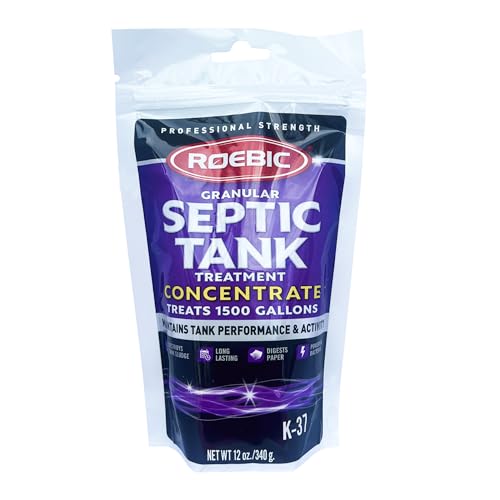
Roebic K-37-BAG Granular Septic Tank Treatment (12 oz)

Roebic SMP-1000 Complete Septic System Maintenance Kit (4 Quarts)

AURORA CAR Sewer Jetter Kit 50 FT (1/4 in NPT, 5800 PSI)

Hourleey Sewer Jetter Kit 50 FT, 1/4 in NPT, 4000 PSI

Sewer Jetter Kit 50 FT, 5800 PSI (1/4 in NPT)

Drain King H34 Water-Powered Drain Cleaner (3 to 4 in)

Roebic K-77 Granular Tree Root Killer (32 oz)

Sewer Jetter Kit 100 FT, 5800 PSI (1/4 in NPT)

Roebic K-97 Liquid Main Line Cleaner (32 fl oz)
Taking A Closer Look At The Options
The Thrift T-200 is the kind of product you keep on a utility shelf and forget about until the kitchen sink stops draining on a Sunday afternoon. Its dry crystal formula is activated by hot water and is engineered to liquefy grease, hair, soap residue, and bath oils in under a minute once it reaches the clog.
Two 2-pound bottles ship in the pack, so you get a backup ready when the first treatment runs out. The non-acid chemistry is intended to be gentle on porcelain, chrome, polished brass, plastic, and metal lines when used as directed. For homeowners with smaller branch lines that feed into a main, that quick reaction time is the main reason this can be a first stop before reaching for heavier gear.
Useful Strengths
- Hot-water activation cuts through grease, soap scum, and hair in under 60 seconds for many users
- Odorless dry crystals make the treatment workable in enclosed kitchens and bathrooms
- Non-acid formula is designed to protect porcelain, chrome, brass, and plastic pipes
- Two-bottle pack keeps a refill on hand for follow-up or second-line treatments
Things To Consider
- Best suited for small branch drains and grease traps, not full main line blockages
- Requires boiling or near-boiling water to activate, which adds an extra step in routine use
Made For
Kitchen sinks, shower drains, and bath lines where hair and soap residue build up between deep cleans.
Look Elsewhere When
Pick the Drain King H34 instead if the blockage sits deeper in the main line and no chemical has touched it yet.
Maintenance is the job here, not emergency clearing. Roebic K-37 is a granular septic treatment designed to reduce sludge and scum while keeping odors under control, all from a 12-ounce bag that’s easy to store next to the tank.
Flush-friendly bacteria work on paper and organic matter in the tank, and the certified biodegradable formula keeps the surrounding soil safer than harsher alternatives. For a household on a septic system, it’s a low-cost monthly habit that can delay the more expensive service calls that come when solids migrate into the drain field.
A Few Strong Suits
- Targets sludge and scum to keep tank layers from migrating into the leach field
- Helps neutralize odors before they reach the yard or the bathroom
- Compact bag fits in a utility drawer and pours directly into a toilet or drain
- Biodegradable formulation is gentler on the surrounding drain field
Worth Noting
- A single 12-ounce bag covers only one to a few treatments, depending on tank size
- Won’t clear an existing clog; it’s a preventive product, not a rescue tool
Right Fit For
Septic homeowners who want a simple monthly dose and don’t need the broader coverage of a multi-quart kit.
Where Another Pick Suits Better
Choose the Roebic SMP-1000 kit when both the tank and the drain field need attention in the same treatment cycle.
Most septic products cover the tank. The SMP-1000 also targets the leach and drain field, which is where backups actually start when a system is failing. Four quarts of concentrated bacterial product cover both jobs in one routine.
The tank portion breaks down solids and limits odors, while the leach field treatment clears sluggish or clogged drain lines so effluent moves again. For an older property with a marginal field, that two-part approach can prevent the kind of soggy yard that signals a much bigger job is coming.
What Helps Most
- Treats the tank and drain field from a single kit, simplifying scheduling
- Targets solids, sludge, scum, and odor in one bacterial dose
- Designed to revive sluggish drain fields before they fail
- Quart-size bottles are easy to pour into toilets and cleanouts
Trade Offs
- Larger upfront buy than a single tank-only treatment
- Requires consistent scheduling; skip doses and benefits drop off quickly
Best Suited To
Septic owners with a marginal or aging drain field who want full-system coverage in one routine.
Skip It When
The Roebic K-37-BAG works fine for smaller tanks that don’t show signs of field trouble yet.
Jetter kits turn a pressure washer into a pipe-cleaning tool, and the AURORA CAR kit comes with enough nozzle variety to handle most residential main lines. The 50-foot hose reaches a cleanout at the edge of the house without dragging extra fittings into the yard.
A 5800 PSI rating on the hose covers the upper end of consumer pressure washer output. Button nose, rotating, side hole, and corner nozzles each tackle a different kind of blockage, from grease films to root intrusions at the joints. Two spanners, sealing tape, and a box of pearl corsage pins round out the kit for storage and setup.
What Earns Its Place
- Six nozzle types give flexibility for grease, roots, and tight corners
- 5800 PSI hose handles higher-output washers without bursting
- M22 coupler and 1/4-inch quick connect simplify attachment to common washer brands
- 50-foot length reaches most single-family cleanouts in one pull
Points To Note
- Requires a pressure washer rated for the hose pressure, which adds to total cost
- 50 feet can run short on long runs to the street in deeper lots
Quick Facts
Perfect Match For
Homeowners who already own a pressure washer and want a complete nozzle kit for outdoor main line work.
Swap It Out When
Reach for the REALYOU 100 FT kit instead when the cleanout sits far from where the washer is parked.
The Hourleey kit stands out by giving you three different orifice sizes (4.0, 4.5, and 5.5) on button nose nozzles, which is the part that controls flow and jet thrust inside the pipe. Pair that with a rotating nozzle for scrubbing and you can tune the clean to the blockage instead of overpowering a fragile line.
The 4000 PSI hose rating is friendlier to mid-range electric pressure washers, which is the segment most people own. M22 female thread to 1/4-inch female coupler plus a 1/4-inch quick connect give you flexible attachment options for different washer brands.
The Practical Payoff
- Three orifice sizes let you match jet force to pipe condition
- 4000 PSI hose rating fits most electric and entry gas pressure washers
- Rotating nozzle scours pipe walls instead of just punching through
- Coupler and quick connect cover both M22 and 1/4-inch washer outputs
Honest Caveats
- Lower PSI rating than the AURORA CAR or REALYOU kits for heavy root work
- No corner nozzle, which can make P-trap navigation tougher in tight layouts
Whose Shelf It Belongs On
Mid-range pressure washer owners who want nozzle flexibility without overspec-ing the hose.
Another Choice May Suit
The Zebra Clean kit makes more sense when you want a wider nozzle selection and a storage bag in one box.
The Zebra Clean kit is the most accessorized entry on the list, which makes it a comfortable pick for first-timers. Beyond the hose and nozzles, you get a storage bag, marking rings, a microfiber cloth, and even nitrile gloves, so you don’t end up at the cleanout with wet shoes and no setup plan.
Mushroom, rotating, pointed, and spray nozzles cover the four common jet tasks. The M22 to 1/4-inch adapter and 1/4-inch quick connect handle most pressure washer brands without needing a separate fitting run. For someone renting a washer or using this only a few times a year, the bundled extras matter more than a longer hose.
Everyday Wins
- Four nozzle types cover grease, soft clogs, and surface spray
- 5800 PSI hose rating matches high-output consumer washers
- Storage bag, gloves, and marking rings keep the kit organized between uses
- Adapter and quick connect fit common M22 and 1/4-inch washer outputs
Worth Bearing In Mind
- 50-foot hose is shorter than the REALYOU 100 FT option for long runs
- Extras add bulk that casual users may not need
Who Should Grab It
First-time jetter shoppers who want one box with everything they need to start and store the kit.
A Better Fit Elsewhere
Pick the AURORA CAR kit instead when nozzle variety matters more than bundled storage accessories.
The Drain King takes a different path. Attach it to a garden hose, feed it into the cleanout, and water pressure expands the bladder to seal the pipe. Pulsating jets then push the clog down the line without needing a pressure washer at all.
The H34 fits 3 to 4-inch lines, which covers most main stack and outside deck drains in residential homes. It’s made in the USA and stores flat in a utility drawer between uses. For households that don’t own a pressure washer, this is often the simplest way to clear a stubborn main line without scheduling a service call.
The Value In It
- Works off a standard garden hose, no pressure washer required
- Expands to seal 3 to 4-inch pipes for full-bore water pressure
- Pulsating jets clear clogs without chemicals or augers
- Compact storage between infrequent uses
Practical Considerations
- Not for use with hot water, which limits it to cold-supply scenarios
- Best results depend on a tight seal at the cleanout, which older lines may not provide
Built With In Mind
Homeowners without a pressure washer who want a chemical-free way to clear main line backups.
Reach For A Different Pick When
Switch to the AURORA CAR jetter kit when you already own a pressure washer and want to scrub pipe walls.
Some main line slowdowns aren’t from grease or paper at all. They’re from tree roots pushing into clay or older PVC joints. Roebic K-77 is a granular copper-based formula designed to kill roots at the entry point and slow regrowth, so the line keeps flowing without a mechanical cutting run.
The 32-ounce container covers a few treatments across multiple cleanouts. It’s safe for bathroom toilets, septic systems, and drain fields, which is why it’s a staple for older homes with mature trees. Use it on a schedule and the roots stay small enough that water can pass without strangling the pipe.
Key Advantages
- Targets intrusive roots at pipe joints rather than just clearing the symptom
- Safe for septic, drain field, and standard plumbing when used as directed
- Slows regrowth so treatment intervals can stretch between applications
- Granular format flushes through toilets without extra equipment
Small Caveats
- Won’t help with grease, paper, or soap clogs; it’s root-specific
- Severe root masses still need mechanical cutting before any chemical helps
Who It Suits Best
Homeowners with mature trees near the sewer run who see recurring backups at the same point.
Consider Something Else When
The Roebic K-97 is a better fit when grease and organic buildup are the main culprits instead of roots.
The REALYOU kit is the long-reach option on this list, with a 100-foot hose that handles lots where the cleanout sits far from where the pressure washer can park. A thermoplastic polyurethane cover layer helps the hose resist weather, oil, and abrasion during outdoor use.
The inner tube is thermoplastic polyester, and the reinforcement is a high-tenacity polyester textile braid chemically bonded for kink resistance. Corner, rotating, and button nose nozzles round out the included hardware. For deep lots or properties where the cleanout is past the driveway, the extra length matters more than another nozzle.
Good Reasons To Consider
- 100-foot hose reaches cleanouts well past the house envelope
- PUR cover and polyester braid construction handle repeated outdoor use
- Corner, rotating, and button nose nozzles cover common blockage patterns
- 5800 PSI rating matches top consumer pressure washer output
A Few Limitations
- Longer hose is heavier and harder to manage on short jobs
- Requires a higher-output washer to benefit from the extra reach
Technical Highlights
The Right Fit
Properties with long runs between the pressure washer and the outdoor cleanout, especially deeper lots.
Where A Sibling Pick Shines
The Zebra Clean 50 FT kit works better on standard lots where 100 feet is overkill and storage matters more.
Liquid bacterial enzyme cleaners work as ongoing protection rather than a rescue mission. Roebic K-97 clears fats, grease, sludge, and paper from inside the line, and the bacteria keep working as long as you keep dosing on schedule.
It’s safe for all pipes and works whether the home is on a septic system or a municipal sewer, which makes it a flexible monthly habit. The 32-ounce bottle pours into a toilet or cleanout without measuring or mixing. For households that want to avoid both harsh chemicals and frequent service calls, this is the easiest routine to maintain.
Bright Spots
- Bacterial enzymes break down organic buildup instead of just pushing it along
- Safe for septic, sewer, and all common pipe materials
- Restores flow gradually without harsh chemical fumes
- Works as monthly prevention for kitchens with heavy grease use
Room For Improvement
- Not a fast fix for a fully blocked line; benefits build over weeks
- Needs consistent dosing to keep the bacterial colony active
Who Will Love This
Homeowners who want a low-effort monthly habit to keep grease and paper from layering in the main.
Not Your Match When
The Roebic K-77 is the smarter pick when the recurring issue is roots at the joints, not organic buildup.
What To Match Against Your Drain Before You Pick
Choosing a main line cleaner starts with the actual problem in your pipes. A grease-clogged kitchen branch behaves nothing like a root-bound sewer lateral, and the wrong product wastes a Saturday.
Identify the symptom first. Gurgling toilets and water backing up into a basement drain usually point to the main line downstream of the house. Slow individual fixtures typically mean a branch issue that a chemical or enzymatic dose can reach. If multiple fixtures are sluggish at once, the clog is past the stacks, which favors mechanical jetting or a water-powered bladder like the Drain King over a chemical product.
Know your pipe material and cleanout location. Older clay or cast iron lines tolerate gentler bacterial and enzymatic cleaners better than aggressive acids, while modern PVC can handle more methods. A cleanout near the foundation usually means a 50-foot hose is enough; properties with deep lots or remote cleanouts often need a 100-foot jetter hose to reach the street-side tap.
Match the tool to your equipment. Jetter kits require a pressure washer that can push the hose rating. A garden-hose bladder needs nothing more than a spigot and a seal at the cleanout. If you don’t own a pressure washer, skip the jetter kits entirely and start with the Drain King or the bacterial products instead.
Reading Between The Categories
Where Shoppers Go Wrong
The most common mistake is treating every backup like a chemical problem. Bacterial and enzymatic cleaners work as prevention, not as emergency clearing. Pouring them into a fully blocked line usually leaves the bottle half-used and the basement still wet.
Another trap is buying a jetter kit without checking the pressure washer’s flow rate and PSI. A 5800 PSI hose paired with a low-output electric washer produces a weak stream that won’t move heavy buildup. Always confirm the washer specs before committing to a jetter kit.
What The Higher Tier Buys
The premium picks in this category earn their position through hose length, nozzle variety, and material construction. A 100-foot hose with a polyurethane cover handles outdoor storage and long pulls without kinking. Multi-nozzle kits give you the flexibility to switch between grease, roots, and tight corners without a second purchase.
Spending up makes sense when the cleanout is remote, the blockage recurs at the same point, or the household produces heavy grease and paper load. For light, infrequent maintenance, the budget end of the list handles the job without the extras.
Frequently Asked Questions
What is the difference between a sewer jetter and a water-powered drain bladder?
A sewer jetter is a hose with nozzles that scour pipe walls using washer pressure. A water-powered drain bladder, like the Drain King H34, expands to seal the pipe and uses garden hose pressure to push clogs downstream. Jetters scrub; bladders push.
Can main line cleaners damage old pipes?
Bacterial and enzymatic treatments are designed to be safe for older pipe materials when used as directed. Aggressive acids and high-pressure jetting can stress aged clay or corroded cast iron. Match the cleaning method to the pipe condition before treating.
How often should a main line be maintained?
Most households benefit from a monthly bacterial or enzymatic treatment, with a mechanical jet or bladder clearing once a year or whenever flow drops. Septic systems often need more frequent treatment dosing to keep solids in the tank.
Are root killers safe for septic systems?
Copper-based granular root killers like Roebic K-77 are formulated to be safe for septic systems when used as directed. They target roots at the pipe joint without disrupting the bacterial balance in the tank.
Do I need a pressure washer for these picks?
Only the jetter kits require a pressure washer. The Drain King uses garden hose pressure, and the bacterial, enzymatic, and granular products need no equipment at all beyond a toilet or cleanout access point.
Closing Thoughts
The right main line cleaner depends less on brand and more on what your pipes actually face day to day. Heavy kitchen grease points toward enzymes and hot-water chemical options. Recurring root backups at the same joint call for a granular root treatment. Long, stubborn mains usually need water pressure, whether from a pressure washer or a simple hose-fed bladder. Match the symptom to the tool and most backups stay minor.
