

Winter walkways get treacherous fast, and hauling out the rock salt feels like a workout nobody signed up for. Liquid ice melts change the math: you spray, you wait a few minutes, and the ice lets go without the back strain of scraping. The four options below cover fast-acting chlorides, pet-safe organic formulas, commercial-scale totes, and a pre-treatment blend built for stubborn Midwest cold.
An Overview Of The Picks

Bare Ground BGB-2.5C 2.5Gal Liquid Ice Melt
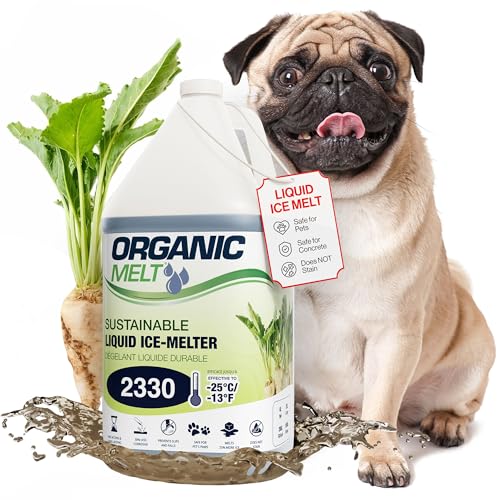
Eco Solutions Sugar Beet Liquid Ice Melt 4L Jug

Bare Ground BG-275T All Natural Liquid De-Icer 275-Gallon Tote

Presidential Liquid Ice Melt Pre-Treat & Deice 5-Gallon Pail
The Picks, Examined More Closely
Calcium chloride (a salt-based compound that generates heat on contact with ice) is the secret weapon behind this 2.5-gallon jug, and Bare Ground leans into it as their fastest-acting formula. The BGB-2.5C targets shoppers who want results in minutes rather than the slow creep of rock salt, and the sprayable format means no more sore shoulders from an hour of scraping the driveway.
Rated to work down to -20 degrees Fahrenheit, it handles the kind of polar nights where traditional pellets give up and stop melting altogether. The jug pours into a standard pump sprayer, and because there’s no fixed shelf life, leftover product sits in the garage until the next storm rolls around. For homeowners in northern climates who deal with stubborn, refreezing ice, the speed advantage tends to justify the chloride price premium.
Where It Excels
- Calcium chloride chemistry cuts through ice fast, often in a fraction of the time chloride-free blends require.
- Usable to -20 degrees Fahrenheit, so it keeps working when rock salt has already tapped out.
- Sprayable format skips the shovel and reduces the physical strain of winter cleanup.
- No shelf life means partial jugs survive multiple seasons without losing potency.
- Compatible with concrete, pavers, asphalt, and most outdoor surfaces when applied as directed.
Points To Note
- Chloride-based formulas can be harsher on vegetation if over-applied near lawn edges or garden beds.
- A standard pump sprayer is sold separately, so first-time users should budget for one.
- Some pet owners prefer chloride-free options for paws that walk treated surfaces daily.
Right Fit For
Homeowners in cold-winter regions who want the fastest melt possible and don’t mind a chloride-based formula.
A Better Fit Elsewhere
Households with dogs who walk treated walkways daily will find the Eco Solutions Sugar Beet formula a softer alternative for paws.
This 4-litre jug earns its place by skipping chlorides altogether and leaning on a sugar beet-derived deicer instead, which is the kind of swap that matters when dogs and cats routinely walk across the treated walkway. The Eco Solutions blend targets the organic, low-corrosion corner of the market where homeowners worry about paws, lawn edges, and stained concrete more than they worry about peak melt speed.
Rated to keep melting down to -13 degrees Fahrenheit, it handles the bulk of North American winter storms short of the deep-freeze zones. The non-staining claim means no white residue on the basement entryway, and the formula is built to resist re-freezing so the morning after a thaw-freeze cycle stays safer. For pet households and eco-minded shoppers, the trade-off in raw speed feels reasonable.
What Helps Most
- Sugar beet base is gentler on pet paws and avoids chloride exposure on treated paths.
- Non-staining formula keeps indoor floors and entry mats clean after walks.
- Resists re-freezing so a midday thaw doesn’t turn into a black-ice evening.
- Lower corrosion profile protects metal edging, tools, and concrete over repeated seasons.
- Works on concrete, pavers, asphalt, and standard outdoor surfaces.
Worth Noting
- Sugar beet formulas melt slower than calcium chloride, so patience is part of the package.
- The -13 degree Fahrenheit ceiling means it struggles in extreme polar outbreaks.
Best Suited To
Pet owners, families with small children, and homeowners who prioritize lawn and concrete safety over fastest-possible melt speed.
Swap It Out When
Residents of northern Minnesota or similar deep-cold zones will want the Bare Ground BGB-2.5C for its lower temperature rating.
This is the big brother of the Bare Ground lineup: a 275-gallon skidded tote designed for property managers, municipal crews, and homeowners with acreage. The BG-275T runs the same all-natural, biodegradable formula that the brand built its reputation on, scaled up so a single tote covers an entire winter season for most commercial sites without refill runs.
Diluted 50:50 with water and sprayed through a trailer-mounted setup, the concentrate stretches further than the smaller jugs while staying non-toxic to people, pets, plants, and livestock. Compared to the BGB-2.5C reviewed earlier, this tote trades grab-and-go convenience for volume economics, so it only makes sense once the treated square footage crosses a certain threshold. The skidded frame also means a forklift or tractor can move it.
What Stands Out
- 275-gallon capacity covers large lots, long driveways, and commercial walkways without mid-season refills.
- All-natural, biodegradable formula keeps it safe around livestock, pastures, and landscaping.
- Water-soluble blend dilutes 50:50, so one tote goes twice as far as the label suggests.
- Skidded frame is forklift-friendly for properties with the equipment to move it.
Some Limits To Know
- 275 gallons is overkill for a standard suburban driveway and tough to store in a small garage.
- Requires a sprayer system with enough flow to use the volume before it sits through summer.
- The upfront cost is significant even though the per-gallon price drops at scale.
Who Will Love This
Property managers, small municipal crews, equestrian properties, and homeowners with multi-acre lots who treat deicing as a recurring chore.
Another Choice May Suit
Standard suburban shoppers should pick up the Bare Ground BGB-2.5C for manageable jugs that fit on a garage shelf.
Presidential positions this 5-gallon pail (45 pounds of liquid) as a pre-treatment tool as much as a deicer, which is a smart angle for anyone tired of chipping at ice the morning after a storm. The blend combines sodium, calcium, magnesium, and potassium acetates (chloride-free ice-melting compounds) with a corrosion inhibitor, and the formula is built to be applied up to 48 hours before a snowfall so the ice never bonds in the first place.
Rated to melt down to -36 degrees Fahrenheit, this is the coldest-rated option in the roundup and the only one that handles the kind of polar vortex cold where most liquid products simply stop working. Application coverage runs roughly 1 gallon per 1,000 square feet, which makes planning easy for driveway and walkway math. Compared to the Bare Ground BGB-2.5C, this one prioritizes pretreatment strategy and extreme-cold tolerance over raw chloride speed.
Key Advantages
- Pre-treatment protocol means spraying ahead of a storm instead of fighting ice after it bonds.
- Rated to -36 degrees Fahrenheit, the coldest working range of any product here.
- Balanced chloride-free blend won’t track indoors or damage most finished surfaces.
- Non-toxic formula protects lawns, plantings, and metal edging through repeated seasons.
- Coverage rate of 1 gallon per 1,000 square feet simplifies dosing for big projects.
Trade-Offs To Consider
- Not recommended for concrete less than one year old or for porous or painted surfaces.
- The pretreatment timing requires watching the forecast and spraying ahead of storms.
Made For
Cold-climate homeowners and small commercial operators who want to stop ice before it bonds rather than fight it after.
Where A Sibling Pick Shines
Casual suburban shoppers who don’t want to plan around storm timing may find the Eco Solutions Sugar Beet jug easier to use on demand.
What To Weigh Before Choosing A Liquid Ice Melt
Temperature Rating
The coldest-rated product on your shortlist should match the worst storm your region typically sees. Chloride-based formulas like the Bare Ground BGB-2.5C keep working around -20 degrees Fahrenheit, while the Presidential pail pushes that ceiling down to -36 degrees for polar-vortex zones.
Sugar beet and acetate blends often stop working somewhere in the -10 to -15 degree Fahrenheit range, so picking one for a Minnesota winter means accepting that mid-storm melt may stall out.
Surface And Pet Safety
Chloride-based products work fast but can irritate pet paws and corrode metal edging over time. Sugar beet and acetate blends trade raw speed for gentler chemistry, which matters on walkways the dog crosses twice a day or near lawn edges where runoff feeds grass.
For new concrete less than a year old, every product here carries restrictions, so curing time and material choice should drive the decision.
Volume And Storage
Liquid ice melts ship in everything from 1-gallon jugs to 275-gallon skidded totes, and storage footprint scales with size. The Presidential 5-gallon pail fits on a garage shelf; the Bare Ground BG-275T tote needs a flat surface and forklift access.
Calculating coverage by square footage of treated surface helps you avoid buying too little for a long driveway.
Key Considerations Across These Picks
Mistakes Worth Dodging
The most common slip-up is buying a chloride-free organic formula for a region where winter temperatures regularly drop below -15 degrees Fahrenheit. The product technically works, but it stops melting during the worst storms, which is exactly when you need it most.
Another frequent error is ignoring sprayer compatibility. Most liquid ice melts need a pump or backpack sprayer, and skipping that budget line turns a simple purchase into a frustrating one once the first storm hits.
What The Higher Tier Buys
Premium liquid ice melts earn their higher price through lower temperature ratings and corrosion inhibitors that protect concrete and metal over multiple seasons. The Presidential pail’s -36 degree Fahrenheit ceiling and included corrosion package are the kind of features that pay off in deep-cold climates where cheaper formulas stop working mid-storm.
Commercial-scale totes like the Bare Ground BG-275T lower the per-gallon cost dramatically, but only if you have the equipment to move and spray 275 gallons before it sits idle.
Frequently Asked Questions
Do liquid ice melts work on thick ice?
Liquid formulas work best on thin ice and as pretreatment before a storm bonds ice to the surface. For thick ice buildup, a chloride-based formula like the Bare Ground BGB-2.5C paired with light scraping gives the fastest results.
Are liquid ice melts safer than rock salt?
Liquid ice melts reduce the tracking issue and skip the gritty cleanup, and many formulas are gentler on concrete and vegetation than traditional rock salt. Performance and surface impact still vary by chemistry, so matching the product to your conditions matters.
Can I use liquid ice melt on new concrete?
Most manufacturers, including Presidential, recommend avoiding liquid deicers on concrete less than one year old. Waiting for a full cure protects the surface from chemical damage and salt scaling.
How far does one gallon of liquid ice melt cover?
Coverage rates vary by product and dilution, but the Presidential pail rates around 1 gallon per 1,000 square feet when used undiluted. Diluted formulas like the Bare Ground BG-275T stretch further but require a larger sprayer system.
Do liquid ice melts have a shelf life?
Chloride-based formulas like the Bare Ground BGB-2.5C typically have no fixed shelf life, so leftover product survives multiple seasons. Organic and acetate blends should be checked on the label, since natural ingredients sometimes degrade over long storage.
Final Verdict
Liquid ice melts save your back and shorten the time between storm and safe walkway. Match the temperature rating to your worst winter day, weigh chloride chemistry against pet and lawn priorities, and pick a volume that fits your storage and sprayer setup. Any of the four options above handles the bulk of the season when sized correctly to your property.
