

You can stack a cord of split oak behind the garage all summer and still light a smoky fire on the first cold weekend, all because the wood held onto moisture you never measured. Seasoned firewood burns hot, but “seasoned” means different things to different stacks, and guessing costs you creosote buildup, wasted matches, and half-burned logs. A dedicated firewood moisture meter takes the guesswork out, reading the actual water content inside the log so you know when fuel is ready for the fire pit, wood stove, or smoker. Stove owners, woodworkers burning scrap, and weekend pizza-oven enthusiasts all benefit from the same small tool.
This roundup covers ten moisture meters built with firewood in mind, alongside a few flexible picks that handle drywall, lumber, and grain when needed. Each option has a real role in the kind of hands-on life where smoke, sawdust, and stacked rounds all share the same weekend.
A Closer Look At The Lineup

Bosch UniversalHumid Wood Moisture Meter (LED Traffic Light)

Proster Pinless Moisture Meter 3/4″ Depth Color Alarm
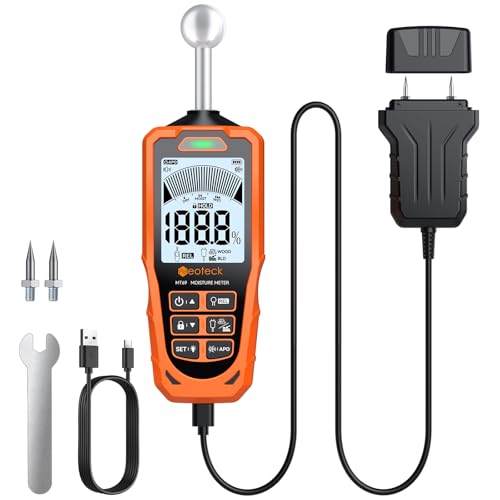
Neoteck 2-in-1 Dual Probe Moisture Meter (LCD)
Bosch Moisture Meter UniversalHumid (LED Traffic Light)
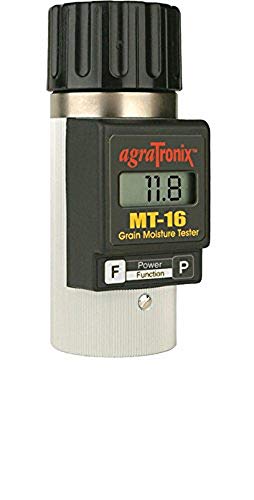
Agratronix MT-16 Portable Grain Moisture Tester

RDINSCOS Rechargeable Pinless Moisture Meter for Drywall

RDINSCOS Rechargeable Pinless Moisture Meter

RDINSCOS Pinless Moisture Meter for Walls and Wood

Proster Rechargeable Pinless Moisture Meter 40mm Depth

Proster Wood Moisture Meter 4 Modes 0-99.9%
More On The Choices That Made The List
Bosch leans into simplicity with the UniversalHumid, packaging a pin-type sensor (two metal pins you press into the wood) with a built-in wood group selector that tweaks the calibration for softwoods versus hardwoods. That matters because firewood runs the full spectrum from pine to dense oak, and a reading calibrated for one will lie to you on the other. The LED traffic light on the front turns green, yellow, or red based on where the moisture content lands, removing the need to memorize reference charts.
The trade-off is the pin-style design: every check leaves a small puncture in the log or board. You will want to angle the probe into the cut end grain (the cross-section of the log), not the bark side, for the most accurate number. Compared to the pinless RDINSCOS picks coming up later, this Bosch is more precise but slightly less convenient on finished surfaces.
What It Does Well
- Wood group selector improves accuracy across softwoods and hardwoods.
- Traffic light LED readout removes the need to interpret raw numbers.
- Compact form factor slips into a coat pocket for stack-side checks.
- Backed by Bosch’s reputation for long-term build quality.
Things To Consider
- Pin probes leave tiny holes, so this is not ideal for finished furniture or visible joinery.
- Requires pushing the pins into denser hardwoods by hand, which can fatigue fingers on a long sorting session.
Feature Snapshot
Who It Suits Best
Casual wood stove owners who split and stack a few cords a year and want a no-learning-curve tool that just tells them when the wood is ready.
Where Another Pick Suits Better
Anyone testing finished furniture, drywall, or walls where pinholes matter should reach for the Proster Pinless Moisture Meter 3/4″ Depth Color Alarm instead.
The Proster Pinless trades the puncture marks of the Bosch above for a flat scanning pad that sits on top of the wood and reads moisture through electromagnetic sensing up to roughly three-quarters of an inch deep. No pinholes means you can run it across stacked firewood, hardwood flooring, or even drywall without leaving a trace. A simple three-color LED ring communicates the result, so you do not have to squint at a tiny screen in low light.
It runs on standard batteries and stays light enough for one-handed scanning during a long stack audit. Where this pick struggles a little is in the calibration layer: pinless meters give a relative reading rather than an absolute percentage, so you compare zones rather than trust a single number to the decimal. You may find that interpretation curve steep if you want lab-grade data.
Real-World Strengths
- Leaves no pinholes on finished lumber, walls, or furniture.
- Scans fast across a stack without repositioning between every log.
- Three-color alarm simplifies pass-fail decisions on the spot.
Honest Caveats
- Pinless sensors give relative rather than absolute moisture percentages.
- Requires a flat, steady hold for a couple of seconds per scan, which slows down hurried checks.
Made For
Splitters and stackers working with finished lumber, hardwood floors, or visible surfaces where pinholes would be unacceptable.
Skip It When
Producers who need a precise percentage for kiln drying or commercial firewood grading should choose the Proster Wood Moisture Meter 4 Modes 0-99.9% instead.
Neoteck’s dual-probe meter answers the pin-versus-pinless debate by including both in a single housing: a flat scanning pad on the back for non-destructive readings, and retractable pin electrodes on the front for direct-contact accuracy. For firewood work, the pin mode covers the standard 0 to 52 percent wood range, while pinless scans around 40mm deep let you check a wall, ceiling, or floor without marking it up.
An audible alarm kicks in when moisture crosses a threshold you set, freeing your eyes to keep working. The trade-off is bulk: cramming two sensors into one tool means it sits chunkier in the hand than either single-mode Bosch unit above. For most weekend wood burners, that added weight feels fair for the versatility.
What Makes Sense
- Combines pin and pinless modes, replacing two separate meters for many owners.
- Audio alarm flags problem readings without watching the screen.
- Pin mode covers a wide wood range suitable for most firewood species.
Worth Noting
- Dual-sensor body runs heavier and larger than single-mode competitors.
- Mode-switching between pin and pinless adds a step mid-workflow.
Key Specs
Best Suited To
Homeowners juggling firewood storage alongside occasional drywall, ceiling, or subfloor moisture checks during renovations.
Reach For A Different Pick When
Someone focused purely on firewood stacks and wanting the lightest pocket tool should look at the Bosch Moisture Meter UniversalHumid (LED Traffic Light) instead.
This is Bosch’s earlier UniversalHumid pin-style meter, and it carries the same wood group selection and LED traffic light logic as the newer model reviewed above. The differences are subtle, mostly packaging and minor ergonomics, but the core measurement behavior is the same. A sticker ships with the tool showing example species for each wood group, which helps if you are not sure whether ash counts as group A or group B.
For someone splitting a mix of oak and pine, that selector prevents the kind of misreads that send damp oak to the fire too early. The pin electrodes push easily into softwoods but take more pressure on dense hardwoods, a common pattern across pin-style meters in this category. You may find yourself bracing the log against your boot for leverage on tougher pieces.
A Few Highlights
- Two-group wood calibration matches a wide range of firewood species.
- Includes reference sticker with example species for each group.
- Traffic light LED simplifies the pass-fail decision at a glance.
Points To Note
- Pin electrodes still leave small puncture marks on every test.
- No rechargeable option, so battery swaps come with long-term use.
Whose Shelf It Belongs On
Workshop users with a steady rotation of softwood and hardwood boards who want Bosch reliability without paying for the latest revision.
A Better Fit Elsewhere
Anyone who dislikes battery replacements should consider the Proster Rechargeable Pinless Moisture Meter 40mm Depth for its USB-C charging.
The MT-16 sits sideways from the rest of this list. AgraTronix built it for grain, not firewood, calibrating it to read moisture in corn, wheat, soybeans, and similar crops. A backlit digital display and multilingual menus make it usable in low light or shared equipment sheds. It runs a basic mode for quick checks and an advanced mode for finer calibration, depending on how much precision the task demands.
If you happen to also store grain, hay, or animal feed alongside your firewood, that versatility earns a mention. The honest read is that for firewood specifically, a wood-calibrated tool like the Proster Wood Moisture Meter 4 Modes gives more relevant numbers than a grain-calibrated one. Most owners will keep this for its intended farming purpose.
Everyday Perks
- Backlit digital display readable in dim barn or shed conditions.
- Basic and advanced modes suit both quick checks and fine calibration.
- Multilingual menu settings work well for shared equipment.
Practical Considerations
- Calibration is tuned for grain rather than firewood species.
Feature Card
Right Fit For
Small-scale farmers, growers, and grain sellers who need a portable tester for stored crops rather than split firewood.
Not Your Match When
Anyone focused exclusively on firewood should pick the Proster Wood Moisture Meter 4 Modes 0-99.9%, which is calibrated for wood and paper.
RDINSCOS stretches the pinless format into a six-mode tool covering softwood, hardwood, drywall, plaster, screed, and concrete. The mode dial sits under your thumb, so you can flip from firewood to wall check without juggling menus. Non-destructive scanning up to about 19mm deep means you can press the pad against freshly painted drywall before committing to a coat of primer.
Rechargeable battery life keeps the tool out of the landfill of dead AAs, and a USB cable tops it back up between sessions. The catch is breadth: cramming six material modes into a single sensor means each mode’s calibration is a compromise compared to a dedicated single-material meter. For someone whose weekend bounces between wood pile and renovation job site, that trade is fair.
What Helps Most
- Six material modes cover firewood, drywall, plaster, screed, and concrete.
- Rechargeable battery removes recurring disposable battery costs.
- Non-destructive scan leaves walls, floors, and lumber unmarked.
Trade Offs
- Multi-mode calibration is less specialized than dedicated single-material tools.
- Pinless scans stay relative, so two-zone comparisons work better than single absolute readings.
Who Will Love This
DIYers splitting time between firewood prep and renovation tasks who want one tool to cover both without buying a second meter.
Swap It Out When
If you only ever test firewood, the Proster Wood Moisture Meter 4 Modes 0-99.9% delivers a more focused pin-style reading at lower cost.
Where the previous RDINSCOS model broadens into six material modes, this sibling narrows its focus on catching hidden dampness behind drywall and ceilings before visible damage appears. The sensor is tuned for low-density drywall, where standard pinless tools often miss subtle moisture gradients because the surface reads as relatively dry even when the cavity behind it does not.
Rechargeable operation means the unit is ready to grab from a drawer, not a junk drawer full of half-used AAs. For firewood specifically, this meter is not the obvious first choice since it leans toward wall and ceiling inspection. You may find it pulls double duty in homes where moisture intrusion is the bigger worry than seasoning a wood pile.
Useful Strengths
- Tuned sensor reads low-density drywall where generic meters often miss subtle dampness.
- Rechargeable design avoids constant battery swaps.
- Pinless scan keeps walls and ceilings unmarked during inspection.
Possible Compromises
- Calibration leans toward drywall and ceiling work rather than firewood species.
Perfect Match For
Home inspectors, renovators, and homeowners worried about leaks behind drywall more than about stacking the next cord.
Consider Something Else When
Firewood-first stackers will get more relevant numbers from the Proster Wood Moisture Meter 4 Modes 0-99.9%.
This RDINSCOS unit zeroes in on walls, wood, concrete, and drywall with a stable sensor that delivers readings in two to three seconds when held flat and steady. The appeal is the absence of pinholes, which matters on visible surfaces, finished joinery, and walls you do not want to mark. For firewood, that means you can scan the cut face of a split log without leaving a tell-tale puncture in the wood.
Owners commonly report that the consistency improves when they develop a steady scanning rhythm, pressing the pad flat against the surface and counting to three before reading. Catching dampness from plumbing leaks, roof intrusion, or seasonal humidity becomes a routine pre-winter check rather than a panicked investigation. The trade-off is the relative-reading nature of pinless sensors described earlier.
Practical Pluses
- Leaves no pinholes on walls, furniture, or visible joinery.
- Stable sensor gives consistent readings when held flat for two to three seconds.
- Scans wood, walls, concrete, and drywall from a single tool.
A Few Limitations
- Pinless technology gives relative rather than absolute moisture percentages.
- Requires flat, steady contact, which slows rapid-fire stack checks.
Who Should Grab It
Workshop owners and homeowners who want a single tool for firewood plus occasional wall, ceiling, or flooring scans.
Look Elsewhere When
Anyone needing a precise percentage for kiln drying or commercial firewood should consider the Proster Wood Moisture Meter 4 Modes 0-99.9%.
Proster bumps the pinless depth up to roughly 40mm on this rechargeable model, reaching past surface treatments into the wood underneath. The 2.4-inch LCD and three-color indicator bar make the reading legible from arm’s length, so you can scan a stack and read the result without bending down to squint at a tiny screen. USB-C charging modernizes the experience for anyone already living the rechargeable lifestyle.
The wider scan depth helps with thicker firewood rounds where surface-dry wood can mask a damp core. You may find this especially useful with oak and other dense species that season slowly from the outside in. The honest trade-off is that deeper scanning on a pinless sensor amplifies the relative-reading caveat, so calibration against a known-dry reference piece remains wise.
A Few Strong Suits
- Reaches roughly 40mm deep, catching moisture below the surface treatment.
- USB-C charging removes disposable battery waste.
- 2.4-inch LCD and color bar keep readings legible from arm’s length.
Soft Spots
- Deeper pinless scans amplify the relative-reading limitation.
- Rechargeable battery introduces a charging routine some casual users skip.
Built With In Mind
Regular firewood stackers and woodworkers who scan the same piles weekly and want a rechargeable tool that sees below the surface.
Where A Sibling Pick Shines
For a more general-purpose scanner that also reads drywall and concrete, the RDINSCOS Rechargeable Pinless Moisture Meter for Drywall covers more material modes.
The Proster 4-mode pin meter closes the list as a focused, no-frills firewood tool. Integrated electrode pins about 10mm long push into the cut end of a log and return a percentage across a 0 to 99.9 percent range, with 0.1 percent resolution (the smallest change it can detect) and roughly 0.5 percent claimed accuracy. Four wood modes let you tune the reading for different species groups, including a setting aimed at firewood and similar dense stock.
For someone who only ever tests firewood, paper, and cardboard, this Proster strips away the drywall and grain modes that complicate other picks. The trade-off is battery type and build feel: it runs on a coin-style cell and the housing feels lighter than the Bosch units reviewed earlier. For most backyard stacks, that lighter form factor is a feature, not a flaw.
What Earns Its Place
- Pin-style sensor delivers a clear percentage for firewood, paper, and cardboard.
- Four wood modes tailor the reading to different species groups.
- Compact, lightweight body fits easily in a pocket during stack checks.
Where It May Fall Short
- Coin-cell battery requires periodic replacement rather than USB charging.
- Pin probes still leave small puncture marks on every test.
Quick Facts
The Right Fit
Firewood-first owners who split and stack their own fuel and want a focused, percentage-reading tool without drywall or grain bells and whistles.
Not Your Match When
Anyone who also scans walls, ceilings, or finished furniture should reach for the Proster Rechargeable Pinless Moisture Meter 40mm Depth instead.
Factors Worth Weighing Before Choosing Firewood Moisture Meters
Pin-Type Versus Pinless Sensing
Pin-style meters drive two electrodes directly into the wood and read the electrical resistance between them, which correlates with moisture content. They tend to give precise absolute percentages but leave puncture marks on every test. Pinless meters read moisture through electromagnetic sensing at the surface, leaving no marks but returning relative readings best used for comparison between zones. Stove owners checking seasoned firewood benefit from either; furniture and wall inspectors benefit more from pinless.
Wood Group Calibration And Species Range
Different tree species carry different default moisture baselines, so a meter calibrated for pine can mislead on oak or ash. Wood group selection, like the Bosch UniversalHumid’s two-group switch or the Proster 4-mode system, adjusts the math to match what you are burning. Buying a meter with species coverage close to your actual firewood pays off in fewer false “ready” readings.
Readout Style And Stack-Side Visibility
Working outside in winter sun or dim garage light makes a clear readout essential. LED traffic lights give an instant verdict without reading fine print, while numeric LCDs let you track exact percentages over weeks of seasoning. Pickers stacking wood in daylight may prefer the speed of a traffic light; serious trackers tracking moisture drop over time usually want the digits.
Power Source And Long-Term Maintenance
Battery type shapes long-term ownership more than buyers expect. Disposable coin cells and AA batteries keep the tool light and grab-and-go, but require periodic replacement. USB-C rechargeable models like the Proster Pinless 40mm Depth and the RDINSCOS units simplify daily routines at the cost of remembering to charge. Either path works; the wrong choice is buying a tool you leave in the drawer because the battery is dead.
Smart Considerations Before You Decide
Pitfalls Shoppers Hit
The most common mistake is buying a pinless meter expecting an absolute percentage that matches the marketing claims. Pinless sensors give relative readings, and comparing zones is more reliable than trusting a single number. Another slip-up is ignoring species calibration. A pine-tuned meter applied to dense oak will keep telling you the wood is ready when it is still closer to 25 percent than the 15 to 20 percent range where seasoned firewood burns cleanly.
Where The Extra Money Goes
Higher-tier meters in this category usually add wood group calibration, dual pin and pinless modes, deeper scan depth, and rechargeable batteries. For most backyard firewood users, a mid-range pin-style meter with two wood groups covers the actual job. The upgrade pays off when you also need to scan walls, floors, or ceilings, or when you measure the same stacks weekly and want a rechargeable, deeper-reading tool.
Frequently Asked Questions
What moisture percentage is ideal for firewood?
Seasoned firewood burns cleanest when moisture content sits between 15 and 20 percent. Anything above 25 percent will smoke heavily and coat your chimney with creosote.
Can a moisture meter read frozen firewood accurately?
Cold wood below freezing can give misleadingly low readings because frozen water inside the cells does not conduct electricity the same way. Bring logs indoors for several hours before measuring for the most accurate result.
Is pinless really as accurate as pin-type?
Pinless meters give reliable comparative readings, but pin-type tools still edge them out for absolute percentage accuracy. For firewood in particular, pin-style meters tend to give numbers you can act on with more confidence.
How deep should a firewood moisture meter read?
Surface-dry firewood can still hide a damp core, especially in dense species like oak. A meter that reads at least 12 to 25mm into the wood gives a more honest picture than a shallow surface scan.
Do these meters work on construction lumber too?
Most pin-style firewood meters can read sawn lumber, and pinless drywall models cover wider material ranges. Grain-specific units like the AgraTronix MT-16 stay calibrated for crops and are not a substitute for wood-rated tools.
Wrap Up
A firewood moisture meter takes the smoke-and-guesswork out of stacking season, and the right one depends on whether you mostly burn wood or also scan walls and floors. Pin-style tools like the Proster Wood Moisture Meter 4 Modes and the Bosch UniversalHumid deliver focused percentage readings for firewood, while the pinless RDINSCOS and Proster rechargeable units add versatility for broader home use. Pick the tool that matches your routine, and the next cord you stack will be the cleanest-burning one yet.
