

A soot-stained hearth is one of those slow, stubborn problems you only notice when company is on the way. The right cleaning product, or in some cases a chimney brush, turns that greasy film into a quick Saturday project instead of an all-day scrub. This roundup covers the picks most homeowners reach for when brick, stone, or masonry starts to look tired: chemical gels for the firebox face, heavy-duty outdoor washes for exterior hearths, and mechanical brushes for the flue above. Each entry was selected for a specific kind of use, so you can match the formula and format to your fireplace’s size and finish.
A Snapshot Of The Selections

KABIN Kathite Chimney Sweep Cleaner 2LB

Midwest Hearth 11-Inch Wire Chimney Brush Kit

Heavy Duty TSP Cleaner Wall Prep

Blue Bear EBC Exterior Building Cleaner 1 Qt

Quick N Brite Fireplace Gel Cleaner Kit

Krud Kutter Multi Purpose House Wash 32 oz

KOTARBAU Chimney Brush 200 mm Spring Steel
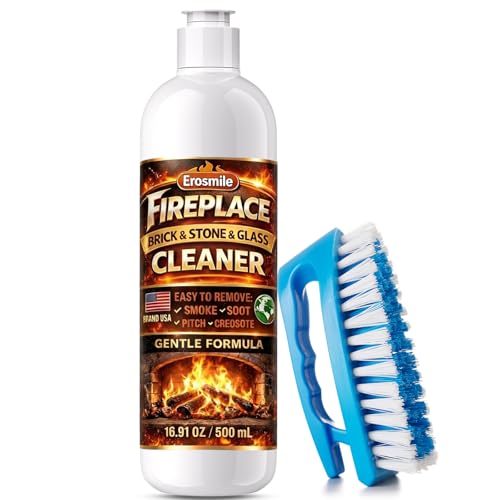
EROSMILE Fireplace Soot Remover Kit
A Breakdown Of The Leading Choices
KABIN Kathite takes a different route from the gels and sprays lower on this list. Instead of scrubbing, you sprinkle a powder over an active fire and let the chemistry do the work as creosote (the tar-like residue that builds up in wood-burning flues) breaks down inside the chimney. That makes it a fit for owners who use their stove regularly and want a routine maintenance step rather than a deep restoration project.
For homeowners who light fires most weekends through winter, this kind of burn-in treatment can stretch the interval between manual chimney sweeps. It pairs naturally with a chimney brush like the Midwest Hearth kit covered next, since the gel loosens buildup and the brush finishes the job.
What Helps Most
- Targets creosote from the inside during a normal burn, with no scrubbing required.
- Compatible with wood stoves, inserts, and open fireplaces, so it adapts to common hearth setups.
- You can use it alongside regular fire logs as part of a routine maintenance schedule.
- Helps keep flue ventilation clearer, which supports steadier drafting on cold nights.
- The 2-pound tub covers multiple treatments across a season for most households.
Points To Keep In Mind
- It works on creosote, not on the soot film that coats visible brick, so you’ll still need a separate surface cleaner.
- Owners commonly report the need for repeated applications over several weeks before heavy glaze deposits loosen.
Feature Snapshot
Whose Hearth It Belongs On
Regular wood burners in cold climates who want a low-effort way to manage creosote between full sweeps.
Look Elsewhere When
Your main problem is visible soot on the firebox brick, in which case Quick N Brite’s gel formula is a better fit for interior surfaces.
Midwest Hearth’s brush kit is built for the part of the job no chemical can reach, the inside of the flue itself. The 11-inch square head pairs with six 3-foot fiberglass rods that thread together, giving you up to 18 feet of reach from the firebox or rooftop. For masonry chimneys with heavy soot loads, mechanical brushing is still the most thorough method.
Where the KABIN treatment above softens creosote gradually, this kit removes it in one afternoon. Tempered steel bristles (heat-treated for rigidity and wear resistance) scrape soot from clay tile liners, and the galvanized double-spiral stem stays stiff under pressure. Heavy-gauge .350-diameter fiberglass rods keep the assembly from whipping sideways inside taller flues.
The Upside
- Modular rod design lets you step the length up or down to match your chimney height.
- Heavy-duty 1/4-inch NPT fittings (standard pipe-taper threads) lock sections together so the brush doesn’t unscrew mid-scrub.
- Stiff steel bristles handle coal residue and creosote glaze that gels alone struggle to lift.
- One-time purchase that lasts many seasons with proper storage and cleaning.
Trade-Offs To Consider
- Working from the rooftop requires basic ladder confidence and a helper for safety.
- Not suited for stainless steel flexible liners, where plastic or poly brushes are usually preferred.
- Fiberglass rods can crack if dropped on hard surfaces, so storage matters between uses.
Built With In Mind
Homeowners with tall masonry chimneys who want to handle annual sweeping themselves rather than booking a service call.
Reach For A Different Pick When
Your liner is a flexible stainless steel system, in which case a poly brush and gentler chemistry like EROSMILE’s soot remover suit the materials better.
B-BRITE’s TSP (trisodium phosphate) formula is a workhorse degreaser that painters reach for when walls need to be truly clean before primer goes on. For fireplace surrounds, that matters: soot and smoke residue on a brick face will bleed through latex paint within weeks if you skip a proper prep step.
Unlike the fireplace-specific gels above, TSP is a general heavy-duty degreaser that handles stove filters, driveways, and greasy garage floors in addition to masonry. That versatility makes it attractive if you have several prep projects queued up at the same time.
What Stands Out
- Cuts through greasy soot film that milder detergents leave behind on painted brick.
- Doubles as a wall prep step, kitchen degreaser, and outdoor surface cleaner in one tub.
- Concentrated formula stretches a small amount across multiple cleaning sessions.
Small Caveats
- TSP is a strong alkali, so gloves and ventilation are sensible precautions during use.
- It is not formulated specifically for natural stone, so test a hidden area first on marble or limestone surrounds.
- Rinsing residue thoroughly is necessary before any paint or sealer goes on top.
Best Suited To
Homeowners repainting a soot-stained brick surround who want a proven degreaser rather than a specialty soot product.
Skip It When
Your goal is just routine cleaning of an unpainted interior hearth, where Quick N Brite’s gentler nonabrasive gel will be easier on the brick.
Blue Bear EBC targets the chalky white stains (efflorescence), mortar haze, and algae that show up on outdoor fireplaces and chimney exteriors after a few seasons of weather. Instead of harsh muriatic acid (a strong industrial hydrochloric-acid solution often used in masonry work), the formula leans on natural fruit acids combined with boosted surfactants (wetting agents that help the liquid spread and penetrate porous surfaces). That makes it friendlier to surrounding landscaping while still pulling mineral deposits out of porous brick.
For an outdoor kitchen fireplace or a chimney stack that sees rain and sun year-round, this kind of acid-based wash handles problems soap cannot touch. Compare that to the TSP cleaner above, which excels at grease but does less against mineral staining.
The Value In It
- Tackles efflorescence, mortar residue, salt deposits, moss, and algae in one product.
- Natural-acid formula is easier on nearby plants and grass than muriatic alternatives.
- Works on concrete, brick, pavers, and natural stone without separate purchases for each.
- Concentrate format lets you dilute for lighter jobs or use full strength on heavy buildup.
A Few Limitations
- It is an acid-based product, so protective eyewear and gloves are still recommended.
- Not designed for interior firebox soot, where a nonabrasive gel like Quick N Brite is the better fit.
- Coverage varies with surface porosity, so heavily textured brick may need more than expected.
Feature Snapshot
Right Fit For
Homeowners tackling an outdoor fireplace, patio hearth, or chimney stack where mineral staining and algae have built up over seasons.
Where Another Pick Suits Better
For purely interior soot on the firebox face, Quick N Brite’s gel is purpose-built for that job and avoids working with acid indoors.
Quick N Brite’s gel formula is the most fireplace-specific product on this list. The kit pairs a 16-ounce nonabrasive gel with a dedicated scrub brush, so you have everything needed for an interior firebox refresh in one box. It clings to vertical brick faces long enough to dissolve soot without running straight onto the hearth floor.
Where TSP above is general-purpose and Blue Bear EBC is built for outdoor mineral stains, this gel is targeted squarely at the interior soot film that builds up after a winter of evening fires. It also handles stone, tile, and marble, so a mixed-material surround can be cleaned with the same product.
Reasons It Performs
- Gel consistency clings to vertical brick and stone without dripping immediately.
- Nonabrasive formula is safe on brick, stone, tile, rock, and marble surfaces.
- Made in the USA, which matters to shoppers who prioritize domestic manufacturing.
- Kit format removes the guesswork of matching brush and cleaner separately.
- Concentrated gel stretches across multiple cleaning sessions in most homes.
Honest Caveats
- Heavy glaze creosote on the chimney walls requires a brush like the Midwest Hearth kit rather than surface gel alone.
- You may find multiple applications needed on a hearth that has not been cleaned in several seasons.
Feature Snapshot
Perfect Match For
Owners of traditional interior fireplaces who want a complete gel-and-brush kit for seasonal soot removal without hiring a pro.
Not Your Match When
The problem is outdoor efflorescence or chimney-tall creosote, where Blue Bear EBC or the Midwest Hearth brush kit handle the job better.
Krud Kutter’s House Wash is the simplest option on this list for outdoor fireplaces: spray it on, rinse it off. The water-based formula is non-toxic, biodegradable, and free of xylene (a petroleum-derived solvent common in harsher cleaners), so it is easier on skin and plants than solvent-heavy alternatives. For someone cleaning an exterior chimney breast along with siding and gutters, that spray-and-rinse approach saves serious time.
The trade-off is gentleness. Where Blue Bear EBC above handles mineral stains with acid, Krud Kutter relies on surfactants and detergents. That is plenty for general grime and mildew on a brick chimney exterior, but it will not lift heavy efflorescence or mortar haze.
The Helpful Details
- Ready-to-use spray format removes mixing and measuring steps.
- Safe across siding, brick, stucco, and gutters for whole-house exterior projects.
- Water-based and biodegradable, which simplifies disposal and plant safety.
- Non-flammable formula stores safely in a garage or shed through winter.
Less Ideal Details
- Will not lift heavy mineral staining the way Blue Bear EBC’s acid-based formula can.
- Designed for outdoor surfaces, so it is not the right tool for interior soot on a firebox.
Who Should Grab It
Homeowners planning a spring exterior wash who want one product that covers the fireplace surround along with the rest of the house.
A Better Fit Elsewhere
For stained mineral deposits on outdoor masonry, Blue Bear EBC’s acid-based approach gets further than this surfactant-only formula.
The KOTARBAU brush is a 200 mm (about 8-inch) head on a spring-steel wire shaft, designed for rough internal scrubbing of brick chimneys. Unlike the Midwest Hearth kit above, it does not include extension rods, so it suits compact or short flues where a long reach is unnecessary.
For owners of a small wood stove or a single-story masonry chimney, that compact format is genuinely easier to handle. You can work from the firebox end without climbing a ladder, which matters in winter when rooftops are icy.
Standout Benefits
- Spring-steel wire shaft flexes through minor flue offsets without snagging.
- 200 mm head suits small-diameter masonry flues common in older cottages.
- Simpler storage than a multi-rod kit since there are no separate sections to lose.
Worth Bearing In Mind
- No included rods, so it is less practical for taller two-story chimneys than the Midwest Hearth kit.
- Sourced abroad, so labeling and warranty support may differ from domestic options.
- Hard steel bristles can score softer liners, so confirm your flue type before brushing.
Made For
Owners of compact masonry chimneys or wood-stove flues who want a single brush instead of a modular rod system.
Consider Something Else When
Your chimney runs two stories or taller, where the Midwest Hearth rod kit gives the reach you need.
EROSMILE rounds out the list with a concentrated soot-removal formula paired with its own scrub brush, similar in concept to Quick N Brite but formulated to also handle glass doors. For a fireplace with a glass-front insert, that combination avoids buying a separate fireplace glass cleaner.
The concentrated liquid penetrates the porous texture of brick and stone where soot has settled into the grain. That makes it a useful step before sealing or repainting a hearth surround, alongside a heavier degreaser like the TSP covered earlier.
Good Reasons To Consider
- Works across brick, stone, tile, rock, and glass doors with one bottle.
- Concentrated formula dilutes for lighter jobs or goes full strength on neglected hearths.
- Included brush matches the cleaner so there is no tool compatibility guesswork.
Things To Weigh Up
- Interior soot only, so outdoor mineral staining still needs a separate product like Blue Bear EBC.
- Several passes may be needed on fireplaces that have gone multiple seasons without cleaning.
Who Will Love This
Shoppers with a glass-front fireplace insert who want one kit for the firebox brick, stone surround, and door glass.
Swap It Out When
Your fireplace is open-hearth with no glass, in which case Quick N Brite’s nonabrasive gel is the more focused pick for interior brick alone.
What Matters Most Before Choosing Fireplace Brick Cleaners
Interior Versus Exterior Use
The first split is location. Interior fireboxes see soot, smoke residue, and creosote stains from combustion, which respond to surfactants, gels, and mild degreasers like Quick N Brite or the EROSMILE kit. Exterior masonry deals with weather-driven mineral staining, algae, and mortar haze, where acid-based washes like Blue Bear EBC earn their keep. Using the wrong chemistry outdoors can mean wasted effort; using it indoors can mean fumes in an enclosed room.
Surface Material Compatibility
Not every cleaner is safe on every masonry type. Brick is forgiving and tolerates most products, but softer natural stone (limestone, marble, sandstone) can etch under acids. The Quick N Brite gel is explicitly safe across stone, tile, and marble, while Blue Bear EBC works across brick and concrete but needs a test patch on sensitive stone. A two-minute spot test in a hidden corner prevents permanent dulling.
Chimney Height And Reach
For the flue above the firebox, mechanical brushing is still the standard. Taller masonry chimneys need modular rod kits like the Midwest Hearth bundle, while compact single-story flues can be handled by a fixed brush like the KOTARBAU model. Measure your flue length before buying, since most sweeps work top-down or bottom-up depending on roof access.
Routine Maintenance Versus Deep Restoration
Light weekly soot responds to gel and brush. Heavy creosote glaze inside the flue needs burn-in treatments like the KABIN powder alongside physical brushing. Choosing based on how neglected the fireplace is right now saves you from buying a second product halfway through the job.
Key Considerations Across These Picks
Pitfalls Shoppers Hit
The most common mistake is buying a heavy-duty acid cleaner for an interior firebox, which produces fumes you do not want in a closed room. Another is choosing a stiff steel brush for a flexible stainless steel liner, where the metal can score or puncture the liner. Match the product to the surface, not just the stain.
What Separates Premium From Basic
In this category, the gap between budget and premium usually shows up in chemistry and kit completeness. A basic cleaner might handle soot film but skip mineral stains, while a premium concentrate covers multiple surface types and dilutes for lighter jobs. Kits that include a matched brush, like Quick N Brite and EROSMILE, also remove the trial-and-error of pairing tools separately. Paying more usually buys versatility and concentration rather than raw cleaning power.
Frequently Asked Questions
What is the safest cleaner for interior fireplace brick?
Nonabrasive gels like Quick N Brite are designed for indoor use and cling to vertical brick without harsh fumes. Always ventilate the room and wear gloves regardless of the product.
Can I use a chimney brush on a stainless steel liner?
Stainless steel flexible liners require poly or plastic brushes, not the stiff steel bristles found on most masonry brushes like the Midwest Hearth or KOTARBAU models. A steel brush can tear the liner.
How often should I clean fireplace brick?
Most homeowners benefit from a light surface clean once or twice per burning season, plus a deeper flue brushing annually. Heavy daily use may need more frequent attention.
Do outdoor fireplace cleaners work indoors?
Acid-based exterior cleaners like Blue Bear EBC produce fumes that are unpleasant indoors. Save them for outdoor masonry and use a gel or spray indoors instead.
Will TSP damage brick?
TSP is a strong degreaser that handles soot and grease well but can affect mortar and some stone finishes with prolonged contact. Rinse thoroughly and avoid letting it dry on the surface.
Closing Remarks
The best pick depends on where the dirt lives: interior soot calls for a nonabrasive gel or soot remover kit, outdoor mineral stains call for an acid wash, and creosote inside the flue calls for either a burn-in treatment or a proper brush. Match the product to the surface and the cleaning goes from a frustrating weekend into a straightforward afternoon.
