

Few household frustrations sting quite like stepping into a shower and getting hit with an ice-cold blast. Under sink hot water recirculating pumps solve that slow trickle problem by keeping heated water circulating through your plumbing, so the tap runs warm within seconds instead of a minute. Tank-style homeowners typically see the biggest gains, since their stored water cools in the pipes during idle hours.
The category splits into two camps: full plumbing-loop systems with dedicated return lines, and retrofit kits that mount under the sink and use a thermal bypass valve to push cooled water back to the heater. Power draw, pump noise, and valve compatibility with your existing heater matter more than brand loyalty. Use this guide to match the right pump style to your home’s plumbing layout and daily hot-water habits.
The Picks In Brief
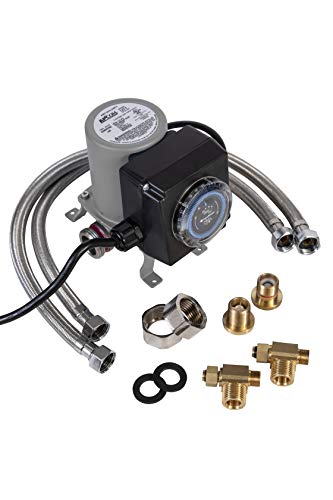
APCOM UT1 Hot Water Recirculation Pump Under Sink

Grundfos GRU-595916 Recirculating Hot Water Pump Comfort System

Crispaire Instant Hot Water Recirculating Pump Kit

TheMiLiO Upgraded WP596816 Sensor Valve Kit Copper Finish

TheMiLiO WP596816 Sensor Valve Kit 2-Pack Copper

TheMiLiO Replacement Kit Programmable Timer Brass Valves

WASSERMANN Cast Iron Circulator Pump 115V 3-Speed

PROZRTED HBS24-12E Smart Instant Hot Water Recirculating Pump

Carivia 120W Hot Water Recirculating Pump 110V

JASSFERRY Hot Water Recirculating Pump 115V Cast Iron Flange
Taking A Closer Look At The Options
Most homes with a traditional tank water heater lose the first minute of every shower to cold-line waste, and the APCOM UT1 tackles that exact pain point without demanding a plumber. The unit tucks under the sink, pairs with the cold-water line, and runs only when the thermostat senses cooled water sitting idle. Compared with the full-loop Grundfos system coming up next, this one skips the dedicated return pipe entirely, which keeps installation friendly for retrofit homes.
You get a built-in timer that controls when the pump actually fires, so it isn’t burning wattage all day. In most kitchens, that means the pump activates in the morning window before anyone showers, then again in the evening. Tank owners with longer pipe runs between the heater and the farthest faucet tend to feel the biggest time savings.
Real Benefits
- Built-in thermostat and timer cut standby energy draw during unused hours
- Under-sink mounting avoids the need to plumb a dedicated return line
- Automatic operation removes the daily habit of pressing a recirculate button
- Tank-heater compatibility keeps the install scope narrow for most homeowners
Things To Consider
- Not designed for tankless water heaters, so upgrading your heater later means swapping pumps
- Performance drops on very long pipe runs between the heater and the far bathroom
Feature Snapshot
Best Suited To
Tank-heater households that want hot water at the tap within seconds and don’t want to pay a plumber to run a new return line.
Look Elsewhere When
You own a tankless water heater, in which case the Crispaire Instant Hot Water Recirculating Pump Kit reviewed further down is a closer match.
The Grundfos Comfort System is the gold-standard reference pump many other kits on this list were designed to mimic, including the TheMiLiO replacement kits later. It runs on just 25 watts, so leaving it on a timer all day barely registers on the electric bill. The included 6-foot line cord gives flexibility for outlet placement, and the 3/4-inch male by 3/4-inch female NPT connection fits standard residential plumbing without custom adapters.
The flow range handles up to 9 gallons per minute, which covers a typical single-family home without straining the motor. Maintenance-free operation means no seal swaps or coupler replacements down the line, a real plus for homeowners who’d rather install it once and forget it.
The Value In It
- 25-watt draw keeps operating cost minimal over years of scheduled runtime
- Maintenance-free design removes the routine seal-replacement chore common to older pumps
- Quiet running, suitable for inside living spaces without audible annoyance
- Full kit included, so a plumber or handy homeowner can complete the install in one trip
Worth Noting
- Head range caps at 6 feet, limiting use on homes with basements below the heater
- Requires a 115V outlet near the pump location, which may need an electrician in older homes
Quick Facts
Made For
Homeowners willing to wire a dedicated return loop who want a quiet, low-watt pump from a recognized brand.
A Better Fit Elsewhere
You’d rather avoid the return-line plumbing altogether, in which case the APCOM UT1 reviewed just above is a simpler swap.
First-time installers usually hit the same wall: they don’t have a return line and they don’t want to open walls. The Crispaire kit sidesteps that by using a thermal bypass approach, sending cooled water back through the cold line via a sensor valve. A 304 stainless steel valve body resists the corrosion that eats through cheaper brass valves in hard-water regions. Twenty-inch PEX supply lines give enough slack to reach typical under-sink shutoff locations without needing extra fittings.
The kit ships with a smart timer for on-demand operation, plus adapters and Teflon tape so you aren’t running back to the hardware store mid-install. Worth flagging: this one is not compatible with tankless heaters, so on-demand owners should keep scrolling.
Advantages To Know
- 304 stainless steel valve handles corrosion in hard-water households
- 20-inch PEX lines cover standard under-sink rough-in without extra parts
- Smart timer activates the pump only when hot water is requested, not on a fixed clock
Honest Caveats
- Not compatible with tankless water heaters, limiting future heater upgrades
- Requires basic plumbing comfort to make watertight PEX connections
- Single-point retrofit means the far bathroom may still see a short cold lag
Right Fit For
DIY first-timers with a tank water heater who want hot-water-on-demand without hiring a plumber to run a new return line.
Swap It Out When
You need fast hot water to multiple bathrooms at once, in which case the TheMiLiO WP596816 Sensor Valve Kit 2-Pack a few picks ahead handles dual-valve setups.
This is not a full pump; it’s a replacement sensor valve for households already running a Watts Premier 500800, 500805, or Grundfos UP Comfort system. The copper finish with an electrophoretic coating aims to outlast the plastic-bodied OEM valves that tend to warp after a few years of hot-cold cycling. Built-in alignment aids on the 12-inch supply lines reduce the swearing that usually comes with cramped under-sink work.
Compatibility is narrow on purpose. You need to confirm your existing pump model before clicking, since mismatched threads ruin the day fast. The package includes the 1/2-inch by 3/8-inch fittings required to bridge the new valve to your existing pump, so a basic swap usually completes in under an hour.
Useful Touches
- Pure copper body with electrophoretic coating resists corrosion in hot, humid under-sink spaces
- Built-in alignment aids on supply lines shorten installation time in tight cabinets
- Direct-fit compatibility with three popular pump models avoids adapter hunting
Points To Keep In Mind
- Single-valve kit, so multi-bathroom homes with two fixtures served may need the 2-pack version
- Only fits specific Watts Premier and Grundfos Comfort models, not universal
- Requires shutting off the water heater during swap, which may need scheduling
Who Should Grab It
Existing pump owners whose original plastic sensor valve is leaking, sticking, or failing to open at the right temperature.
Not Your Match When
You don’t yet own a compatible pump, in which case the Grundfos GRU-595916 reviewed earlier is the system to start with.
Two-bathroom homes know the pain: hot water arrives at the kitchen sink fast but the upstairs shower still trickles cold for a full minute. This 2-pack handles that by installing matched sensor valves at two separate fixtures, which lets the pump serve both loops simultaneously. The same copper-and-coating construction from the single-pack version carries over, with a stated service life of 5 to 7 years under proper maintenance.
Two brass valves, four 12-inch lines, and four fittings come in the box, which is enough hardware for a complete dual-point install without a follow-up parts run. Standard tank-heater compatibility keeps it accessible, though you should verify your heater setup before ordering.
Why It Works Well
- Dual-valve configuration serves kitchens and bathrooms at the same time
- 5 to 7 year expected service life on the copper body under normal use
- All fittings included, so no mid-install trips for missing adapters
Small Caveats
- Requires a compatible Watts Premier or Grundfos Comfort pump, sold separately
- Indoor cold-climate installations only, not rated for outdoor or unconditioned spaces
Feature Rundown
Perfect Match For
Multi-bathroom households with two hot-water fixtures that need simultaneous fast delivery.
Another Choice May Suit
You only need a single-fixture retrofit, in which case the single-pack TheMiLiO valve reviewed just above saves money.
Schedules run households. The 24-hour dial with quarter-hour tabs on this kit lets you align pump operation with the exact minutes your family actually showers, washes dishes, and runs laundry, rather than running the pump at arbitrary intervals. AM/PM indicators simplify programming, and the dual-valve setup means two fixtures stay ready at once.
It functions as a replacement for existing Watts 0955805 and Grundfos 595916 systems, so the pump body itself isn’t included. You’re paying for the timer, two upgraded 595926 brass valves, supply lines, and adapters. The brass valves close at 98 degrees Fahrenheit, which prevents the pump from running indefinitely once lines reach temperature.
What Helps Most
- Quarter-hour programming tabs match real household routines instead of fixed hourly cycles
- Two brass valves serve kitchen and bath loops at the same time
- Auto-shutoff at 98°F prevents wasted runtime once lines heat up
A Few Limitations
- Requires an existing compatible pump body, this is a kit not a full system
- Programming takes a few minutes of dial-setting on first install, which may confuse less technical users
Whose Shelf It Belongs On
Homeowners with predictable morning and evening hot-water windows who want the pump to track their actual routine.
Reach For A Different Pick When
You don’t yet own a compatible Watts or Grundfos pump, in which case the full Grundfos GRU-595916 reviewed earlier gives you the complete system.
This WASSERMANN unit steps out of the residential under-sink category and into the hydronic and boiler world. The cast iron body, 23-foot max head, and 145 PSI pressure rating handle closed-loop heating systems where household pumps would burn out fast. Manual 3-speed control lets you tune output to match the loop length and radiator count, which matters more in these systems than on a simple tank-to-faucet retrofit.
A built-in check valve prevents backflow that can damage boiler components. It targets wood-burner radiant heaters and hydronic heat systems as much as domestic hot water, so the value proposition shifts from “wait less at the tap” to “move heated water through a building.”
Notable Gains
- 145 PSI pressure rating handles boiler and hydronic loop demands
- Manual 3-speed control matches pump output to loop size and radiator count
- Built-in check valve prevents backflow damage to boiler components
- 1-inch NPT flange suits heavy-duty plumbing rough-ins
Trade Offs
- Overkill for standard residential under-sink use, since it’s built for boiler loads
- Higher flow and head ratings mean more electrical draw than small under-sink units
Spec Overview
Built With In Mind
Homeowners with hydronic boiler loops, wood-burner radiant heaters, or larger multi-zone heating systems.
Where A Sibling Pick Shines
You only need a basic tank-to-faucet retrofit, in which case the compact Carivia 120W pump reviewed later is a quieter everyday pick.
Remote-mount installs usually mean the pump can’t live under the sink because the cabinet is full, or the chosen fixture is a wet bar in another room. The PROZRTED HBS24-12E solves that with a 15-inch hose that lets you place the pump remotely while the thermostat stays where it can sense line temperature. The built-in thermostat fires the pump on demand rather than on a clock, which trims energy use in homes with sporadic schedules.
It can also run continuously for users who simply want hot water available without thinking about it. Owners commonly report the 2 to 3 minute pre-heat window hits the right balance between waiting and wasting energy.
Positive Points
- Built-in thermostat enables on-demand activation without a separate timer purchase
- 15-inch hose supports remote mounting in awkward under-sink cabinets
- Continuous-run option suits households with unpredictable hot-water needs
Where It May Fall Short
- Continuous-run mode adds noticeable energy use compared to thermostat-only operation
- Remote hose length caps placement flexibility for very long pipe runs
Who Will Love This
Homeowners with cramped cabinets or secondary fixtures like wet bars who need flexible pump placement.
Consider Something Else When
You want a traditional under-sink install with a low 25-watt draw, in which case the Grundfos GRU-595916 reviewed earlier is a quieter fit.
A 25 dB operating level puts this pump in the same room as a quiet refrigerator, which matters in studio apartments and open-plan homes where the kitchen shares walls with living space. The cast iron pump head and aluminum housing handle 145 PSI, with a max flow of 25 liters per minute (about 6.6 GPM) that covers most small-to-mid residential setups. The included 3/4-inch NPT fitting plus brass 1/2-inch adapter makes the rough-in connection straightforward.
A manual and automatic mode switch lets you choose between continuous flow during heavy-use windows or on-demand activation. Owners commonly cite the 15-second hot-water arrival at the kitchen tap as a meaningful upgrade from the previous minute-long wait.
Features That Help
- 25 dB noise level keeps operation nearly inaudible in quiet living spaces
- Manual and automatic modes cover both continuous and on-demand use patterns
- Brass adapter included, so no extra trip for fitting compatibility
- 145 PSI max pressure handles typical residential plumbing demands
Where It Is Less Suited
- Higher wattage than the 25-watt Grundfos, costing more across heavy daily runtimes
- Cast iron head adds weight that complicates wall-mount installations
Key Specs
The Right Fit
Studio and apartment dwellers who need quiet pump operation and a simple under-sink install without a return loop.
Where Another Pick Suits Better
You prioritize minimal energy draw over noise level, making the Grundfos GRU-595916 reviewed earlier the better long-term value.
Solar water heating and small boiler loops run hotter and at higher pressures than standard residential plumbing, and the JASSFERRY pump is built for that world. The 230°F fluid temperature rating covers most solar storage tanks, and 3-speed power at 100, 70, or 55 watts lets you dial output to match the loop demand without overworking the motor. A 20-foot max head handles single-story loops with margin.
The cast iron body carries the same maintenance-free ethos as the other heavy-duty options, with no mechanical seals or couplers to swap. Indoor liquid temperature range starts at 36°F, so cold-climate workshops won’t choke it during shoulder seasons.
Useful Highlights
- 230°F max fluid temperature suits solar and high-temp boiler loops
- 3-speed wattage control at 100/70/55W matches output to loop demand
- Maintenance-free design avoids the seal and coupler service common to older pumps
Potential Drawbacks
- Specialty orientation means it’s over-spec for typical residential retrofits
- 1-inch flange connection requires matching plumbing size, not a quick universal fit
Who It Suits Best
Homeowners with solar water heating arrays or workshop boiler loops that need high-temperature tolerance.
Skip It When
You want a standard under-sink residential install, in which case the quieter Carivia 120W pump reviewed just above is a simpler swap.
What Matters Most Before Choosing Under Sink Hot Water Recirculating Pump
The first decision point is whether your plumbing already has a dedicated return line. Homes built or remodeled with recirculation in mind have a second pipe that loops unused hot water back to the heater, and these setups pair best with full-loop pumps like the Grundfos Comfort System. Older homes without that return line need retrofit kits with thermal bypass valves that send cooled water through the cold line instead.
Tankless water heaters add a second filter. Many retrofit systems explicitly exclude tankless units because their on-demand heating elements don’t store water to draw from, and pulling cooled water back through the cold line can confuse their flow sensors. Check compatibility before buying.
Power draw varies wildly across this category. The Grundfos pulls 25 watts, while the Carivia pulls 120 watts. Over a year of timer-driven runtime, that gap can add up. Noise matters less for basement mechanical rooms but a lot for studio apartments where the kitchen shares a wall with the bedroom. The 25 dB Carivia rating sits at the quiet end of the spectrum.
Finally, valve compatibility matters when you’re replacing rather than installing from scratch. Watts Premier, Grundfos Comfort, and a handful of other ecosystems use proprietary sensor valves, so a replacement valve from one brand rarely fits another brand’s pump body.
Key Considerations Across These Picks
Mistakes Worth Dodging
The most common slip-up is buying a pump before checking whether the home has a return line. Retrofit kits without return lines rely on thermal bypass through the cold supply, which works but doesn’t deliver the same flow rate as a true loop system. Homes with longer pipe runs between the heater and the far bathroom also tend to underperform on single-point retrofits, so dual-valve kits earn their keep there.
Another trap is overlooking tankless compatibility. Several kits on this list explicitly exclude tankless heaters, and forcing the install can cause flow issues with the heater’s internal sensors.
When Paying More Pays Off
Higher-tier models in this category typically earn their price through longer service life, quieter operation, or finer scheduling controls. The Grundfos 25-watt draw, for example, costs more upfront but trims the electric bill enough to matter over years of daily runtime. TheMiLiO’s copper-finished valves also outlast plastic OEM bodies in hard-water regions, which avoids the cost of a repeat replacement in three to five years.
Frequently Asked Questions
Do under sink hot water recirculating pumps work with tankless water heaters?
Most retrofit kits explicitly exclude tankless heaters because the thermal bypass approach can interfere with on-demand flow sensors. Tankless owners should look for pumps specifically rated for tankless compatibility, or plan to add a small storage tank to buffer the recirculation loop.
How much water does a recirculating pump actually save?
A typical household wastes 1 to 2 gallons per minute of cold water while waiting for hot water to arrive at the tap. Across a family of four running two showers, a dishwasher cycle, and laundry each day, that adds up to thousands of gallons per year. Exact savings depend on pipe run length and how often the pump runs.
Can a homeowner install one of these pumps without a plumber?
Retrofit under-sink kits with PEX supply lines and threaded valves are designed for handy homeowners with basic plumbing comfort. Full-loop systems with dedicated return lines typically require a plumber because routing the return pipe through walls and floors is beyond most DIY skill levels.
How long do these pumps usually last?
Standard residential models last 8 to 15 years with normal use, while the valves and seals see more wear and may need replacement at the 5-year mark. Heavy-duty cast iron models like the WASSERMANN and JASSFERRY units are built for higher temperatures and tend to outlast standard residential pumps when properly maintained.
Will a recirculating pump raise the electric bill noticeably?
A 25-watt pump running on a timer for 4 hours daily uses roughly 36 kWh per year, which is a small fraction of a typical household electric bill. Higher-wattage pumps like the 120W Carivia increase that figure, so energy-conscious shoppers may prefer the lower-draw options even at a higher initial cost.
Bottom Line
The right under sink hot water recirculating pump depends on three things: whether you have a return line, what type of water heater you own, and how much daily runtime matters to your electric bill. Tank-heater homes without return lines get the most value from retrofit kits, while loop-equipped households benefit from the efficiency of full-system pumps. Quiet operation and low wattage become priorities in studios and small homes where every decibel and watt registers.
