

A sump pump only does its job when water moves in one direction: out. The check valve sitting on that vertical discharge line is the small, unglamorous piece that keeps pumped water from rushing back down the pipe after each cycle. Skip it, and your pump short-cycles itself to death. Fit the wrong one, and you spend weekends listening to a metal bang every time the pump shuts off.
Most homeowners notice the check valve only when something goes wrong. By then the pump is already cycling twice as often as it should. Whether you’re replacing a tired original, retrofitting an older basement install, or building a sewage or irrigation line from scratch, the picks below cover the common sizes (3/4″, 1″, 1-1/2″, 2″), materials (clear PVC, schedule 80, ABS), and styles (true union, spring-loaded, silent flapper) that show up in real basements and crawlspaces.
The Shortlist At A Glance

FANOVO 2 inch Union Ball Valve SCH80 UPVC 2-Pack
FANOVO 1-1/2 inch True Union Ball Valve SCH80

FANOVO 1-1/2 inch NPT Female PVC Union SCH40

Zoeller 30-0242 PVC Quiet Check 1-1/2″ Union
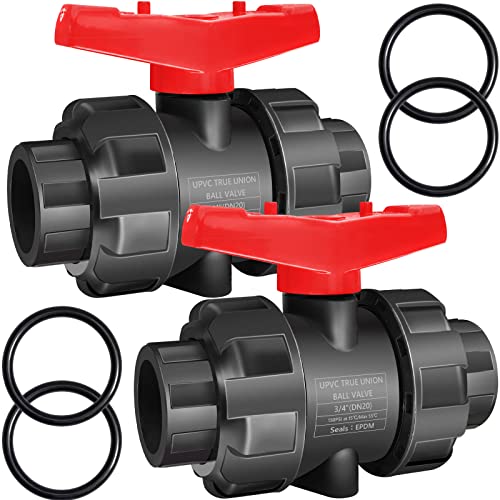
FANOVO 3/4 inch True Union Ball Valves SCH80
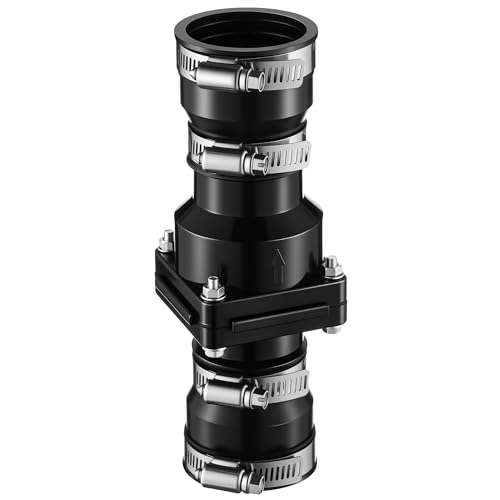
Tellingyou Sump Pump Check Valve 1-1/2″/1-1/4″
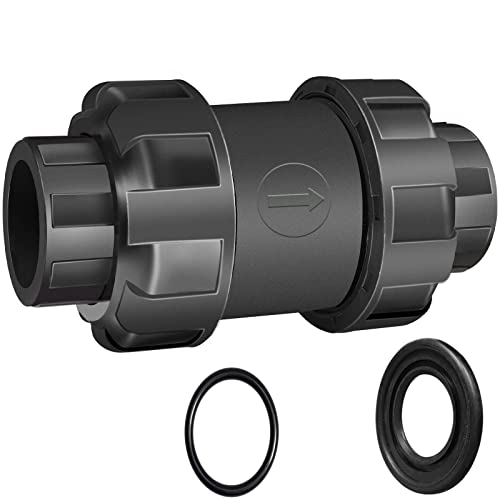
FANOVO 1 inch PVC True Union Spring Check Valve
FANOVO 1-1/2 inch PVC Union Coupling SCH80 2-Pack

Green living 1-1/2″ Silent Check Valve w/ Flapper

FANOVO 1 inch Clear PVC Spring Check Valve
What Each Pick Brings To The Table
The FANOVO 2″ union ball valve shows up most often on high-output sewage ejector lines and pool booster plumbing rather than a residential sump pit. A “full port” design means the bore through the ball matches the pipe diameter, so flow doesn’t bottleneck at the valve. Schedule 80 (a thicker-wall PVC rating rated for higher pressure than schedule 40) UPVC (unplasticized PVC, a stiffer, more chemical-resistant formulation) handles the rougher service these bigger lines tend to see.
Two valves in the box is genuinely useful on a 2″ install where you want isolation both upstream and downstream of the check valve. For most basement sumps, this size is overkill, but for sewage pits and irrigation mains it’s the right scale.
Well-Handled Touches
- Full-port geometry preserves flow on 2″ mains where any restriction costs pumping capacity.
- Schedule 80 wall thickness tolerates higher working pressures than the schedule 40 fittings most basements use.
- True-union end caps (threaded unions at each end of the valve body) let you service the valve without cutting pipe, a real time-saver on a tight sewage run.
- Two-pack pricing drops the per-valve cost below most single-pack competitors.
Things To Weigh Up
- Slip-socket connections (smooth sockets that glue onto pipe with PVC cement) require primer and cement rather than threaded hand-tightening, so installation is messier and less forgiving than a threaded union.
- At 2″, this is the wrong pick for the common 1-1/2″ residential sump discharge.
Whose Shelf It Belongs On
Homeowners running a 2″ sewage ejector or a high-volume irrigation main who want one valve for isolation and one as a spare.
Swap It Out When
The FANOVO 1-1/2 inch True Union Ball Valve SCH80 is a better fit for a standard residential sump discharge line.
Most residential sump discharge lines in North America are 1-1/2″ PVC, which is exactly what this FANOVO valve is sized for. The “full flow” port design avoids the pressure drop you’d get from a reduced-port valve, which matters on a sump line that needs every bit of headroom the pump can deliver. The true-union body unscrews at both ends, so a stuck ball or a worn seal can be addressed without dismantling the whole riser.
Schedule 80 wall thickness adds a margin of safety on the vertical discharge, where water hammer (the pressure shock that happens when a pump slams a valve shut) and accidental kicks from stored items are routine.
A Few Highlights
- 1-1/2″ matches the most common sump discharge size, so no reducer fittings are required.
- Full-port design keeps flow capacity close to the bare pipe.
- True-union ends make field service realistic without a pipe cutter.
- UPVC body resists the mineral content in many sump discharge streams.
Trade Offs
- Slip-socket glue joints aren’t friendly in cold basements where cement cures slowly.
- This is a ball shutoff valve, not a check valve. It complements, rather than replaces, a swing or spring check valve on the same line.
Who It Suits Best
DIYers replacing a stock 1-1/2″ sump discharge who want a serviceable isolation valve they can install in an afternoon.
Reach For A Different Pick When
The Zoeller 30-0242 Quiet Check is a better fit where water-hammer noise from the check valve itself is the main complaint.
This is a threaded union rather than a true check valve, and that distinction matters. The FANOVO 1-1/2″ NPT (National Pipe Thread, the standard tapered thread used on iron and PVC fittings) female union is built for pool sand-filter and pump circuits where you want to break the line apart for winterization or pump swaps. FIP (Female Iron Pipe, the same NPT thread on the inside of the fitting) on both ends means it threads directly onto male adapters, no glue required.
Schedule 40 is thinner than schedule 80, but for a low-pressure pool or shallow sump discharge that’s plenty. The built-in EPDM (a synthetic rubber sealing compound) O-ring handles the seal so you don’t need to wrap Teflon tape on the sealing surfaces.
What Earns Its Place
- Threaded installation lets you hand-tighten without PVC primer or cement.
- Two-pack format suits pool plumbing that needs unions at both the pump and the filter.
- EPDM seal is broadly chemical-resistant, including to pool chlorination levels.
Points To Note
- Schedule 40 wall is thinner, so this isn’t the right union for a high-pressure discharge.
- Without a check valve built in, backflow prevention still requires a separate valve upstream.
Made For
Pool owners and pool-techs servicing sand-filter loops where a clean, threaded union is what the plumbing actually needs.
A Better Fit Elsewhere
The Tellingyou Sump Pump Check Valve is the more direct sump-pit choice when a true check valve, not just a union, is the goal.
Zoeller has been in the residential pump market long enough that their quiet-check design has become the reference point many other brands copy. The clear PVC body lets you see the flapper (the rubber or polymer disc that swings shut when flow stops) inside, which makes it obvious whether debris is keeping it from seating fully. At 10.5″ long, it gives the flapper enough travel to close slowly instead of slamming.
That slow closure is the entire point: a standard swing check valve can sound like a carpenter’s hammer every time the pump shuts off. A bedroom wall away, that’s a problem.
The Value In It
- Engineered for quiet operation, a real upgrade over a generic swing check.
- Clear body simplifies troubleshooting, since you can see whether the flapper is fouled.
- Slip-union end matches standard 1-1/2″ PVC schedule 40 pipe.
Where It May Fall Short
- Clear PVC can discolor over years of mineral exposure, though that doesn’t usually affect function.
- Zoeller pricing trends higher than off-brand alternatives, which matters on a tight repair budget.
Right Fit For
Finished basements and bedrooms adjacent to a sump pit where the slam of a stock check valve wakes people up.
Look Elsewhere When
The Green living 1-1/2″ Silent Check Valve delivers a similar quiet profile at a noticeably lower price point.
Sump pumps don’t usually run on 3/4″ lines, which is exactly why this FANOVO pair earns its spot on the list. Condensate pumps, small irrigation zones, and reverse-osmosis reject lines all use this smaller diameter, and a schedule 80 full-port valve handles the job without choking flow. At 3/4″, the whole assembly fits in the palm of your hand, useful where space is tight against a wall.
Like the larger FANOVO valves above, these unscrew at both ends for service. You may find two valves in a single box lets you isolate equipment on either side of a filter or a softener.
The Case For It
- Full-port geometry on a small diameter avoids the pressure loss a reduced-port valve would add.
- True-union ends are unusual at 3/4″, where most compact valves are glued-only.
- Schedule 80 wall thickness exceeds what’s typical at this small size.
A Few Limitations
- Slip-socket glue joints still required, despite the union body.
- Too small for a standard sump discharge, so this is a specialty pick.
Best Suited To
Plumbers and serious DIYers building out a small irrigation branch or a condensate line where a serviceable valve matters.
Consider Something Else When
The FANOVO 1-1/2 inch True Union Ball Valve is the right call for a true residential sump-pit install.
This is the most direct answer to the question “which check valve fits my sump pump?” without forcing the shopper to measure first. The Tellingyou valve accepts both 1-1/2″ and 1-1/4″ schedule 40 pipe, which covers the two discharge sizes you actually find in residential basements. The ABS (Acrylonitrile Butadiene Styrene, a tougher black plastic) body is paired with stainless-steel clamps that resist corrosion in a damp pit environment.
The flapper style is the simplest of the three common designs (flapper, swing, and spring), and simplicity is exactly why so many plumbers stick with it. Fewer moving parts generally means fewer things to go wrong.
Reasons It Performs
- Two-size compatibility removes the “did I measure right?” anxiety from the install.
- Stainless clamps are a step up from the plated steel hardware on older valves.
- ABS body tolerates the rough handling a sump pit sees.
Some Limits To Know
- Flapper valves can hammer on high-head pumps if the shutoff is too abrupt.
- Not a true-union design, so full service means cutting the valve out.
Who Should Grab It
First-time sump installers who want a single, clearly-labeled valve that fits the most common residential pipe sizes.
Where A Sibling Pick Shines
The Zoeller 30-0242 Quiet Check handles abrupt-shutoff noise better in a finished basement.
At 1″, you’re looking at smaller sump installations, often a secondary pump or a tight retrofit where 1-1/2″ simply won’t fit. The FANOVO spring check valve uses an internal spring to push a ball back into the seat the instant forward flow stops, which closes the valve faster than gravity-driven swing or flapper designs. Faster closure means less backflow, less water hammer, and a pump that doesn’t have to re-lift water it just pumped.
The trade-off shows up in installation: this valve is vertical-direction only, and the arrow on the body must point uphill. Get either wrong and the valve won’t seal.
The Practical Payoff
- Spring-assisted closure reduces water hammer compared with a gravity flapper.
- Schedule 80 body tolerates higher discharge pressures.
- True-union ends allow service without breaking the line.
Possible Compromises
- Vertical-only installation rules out horizontal runs.
- Spring fatigue is a known wear point over years of heavy cycling.
Perfect Match For
Workshop and utility-sink installs where a 1″ line needs backflow prevention and a quiet shutoff.
Skip It When
The Tellingyou Sump Pump Check Valve is more forgiving on standard 1-1/2″ or 1-1/4″ residential lines.
A union coupling is the simple, often-overlooked piece that makes pump swaps possible. The FANOVO 1-1/2″ SCH80 coupling pairs two pipe ends and lets you spin the body apart by hand, no saw or torch required. On a pool pump, that’s the difference between a 30-minute pre-season service call and an afternoon of cutting and re-gluing.
Schedule 80 on a coupling is unusual, since most couplings are schedule 40. The thicker wall handles the same pressure the schedule 80 ball valves upstream can deliver.
Key Advantages
- Two couplings per pack covers both sides of a typical pump install.
- Schedule 80 wall matches premium valve bodies for system consistency.
- EPDM sealing ring simplifies reassembly without re-taping.
Details To Watch
- Slip-socket glue joints still required, just like the brand’s ball valves.
- This is a coupling, not a check valve, so it doesn’t prevent backflow on its own.
Built With In Mind
Pool owners and service technicians who want a serviceable pump loop without the full valve assembly.
Not Your Match When
The FANOVO 1 inch Clear PVC Spring Check Valve is the call when actual backflow prevention is the priority.
The Green living silent check valve approaches the same problem the Zoeller addresses, with a spring-loaded baffle that slows the flapper before it seats. The result is the soft “thud” instead of a metallic bang when the pump kicks off. Steel clamps ship in the box, so the install is a single trip to the basement rather than a hunt for the right hose clamps.
For most finished basements, where the sump pit sits under or beside living space, that’s the difference between ignoring the pump and hearing it every cycle.
Useful Touches
- Spring-loaded baffle softens the slam that wakes light sleepers.
- Steel clamps included, no extra parts run to the hardware store.
- 1-1/2″ sizing fits the majority of residential sump discharges.
Small Caveats
- Spring can wear faster than a pure gravity flapper, especially on high-cycle pumps.
- Clamp-style installation means periodic re-checking for tightness.
Feature Snapshot
Who Will Love This
Homeowners with a sump pit near a bedroom or home office who want quiet without paying premium-brand pricing.
Where Another Pick Suits Better
The Zoeller 30-0242 Quiet Check is a sturdier long-term investment when the install needs the brand reputation to match.
The clear body on this 1″ spring check valve is the whole reason it earns the last spot on the list. With an opaque PVC valve, you’re guessing whether the flapper is fouled or the spring is fatigued. With a clear body, you look and you know. Schedule 80 wall thickness at 1″ is uncommon, which is why this valve lands on workshop benches rather than in mass-market retail.
Like the other spring check on this list, the install is vertical-only and arrow-direction matters. Get either detail wrong and the valve never seats properly.
A Favorable Mix
- Clear body turns routine inspection into a one-glance check.
- Spring closure stops backflow faster than gravity designs.
- True-union ends let you clean the valve without cutting pipe.
Worth Bearing In Mind
- 1″ sizing limits use to smaller sump, sprinkler, or pool lines.
- Vertical-only mounting rules out horizontal retrofit work.
Who Should Grab It
Tinkerers and pros who service their own equipment and want a valve that doesn’t hide its wear.
Reach For A Different Pick When
The FANOVO 1-1/2 inch True Union Ball Valve is the standard residential sump size for a typical basement install.
What Matters Most Before Choosing Sump Pump Check Valves
Size And Pipe Compatibility
The single biggest mistake on a sump check valve install is buying the wrong nominal size. Measure the outside diameter of the discharge pipe coming out of your pump before you order. Most residential sumps use 1-1/4″ or 1-1/2″ pipe. Sewage ejectors and high-output pumps typically step up to 2″. A valve that “looks right” but is a half-size off will either not seal or will never seat properly. When in doubt, valves listed for both 1-1/4″ and 1-1/2″ (like the Tellingyou) save the return trip.
Material And Schedule Rating
Schedule 40 PVC is the basement default: cheaper, easier to glue, plenty strong for residential head pressure. Schedule 80 has a thicker wall, which matters on a vertical discharge where a stored box or a misplaced foot can crack a fitting. UPVC is stiffer and more chemical-resistant than standard PVC. ABS handles cold and rough use, common in older pits. For most basements, schedule 40 is fine; for sewage ejectors and irrigation mains, schedule 80 earns its keep.
Valve Type And Noise
Flapper, swing, and spring check valves each close differently. Flapper and swing rely on gravity or backpressure, which can slam shut and bang loudly. Spring-loaded valves close faster and quieter, at the cost of a wear point you don’t have on a gravity design. If the sump pit is far from living space, a simple flapper is fine. If it sits under a bedroom, a spring or “quiet check” design pays for itself the first night.
Serviceability
A true-union body unscrews at both ends so you can clean a flapper or replace a seal without cutting pipe. A glued-slip valve does the same job until something fails, and then you cut. For most one-time installs in finished basements, true-union is the upgrade worth making.
Key Considerations Across These Picks
Pitfalls First-Timers Hit
The most common sump check valve mistake is ignoring the arrow on the valve body. Check valves are directional, and installing it backward lets water flow downhill but blocks the pump from pushing it uphill. The next common miss is skipping the small drilled hole (called a bleed hole) some installers add above the check valve, which lets air escape on each cycle and reduces short-cycling. Always dry-fit before gluing.
What Separates Premium From Basic
Premium valves earn their cost in two places: the seal material and the body wall. EPDM seals tolerate minerals and chlorination better than budget rubber, and a thicker schedule 80 body holds up against the kind of accidental impact a basement sees over twenty years. A branded quiet-check design also adds engineered flow paths that dampen water hammer, something generic flappers never match. For a basement where noise and reliability both matter, the upgrade pays back over the life of the pump.
