

When your septic system backs up or your sump pit fills after a storm, the pump you chose quietly decides whether the next morning starts with cleanup or relief. A septic-rated submersible pump has to handle solids, run cool during long cycles, and switch on without you watching it. This roundup walks through ten pumps that fit those needs, from compact utility models to cast-iron workhorses, so you can match the right one to your pit, your plumbing, and your tolerance for fiddling with float switches.
A Closer Look At The Lineup

WAYNE CDU800 1/2 HP Submersible Sump Pump
Zoeller M53 Mighty-mate Submersible Sump Pump 1/3 HP

Zoeller M98 Flow-Mate Sump Pump 1/2 HP Cast Iron
Zoeller Waste-Mate 267-0001 Sewage Pump 1/2 HP
Rainbro 1/2 HP Thermoplastic Submersible Sump Pump

AQUASTRONG 1 HP Sump Pump 4500 GPH

Aquastrong 1/2 HP Portable Utility Pump 3159 GPH
Aquastrong 1/2 HP Utility Pump 3159 GPH with Float Switch

Aquastrong 1/2 HP Automatic Sump Pump 3159 GPH

7000 GPH Sewage Pump 1.5 HP with 16FT Cord
A Breakdown Of The Leading Choices
Cast iron and stainless steel put the WAYNE CDU800 in a different weight class from the lightweight utility pumps elsewhere in this roundup. A vertical float switch rides inside a tested-to-one-million-cycles mechanism, which matters once you stop thinking about the pump and start trusting it to cycle through storm after storm.
For homeowners with a dedicated sump pit in a flood-prone basement, the top-suction design pulls water down without gulping air, so you don’t have to drill a weep hole. The 1/2 HP motor moves up to 5,100 gallons per hour at peak, enough headroom for most single-pump residential pits.
Real Benefits
- Cast iron housing holds up to years of submerged duty without corroding
- Vertical float switch rated to a million cycles for reliable auto operation
- Top-suction intake pulls water low while resisting air lock
- 5,100 GPH peak flow handles heavy rain events for most homes
- Three-year warranty gives a real paper trail if anything goes wrong
Things To Consider
- Heavier than thermoplastic pumps, so carrying it down basement stairs takes effort
- Cast iron can show surface rust over time in consistently damp pits
Quick Facts
Right Fit For
Homeowners with a finished basement and a serious sump pit who want a cast iron pump they can leave in place for years.
Look Elsewhere When
Shed-based or pond-side work calls for the lighter Aquastrong 1/2 HP Portable Utility Pump 3159 GPH, which trades durability for portability.
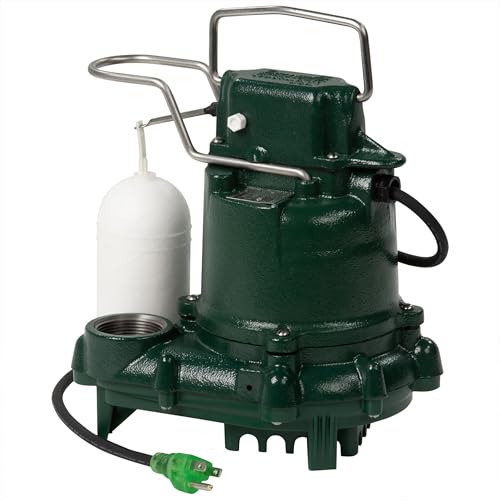
The M53 has earned a long reputation in plumbing circles as the small sump pit’s best friend. Its 1/3 HP motor is modest, but the vortex impeller and cast iron switch case carry the same build language as Zoeller’s bigger sewage units.
Pair it with a piggyback float switch and the pump turns on and off without your attention. In a tight sump crock where a chunkier pump barely fits, the Mighty-mate slides in and just works, season after season.
Noteworthy Benefits
- Vortex impeller design resists clogging from small debris
- Cast iron housing and motor shell stand up to constant submersion
- Compact footprint fits narrow sump crocks
Room For Improvement
- Lower horsepower limits it to moderate inflow situations
- Plastic base may wear under heavy cycling over many years
Made For
Older homes with small sump crocks and steady-but-modest groundwater issues.
Swap It Out When
Heavy storm-driven flooding demands the WAYNE CDU800 1/2 HP Submersible Sump Pump, which moves a much larger volume per hour.
Step up from the M53 and you land on the M98, where an oil-filled motor inside a cast iron shell changes the feel of the unit. The oil bath absorbs heat, so long pumping cycles don’t shorten the motor’s life the way they might in an air-cooled design.
An LED plug at the end of the nine-foot cord confirms power at a glance, a small detail that saves you from guessing whether an outlet has failed or the pump has. Stainless steel hardware keeps fasteners from rusting shut after years underground.
What Works In Its Favor
- Oil-filled motor runs cooler during extended pumping cycles
- LED power plug lets you check status without a multimeter
- Vortex impeller keeps debris moving instead of jamming the volute
- Stainless steel hardware resists seizing in damp pits
Worth Noting
- Heavier than the M53, so installation is a two-person job
- Oil-filled design means service, not just swap, if the motor ever fails
Feature Card
Best Suited To
Homeowners who run their sump pump hard during long storm seasons and value long motor life over a light carry weight.
Where Another Pick Suits Better
The Zoeller Waste-Mate 267-0001 Sewage Pump is the better match when solid waste, not just groundwater, has to pass through the pump.
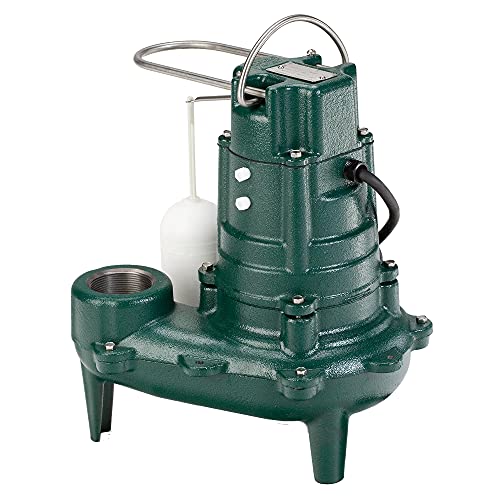
The Waste-Mate is the first pump in this roundup that genuinely wants to chew on what the others would choke on. Its vortex impeller passes two-inch spherical solids, which covers most things that come out of a residential sewage ejector basin without grinding them up first.
A two-pole mechanical switch and ASTM Class 25 cast iron construction point to long-term service. For homes with a septic system rather than a city sewer, this is the closest match to a true effluent pump without stepping up to a grinder.
Strong Points
- Handles 2-inch spherical solids without a grinder plate
- ASTM Class 25 cast iron resists wear in abrasive effluent
- Mechanical float switch is field-serviceable
Small Caveats
- Plastic impeller, while non-clogging, can wear faster than cast iron under heavy use
- Overkill for clean groundwater that the WAYNE CDU800 handles fine
- Larger footprint than a basic sump pump
Perfect Match For
Properties with septic systems and sewage ejector basins where solids up to two inches regularly pass through.
Not Your Match When
A clean-water sump pit doesn’t justify the Waste-Mate, and the Aquastrong 1/2 HP Automatic Sump Pump 3159 GPH covers that job at a friendlier footprint.
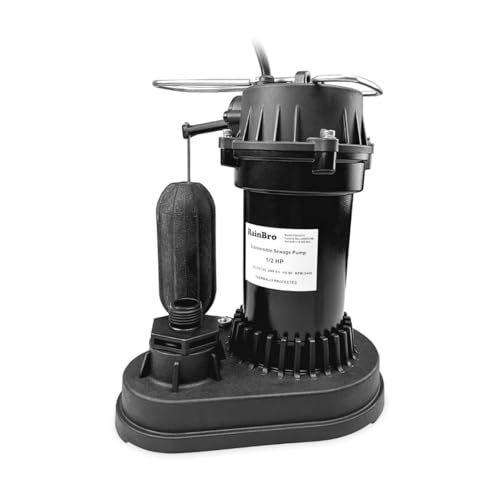
The Rainbro PSU051V trades cast iron for thermoplastic, which makes it light enough to carry with one hand. The 1/2 HP motor still moves up to 3,600 gallons per hour, and a vertical float switch keeps operation hands-off once installed.
For a part-time pump that runs during seasonal groundwater or for a backup in case the main pump fails, the lower weight is a real benefit. Carry it out of storage, drop it in the pit, plug it in, and walk away.
Useful Strengths
- Thermoplastic body keeps weight low for one-person handling
- 22-foot maximum immersion depth suits deeper pits
- 31-foot maximum head handles uphill discharge runs
- 10-foot cord reaches typical basement outlets without an extension
Trade Offs
- Thermoplastic won’t outlast cast iron in permanent installations
- Vertical float needs clearance above the pump
Spec Overview
Whose Shelf It Belongs On
DIYers who want a portable backup pump or a seasonal unit they can pull out and store between uses.
Consider Something Else When
Year-round, unattended duty in a harsh pit favors the heavier Zoeller M98 Flow-Mate Sump Pump 1/2 HP Cast Iron.
The AQUASTRONG 1 HP jumps a full horsepower above most of the lineup. At 4,500 gallons per hour and 30 feet of vertical lift, it’s sized for flooded basements where the water is rising faster than smaller pumps can drain.
Plug-in operation keeps control simple, and a bottom-suction design pulls water down to roughly a fifth of an inch off the floor. That matters when you want to walk on dry concrete by the next morning, not slightly damp concrete.
A Few Highlights
- 1 HP motor outpumps most 1/2 HP residential units
- 30-foot maximum head suits uphill discharge to street level
- Bottom suction drains water nearly to the floor surface
- Passes solids up to about 1/5 inch without jamming
Points To Note
- Thermoplastic build trades durability for portability
- Powerful motor pulls more amps than smaller pumps
Right Fit For
Homeowners dealing with serious basement flooding or pool draining where speed matters more than long service life.
Reach For A Different Pick When
Daily sump cycling in a small pit wastes the extra horsepower, and the Rainbro 1/2 HP Thermoplastic Submersible Sump Pump covers that workload for less.
This Aquastrong utility pump is built for moving jobs: swimming pools, garden ponds, hot tub drainage, and the occasional flooded window well. The 10-foot cord reaches outdoor outlets, and at 3,159 gallons per hour the job finishes before you finish your coffee.
Plug it in, water flows. Unplug it, water stops. There’s no float switch to set, no panel to configure, and at roughly 3,159 GPH, even a soaked hot tub empties in under an hour for most households.
The Case For It
- Lightweight enough to grab and redeploy around the yard
- 3,159 GPH moves large volumes quickly
- 10-foot cord reaches outdoor GFCI outlets
Honest Caveats
- No automatic float, so unattended duty is risky
- Thermoplastic body isn’t meant for permanent sump installation
Who Should Grab It
Homeowners who need a pump for pool openings, pond cleanouts, and seasonal water moves rather than continuous sump duty.
Where A Sibling Pick Shines
Automatic basement protection calls for the Aquastrong 1/2 HP Utility Pump 3159 GPH with Float Switch, which adds unattended on/off cycling.
Take the portable Aquastrong from pick 7, add an adjustable tether float switch, and you get a pump that can also babysit a flooded basement overnight. The tether lets you dial in the on and off levels to match your pit depth, which prevents the short-cycling that wears out cheap pumps.
Run the float upward to lock the pump in manual-on mode for stubborn jobs, or let it ride free for unattended cycling. That flexibility is rare in this price range, and it makes the unit genuinely useful across more than one scenario.
A Favorable Mix
- Adjustable tether float switch customizes activation level
- Manual lock position supports continuous drainage
- Passes small solids up to about 1/5 inch
- 26-foot max head handles modest uphill discharge
Points To Keep In Mind
- Tether adjustment takes a few minutes of trial and error to set right
- Thermoplastic housing is fine for occasional duty, not daily grind
Feature Snapshot
Who It Suits Best
Shed-owning homeowners who want one pump that handles both pool draining and short-term basement backup duty.
A Better Fit Elsewhere
Daily sump cycling in a finished basement is better handled by the cast iron WAYNE CDU800 1/2 HP Submersible Sump Pump, which is built for permanent duty.
Instead of a mechanical float, this Aquastrong uses an electronic water-level sensor with six adjustable trigger points from one inch to five inches. Set the activation level high if your pit fills fast, or low if short cycling has been a problem with older mechanical floats.
For shallow sump pits where a tethered float would hit the basin wall before the water rises, electronic sensing skips the geometry problem entirely. The pump also shuts off cleanly at 0.4 inches, leaving less standing water than most mechanical switches manage.
Positive Takeaways
- Six selectable activation levels fit different pit geometries
- Shuts off at 0.4 inches, leaving a nearly dry pit floor
- No moving float parts to snag or tangle in the basin
- Same 3,159 GPH flow as the manual utility version
Possible Compromises
- Electronic sensors can occasionally misread in heavily soiled water
- Sensor adds a small premium over the tether float version
Built With In Mind
Homeowners with shallow or narrow sump pits where mechanical floats just don’t fit well.
Another Choice May Suit
Very dirty effluent with fibrous material often favors the Zoeller Waste-Mate 267-0001 Sewage Pump 1/2 HP, which is engineered for that abuse.
The 1.5 HP motor pushes 7,000 gallons per hour at peak, which doubles most residential pumps on this list. A 16-foot power cord reaches distant outlets without an extension, and the float switch disconnects power below eight inches of water for dry-run protection.
When the inflow is overwhelming, whether from a flooded basement, an overfull pool, or a sump pit that won’t quit, this kind of headroom means the water recedes instead of just trickling. For most homes it’s overkill, but for emergency workhorses, the extra muscle pays off.
Notable Upsides
- 7,000 GPH peak flow clears heavy flooding fast
- 30-foot max head reaches uphill discharge points
- 16-foot cord eliminates the extension-cord run
- Float switch shuts off below 8 inches for dry-run protection
- 117 GPM output doubles typical residential units
Details To Watch
- Powerful motor draws significant amps on startup
- Larger size and weight reduce portability versus smaller Aquastrong units
The Right Fit
Homeowners managing large inflow events like full basement floods or oversized pools that need emptying in a hurry.
Skip It When
Daily, low-volume sump cycling wastes the extra horsepower, and the Aquastrong 1/2 HP Automatic Sump Pump 3159 GPH runs cheaper for years.
Picking A Submersible Pump That Fits Your Septic Setup
Choosing the right pump starts with the job you’ll ask it to do. A sump pit that handles clean groundwater has different needs than a sewage ejector basin carrying effluent from a basement bathroom. Flow rate, measured in gallons per hour, tells you whether the pump can keep up with the inflow, while maximum head (how high it can push vertically) tells you whether it can reach your discharge point. For most residential basements, 3,000 to 5,000 GPH and 25 to 30 feet of head covers the usual cases.
Material choice matters as much as numbers. Cast iron pumps like the WAYNE CDU800 and Zoeller M98 shed heat well and tolerate permanent submersion, but they weigh more and may show surface rust over time. Thermoplastic pumps from Aquastrong weigh less and cost less, but they’re better suited to occasional duty or portable work than to a permanently installed pit.
Switch type changes the daily experience. A vertical float (WAYNE CDU800) is simple and time-tested, a tether float (Aquastrong with tether) lets you tune activation depth, and an electronic sensor (Aquastrong automatic) skips moving parts but can misread in very dirty water. For sewage and effluent, vortex impellers pass small solids without jamming, which is why pumps like the Zoeller Waste-Mate handle 2-inch debris that would stall a basic sump pump.
Cord length, solids handling, and amp draw are the smaller details that decide between a smooth install and a frustrating one. A 16-foot cord (like the 7000 GPH sewage pump) reaches distant outlets, while a 10-foot cord suits typical basement setups. Match the solids rating to your worst-case debris, and confirm your circuit can handle the motor’s startup draw before you buy.
Key Considerations Across These Picks
Pitfalls Shoppers Hit
The most common mistake is underestimating solids. A standard sump pump that handles groundwater beautifully will stall the first time it meets a sewage basin with personal care products or fibrous waste. The fix is matching the pump’s solid-passing rating to your actual waste stream, not just to your pit size.
The other trap is sizing by horsepower alone. A 1.5 HP pump (7000 GPH sewage model) sounds safer than a 1/3 HP unit (Zoeller M53), but in a small pit the bigger pump short-cycles, wears faster, and uses more power. Right-size for the inflow you actually see, not for the worst storm you can imagine.
Where The Extra Money Goes
Paying more for cast iron over thermoplastic buys heat dissipation and a longer service life in permanently submerged pits. The Zoeller M98’s oil-filled motor adds another tier of thermal management for hard-running applications. For sewage duty, premium picks like the Zoeller Waste-Mate spend the money on vortex impellers and ASTM-grade cast iron that handle abrasive effluent that would destroy a basic sump pump. The upgrade is worth it when the pump runs unattended for years in a hostile environment, and unnecessary when it’s a portable unit used a few times a year.
Frequently Asked Questions
Can a sump pump handle septic tank duty?
A basic sump pump is built for relatively clean groundwater and typically clogs when sewage solids reach it. Septic and sewage ejector basins need pumps like the Zoeller Waste-Mate 267-0001 that pass two-inch spherical solids through a vortex impeller.
How many gallons per hour do I need?
For a residential sump pit with moderate groundwater, 3,000 to 5,000 GPH covers most storm events. Heavy flooding or pool draining benefits from 5,000 to 7,000 GPH, like the AQUASTRONG 1 HP Sump Pump 4500 GPH or the 7000 GPH sewage model.
How deep can a submersible pump sit?
Most residential submersible pumps work at immersion depths of 15 to 25 feet. The Rainbro PSU051V lists a 22-foot maximum immersion, which fits standard residential pits comfortably.
What’s the difference between a float switch and an electronic sensor?
A float switch uses a physical floating mechanism that rises with the water to trigger the pump. An electronic sensor reads water level without moving parts, which helps in shallow pits where a float would hit the basin wall.
How long do submersible pumps typically last?
A cast iron pump installed permanently in a clean sump pit can run for many years before service. Thermoplastic utility pumps used occasionally last a long time as well, while pumps cycling hard in dirty effluent benefit from the heavier-duty construction of models like the Zoeller M98.
The Takeaway
A septic-rated submersible pump earns its keep by matching the workload you actually face: clean groundwater, dirty effluent, or a portable yard job. The right pick comes down to flow rate, solids handling, switch type, and how long you expect to leave it in place. Start with the toughest job the pump has to do, then size from there.
