

Slow drains, gurgling toilets, and that unmistakable smell from the basement cleanout all share one root cause: buildup that has nowhere to go. Sewer line cleaners come in several distinct forms, from enzyme pods that keep septic tanks humming to alkaline crystals that cut through grease in minutes, plus powered augers that physically reach deep into the main line. Picking the right one depends on your plumbing setup, the type of clog, and how much hands-on work you want to put in. This roundup walks through ten solid options across chemical, biological, and mechanical categories so you can match the tool to your problem.
A Side-By-Side Look

RID-X Septic Tank Treatment Pods (6 Month Supply)

Thrift T-200 Odorless Drain Cleaner (Pack of 2)
Thrift Drain Cleaner 2 lb (3-Pack)

Thrift 6 lb Alkaline Granular Drain Cleaner
Roebic K-37 Granular Septic Treatment (12-Ounce)

Roebic K-77 Granular Tree Root Killer (32 oz)

Roebic K-97 Liquid Main Line Cleaner (32 fl oz)

PIONEERWORKS 50Ft Electric Drain Auger (DA04)

PioneerWorks 30Ft Portable Auto-Feed Drain Auger

PIONEERWORKS 100Ft x 3/8 in Auto-Feed Drain Auger
A Breakdown Of The Leading Choices
For households on a septic system, preventive maintenance usually beats emergency pumping, and RID-X’s six-month pod supply is built around that idea. The pods dissolve in the tank and introduce bacteria and enzymes that target common culprits like toilet paper, fats, oils, grease, starch, and protein residues. In a typical three-bedroom home, flushing one pod per month keeps the bacterial layer active without overhauling your routine.
Compared with the alkaline Thrift crystals covered below, RID-X works slowly and quietly rather than burning through a clog in under a minute. That’s the trade-off: it is prevention rather than emergency rescue. For rural homes, vacation cabins, or anyone who cannot easily reach a sewer cleanout, this approach tends to fit the rhythm of everyday life.
What Pays Off
- Six pre-measured pods remove guesswork from monthly dosing.
- Dual-action enzymes address both surface waste and solids at the bottom of the tank.
- Compatible with most septic system configurations and safe for plumbing materials.
- Compact packaging stores easily near the laundry or utility sink where dosing happens.
Things To Consider
- Slow-acting biology cannot rescue an already-overloaded tank or a fully blocked line.
- Cold winter ground temperatures can slow bacterial activity, so monthly flushing in cold climates may feel less effective.
Key Specs
Made For
Homeowners with septic systems who want a low-effort, once-a-month maintenance habit to reduce the risk of backups.
Where Another Pick Suits Better
Households on municipal sewer lines that face slow drains will get faster relief from the Thrift T-200 Odorless Drain Cleaner, since its hot-water-activated formula works in under a minute.
When a kitchen sink or shower drain backs up from grease and soap residue, an alkaline crystal cleaner often clears it faster than any biological alternative. Thrift’s T-200 is activated by hot water and is designed to liquefy grease, hair, soap scum, and bath oils in under sixty seconds, which makes it a strong fit for small drains and grease traps alike. The odorless dry formula keeps the cleanup process comfortable indoors.
Unlike the RID-X pods reviewed above, this is a reactive product rather than a preventive one. You reach for it when something is already slow, not on a calendar schedule. Property managers and homeowners with older plumbing often keep a bottle on hand for that exact moment when the kitchen drain announces it has had enough.
Notable Gains
- Works in under a minute once hot water is poured down the drain.
- Non-acid formula is designed not to harm porcelain, chrome, brass, or plastic pipe when used as directed.
- Two-pound bottle is easy to store under a sink or in a utility closet.
- Versatile enough for sinks, tubs, sewer lines, and grease traps.
Points To Note
- Boiling water is required for activation, so safe handling matters around skin and surfaces.
- Not intended for fully blocked or standing-water drains where the crystals cannot reach the clog.
- Alkaline residue should be flushed thoroughly to protect sensitive plumbing finishes.
Whose Shelf It Belongs On
Renters and homeowners who want a fast, odorless rescue option for slow kitchen and bathroom drains without calling a plumber.
Reach For A Different Pick When
Anyone dealing with tree root intrusion in a sewer line will need Roebic K-77 Granular Tree Root Killer, since alkaline crystals cannot dissolve root masses.
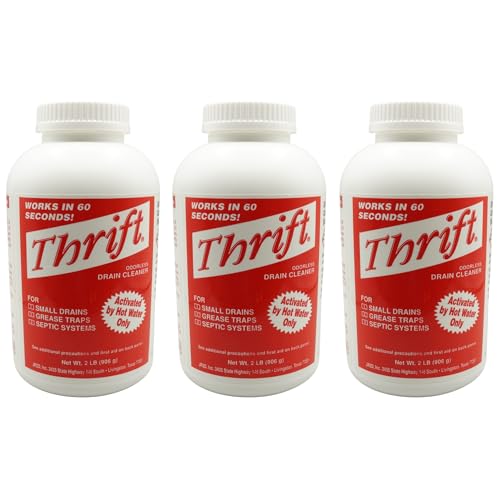
For households or light-commercial spaces that treat drain cleaning as a recurring chore, buying in bulk reduces both cost and the odds of running out at the wrong moment. This three-pack delivers the same hot-water-activated alkaline crystals as the T-200 above, just multiplied across three two-pound bottles. Maintenance crews, church kitchens, and small restaurants tend to appreciate the predictable supply.
The trade-off is storage. Three bottles take up real shelf space, and you will want to keep them dry and sealed between uses. Compared with the larger single-bottle Thrift 6 lb option covered next, this format trades bulk density for portability.
Good Reasons To Consider
- Same proven hot-water-activated formula as the standard T-200, just tripled in quantity.
- Individual bottles are easier to handle than a single six-pound container.
- Odorless crystals keep indoor use comfortable even in tight utility rooms.
Worth Noting
- Bulk supply only makes sense if you actually use the product regularly; otherwise bottles can sit past their effective window.
- Hot water is still required, so storage near a kettle or hot water source saves time.
At A Glance
Best Suited To
Maintenance staff, small food businesses, and multi-unit landlords who clear drains on a regular schedule.
Consider Something Else When
You only need an occasional rescue and would rather buy one large container, in which case the Thrift 6 lb Alkaline Granular Drain Cleaner covers more uses per shelf footprint.
The six-pound single bottle makes sense when you want a serious supply on hand without juggling multiple smaller containers. Like the rest of the Thrift line, this version uses dry, odorless crystals activated by hot water to clear clogs in under sixty seconds, with the same non-acid promise for porcelain, chrome, brass, and plastic pipes.
A single large bottle works well in a garage, basement workbench, or maintenance closet where shelf space is dedicated and you measure out doses by the scoop. If you prefer the convenience of grabbing one small bottle and storing the rest, the three-pack reviewed above is the better fit.
Practical Advantages
- Single large container reduces packaging waste per dose.
- Fast-acting alkaline formula suits sinks, tubs, sewer lines, grease traps, and septic systems.
- Odorless crystals are friendlier for indoor storage than acidic drain openers.
Honest Caveats
- A six-pound bottle is heavy when full and awkward to pour one-handed.
- Once opened, the contents must be kept dry to preserve potency.
Quick Facts
Who It Suits Best
Property owners and hobbyists who want a long-lasting stash in a garage or workshop without managing multiple containers.
Swap It Out When
You mostly need small, occasional doses around a single kitchen sink, in which case the smaller Thrift T-200 2 lb pack is easier to handle.
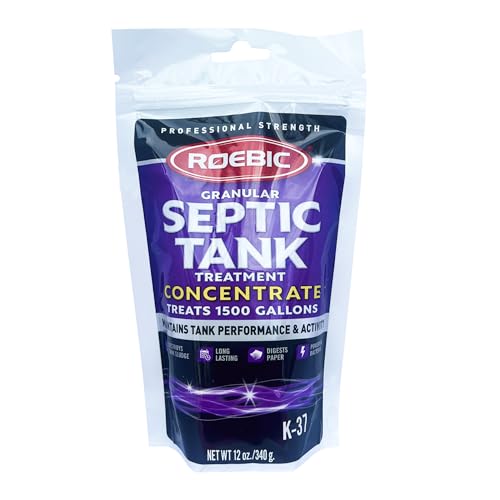
Roebic’s K-37 is a granular septic tank treatment concentrate built around bacteria that digests paper, reduces sludge layers, and cuts down on odors. The 12-ounce size is compact enough to keep near the septic access without dedicating shelf space, and the biodegradable formula appeals to homeowners who want a less harsh approach than alkaline drain openers.
It plays a different role than the Roebic K-97 liquid reviewed later. K-37 leans into concentrated sludge and scum reduction, while K-97 is a monthly flow-restoration product for the main line. Many homeowners with older septic systems keep both on hand as complementary tools.
Points In Its Favor
- Concentrated formula means a little goes a long way per dose.
- Biodegradable ingredients align with environmentally aware septic care.
- Targets both sludge and floating scum, which together cause most backups.
Trade Offs
- Bacterial treatments cannot cut through grease the way Thrift crystals can, so they are not a substitute for emergency clog clearing.
- Effectiveness drops in cold soil or during periods of heavy water use, so dosing may need to increase temporarily.
Right Fit For
Septic homeowners who want a small, frequent-dose treatment to keep tanks healthier between pump-outs.
Look Elsewhere When
Your issue is a slow main line that connects to a municipal sewer, in which case Roebic K-97 Liquid Main Line Cleaner is the more targeted pick.
Tree and shrub roots sneaking into sewer laterals are a different problem from grease buildup, and they call for a different tool. Roebic K-77 is a granular copper-based treatment designed to kill roots at the point where they enter the pipe and discourage regrowth, while remaining safe for the rest of the plumbing system.
You will not reach for K-77 every month. It is a targeted seasonal treatment for homes with mature trees near the sewer lateral. Compared with the mechanical augers covered below, K-77 is a chemical approach that works without pulling out the drain snake, though the deepest root masses may still require professional rodding.
A Favorable Mix
- Copper formula targets roots without harming septic or sewer pipe materials.
- Granular format is easy to flush down a toilet or cleanout.
- Discourages regrowth, so repeat treatments can gradually reduce intrusion.
Things To Consider
- Severe root blockages may still need a mechanical auger to restore full flow.
- Multiple treatments spaced over weeks are usually required for noticeable improvement.
Feature Snapshot
Built With In Mind
Homeowners with established trees near the sewer line who notice recurring slow drains or gurgling toilets.
Skip It When
Your drains back up from grease or hair without root involvement, since a hot-water-activated cleaner like Thrift T-200 is more efficient.
Where Thrift crystals provide a quick rescue, Roebic K-97 is the slow-and-steady counterpart for households that want to keep the main line flowing without harsh chemicals. The liquid bacteria-and-enzyme formula clears fats, grease, sludge, and paper residue, and it is safe for all pipes and for the environment around the drain field.
The 32-fluid-ounce bottle is designed for periodic use rather than a single emergency dose. Compared with the K-37 septic treatment above, K-97 targets the main line connecting the house to the sewer or septic tank, which makes them complementary rather than redundant.
A Few Highlights
- Liquid format pours easily into toilets and drain openings without measuring crystals.
- Bacterial approach naturally restores flow without corroding pipes.
- Works in both sewer-connected and septic-connected households.
Where It May Fall Short
- Slow biological action cannot dislodge a complete blockage.
- Bacterial performance drops in very cold drains, so winter dosing may feel slower.
Perfect Match For
Owners who want a gentle monthly treatment to reduce buildup before it turns into a backup.
Another Choice May Suit
For an immediate fix on a backed-up sink, the Thrift T-200 hot-water-activated crystals act in under a minute.
Sometimes the clog is physical rather than chemical, and a powered auger is the honest answer. This PIONEERWORKS unit pairs a 50-foot anti-twist steel cable with a 5/16-inch thickness, an automatic forward-and-reverse feed, an air-activated foot switch, and a built-in GFCI (ground-fault circuit interrupter, a safety device that cuts power instantly if it detects electrical faults in damp environments) for operator protection.
It is rated for pipes from roughly 2 to 3 inches in diameter, which covers most household branch lines and smaller mains. The included six cutter attachments handle different blockage types, from soft hair clumps to root intrusions at the entry points. Compared with the smaller 30-foot PioneerWorks model reviewed next, this one trades portability for extra reach.
Well-Handled Touches
- Foot switch leaves both hands free to guide the cable into the drain.
- Auto-feed saves effort on long runs through multiple bends.
- GFCI protection is reassuring when working near wet floors.
A Few Limitations
- Larger drums and 50-foot cables are heavier to carry between job sites.
- Not designed for 4-inch main lines, where the 100-foot PIONEERWORKS unit has the edge.
Who Should Grab It
Homeowners and handymen clearing mid-length household branch lines and small main lines who want professional-feeling controls.
A Better Fit Elsewhere
Anyone working mainly on smaller sink and shower drains may find the PioneerWorks 30Ft Portable Auto-Feed Drain Auger easier to manage.
Compactness matters when the drain you need to clear is under a pedestal sink, behind a toilet, or inside a narrow laundry closet. The 30-foot PioneerWorks auger trims weight and footprint while keeping the auto-feed and foot-switch convenience of its larger sibling. The heat-treated piano-wire cable is designed to resist kinking and tangling as it works through 3/4-inch to 2-inch pipes.
The closed drum keeps the cable contained during use and storage, which is a quiet blessing in tight spaces. Compared with the 50-foot PIONEERWORKS machine reviewed above, this one sacrifices reach for portability, so it is the better fit for routine household clogs rather than deep main-line work.
Strengths Worth Knowing
- Light enough to carry with one hand to sinks, toilets, or floor drains.
- Closed drum reduces splatter and keeps the cable tidy during use.
- Foot switch allows controlled one-person operation.
Some Limits To Know
- Thirty feet is not always enough for deep main-line or yard cleanout jobs.
- Smaller drum capacity means more frequent cable management during long clears.
Right Fit For
DIYers handling recurring small-diameter clogs in sinks, tubs, and floor drains without calling a plumber.
Swap It Out When
The clog sits deep in the main line, where the PIONEERWORKS 100Ft x 3/8 in Auto-Feed Drain Auger offers the cable length needed to reach it.
For deep main-line blockages, root intrusions far from the cleanout, and lines from 1 to 4 inches in diameter, the 100-foot PIONEERWORKS auger is the most capable mechanical option in this roundup. A 6.8-amp motor drives the full cable through bends and grease with high torque, while eight-inch wheels and an included GFCI make the unit easier to maneuver around wet floors.
Six interchangeable cutters let you match the head to the blockage, from soft hair to tougher root masses. The honest read is that this machine crosses into professional territory, and many shoppers will be perfectly served by the smaller 30-foot PioneerWorks model above. For deep or stubborn problems, though, the extra reach pays for itself.
Useful Highlights
- Full 100-foot cable reaches deep into main lines and yard cleanouts.
- High-torque 6.8-amp motor handles grease, soap, and root intrusions.
- Eight-inch wheels and GFCI add mobility and electrical safety.
Potential Sticking Points
- Heavier and bulkier than household-scale augers, so storage space matters.
- Learning curve is steeper for first-time users; expect a few practice runs.
Spec Overview
Who Will Love This
Property owners with long main lines, recurring root issues, or the willingness to take on heavier DIY plumbing jobs.
Look Elsewhere When
Most clogs sit in the first 30 feet of pipe; the lighter PioneerWorks 30Ft Portable Auto-Feed Drain Auger handles those with less effort.
Matching Cleaners To Your Plumbing Situation
Selecting the right sewer line cleaner starts with identifying the type of plumbing you have and the nature of the clog. Households connected to a municipal sewer system usually face grease, hair, and paper buildup in branch lines, while homes on septic systems add tank maintenance and drain field care to the picture. Knowing whether your issue is slow drainage, a complete backup, or recurring odors narrows the product category quickly.
For septic systems, biological treatments like RID-X pods and Roebic K-37 work as ongoing maintenance rather than emergency tools. They replenish the bacterial layer that breaks down solids, which reduces the workload on your tank and limits the sludge that eventually triggers backups. Pairing a granular concentrate with a monthly liquid treatment gives layered coverage.
Grease, soap, and hair respond to hot-water-activated alkaline crystals. Thrift’s T-200, the three-pack, and the 6 lb bottle share the same active formula, so the choice comes down to how often you reach for the product. A single kitchen rescue calls for the smallest size; a busy rental or workshop benefits from a bulk supply.
Main-line issues that reach the sewer lateral often involve tree roots, especially in older neighborhoods with mature landscaping. Roebic K-77 attacks roots chemically over repeated treatments, while the PIONEERWORKS powered augers physically remove intrusions and other deep blockages. For lines between 1 and 4 inches in diameter and lengths up to 100 feet, the larger PIONEERWORKS machine is the most capable mechanical option reviewed here.
Key Considerations Across These Picks
Common Shopping Slip Ups
One easy mistake is reaching for an alkaline crystal cleaner when the real problem is a septic tank that needs biological support, or vice versa. Each product category handles a different job, and using the wrong tool wastes time and chemicals. Another trap is buying a 50- or 100-foot auger for clogs that sit within 15 feet of a fixture; lighter, smaller machines are easier to live with and store. Finally, ignoring pipe diameter ratings leads to cable-binding and frustration, so confirm the line size before choosing a powered snake.
Where The Extra Money Goes
Higher-tier picks like the 100-foot PIONEERWORKS auger command a premium for reach, motor power, and durability, which only pays off when you genuinely face deep blockages or root intrusions. Bulk Thrift crystals cost more up front but reduce per-use cost for frequent maintenance. Premium Roebic treatments like K-97 cost more than generic enzymes because of higher bacterial concentration and brand stability, which matters when consistency is the priority. The upgrade is worth it when the use case justifies it, and unnecessary when a smaller or simpler option already meets the job.
Frequently Asked Questions
What Is The Difference Between A Drain Cleaner And A Sewer Line Cleaner?
Drain cleaners typically target clogs inside a sink, tub, or branch line close to the fixture. Sewer line cleaners are designed for longer runs between the house and the street or septic tank, which is why they often involve more powerful chemicals, longer cables, or larger quantities of treatment.
Can Chemical Drain Cleaners Damage Old Pipes?
Repeated use of harsh acidic or highly alkaline products can shorten the life of older metal or thin-walled pipes. Non-acid formulas and enzyme-based treatments are designed to be gentler when used as directed. For very old plumbing, a mechanical auger often provides a safer alternative.
How Often Should I Treat My Sewer Line?
Many homeowners use a biological treatment monthly as preventive care and reach for an alkaline cleaner only when drains slow down. Frequency depends on household size, pipe age, and the presence of trees near the lateral. Larger households often treat more often than single-occupant homes.
Do Powered Drain Augers Work On Toilets?
Some augers are designed for toilet drains, but household electric drain snakes are often too aggressive for porcelain toilet bowls and may damage the trap. A dedicated toilet auger with a protective rubber sleeve is the safer tool for that fixture.
Is It Safe To Use Drain Cleaners In A Septic System?
Enzyme- and bacteria-based septic treatments like RID-X or Roebic K-37 are designed for septic systems. Hot-water-activated alkaline cleaners can be used sparingly, but heavy or repeated doses may disrupt the bacterial balance inside the tank.
The Takeaway
The right sewer line cleaner depends less on brand hype and more on your plumbing setup, the type of clog, and how hands-on you want to be. Chemical treatments, biological maintenance, and powered augers each fill a different gap, and most well-prepared homes end up keeping at least two on hand. Start by identifying what your pipes are actually dealing with, then match the tool to that job.
