

A water tank that runs dry without warning, or overflows into a muddy patch beside the barn, is a familiar headache for anyone managing livestock troughs, rooftop cisterns, or off-grid storage. The right float valve takes that daily watch off your hands by shutting off flow at a set level, so you stop checking the tank every hour. Below are four solid options across tank, cistern, and trough setups, ranging from a compact toilet-cistern unit to a high-flow agricultural valve and a replacement rod for existing installations.
The Main Contenders

Cornat Universal Cistern Filling Valve (50mm Float)
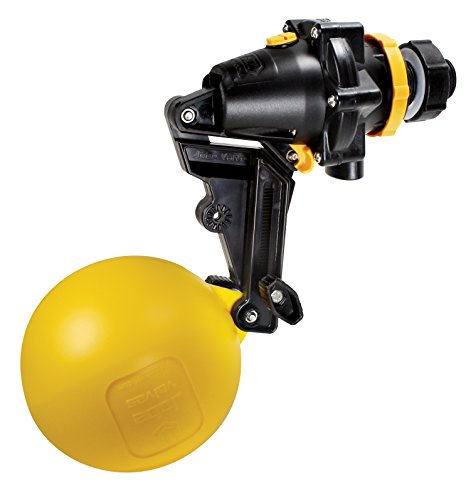
Jobe Valves Topaz Trough Valve 4.9″ Float 100PSI

Kerick Valve SR12 Stainless Steel Rod 12″

Musibo 1/2″ to 3/4″ 304 Stainless Float Valve
What Each Pick Brings To The Table
For tight or awkwardly shaped toilet cisterns, the Cornat Universal Cistern Filling Valve solves a problem many retrofit jobs run into: a standard float body simply won’t fit. Its slim 50mm flat float (a small buoyant disc that rides on the water surface and triggers the shut-off) slides into deep or wall-hung units where a conventional round float would jam. The fill level can also be tuned to match the cistern’s capacity, which is useful when you’re swapping parts between older and newer tanks with different flush volumes.
Compared to the larger agricultural options further down this list, this is a domestic-scale part, and that’s exactly its appeal. If your main concern is a slow, dripping fill that never quite shuts off, replacing the valve outright tends to be cleaner than rebuilding the old one.
A Strong Showing
- Flat 50mm float body fits deep and wall-hung cisterns where standard floats won’t clear the lid
- Adjustable fill level so you can match tank capacity rather than living with a fixed shut-off point
- Compact form factor simplifies retrofit work in older European-style toilets with limited internal space
- Single-piece design reduces the number of joints that could develop leaks over time
Things To Consider
- Sold through international channels, so local warranty terms and included fittings may differ from domestic equivalents
- Documentation and any included seals may arrive in a language other than English, which can complicate first-time installation
Who Should Grab It
Homeowners dealing with a leaking or underperforming fill valve inside a deep or wall-hung cistern, especially where space rules out a standard replacement.
Consider Something Else When
Anyone managing a livestock trough or large outdoor storage tank will want the Jobe Valves Topaz Trough Valve instead, since it handles much higher flow rates and rougher outdoor conditions.
Where the Cornat above handles a quiet domestic job, the Jobe Valves Topaz Trough Valve steps up to the demands of a working farm or large rainwater setup. The 4.9″-wide float drives a small pilot valve (a low-flow control valve that uses line pressure to operate the larger main valve), which in turn commands the main diaphragm, so a relatively gentle motion at the water surface can hold back serious flow. Rated for 200 litres per minute and 100 PSI, it’s the kind of spec sheet you want when refilling a 1000-litre trough after a hot afternoon.
Mounting flexibility matters more than people expect, and this valve accepts horizontal or vertical orientation above or below the waterline without tools. That alone saves an afternoon of bracket fabrication if your tank inlet sits in an awkward spot.
Reasons It Performs
- 200 L/min flow capacity refills large troughs quickly after livestock drain them
- 100 PSI rating handles pressurised feed lines that would overwhelm smaller valves
- Tool-free adjustment and multi-orientation mounting suit unusual tank layouts
- Non-corrosive construction extends service life outdoors in sun and rain
- Optional Frostpro anti-freeze port lets you add freeze protection later without replacing the valve
- Built-in shut-off switch locks the valve closed for maintenance work on the line
Trade Offs
- 1″ NPT inlet (a standard tapered pipe thread used in North American plumbing) requires matching fittings, which may not be on hand for smaller domestic installations
- Overkill for a rooftop cistern or a small storage tank that never sees more than a trickle
Best Suited To
Smallholders and property owners running livestock troughs or large outdoor tanks who need reliable high-flow automatic refilling without daily checks.
Look Elsewhere When
The Musibo 1/2″ to 3/4″ 304 Stainless Float Valve is a better match for a typical backyard pool or modest rainwater barrel, since its lower flow rate and simpler stainless design suit those lighter-duty jobs.
The Kerick Valve SR12 isn’t a complete valve, it’s a 12-inch stainless steel rod that connects the float to the valve body, and that’s the point. Many older float valves fail not because the valve mechanism is worn out but because the rod has corroded, bent, or stripped its threads. Buying a complete new valve when only the rod is shot is wasteful, and this replacement part lets you restore function without scrapping the working components.
Made in the US from stainless steel with a 1/4″-20 female threaded connection, it fits a defined family of Kerick float valves (including the 4DMD9, 4DME1 through 4DME4 series). If your existing setup came from that line, this drops in cleanly.
Where It Delivers
- Stainless steel construction resists rust in damp tank environments where mild steel rods fail within a season or two
- Standardised 1/4″-20 threaded connection fits a recognised range of compatible Kerick valves
- Cost-effective repair path when only the connecting rod has failed
Honest Caveats
- Only useful if your existing valve matches the compatible Kerick series; it is not a universal replacement rod
- Does not include a float, valve body, or any sealing hardware, so plan a full parts inventory before ordering
Whose Shelf It Belongs On
Workshop owners and maintenance-minded property managers who already run compatible Kerick float valves and want a corrosion-resistant spare rod on hand.
Reach For A Different Pick When
Anyone starting from scratch with no existing valve should pick the Musibo 1/2″ to 3/4″ 304 Stainless Float Valve, which arrives as a complete working assembly rather than a single component.
The Musibo 1/2″ to 3/4″ float valve is the broadest-appeal item on this list. Built from 304 stainless steel, it suits water tanks, water towers, pools, solar storage tanks, and livestock troughs alike, which is unusual for a part at this level. It runs on water pressure alone (no electricity needed), starts working once line pressure exceeds 0.2 kg, and tolerates water temperatures from 0°C up to 100°C, so it covers everything from a winter stock tank to a solar hot water backup.
For most backyards and small properties, this is the practical middle ground between the domestic Cornat valve above and the industrial Jobe Valves unit. Installation is vertical on a horizontal surface with the float hanging down, which keeps the mechanics straightforward.
Practical Pluses
- 304 stainless steel body handles clean water across a wide temperature range without corroding
- Pressure-operated design means no power supply or controller is required at the tank
- Fits 1/2″ to 3/4″ threaded connections, covering the most common residential and light-commercial inlet sizes
- Single automatic shut-off mechanism reduces manual top-ups across pools, troughs, and storage tanks
Worth Bearing In Mind
- Threaded connections require proper thread seal tape (15-25 wraps, covering 2-3 mm thickness) to prevent slow leaks at the joint
- Must be mounted vertically with the float oriented downward, which rules out some low-clearance installations
- Designed for clean water only; sediment-heavy sources may clog the mechanism over time
Feature Snapshot
The Right Fit
Homeowners and smallholders who want one valve they can move between a pool, a livestock trough, and a rainwater tank without buying a different model each time.
Swap It Out When
High-demand livestock operations needing fast refill on large troughs will find the Jobe Valves Topaz Trough Valve a stronger match, given its 200 L/min capacity and heavier-duty construction.
Choosing The Right Float Valve For Your Tank
Picking a float valve comes down to matching the unit to the tank’s purpose, inlet size, and how much wear it will see. A household cistern needs a compact body, while an agricultural trough demands higher flow rates and tougher materials.
Match The Valve To The Tank Type
Toilet cisterns call for slim floats that fit inside narrow housings, so units like the Cornat Universal Cistern Filling Valve with its 50mm flat body are the right shape. Outdoor storage tanks and troughs need floats built for larger swings in water level and rougher conditions, where stainless steel construction and higher flow ratings start to matter.
Check Flow Rate And Pressure
Flow rate, measured in litres per minute, decides how fast a valve can refill a drained tank. For a backyard pool or modest rainwater barrel, a moderate-flow valve handles the job comfortably. For livestock troughs that several animals drink from during a hot afternoon, look for higher capacities in the 100-200 L/min range and pressure ratings that match your incoming line.
Confirm Thread Size And Mounting Style
Most residential valves use 1/2″ or 3/4″ threaded connections, while agricultural units often step up to 1″ NPT. Verify the inlet size on your existing plumbing before ordering, and check whether the valve mounts vertically, horizontally, or both. Tool-free adjustable mounting saves time when the inlet sits in an awkward spot.
Weigh Material And Environment
Stainless steel, especially 304-grade, holds up well in damp outdoor tanks where rust would destroy plated steel within a season or two. Plastic floats are lighter and cheaper but can degrade under UV exposure. For tanks in direct sunlight or freezing conditions, prioritise corrosion-resistant metals and any available anti-freeze accessory ports.
Common Slip-Ups And Where The Extra Money Goes
Pitfalls Shoppers Hit
A common mistake is buying a valve with the wrong thread size, which means extra fittings, more joint seals, and a slow leak somewhere down the line. Another is choosing a domestic-scale valve for a trough that loses 200 litres a day to thirsty livestock; the valve keeps up for a while, then wears out faster than expected. Always match the spec to the actual demand rather than the visible size of the tank.
What Separates Premium From Basic
The jump from budget to premium valves usually shows up in three places: the float mechanism (pilot-operated designs handle higher flow with less float movement), the body material (stainless versus plated brass or plastic), and mounting flexibility (tool-free multi-orientation versus fixed-position installs). Paying more makes sense when the tank is hard to access, the water is pressurised, or the installation runs year-round outdoors. For indoor cisterns with light daily use, a simpler valve typically does the job just fine.
Frequently Asked Questions
How does a float valve know when to shut off?
A float valve uses a buoyant float that rises with the water level. Once the float reaches the set height, it triggers a pilot or diaphragm mechanism that closes the inlet and stops the flow.
Can a float valve work without electricity?
Yes, mechanical float valves operate purely on water pressure and buoyancy, so they function during power outages and in off-grid setups where no controller power is available.
What pressure does a typical float valve need?
Most residential float valves start working around 0.2 kg of pressure, while industrial units may require higher incoming line pressure to operate the pilot mechanism reliably.
How do I stop a float valve from leaking at the threads?
Apply thread seal tape clockwise, wrapping 15 to 25 layers to cover 2 to 3 mm of thread depth, then tighten the joint firmly. Larger gaps or threads may need additional wraps or a suitable sealant.
Can I use the same float valve for a pool and a livestock trough?
Stainless steel multi-use valves are often rated for both clean water applications and livestock use, provided the flow capacity and inlet size match the demands of each setup.
The Takeaway
The right float valve quietly does its job in the background, so you stop thinking about water levels altogether. Match the valve to your tank type, confirm the inlet size, and choose a body material suited to your climate, and the rest tends to take care of itself.
