

A slow-flushing toilet, a soggy patch over the leach field, or that faint sulfur whiff near the back yard are the usual first hints that a septic system needs attention. Drain field cleaners, sometimes called septic treatments, use bacteria and enzymes to break down the solids, grease, and soap residue that clog soil pores and starve the field of oxygen. The right product depends on whether you want steady prevention or a heavy intervention, and whether your system is residential, commercial, or somewhere in between. Below are nine options worth your attention, chosen to cover routine upkeep, full restoration, and everything in between.
The Leading Options At A Glance

Rid-X Septic Tank Treatment 3.2 Ounce

NAODIFU Bio-Tab Septic Tablets 14-Count

Rid-X Septic Tank Treatment Powder 3-Month Supply

Septic-Flow Enzyme Pods 1-Year Supply

Bio-Safe One BIO-112 5-Gallon Sludge Digester

Bio-Safe One BSA 10003 24-Monthly Treatments

Bio-Safe One LVL1 Shock 5-Gal + 42 Treatments

Green Pig Septic Treatment Packets 1-Year Supply
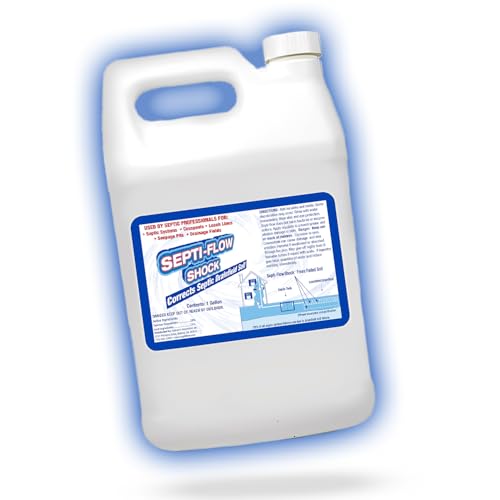
Septic-Flow Shock Drain Field Cleaner 1 Gallon
Meet The Standout Selections
For most suburban homes on a standard 1,000-gallon tank, Rid-X in its small 3.2-ounce pack is the product people reach for first, and for good reason. You pour one packet down the toilet once a month, flush, and the bacteria and enzymes go to work on paper, soap residue, and organic matter before it can settle into the field. Compared to the bulk liquids further down this list, this is a low-fuss monthly habit, not an emergency intervention.
In practice, it’s the kind of product a household uses almost on autopilot. There’s no measuring cup to clean, no jug to store, and the format is forgiving for anyone who has never thought about what’s living under the lawn. It’s also a useful baseline: if you start here and your system behaves well, you likely don’t need anything heavier for a long time.
Why It Works Well
- Compact single-dose packet fits a standard monthly routine without storage hassle.
- Designed to target toilet paper, fats, oils, and grease before they reach the field.
- Trusted enough that many septic pros keep it in their own service trucks.
- Easy to teach other household members: one packet, one toilet, once a month.
Things To Consider
- A small packet covers a single monthly dose, so you’ll reorder often for ongoing use.
- Owners commonly report it works best as prevention rather than as a fix for an already-failing field.
Who It Suits Best
Homeowners with a healthy, well-maintained tank who want a low-effort monthly habit more than a rescue product.
Look Elsewhere When
The Bio-Safe One BIO-112 5-Gallon Sludge Digester is a smarter grab for drain fields already showing soggy ground or back-ups.
Tablets change the experience of septic maintenance more than people expect. With NAODIFU’s 14-count Bio-Tab jar, you drop one tablet into the bowl, let it sink, and the slow dissolve carries enzymes and bacteria right to the bottom of the tank. The 8-ounce jar holds roughly a year of monthly doses for a typical home, which is a quieter shelf footprint than loose powder or a jug.
Where Rid-X leans on its name recognition, Bio-Tab leans on format. For households that forget powder scoops or hate measuring, a tablet is a small but real upgrade in consistency. You may find the dissolvable action slower than a poured powder, though, especially in cooler soil during the shoulder seasons.
What Makes Sense
- Pre-measured tablets remove the guesswork from monthly dosing.
- Gradual dissolution is meant to keep bacteria active at the source rather than in transit.
- Compact jar tucks under a sink without crowding the laundry shelf.
Worth Noting
- Tablets need a few hours in standing water to fully dissolve, so late-night dosing won’t suit every routine.
- The brand is less established than Rid-X, so long-term field data is thinner.
Made For
Residential owners who want a year of doses in a small jar and don’t want to think about scoops or bottles.
Where Another Pick Suits Better
The Green Pig Septic Treatment Packets are an even simpler “drop and flush” option for households that prefer powders over tablets.
The 3-month powder version of Rid-X exists for a simple reason: many households would rather buy one box a year than a packet a month. Inside is the same enzyme and bacteria blend as the single-dose pack, just portioned for a quarterly shake into the toilet. It’s a more economical path for families who want the brand without the repeat-order rhythm.
The catch is that powder is messier than a packet. You’ll be tipping a scoop down the bowl rather than dropping a sealed pouch, and the container itself needs a dry shelf. For most homes, that’s a small price for fewer shipments and a lower per-dose cost.
Benefits That Matter
- Three months of doses in a single purchase reduces reordering frequency.
- Familiar Rid-X formula targets paper, grease, and organic solids.
- Powder dissolves quickly, so dosing takes only a flush or two.
- Lower per-month cost than the single-dose packets for the same brand.
Trade Offs
- The scoop-and-pour routine can feel dated next to single-use packets or tablets.
- Container must be kept dry to prevent the powder from clumping before use.
Best Suited To
Owners who want a familiar name on a quarterly schedule and prefer buying in larger containers.
Reach For A Different Pick When
The Septic-Flow Enzyme Pods 1-Year Supply makes more sense for those who want a full year of maintenance in a single shipment.
Septic-Flow’s pod format is a quiet, well-engineered take on routine care. The box ships as a full year’s worth of single-use pods, so you set a calendar reminder, drop one in once a month, and don’t think about the system again. It’s the kind of “install and forget” approach that suits busy families, rentals, and second homes where the same owner isn’t always around to maintain the system.
Where the Rid-X powder leans on household recognition, Septic-Flow leans on packaging discipline. Each pod is sealed, so there’s no exposure to bathroom humidity between doses, and the brand sources its bacteria and enzymes for steady monthly breakdown of paper, grease, and waste. For most homes, this is the kind of product that quietly keeps the field out of the conversation for twelve months at a stretch.
Reasons It Performs
- A full year of doses means one purchase covers most households’ maintenance cycle.
- Single-use pods eliminate the measuring step that throws off routine powder products.
- Sealed wrappers keep bacteria viable longer than open jars in humid bathrooms.
Points To Note
- Less widely stocked than Rid-X, so shelf-availability can vary by region.
- Pods need to dissolve fully in the tank, so they perform best with regular water use, not in vacant homes.
The Right Fit
Homeowners who want a single annual purchase and the discipline of a sealed pod for every month.
Not Your Match When
The NAODIFU Bio-Tab Septic Tablets are a friendlier format for households that prefer a jar of tablets over a stack of single-use pods.
Once a drain field starts to back up, monthly packets won’t cut it. Bio-Safe One’s BIO-112 ships as a 5-gallon pail of concentrated liquid loaded with aerobic and anaerobic bacteria designed to chew through sludge and the bio-mat that smothers leach field soil. The formula traces back to the strains developed for the Exxon Valdez cleanup, which gives it a weight that most residential powders can’t claim.
This is intervention, not maintenance. The liquid goes into the tank or directly into the distribution lines, and over a few weeks it can restore flow in fields that were on the edge of failure. You may find the pail bulky to store, and the up-front cost is steeper than a year of monthly pods, but for a system that’s actively struggling it’s the kind of treatment that can buy you years before a replacement field.
The Value In It
- Concentrated liquid targets heavy sludge and grease mat that powders struggle to reach.
- Patented bacterial strains with a 5-plus-year shelf life, so the pail won’t lose potency quickly.
- Works for residential and commercial systems, including grease traps.
Honest Caveats
- A 5-gallon pail is heavy and needs a dry storage spot, which not every garage has.
- Designed as a one-time or periodic shock, not a monthly habit, so dosing is less intuitive.
Who Will Love This
Owners of older or stressed systems who need a real intervention before considering a new drain field.
Skip It When
The Rid-X Septic Tank Treatment 3.2 Ounce covers the routine path for tanks that are still functioning well.
BSA 10003 is the maintenance sibling of BIO-112. Instead of one heavy pail, you get 24 pre-measured treatments designed to be flushed one per month, using the same patented bacterial strains that gave Bio-Safe One its reputation. For owners who like the heavy-duty brand’s science but don’t have a failing field, it’s a way to apply the same formula as prevention rather than rescue.
Two years of treatments in a single box is also a relief for anyone who manages multiple properties or simply wants to stop reordering. Compared to the lighter monthly packets earlier on this list, the trade is mostly one of long-term commitment: you’re buying in because you want the bacterial depth, not because you need a quick fix.
What Stands Out
- 24-month supply means most households set it and forget it for two years.
- Lab-cultivated bacterial strains target sewage solids rather than just suspending them.
- Pre-measured doses remove any guesswork around how much to add each month.
Points To Keep In Mind
- Higher up-front cost than a single quarter of competitor product.
- Performance is more visible in long-term soil health than in any single dramatic result.
Perfect Match For
Long-term planners managing one or more properties who want to standardize on a single bacterial brand.
Consider Something Else When
The Green Pig Septic Treatment Packets are a friendlier entry point for first-time owners who aren’t ready to commit to a two-year supply.
The LVL1 Shock package pairs the heavy BIO-112 pail with 42 follow-up monthly treatments, which is essentially a full-service septic program in a single delivery. The shock component restores flow in a struggling field, and the follow-up packets keep the bacterial population active for the next three and a half years. For larger homes, in-law suites, or small commercial properties, that’s a sensible way to bundle restoration and maintenance into one purchase.
It’s also the most storage-intensive kit on this list. Five gallons of liquid plus three and a half years of monthly doses means a garage shelf or utility closet with real square footage. For households that just need a quick tune-up, it’s overkill; for those who want a long-term relationship with a bacterial brand, it removes a lot of decision-making.
Key Advantages
- Combines a one-time heavy shock with three-plus years of monthly maintenance.
- Targets bio-mat, sewage, and organic sludge that lighter products can’t break down.
- Suitable for residential, hotel, RV, and small commercial systems.
Trade-Offs To Consider
- Large physical footprint, not realistic for apartments or small utility closets.
- Higher up-front cost than any single product, even if the per-year math works out.
Built With In Mind
Owners of larger or higher-load systems who want a full program rather than piecing together monthly purchases.
A Better Fit Elsewhere
The Bio-Safe One BIO-112 5-Gallon Sludge Digester alone is enough for a single intervention, without the ongoing follow-up commitment.
Green Pig’s four-packet box is the lowest-friction entry on this list. Each packet is a single dose meant to be flushed once per quarter, so the brand’s “1-year supply” really means four scheduled treatments. There’s no measuring, no jug, and no calendar math beyond four annual reminders.
The flip side is that quarterly dosing is less aggressive than monthly products. For a young system with light household use, that may be exactly the right cadence. For a busy family home on a small tank, you’d want a more frequent product on this list instead.
Strong Points
- Four-packet box is the easiest possible introduction to septic maintenance.
- Septic-safe enzyme blend supports routine prevention without harsh chemicals.
- Tiny shelf footprint, ideal for a half-bath closet or kitchen drawer.
Small Caveats
- Quarterly dosing may be too sparse for households with high daily water use.
- Less aggressive enzymatic action than dedicated monthly products.
Right Fit For
New homeowners or vacation properties that need a low-effort, infrequent routine to keep the system healthy.
Where A Sibling Pick Shines
The Septic-Flow Enzyme Pods 1-Year Supply gives you twelve monthly doses instead of four, which fits active family homes more naturally.
Most drain field problems aren’t really about solids: they’re about soap, detergent, sodium, and sulfate residue slowly sealing the soil. Septic-Flow’s Shock is built specifically to attack that buildup in the leach field lines, where bacteria-only treatments can struggle to reach. The 1-gallon jug pours into the distribution box or directly into the field’s access port.
This is a periodic deep clean, not a monthly habit. In homes where the tank runs fine but the field lines are slow, it can restore percolation without needing a full sludge digester. You’d still pair it with an ongoing bacterial product from earlier on the list, since the Shock handles the mineral and soap side rather than organic waste.
Useful Strengths
- Targeted at sodium, phosphate, and sulfate buildup that most bacteria-only products miss.
- Liquid format reaches the full length of leach field lines, not just the tank.
- Useful as a periodic deep clean alongside a monthly maintenance product.
Practical Considerations
- Not a stand-alone maintenance product: the tank still needs a bacterial companion.
- One-gallon jug needs a labeled storage spot away from drinking water.
Whose Shelf It Belongs On
Households with slow leach field lines and a history of heavy detergent or soap use who want to reopen soil pores.
Swap It Out When
The Bio-Safe One BIO-112 5-Gallon Sludge Digester is the better pick for organic sludge problems rather than mineral buildup.
What To Weigh Before Choosing Drain Field Cleaners
Treatment Format
The single biggest practical decision is format: single-use packets, tablets, powder, pods, or liquid. Packets and pods are the lowest-fuss, the easiest to teach other household members, and the hardest to over-dose. Powders cost less per dose but demand a scoop, a dry container, and a consistent hand. Liquids are usually concentrated interventions, not monthly habits, so they live on a garage shelf rather than a bathroom one. For a typical family home, format often decides consistency more than the bacterial blend does.
Active Ingredients And Target Problem
Bacteria-only products and enzyme-fortified blends both work, but they target different things. Bacteria keep organic waste active and moving through the system. Enzymes accelerate the breakdown of paper, fats, and starches. Mineral-targeted shock treatments, like the Septic-Flow Shock, address soap and sulfate buildup in the soil itself. Matching the formula to the actual problem, not just buying the strongest option, is where most septic maintenance goes right.
Tank Size And Household Load
A 1,000-gallon tank serving two adults behaves very differently from the same tank serving a family of five with a garbage disposal. Larger or heavier-use systems usually benefit from monthly dosing, while smaller or seasonal properties can do well with quarterly packets. Drain field cleaners aren’t one-size-fits-all, and the recommended dose on each product assumes a typical residential tank. Adjusting for occupancy and water use is part of the math.
Severity Of The Problem
If the system is functioning normally, monthly prevention is the right level. If toilets are slow, the leach field is soggy, or odors are showing up indoors, prevention alone won’t undo years of buildup, and a concentrated liquid or shock treatment becomes the smarter spend. Most long-term septic owners keep one of each on hand: a small monthly product for steady care, and a larger treatment reserved for when the field needs help.
Key Considerations Across These Picks
Common Shopping Slip Ups
The most frequent mistake is treating drain field cleaners as emergency products rather than preventive ones. By the time a system shows obvious symptoms, the soil pores are often already coated with bio-mat, and a small monthly packet won’t undo that. Another common error is mixing bacterial and chemical treatments in the same window: chlorinated cleaners and harsh drain openers can wipe out the bacteria you just added, so timing matters. Lastly, owners occasionally oversize their dose, which doesn’t make the system cleaner and can throw off the tank’s natural balance.
Where The Extra Money Goes
Higher-tier products earn their cost through bacterial concentration, patented strains, and liquid formats that reach deeper into the system. A 5-gallon sludge digester or a 24-month supply reflects a real investment in shelf-stability and lab-cultivated organisms, not just a larger container. For most homes, the upgrade pays off when there’s an actual symptom, or when the property has multiple bathrooms, a garbage disposal, or a rental unit that pushes the system harder than average.
Frequently Asked Questions
How often should drain field cleaners be used?
Most residential systems do well with monthly dosing, though quarterly products can work for low-use homes. The cadence should match tank size, household occupancy, and whether the system has shown past issues.
Can drain field cleaners fix a failing leach field?
They can help in early-stage failure by reducing bio-mat and restoring flow, but a fully saturated or collapsed field usually needs professional service or replacement. Treatments buy time, they don’t rebuild soil structure.
Are enzyme or bacteria products better?
They serve different roles. Bacteria maintain ongoing breakdown of waste, while enzymes accelerate the process for specific materials like paper, fats, and starches. Many effective products combine both.
Is it safe to use these products with a garbage disposal?
Yes, but the system will be under higher load, so monthly dosing becomes more important. Avoid running harsh chemical drain openers in the same week as a bacterial treatment, since they can neutralize the active cultures.
Do drain field cleaners work in cold weather?
Bacterial activity slows in cold soil, so winter dosing has less immediate impact. Most owners shift to steady maintenance during the cold months and reserve heavier shock treatments for spring or fall.
Wrap Up
The right drain field cleaner is the one that matches your system’s actual condition, not the strongest one on the shelf. For most homes, a steady monthly product keeps the field out of mind, while a heavier liquid or shock treatment stays in the garage for the day something feels off. Match the format to the household’s habits, the formula to the symptom, and the dose to the tank, and the system will quietly do its job for years.
